Can I Visit China Without a Visa?
Introduction
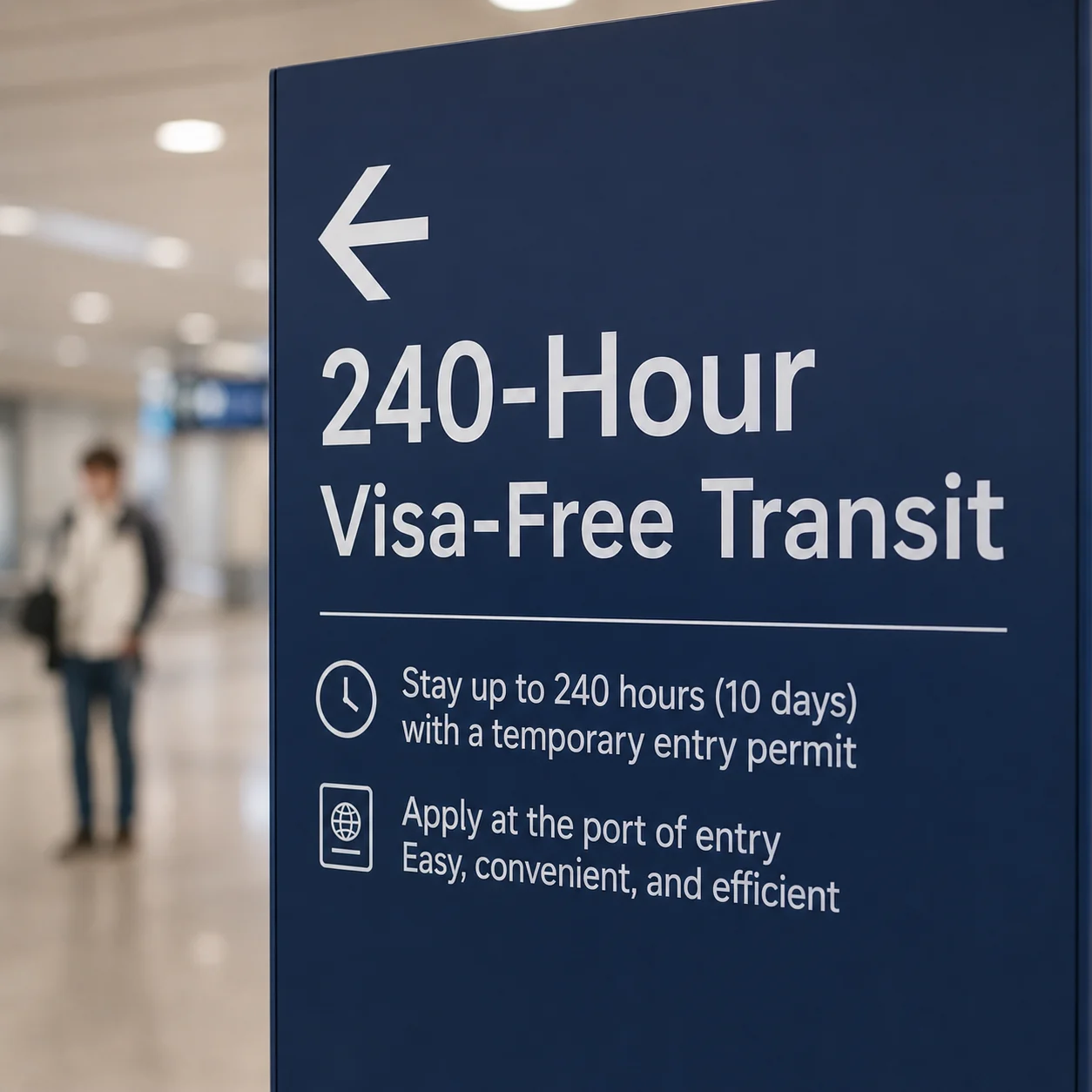
China can be visa-free for some travelers, but not in one single way. A 30-day visa-free entry mainly depends on your passport. A 240-hour transit depends on your route. This episode explains 免签, the Mandarin phrase for visa-free, and helps you understand which rule might apply to your trip.
TRANSCRIPT
PandaWu: Hello, this is 5 Minute Chinese from On The GreatWall. I'm PandaWu.
Emma: And I'm Emma.
Emma: I was looking at flights to China, and I thought, great, maybe I do not need a visa now. Then I saw two different phrases: 30-day visa-free entry, and 240-hour visa-free transit. And suddenly I was not sure which one applied to me.
PandaWu: That is a very common moment. China can be visa-free for some travelers, but not in one single way. The two rules people often mix up are 30-day visa-free entry and 240-hour visa-free transit.
Emma: They sound almost the same.
PandaWu: They do. But they answer different questions. The 30-day rule starts with your passport. The 240-hour rule starts with your route.
Emma: Passport for one. Route for the other. That already helps.
PandaWu: Good. Let us make it practical. Imagine you want to visit Shanghai for a week. Before you book anything, the first question is: does your passport qualify for China's 30-day visa-free entry?
Emma: So this rule is mainly about nationality.
PandaWu: Exactly. If your passport is from a country covered by the 30-day visa-free policy, and your visit purpose fits the rule, you may be able to enter China without applying for a visa in advance.
Emma: So if my passport is on the list, I can visit China directly?
PandaWu: Maybe, but you still need to check the latest official details. Policies can change, and the reason for your visit matters. But yes, the basic idea is simple: the 30-day entry rule begins with your passport.
Emma: Okay. Then what about the 240-hour transit rule?
PandaWu: That one is different. Think of it as the route question. You are not just asking, what passport do I hold? You are asking, where am I coming from, and where am I going next?
Emma: So this is where the word "transit" matters.
PandaWu: Exactly. Imagine you fly from London to Shanghai, stay for three days, and then fly on to Tokyo.
Emma: So China is not the final destination. It is the stop in the middle.
PandaWu: Right. That is why it may count as transit. You are passing through China on your way to a third place.
Emma: That feels pretty clear. But I can also see where someone might get it wrong.
PandaWu: Here is the common trap. Someone sees "240-hour visa-free transit" and thinks, great, I can fly from London to Shanghai, spend a week there, and then fly back to London.
Emma: But that is not really transit.
PandaWu: Correct. That is a round trip. You are going from London to China and then back to London. For transit, China usually needs to be the middle stop between one place and another place.
Emma: So London to Shanghai to Tokyo may work. London to Shanghai to London is a different situation.
PandaWu: Exactly. That one sentence can save travelers a lot of confusion.
Emma: I can imagine standing at the airport counter and realizing I checked the wrong rule.
PandaWu: That is the stressful version. Picture arriving at Shanghai Pudong Airport. You have your passport, your hotel booking, and your onward ticket. The officer is not just asking whether you want to visit China. The real question is: which visa-free rule are you using?
Emma: Passport-based entry, or route-based transit.
PandaWu: Yes. If you mix them up, the problem may not appear when you read a social media post. It may appear when you try to board the plane, or when you reach immigration.
Emma: That is exactly what travelers want to avoid.
PandaWu: And that is why we added a free Visa-Free Checker on On The GreatWall. You enter your passport and your travel route, and it gives you an early idea of which visa-free rule may fit your trip.
Emma: So not an official decision, but a way to check before booking or flying.
PandaWu: Right. It cannot promise what immigration will decide. You should still check the latest official policy before you travel. But it helps you ask the right question early.
Emma: That sounds useful because the words online can be a little misleading. "Visa-free" sounds simple, but the details are doing a lot of work.
PandaWu: Exactly. And the useful Chinese phrase today is:
PandaWu: 免签
Emma: 免签
PandaWu: It means visa-free. 免 means exempt, or without. 签 is short for 签证, which means visa.
Emma: So 免签 is the word people may see in travel news, airport notices, or policy updates.
PandaWu: Yes. But seeing 免签 does not mean every traveler can enter China in the same way. It only tells you that some kind of visa-free rule may exist.
Emma: So the real question is not just, is China visa-free?
PandaWu: Right. The better question is, which visa-free rule fits my trip?
Emma: For the 30-day entry, check your passport.
PandaWu: For the 240-hour transit, check your route.
Emma: And if your route is not really transit, do not assume the transit rule applies.
PandaWu: Exactly. A simple way to remember it is this: passport for entry, route for transit.
Emma: Passport for entry. Route for transit. And the phrase is 免签.
PandaWu: Visa-free. Useful, but not automatic for every trip.
Emma: So before someone books a China trip, they should check their passport, check their route, and check the latest official rules.
PandaWu: And if they want a clearer starting point, they can try the free Visa-Free Checker on On The GreatWall before they fly.
Emma: That makes the answer feel much less confusing. China may be visa-free for you, but first you need to know which door you are using.
PandaWu: That is a good way to put it. One door starts with your passport. The other starts with your flight route.
PandaWu: Once again, our five minutes are up, but if you'd like to hear more authentic stories about Chinese food, history and culture, you can head to our topic page on our website, onthegreatwall.com. See you again soon. But for now, it's goodbye.
Mini Quiz
Question: What is the biggest misunderstanding about China's visa-free rules?
A. Visa-free always means every traveler can enter China for 30 days without checking anything.
B. China has different visa-free rules, and travelers need to check both their passport and their route.
Answer: B. Some rules depend on nationality, while transit rules also depend on where you come from and where you go next.
Useful Examples
- Example免签 PinyinMiǎn qiān MeaningVisa-free.
- Example签证 PinyinQiān zhèng MeaningVisa.
- Example过境 PinyinGuò jìng MeaningTransit through a place on the way to somewhere else.
More Podcast Episodes
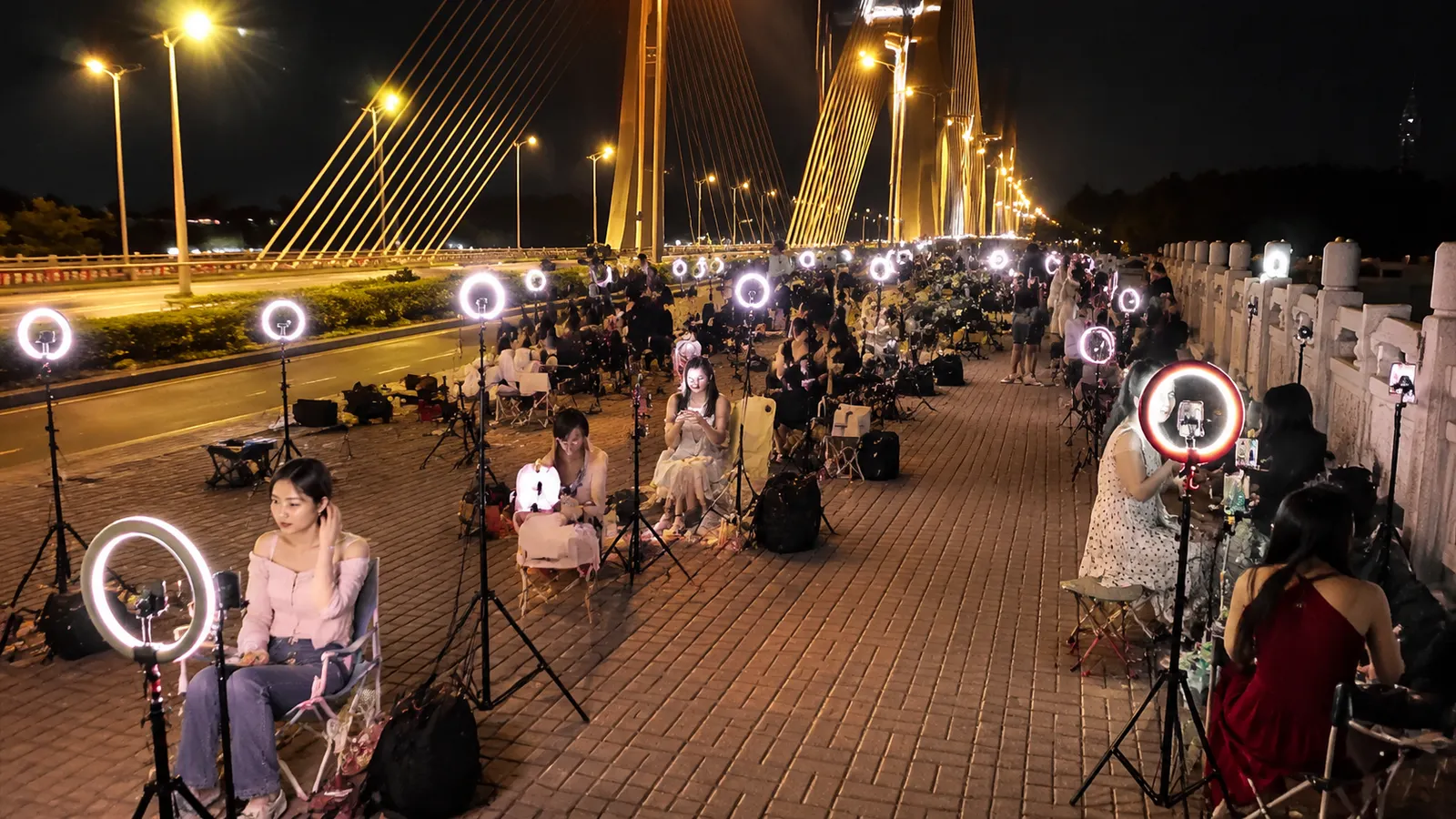
Why Do Chinese Streamers Go Live in Wealthy Areas?
27 Jul 2026
Emma finds a glowing row of roadside streamers and learns why wealthy neighborhoods, cold nights and virtual gifts are all part of the attention game.

Why Do Chinese Malls Feel Like Indoor Cities?
25 Jul 2026
Emma entered Guangzhou's Wanda Plaza for one HEYTEA. Seven hours later, she had new nails, an IMAX ticket and two unusual bags of chips.

Which Chinese City Should Food Lovers Visit First?
21 Jul 2026
PandaWu spent more than a decade in Guangzhou. Here is why he recommends its dim sum, roast meats, desserts, and late-night food.