A carver named Zhou presses his chisel into a block of river ice the size of a sedan. The temperature is twenty-five degrees below zero. His breath leaves his mouth in thick white clouds that freeze instantly against his scarf. Each strike of his mallet sends a spray of ice crystals into the air, glittering like broken glass in the pale afternoon sun. He has been standing on this scaffolding for six hours, and he will stand here for six more, because the block in front of him is destined to become the turret of a frozen cathedral that will draw three million visitors before it melts.
The River Gives, the River Takes
Every December, men in rubber boots walk onto the frozen Songhua River with long saws. The ice beneath their feet is more than half a meter thick, solid enough to hold trucks, clear enough in places to see the dark water rushing underneath. They cut the surface into rectangular slabs two meters long and one meter wide, each weighing roughly seven hundred kilograms. The sound of the saws is high and metallic, like violin strings being scraped by a bow. When a slab breaks free, workers slide it onto a flatbed truck using long metal poles and brute strength. The ice is so cold it burns bare skin on contact.
These blocks are the bones of the festival. Twenty thousand of them will be stacked, carved, and illuminated over the next three weeks. The largest sculptures rise thirty meters into the air, taller than a ten-story building, yet they are made of the same frozen water that flows past Harbin every spring. The river gives the city its building material, and the river always takes it back.
Building a City That Will Not Last
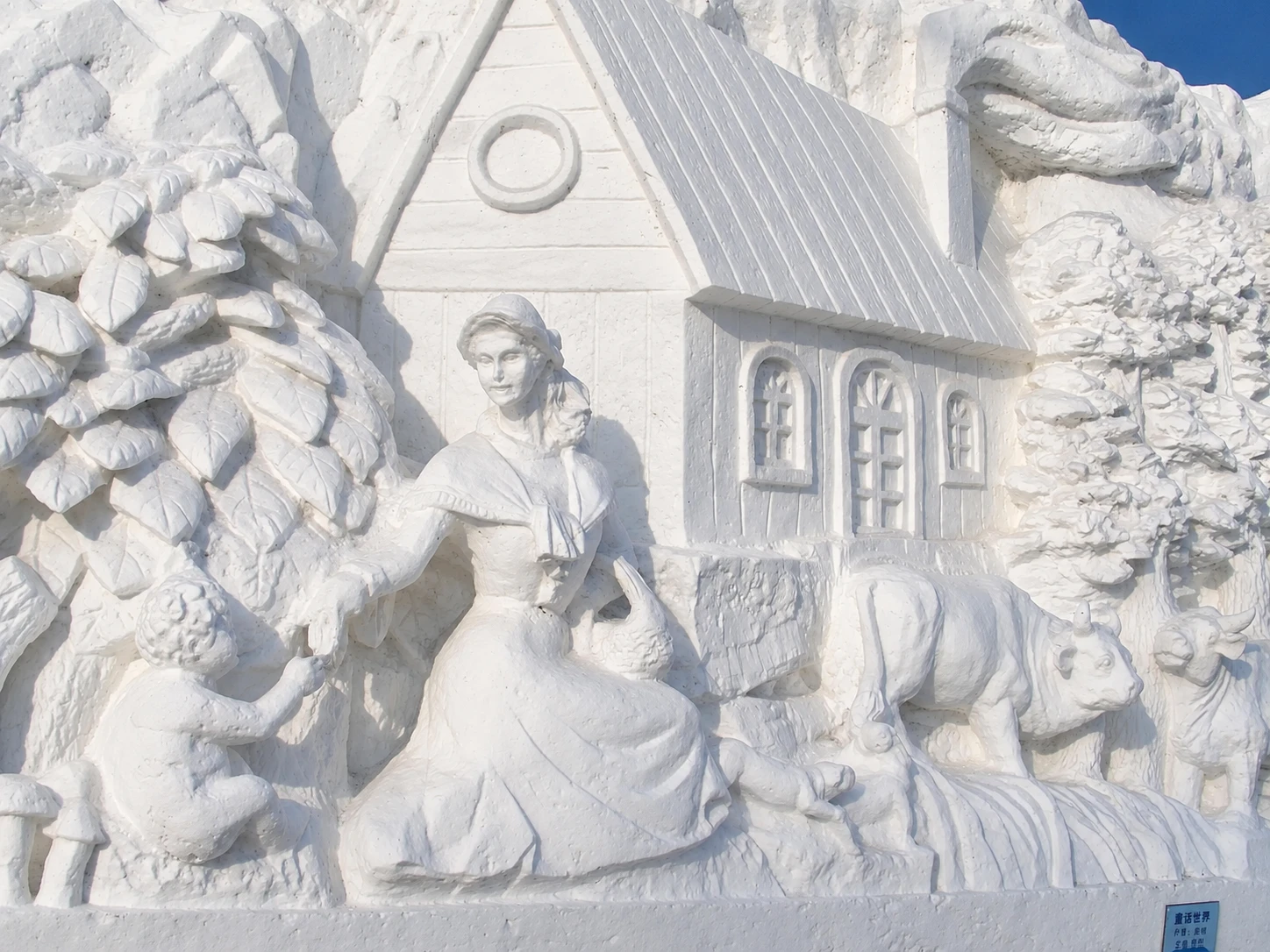
Zhou learned to carve ice from his father, who learned from his father before him. The technique has not changed much in fifty years. A rough outline is sketched onto the surface with charcoal. Large electric saws remove the excess. Then come the chisels, a dozen different widths, each one leaving a distinct texture on the ice surface. The final step is polishing, which Zhou does with a block of fine sandpaper wrapped around a wooden handle. When he holds a flashlight against a finished wall, the light diffuses through the ice like it is passing through frosted glass.
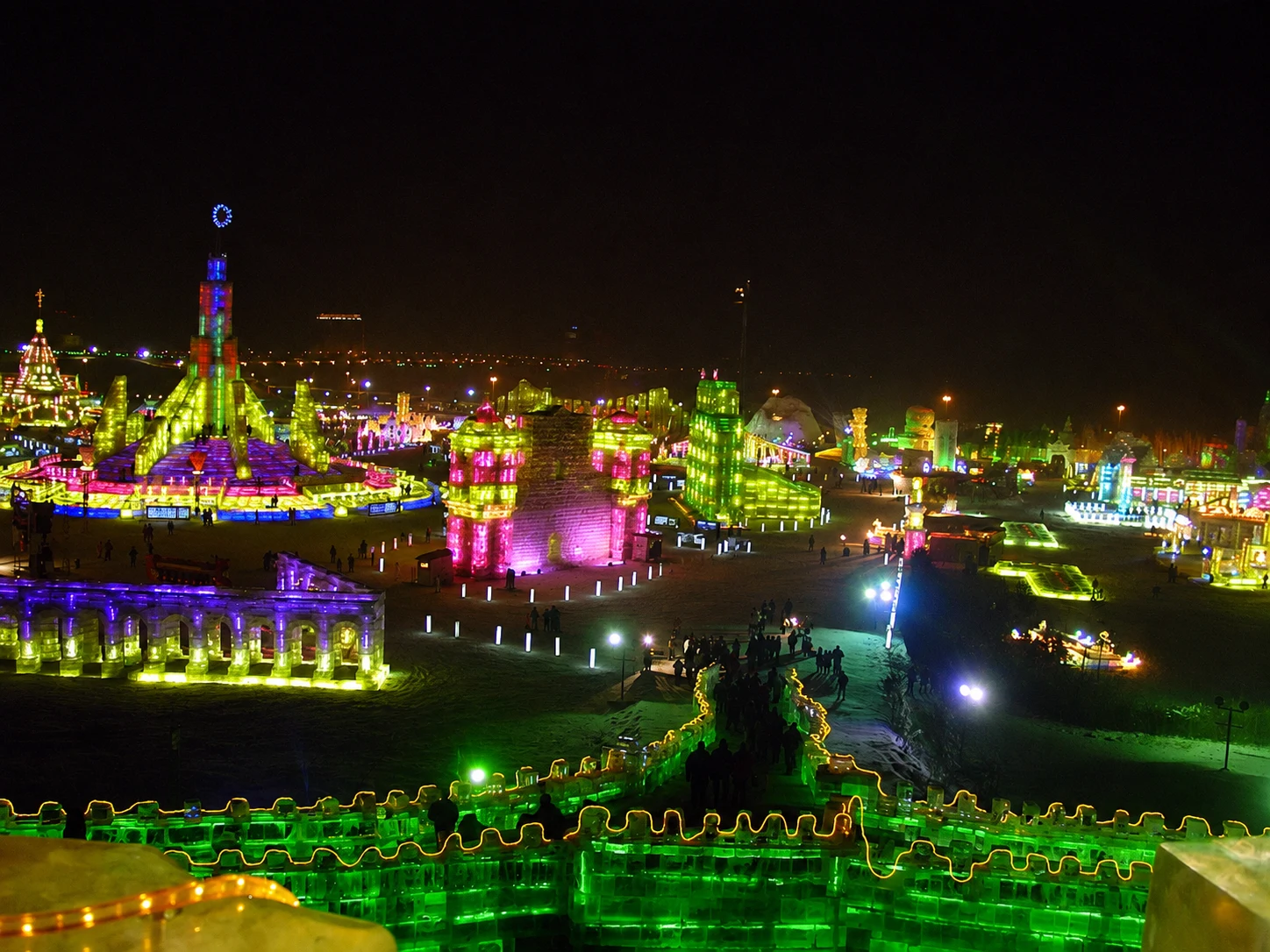
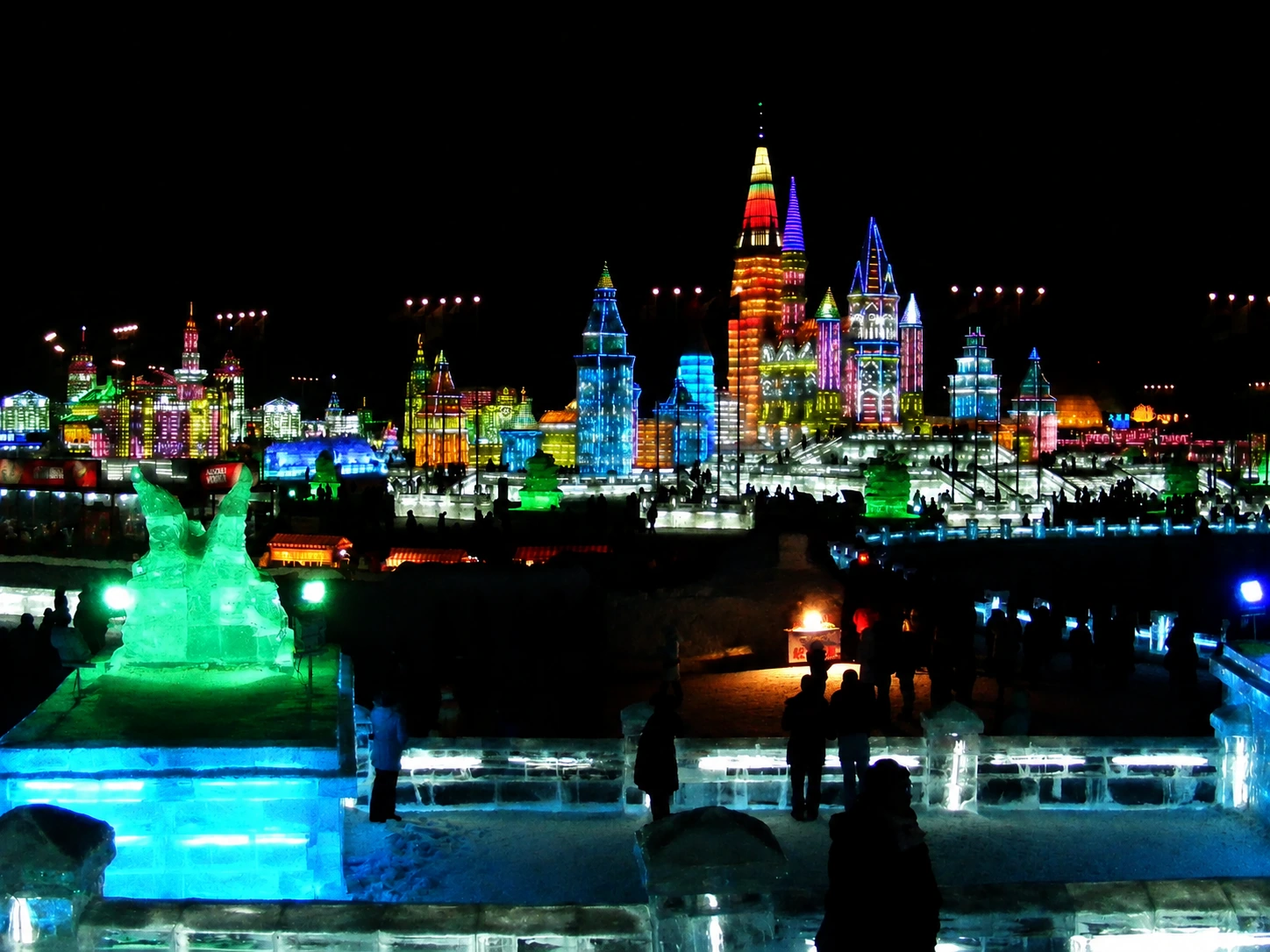
The work happens mostly at night under floodlights, because daylight hours in Harbin's winter are brief. The carvers work in shifts around the clock. By mid-December, a temporary city rises on the west bank of the river: ice pagodas, ice castles, ice versions of famous landmarks from Moscow to Beijing. There is an ice slide wide enough for six people to descend side by side, and an ice maze where children run until their cheeks turn red and their parents call them back.
When the Lights Find the Ice
The transformation happens at dusk. Strings of LED lights, buried inside the sculptures during construction, flicker on one circuit at a time. Zhou climbs down from his scaffolding and walks to the entrance gate he carved three days ago. He stands among the first visitors, families in puffy down jackets, couples holding gloved hands, a grandmother taking a selfie in front of an ice replica of Saint Basil's Cathedral. The lights shift from blue to purple to gold, and the ice catches every color, amplifies it, sends it glowing through walls thick enough to stop a car.
A young boy presses his face against the side of an ice sculpture of a dragon. His mother tries to pull him away, but he stays there, mouth open, watching the light change inside the ice from the other side. The surface is so cold it sticks to his skin for a second when he pulls back. He laughs. His breath hangs in the air like a small ghost.
The Return to Water
By eleven at night, the temperature has dropped to thirty below. The last tourists board buses back to their hotels. The floodlights shut down in sections, leaving the sculptures dark and silent. Zhou makes one final walk through the grounds before going home. In the darkness, the ice structures look like the ruins of a civilization that vanished overnight. He runs his hand along a wall he carved, feeling the tool marks he left behind. Already, invisibly, the surface is sublimating into the dry winter air, losing a millimeter of thickness each day.
The festival will close in February. By March, bulldozers will knock the remaining walls flat, and the Songhua River will reclaim its water. Zhou will rest for a month, then begin sketching designs for next year. The city he built will be gone, but the river will freeze again, and the saws will return, and the light will find its way through new ice.
For visitors, Harbin's frozen city is only half of winter. The other half waits indoors, where families gather around a bubbling iron pot stew and let the same cold become a reason to stay at the table.