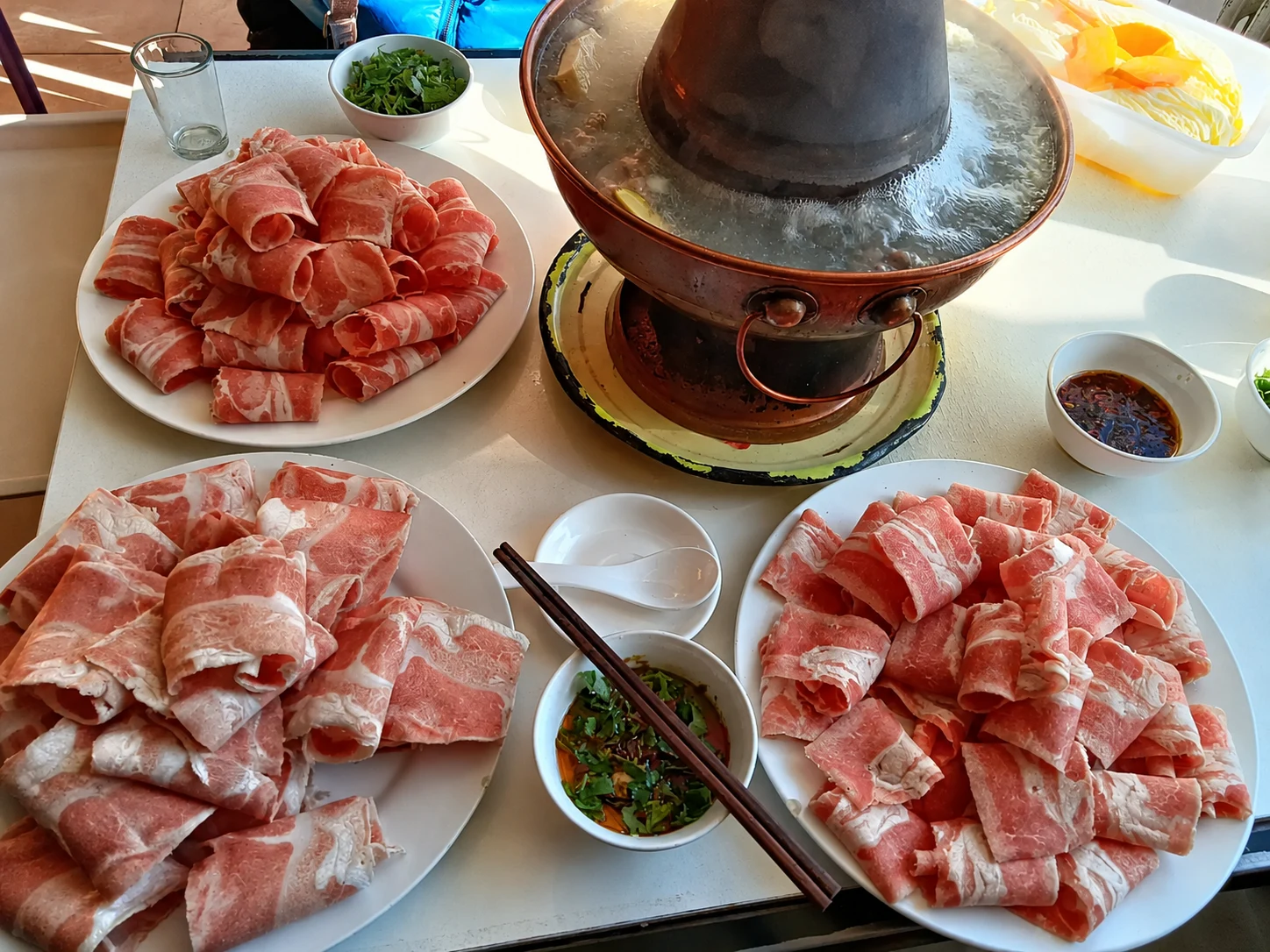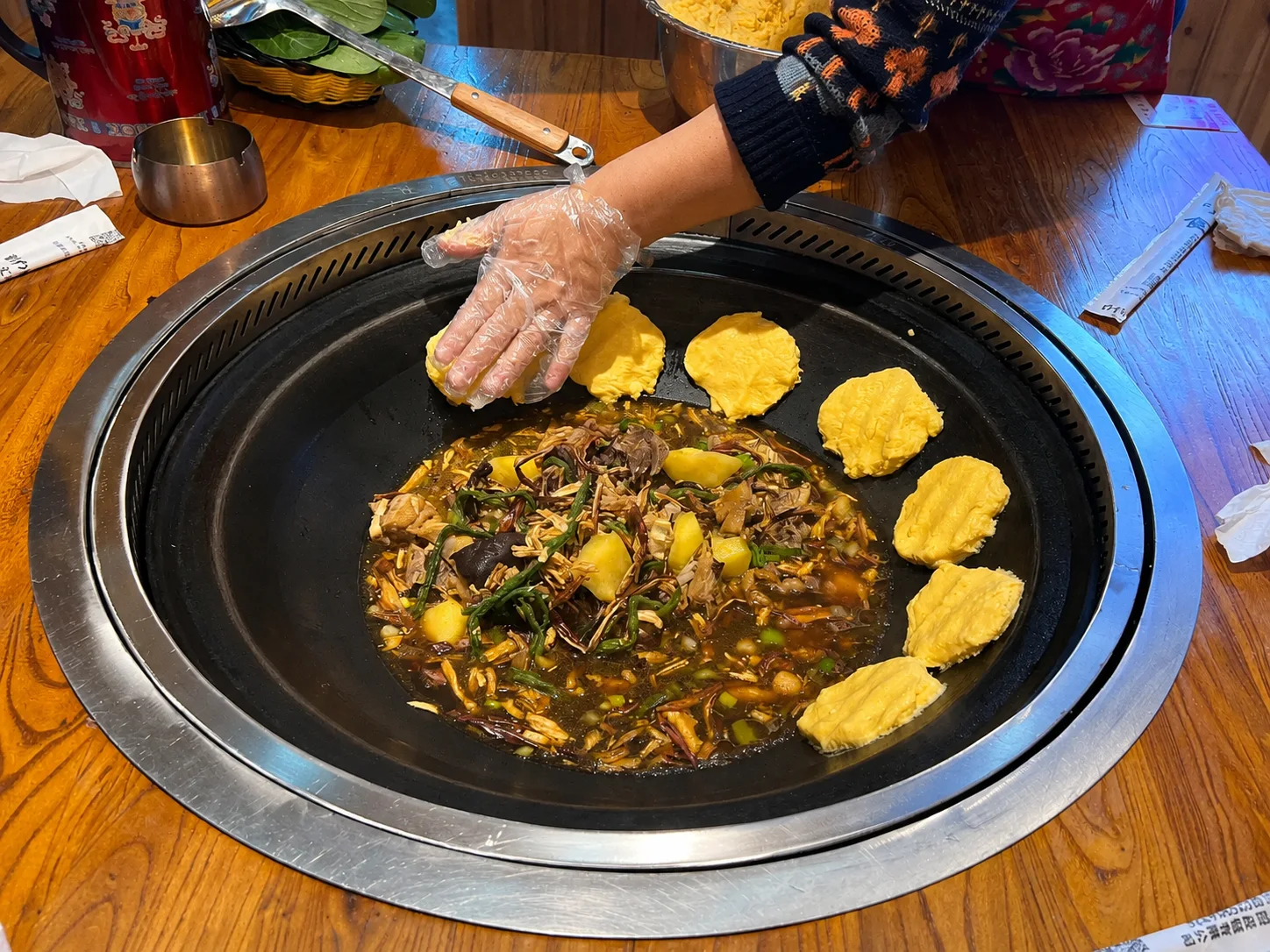
The waitress does not ask if you are ready. She simply grips the cast iron lid with both hands, braces her knees, and lifts. A cloud of steam erupts upward, filling the small private room with the smell of pork bones that have been simmering for four hours in soy sauce, star anise, and cinnamon bark. The steam is so thick and hot that for a moment you cannot see the pot at all. Then it clears, and there it is: a black iron basin the size of a wagon wheel, crammed with meat, potatoes, corn on the cob, glass noodles, cabbage, and dried tofu sheets, all bubbling together in a broth the color of dark caramel.
The Weight of the Pot
The pot itself is the story. In Northeast China, every farmhouse once owned at least one cast iron vessel thick enough to stop a bullet and heavy enough to crack a floor. These pots were not bought in stores. They were forged in local foundries from iron mined in the nearby mountains, passed down through generations, seasoned by decades of fire until their interiors turned black and slick as obsidian. A full pot weighs twenty kilograms empty. Filled with stew, it requires two people to lift.
The material matters. Cast iron holds heat the way a stone wall holds warmth after sunset. Long after the wood fire beneath it has burned to embers, the pot continues to bubble. In a Harbin winter, when temperatures drop to thirty degrees below zero and the wind off the Siberian plain cuts through every layer of clothing, this sustained heat is not a luxury. It is survival. The same cold that hardens the walls of Harbin Ice and Snow World makes the heat around this table feel necessary rather than decorative.
What Goes Beneath the Lid
The standard order at any tieguodun restaurant begins with pork backbone, the vertebrae still connected by cartilage that softens into gelatin after hours of simmering. The butcher splits the bones lengthwise so the marrow can leak into the broth. To this, the cook adds whole ears of sweet corn, chunks of russet potato that dissolve at the edges to thicken the liquid, and wide ribbons of napa cabbage that wilt into silky strands.
The secret ingredient is time. The pot sits over a wood fire for at least three hours before it ever reaches a table. During this slow baptism, the fat from the pork renders and floats to the surface, carrying with it the aromatic oils of star anise, Sichuan peppercorn, dried chilies, and ginger. The broth reduces. The flavors compress. By the time the lid comes off, what started as water and raw meat has become a dark, sticky, intensely savory liquid that coats the tongue like velvet.
The Fire Under the Table
In the oldest restaurants, the pots are not cooked in a kitchen and then carried out. They are cooked at your table. A brick-lined fire pit is built into the center of the dining surface, and real wood, usually pine or birch, is loaded into the pit until the flames rise high enough to lick the bottom of the pot. Diners sit on wooden benches around the fire, peeling off layers of winter clothing as the room temperature climbs.
A cook arrives every twenty minutes to stir the pot and add more wood. The sound of the fire, the bubbling broth, and the clank of the iron ladle against the pot wall fill the room. Outside, snow falls against the windows. Inside, faces glow red from the heat. The boundary between cooking and eating dissolves. You are not a customer watching a performance. You are a participant in a ritual that has kept this region alive for centuries.
Corn Bread on the Rim
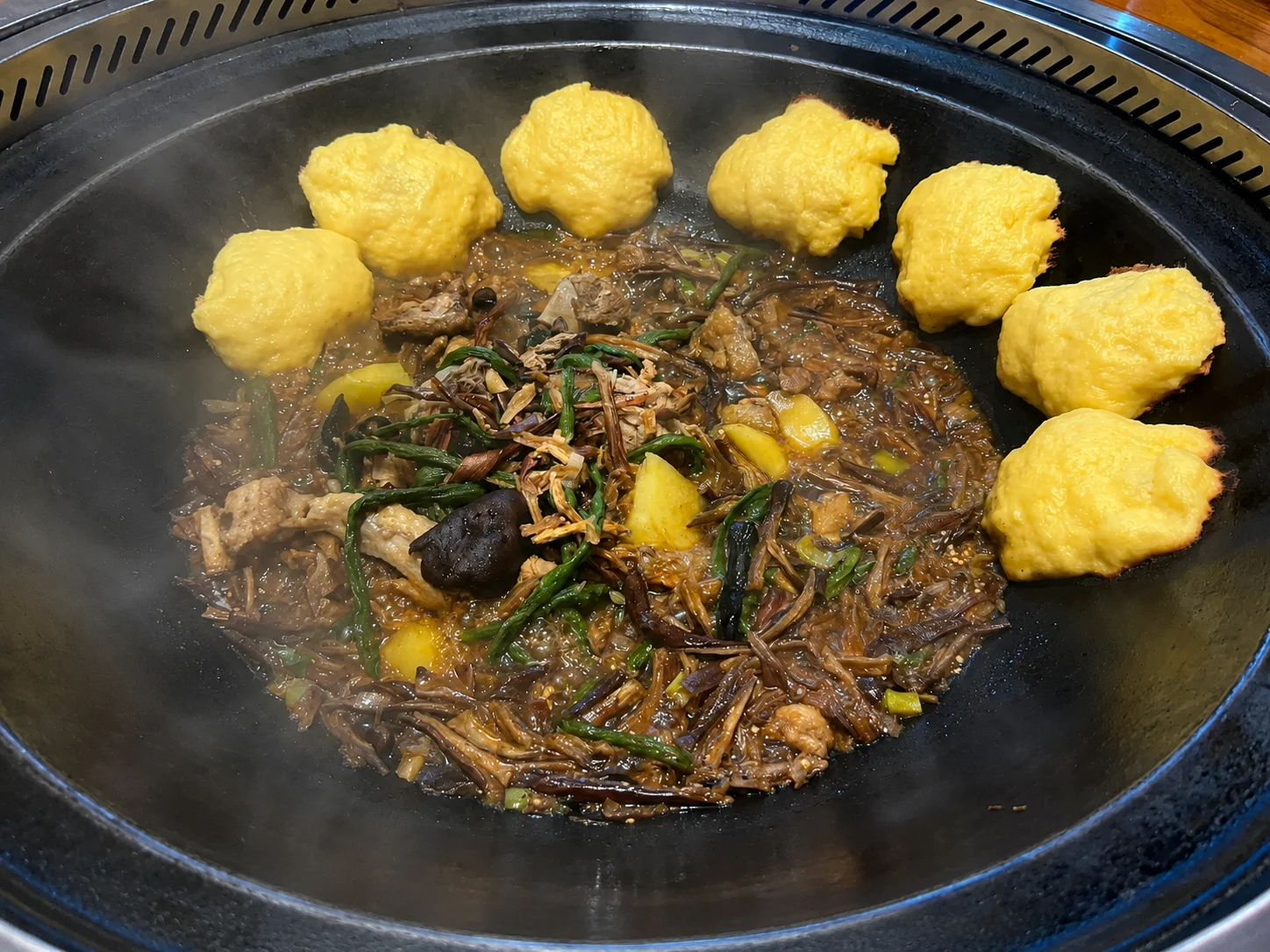
Halfway through the meal, the waitress returns with a bowl of wet cornmeal dough. She shapes it with her hands into small patties and slaps them onto the inner rim of the pot, where the metal is hot enough to sear but not so hot it burns. The patties stick there, half submerged in the bubbling broth, half exposed to the dry heat of the lid. By the time the main course is finished, the corn bread is ready. The bottom half has absorbed the pork fat and broth, turning soft and rich. The top half has crusted over into a golden, crackling shell. You peel it off with your fingers and eat it standing up, because the heat is too intense to sit still.
The Empty Pot
The meal ends when the broth has reduced to a thick sauce and the potatoes have fallen apart completely. The fire in the pit has burned down to gray ash. The iron pot, now cooling, makes ticking sounds as the metal contracts. Outside, the temperature has dropped another five degrees, but you do not feel it. The heat of the pot has settled into your bones, and it will stay there for hours.
The waitress returns to clear the table. She lifts the pot with both hands, her forearms straining, and carries it back to the kitchen, where it will be scrubbed with coarse salt and prepared for the next group of diners. The fire pit is swept clean. The window fogs over from the contrast of warm air and frozen glass. In Harbin, winter lasts six months, and every night, the iron pots do their work.
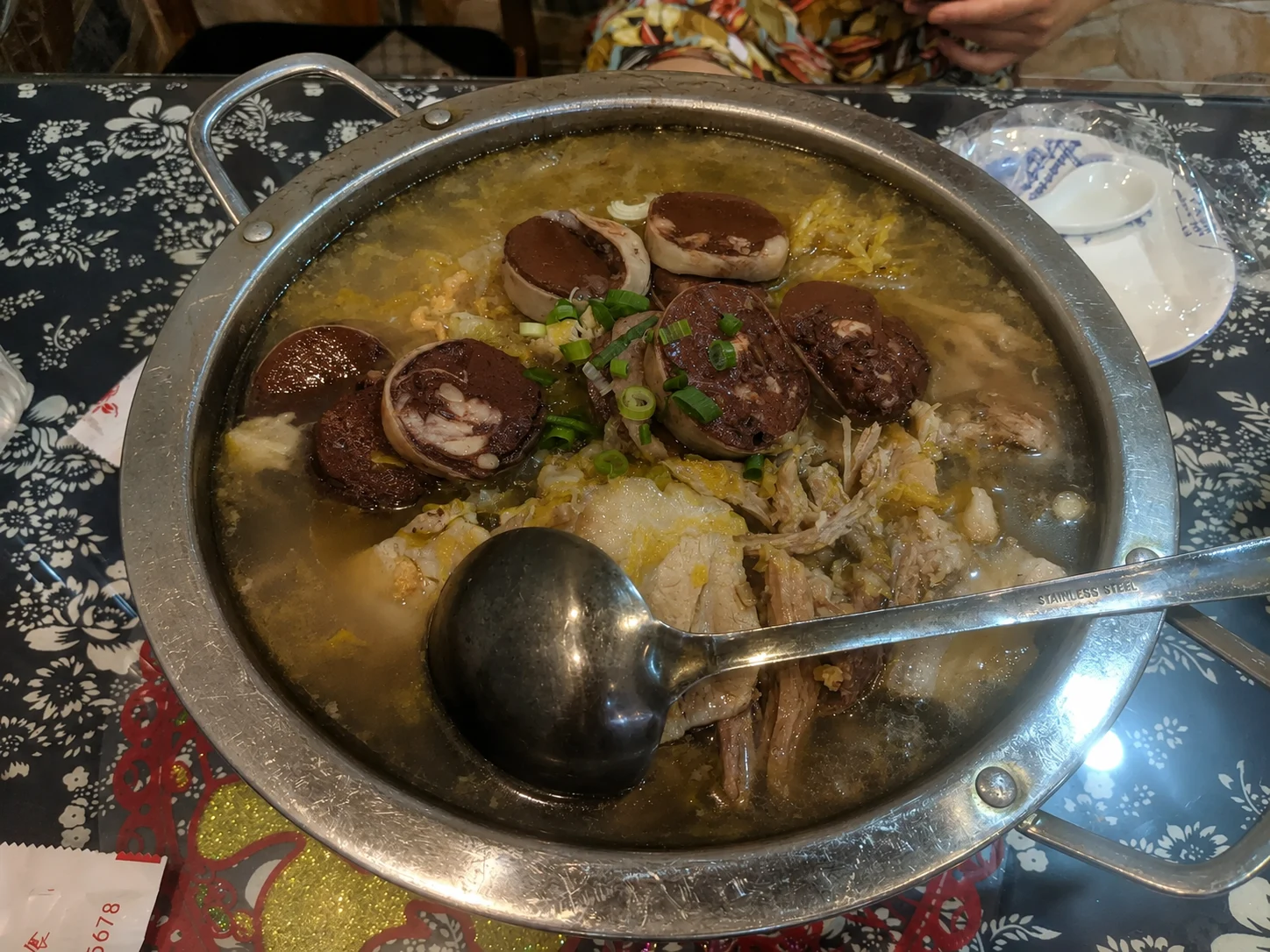
In villages beyond the city, another communal pot begins with the annual Northeast pig slaughter feast, when pork, blood sausage, and pickled cabbage turn winter preservation into a meal shared across households.