A thin metallic note cuts through the clink of covered tea bowls.
At a Chengdu teahouse, that sound may come from a small fork in an ear cleaner's hand. Beside it sits a case of slender metal tools, soft brushes, and feathers. The customer leans back in a bamboo chair. Everyone else keeps talking.
The scene creates two opposite reactions at once. The tools look precise enough to make a first-time visitor tense. Yet the people nearby treat the service as one more part of the afternoon, no stranger than refilling a cup of tea or beginning another game of cards.
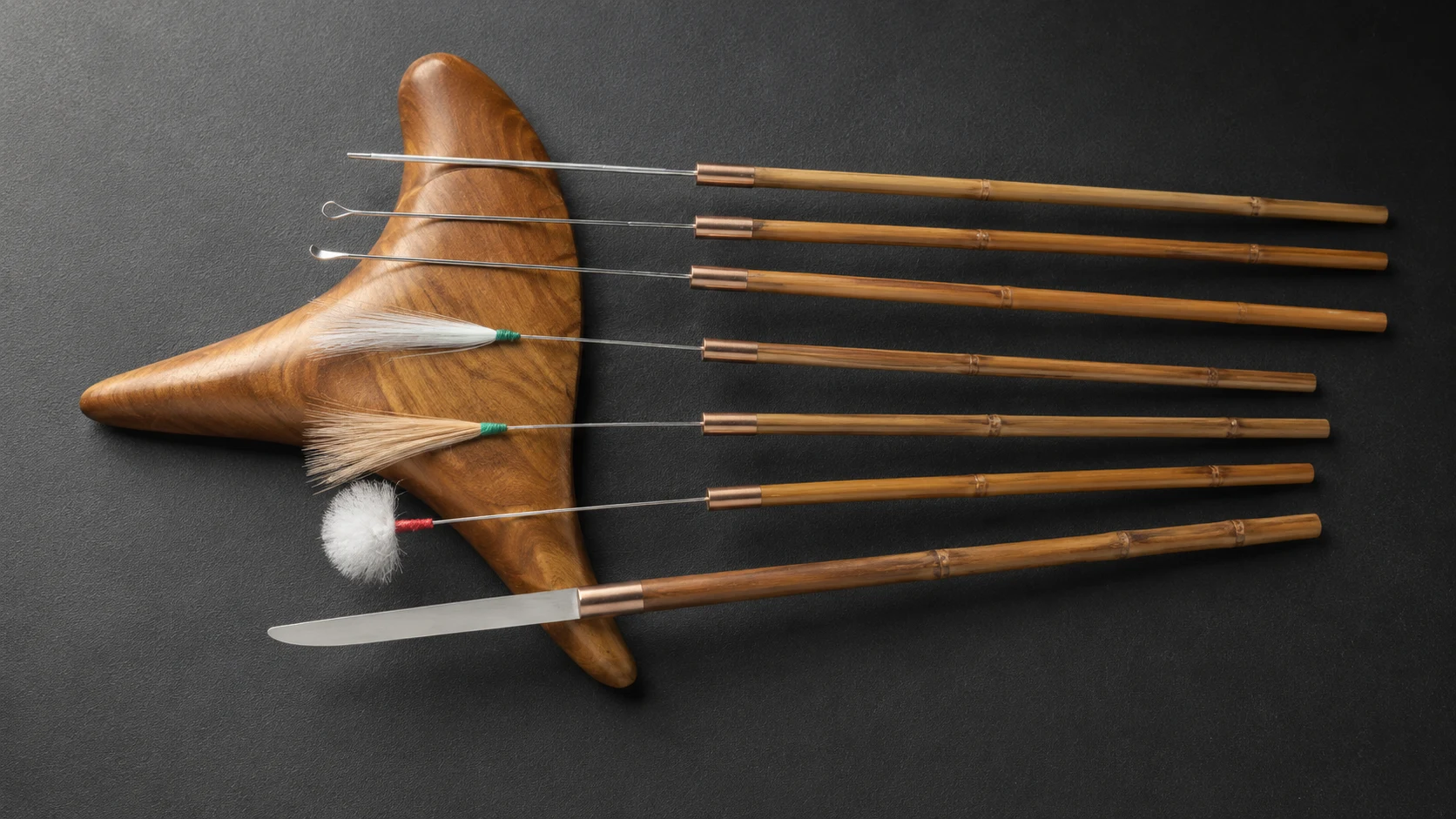
This is *cai er*, commonly translated as "ear picking" or "ear cleaning." The service exists beyond Chengdu, but the city has made it unusually visible in teahouses, parks, and tourist streets.
What happens when those tools reach the ear? And how did an act that feels private in many places become something people do in full public view?
The Tools Look More Alarming Than the First Touch
There is no single sequence followed by every ear cleaner. An outdoor practitioner in People's Park, a worker in a teahouse, and a specialist in a modern shop may use different tools and offer different versions of the service.
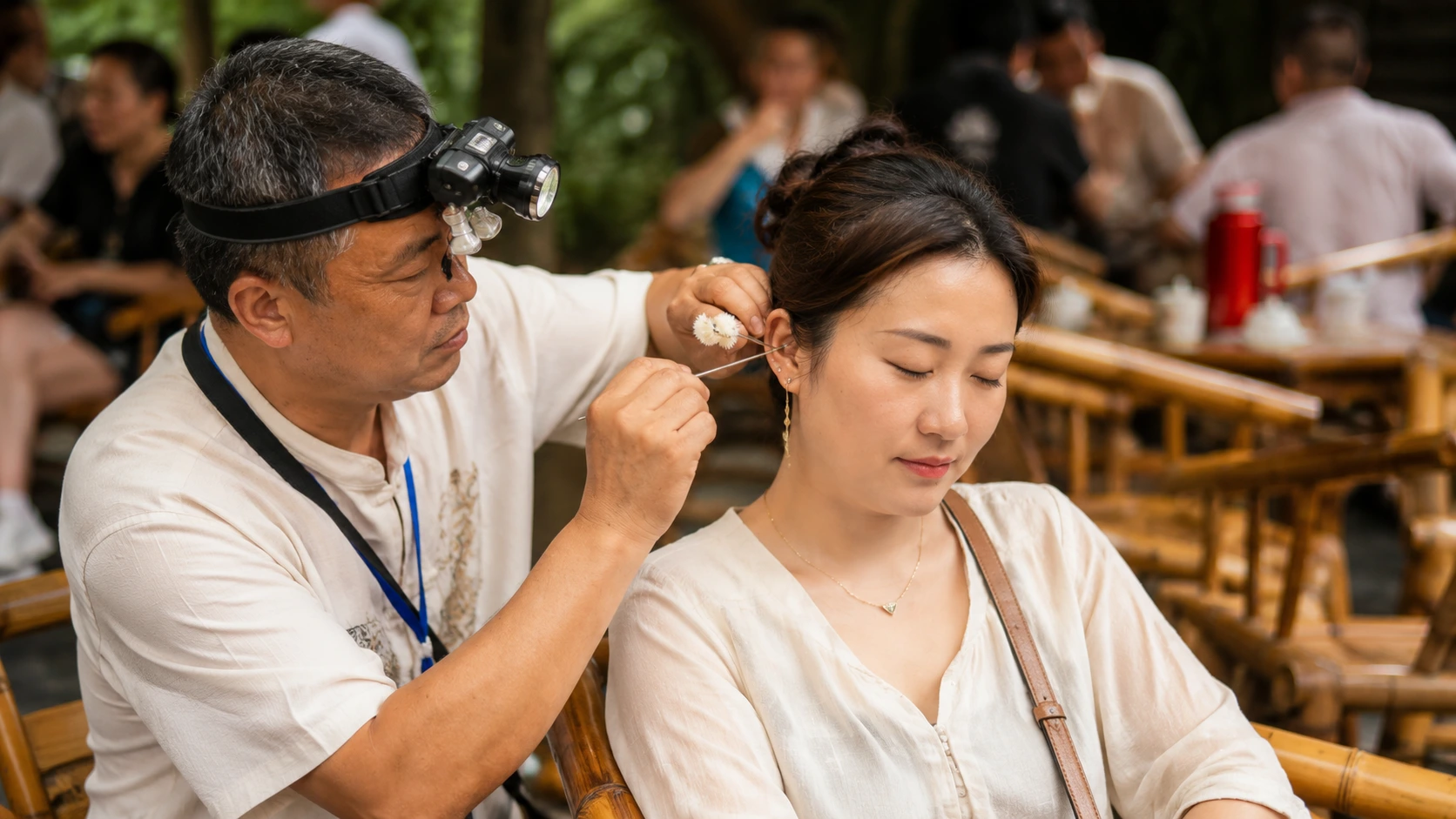
A typical session begins with looking. The cleaner may wear a headlamp and gently adjust the outer ear before choosing a small scoop or another fine metal instrument. The customer is expected to remain still while the tool works close to the ear canal. That contrast is part of the spectacle: one person performs tiny, controlled movements while the rest of a noisy public space continues around them.
I had my first ear cleaning while traveling in Chengdu. I was sitting over tea in People's Park when a bright metallic *ding* began sounding among the tables. The ear cleaners carried tuning forks and struck them as they walked, letting the note travel ahead of them. It was practical advertising: the unfamiliar sound made people turn their heads and wonder what all those slender tools were for.
When one practitioner passed my chair, I glanced almost without thinking at the long ear picks in his kit. He caught the look immediately. That moment of curiosity was enough. With the familiar traveler's thought of "I'm already here," I paid for a 15-minute session.
He began by wiping the outer ear with a disinfecting tissue. Then he selected a long, narrow scoop and slowly removed wax from the ear canal. I had never let anyone else clean my ears before. At first, every small movement felt tense and strangely intimate; I was acutely aware of the metal tool and the need to keep still. As the minutes passed, the strangeness softened into a light tingling sensation.
Once the cleaning was finished, the service shifted from practical to sensory. A feather brushed around the ear, followed by the close vibration of the tuning fork. The sound seemed to travel through the side of my head, sending a brief shiver across my scalp. The exact sequence and purpose of these tools vary, so my experience should not be mistaken for a standard medical procedure.
For the customer, the strongest feeling may arrive before the first touch. The eye sees a long metal tool. The body imagines what could go wrong. Only then does the actual sensation begin.
Cleaning Is Only Part of the Experience
If removing earwax were the whole point, the feathers and ringing metal would be difficult to explain. Chengdu ear cleaning also sells attention, sound, stillness, and a sequence of small sensations.
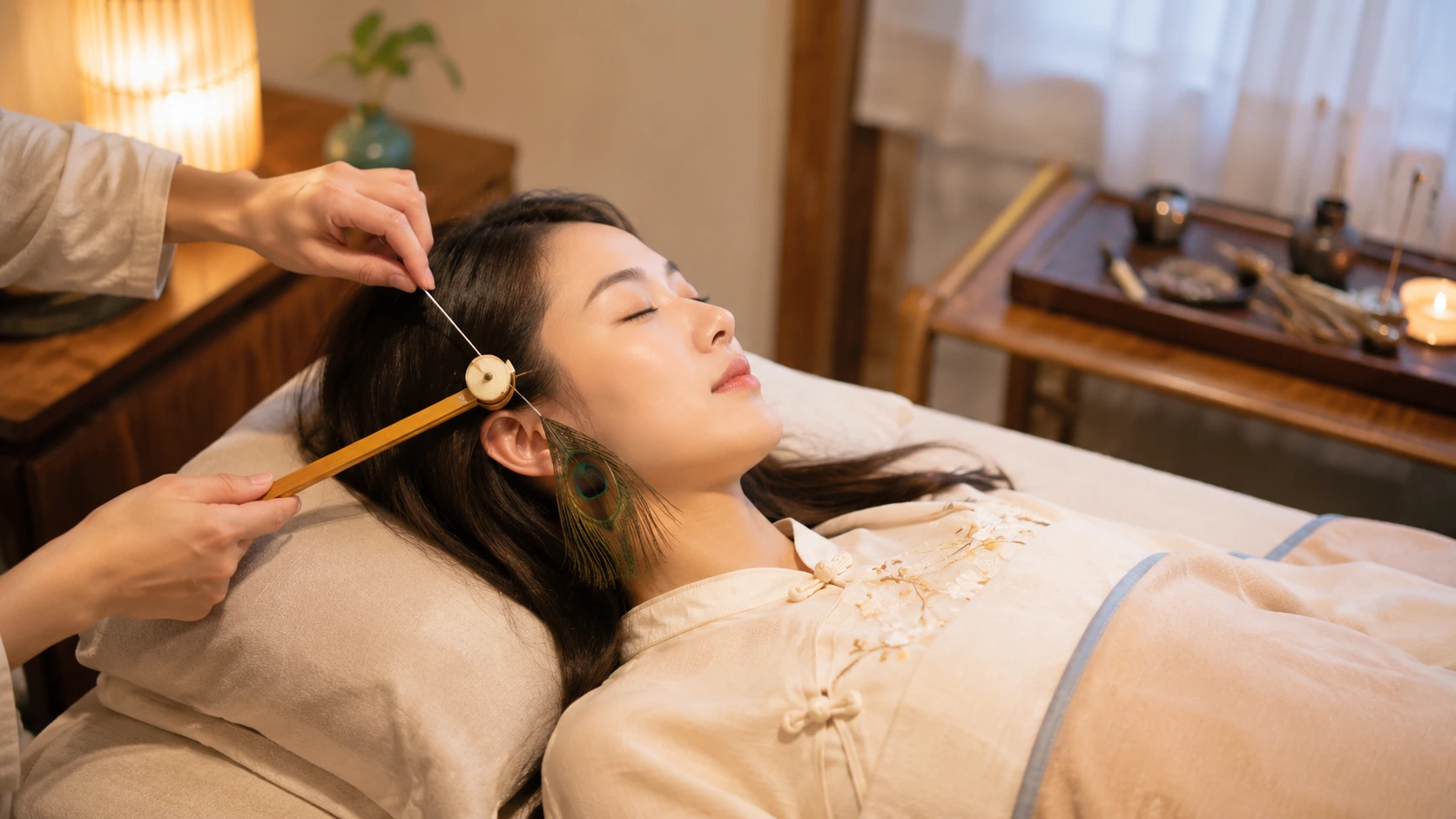
The cleaner works while the customer does almost nothing. A faint scrape may be followed by a tickle around the ear. A brush passes over the skin. A vibration seems louder because it is so close to the head. This is why travel videos often frame the service as a spa treatment or compare it with ASMR rather than ordinary personal hygiene.
That does not mean everyone relaxes. In one Reddit discussion, the person posting called the experience "addictive," while another traveler described it as frightening and said they could not enjoy it. Both reactions make sense. The same light touch that feels soothing to one person can feel intrusive to another.
Traditional ear picking is also not medical care. Hygiene and training can differ from one practitioner to another, and the service should not be presented as a treatment for tinnitus, hearing loss, or other ear conditions. NHS guidance warns against putting fingers, cotton buds, or other objects into the ear to remove wax, which can push wax farther inside. Anyone with ear pain, discharge, a known eardrum perforation, previous ear surgery, or an unexplained change in hearing should seek medical advice rather than treat a cultural experience as healthcare.
Even when the session feels pleasant, one question remains. Why does it happen beside strangers drinking tea?
The Teahouse Makes a Private Act Public
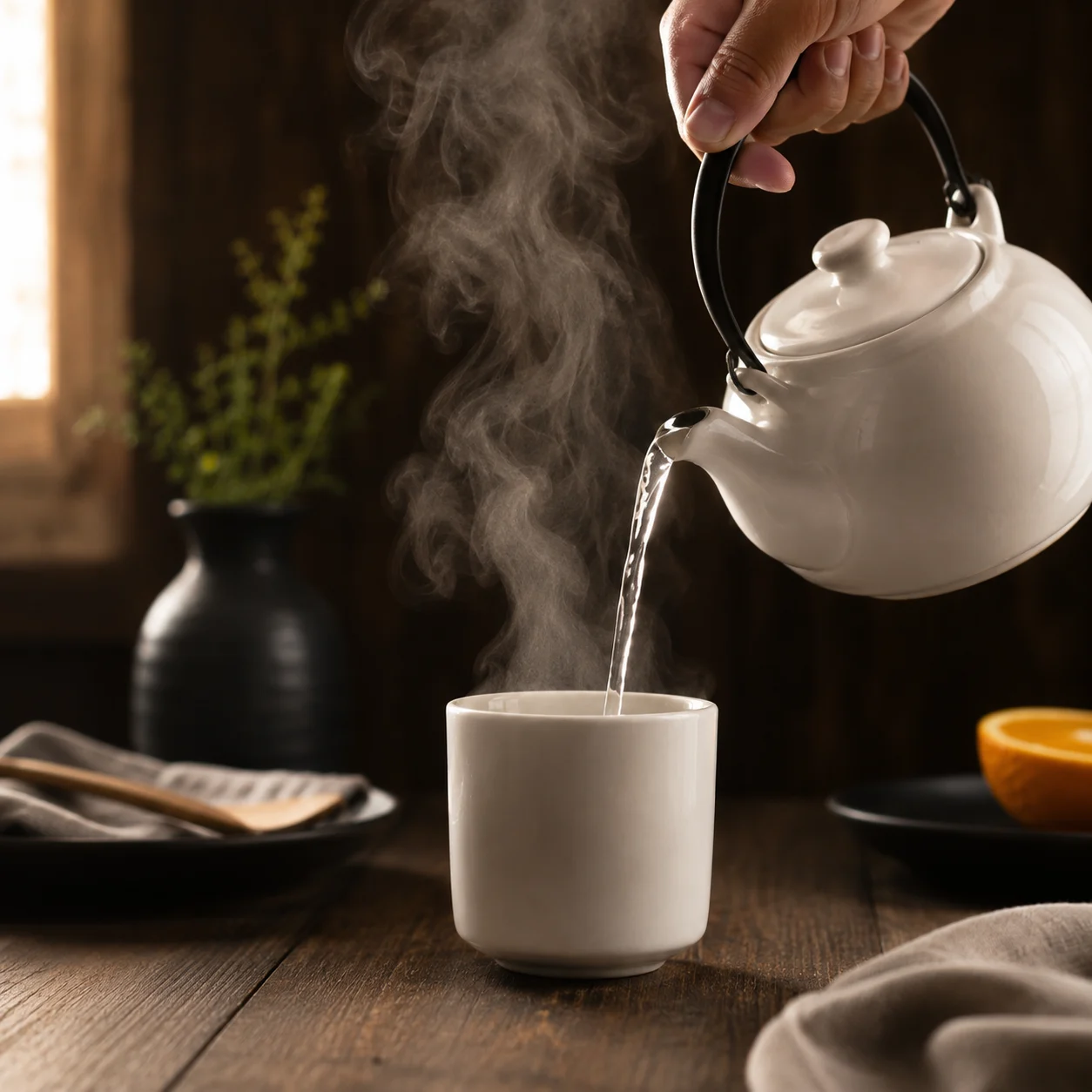
The answer begins with Chengdu's teahouse culture. A traditional teahouse sells tea, but it also supplies something harder to price: a chair and permission to remain.
People talk, read, watch the room, conduct small pieces of business, or let an afternoon pass. A game at the next table can last for hours. A customer does not need to keep ordering new drinks simply to justify staying. The space is commercial, but it also behaves like part of the neighborhood.
Historian Wang Di's work on Chengdu's public life shows that many people once made a living around these rooms. Ear cleaners, shoe shiners, fortune tellers, small vendors, performers, and other workers could find customers without owning a shop of their own. The tea drinker was already seated. The service came to the chair.
That arrangement changes the meaning of ear cleaning. It does not require a private appointment or a separate trip. It can be added to time that has already been set aside for tea. The customer leans back while companions continue their conversation. Other patrons may watch for a moment, then return to their bowls and games.
Sichuan's official description of a People's Park outing captures the combination in four details: a bamboo chair, a cup of covered-bowl tea, an ear cleaning, and a round of cards or chess. The ear cleaner is not isolated from the setting. The service belongs to the same loose collection of things a person can do while staying in the park.
This is also why Chengdu ear picking is more culturally revealing than a list of unusual tools. Ear cleaning exists elsewhere in China and across Asia. Chengdu's distinction is not ownership of the practice, but visibility. The city's teahouses gave the cleaner a moving workplace, the customer an available chair, and everyone else a view.
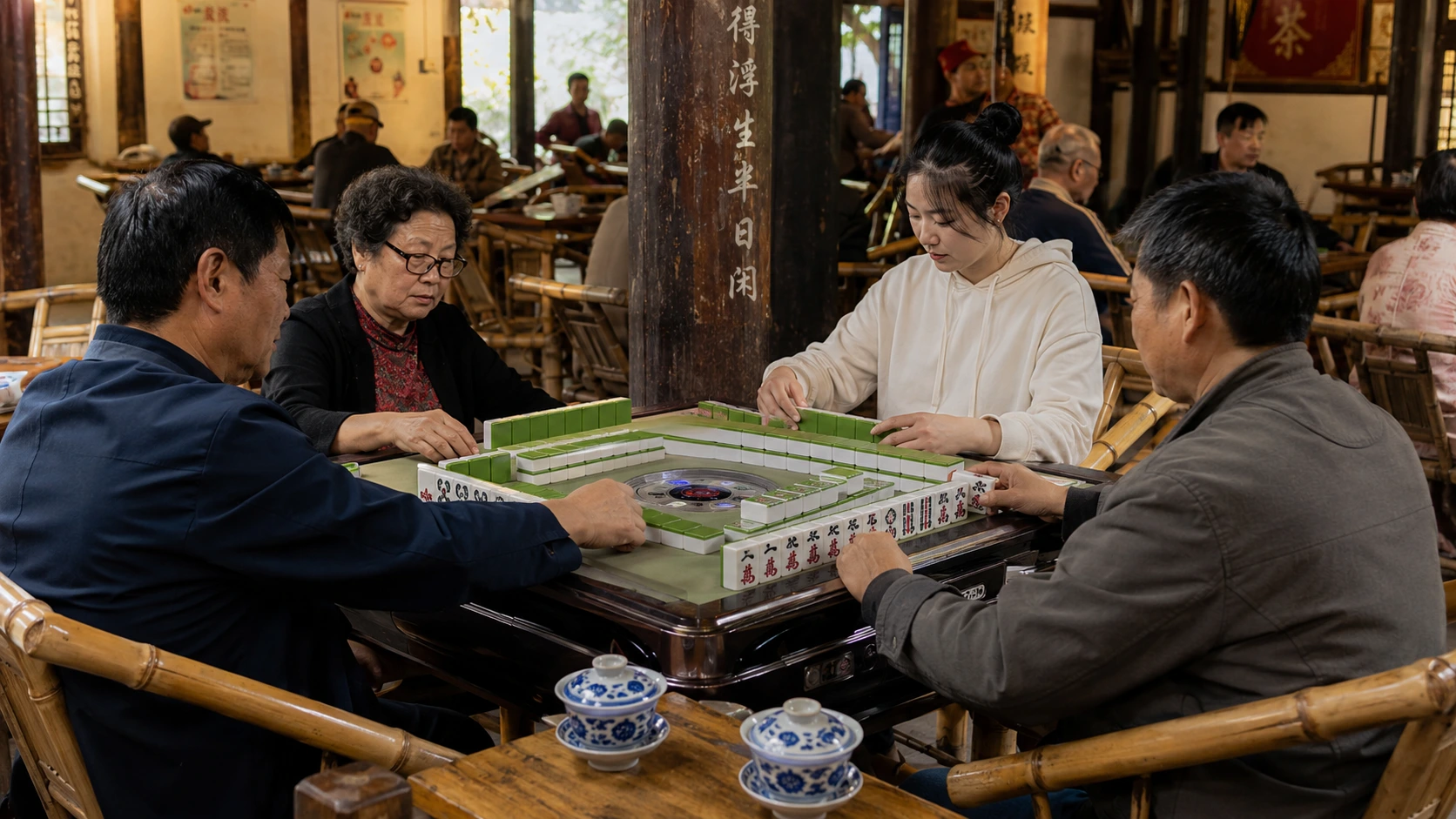
The same public space can hold another afternoon around a Chengdu mahjong table. In one corner, four people draw and discard tiles. In another, a customer closes their eyes while a metal tool moves beside the ear. Neither activity needs to become a special occasion.
In this corner of everyday life in China, private care becomes public leisure because the room has already made time shareable.
The Fork Rings for the Next Customer
The session ends without changing the rhythm of the teahouse.
The practitioner wipes or puts away the tools. The customer sits upright and reaches again for the covered tea bowl. A nearby conversation has continued through the whole procedure. Perhaps someone watched the feather brush for a few seconds. Most people did not need to.
Chengdu's ear cleaning can look startling when separated into a close-up video: metal prong, open ear, sudden vibration. Seen from across a teahouse, it becomes less like a stunt. It is one small service moving through a much larger public afternoon.
The cleaner closes the case and walks toward another table.
A moment later, the metal fork rings again.
Questions About Chengdu Ear Cleaning
What happens during Chengdu ear cleaning?
The steps vary by practitioner. A session may include examining the ear, using a small scoop or fine metal tool, brushing the outer ear, and adding a feather or vibrating instrument for sensation. It is a traditional leisure service, not a standardized medical procedure.
What does traditional Chinese ear cleaning feel like?
People describe different sensations, including light scraping, tickling, tingling, vibration, relaxation, or discomfort. The tools may look more intimidating than they feel, but no experience is guaranteed to be painless or enjoyable.
Is Chengdu ear cleaning safe?
Standards of hygiene and training can vary, so it should not be treated as medical care. People with pain, discharge, eardrum problems, previous ear surgery, or hearing changes should consult a qualified healthcare professional before allowing anything into the ear canal.