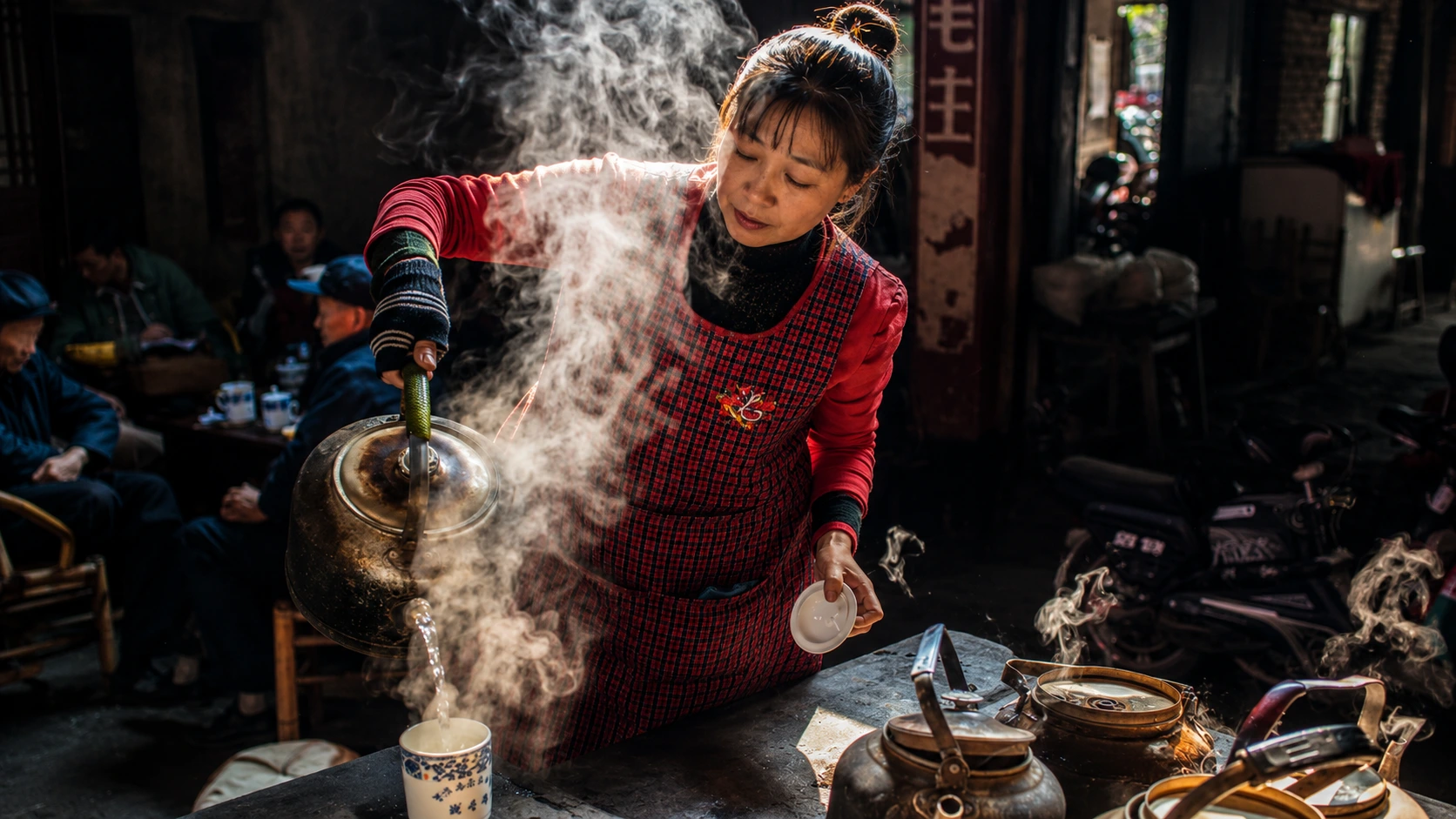
At Guanyinge Teahouse in Pengzhen, the tea in an elderly customer's bowl has gone pale, but he does not leave.
He lifts the lid of his gaiwan as another stream of hot water wakes the leaves at the bottom. Around him, bamboo chairs scrape against the floor. Cards slap against a table. A kettle hisses.
Hours may pass before this customer gives up his chair. No one brings a bill for the extra time. No one asks whether he would like to order something else. He paid for one bowl of tea, and the afternoon came with it.
This small exchange sits at the heart of Chengdu teahouse culture. The drink is inexpensive. The seat is simple. Yet together they provide something that is becoming scarce in many cities: a place where a person can stay without explaining what the time is for.
It also offers one answer to a common question: why does Chengdu have so many teahouses?
The Tea House That Sells Time
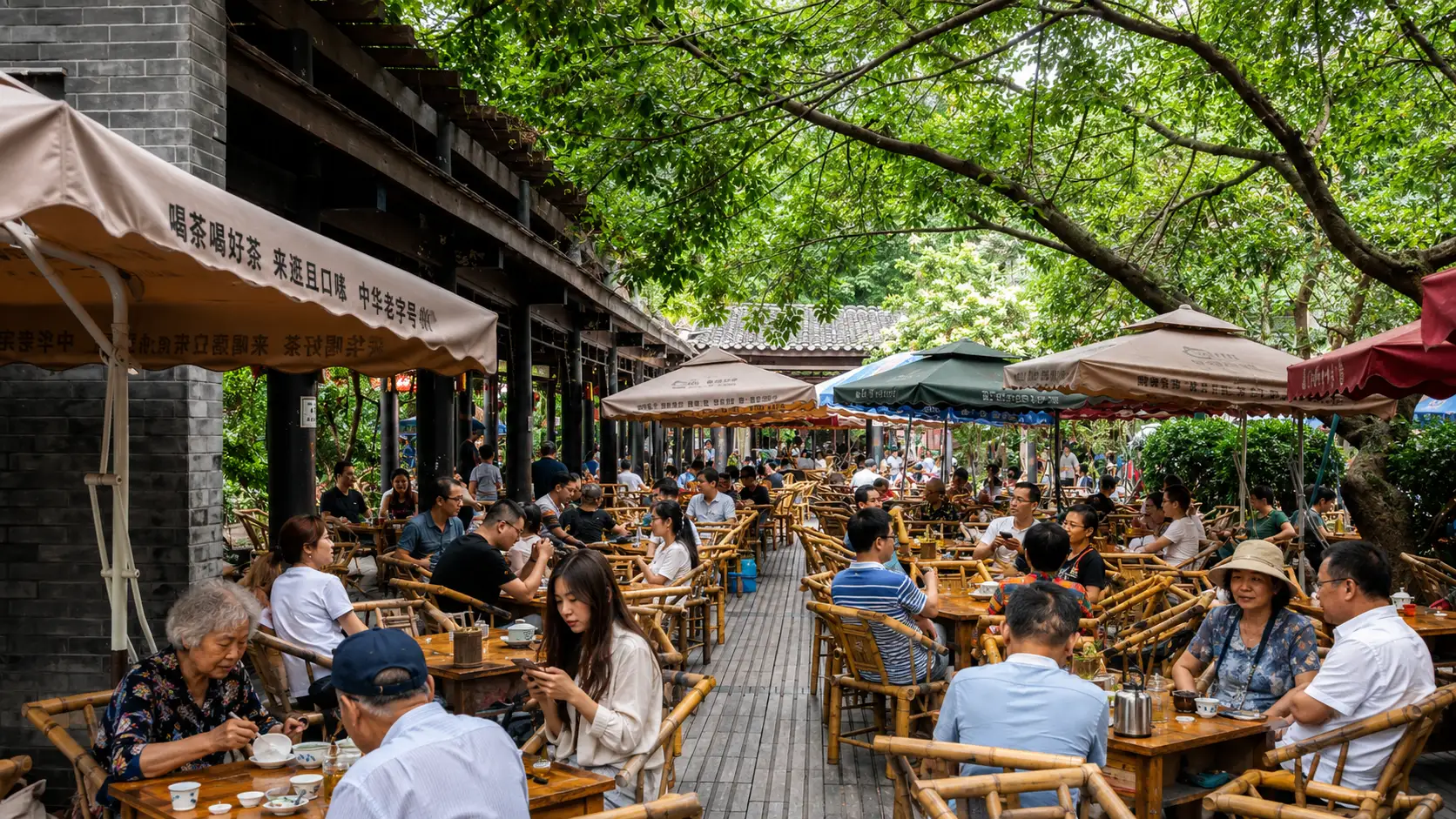
A Chengdu teahouse may have no elaborate menu and no ceremony announced to the room. The waiter sets down a lidded bowl, adds hot water, and returns when it needs filling again. The customer talks, plays cards, watches the street, or sits without doing much at all.
These are not side activities added to the tea. They are the reason the tea is there.
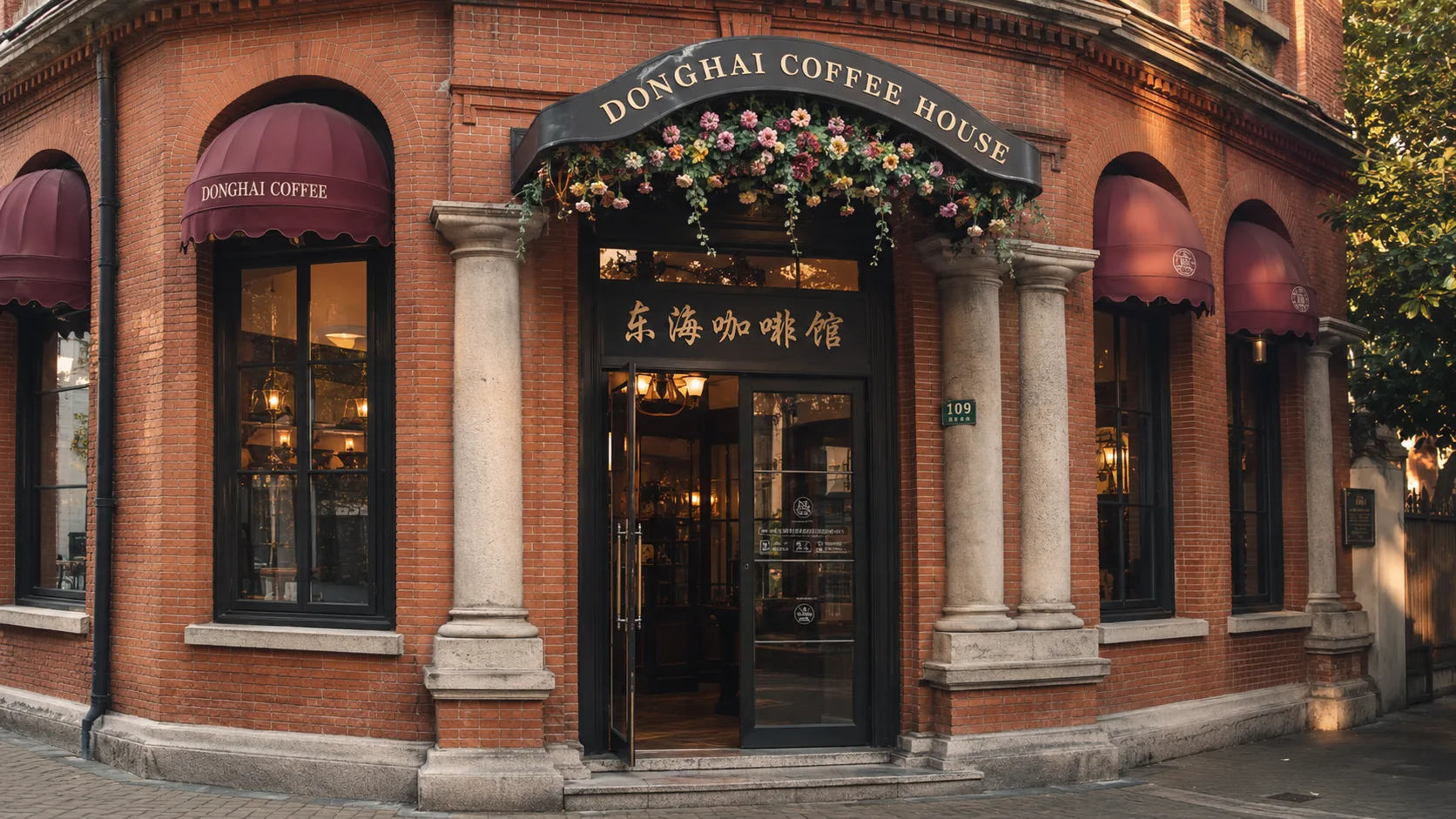
In a modern cafe, a drink often accompanies another purpose: a meeting, a laptop, an hour between appointments. The room may be comfortable, but the commercial rhythm remains visible. Cups empty. Tables turn over. Another order feels due.
The old Chengdu arrangement is different. A cheap bowl can establish a temporary claim to a bamboo chair. The customer does not own the space, but for several hours he belongs in it. Friends know where to find him. Strangers can share the same table without needing to become friends. The teahouse becomes a public living room run on very little money.
What looks like idleness from outside is often another way of organizing daily life. Conversation is not fitted around the day. For a while, it is the day.
Before Cafes, Chengdu Had the Teahouse
Teahouses became important in Chengdu because they solved ordinary problems.
In the first half of the twentieth century, they were among the city's basic units of public life. People went there to hear news, find work, negotiate business, watch Sichuan opera, meet acquaintances, and settle disputes. The room could be a rest stop, an informal office, an employment exchange, and a neighborhood club before lunch.
That history explains why calling the teahouse a place to drink tea misses most of what happened inside it. Tea made the gathering possible, but the gathering gave the business its value.
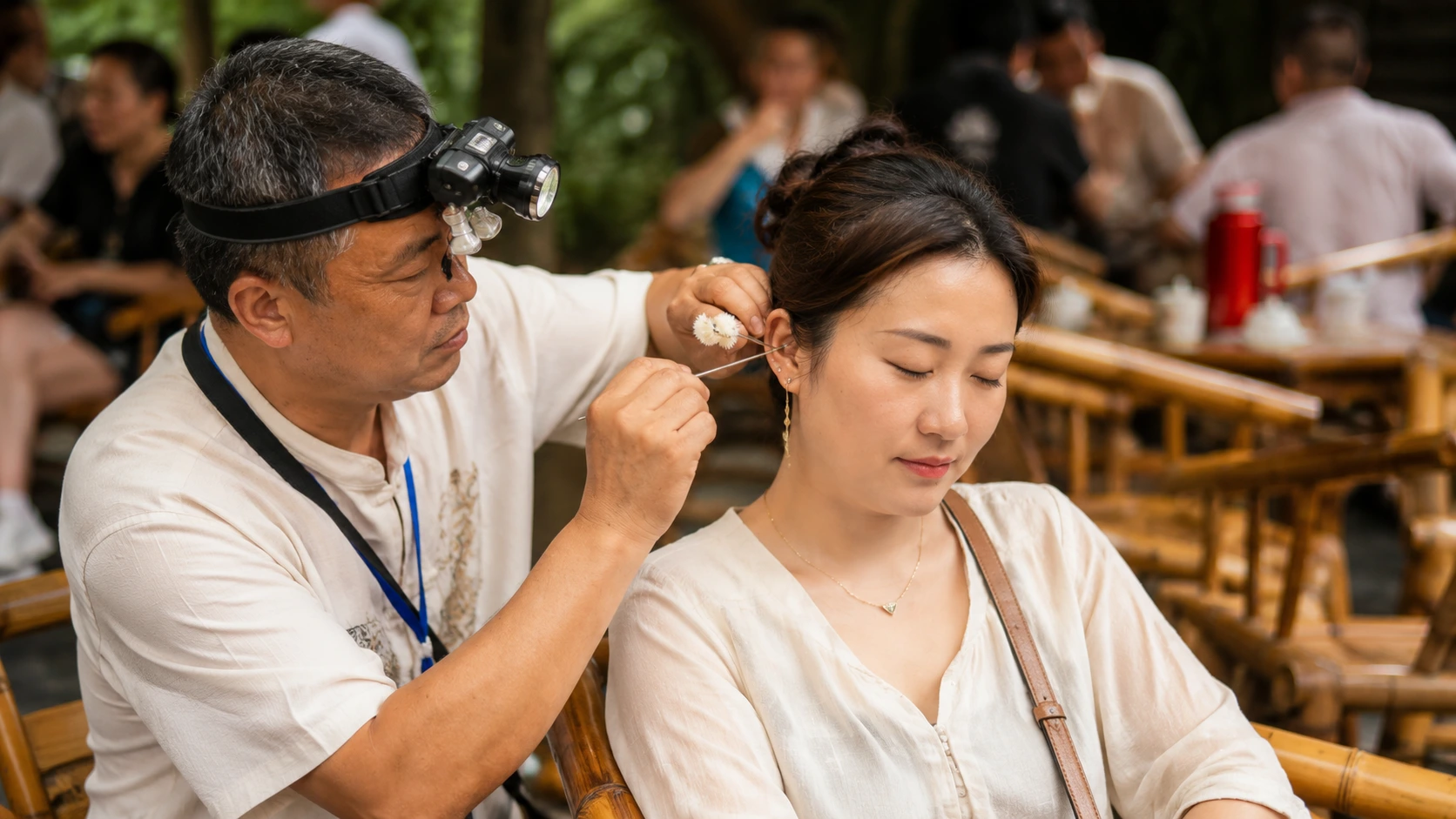
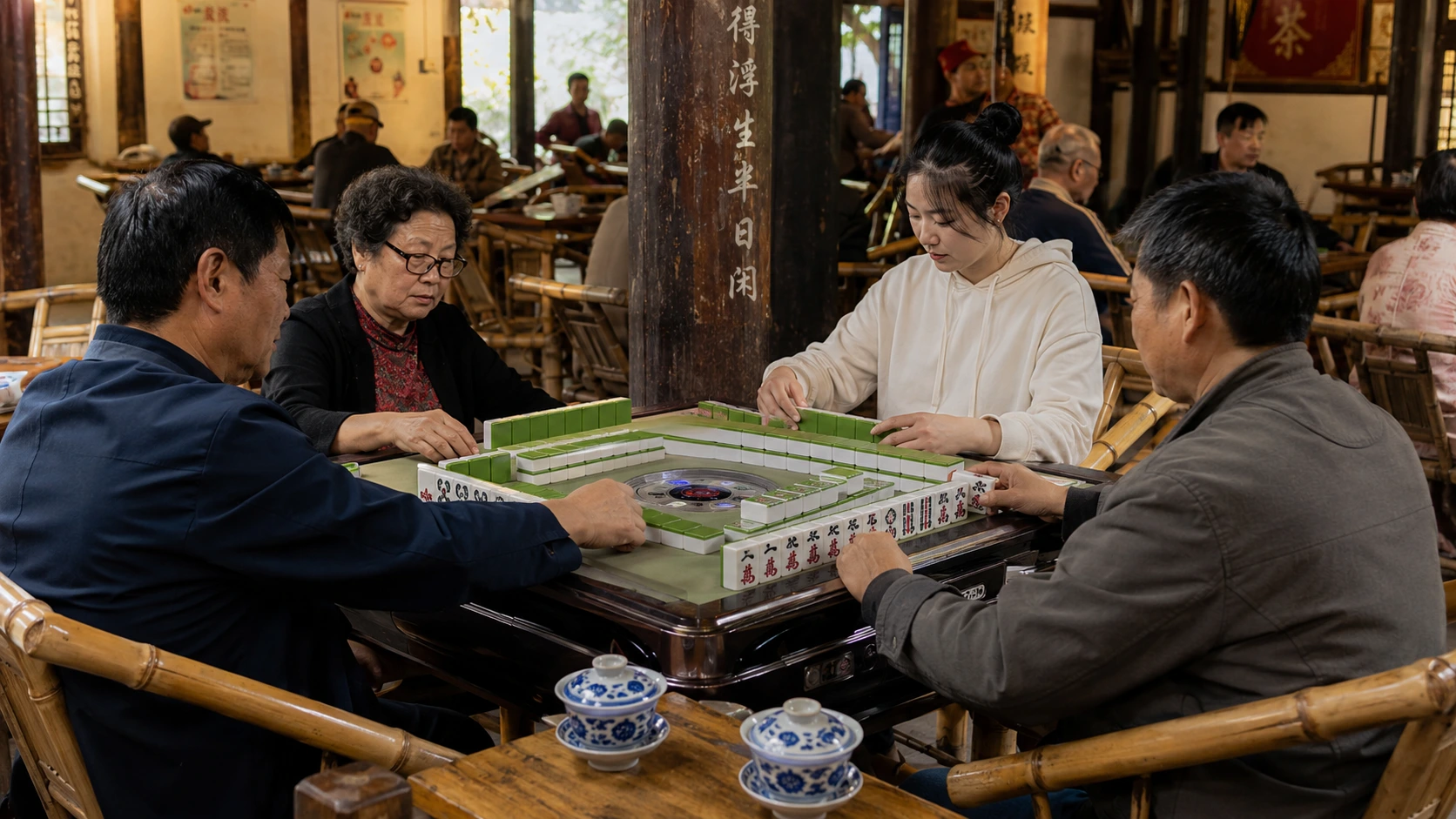
That flexible room still holds more than tea. A table can become a long Chengdu mahjong afternoon, while a bamboo chair beside it becomes a workplace for traditional ear cleaning.
The city's teahouses changed with the century. During the decades after 1949, private businesses and older public spaces came under tighter control. Historian Di Wang describes a long decline in Chengdu teahouse life, followed by a revival from the late 1970s and early 1980s. Street-corner establishments returned as the city's public life reopened.
The furniture changed. Old neighborhoods were rebuilt. Some tea rooms acquired brighter lights, televisions, and new customers. But their familiar bargain survived: hot water could be renewed, and customers could stay.
This is why the history of Chengdu's teahouses is not a straight line from tradition to disappearance. It is a history of contraction, return, and adaptation. The city kept finding new forms for an old need.
The Old Teahouse That Kept Its Customers
In Pengzhen, in Chengdu's Shuangliu district, that history has a physical address.
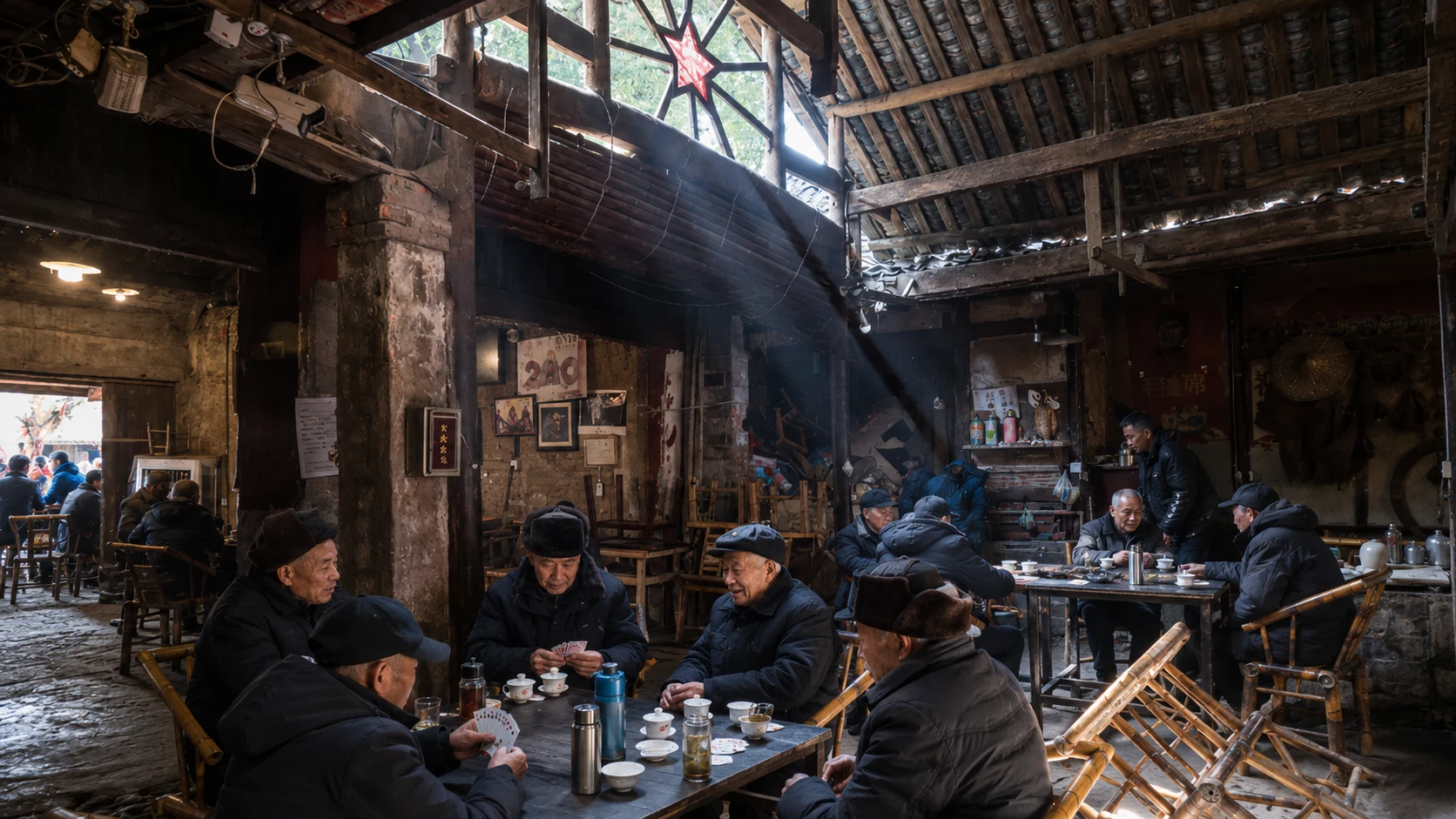
Guanyinge Teahouse stands inside a timber building more than a century old. Its earth floor has been compressed by generations of feet. Bamboo chairs gather around worn tables. A large stove keeps the kettles working. Long before it drew photographers and visitors, it served the people who lived nearby.
Its survival can easily be turned into a simple story about an untouched relic. The truth is more interesting.
The building aged. Its structure and interior deteriorated, creating safety problems that could not be solved by nostalgia. In 2016, Chengdu listed it as a protected historic building. A conservation project began in November 2021 and was completed in April 2023. The work sought to address structural risks while retaining original materials, construction methods, and the atmosphere of an operating Sichuan teahouse. In 2024, the project received an Award of Merit in UNESCO's Asia-Pacific Awards for Cultural Heritage Conservation.
The dates describe preservation. The customers explain why it mattered.
Li Qiang, who grew up around the teahouse and took it over from his mother in 1995, continued serving its elderly regulars. Some had been paying a token price for their usual place since 2003. They came to drink tea, play cards, eat a snack, take a nap, and see people who had watched them grow old.
Guanyinge survived neither by resisting every change nor by becoming a sealed museum. It was repaired because it remained useful. The beams could be conserved, the stove kept hot, and the same social exchange resumed beneath the roof: one bowl, one chair, as much of the morning as a customer needed.
That makes the old teahouse more than evidence of how Chengdu once lived. It is evidence that the old arrangement still works.
The Bowl Designed for Another Refill
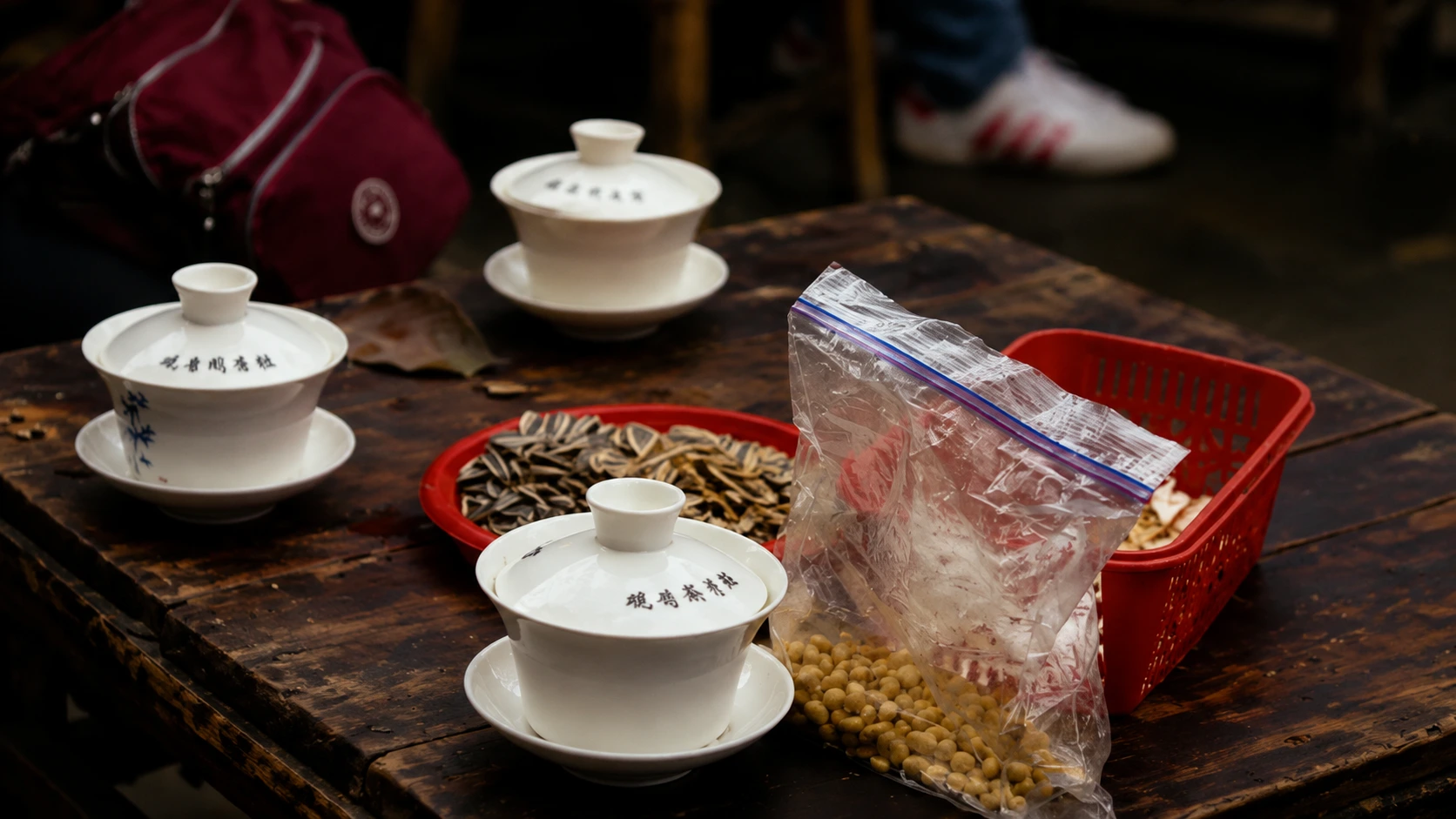
The object at the center of that arrangement has three pieces: a bowl, a lid, and a saucer.
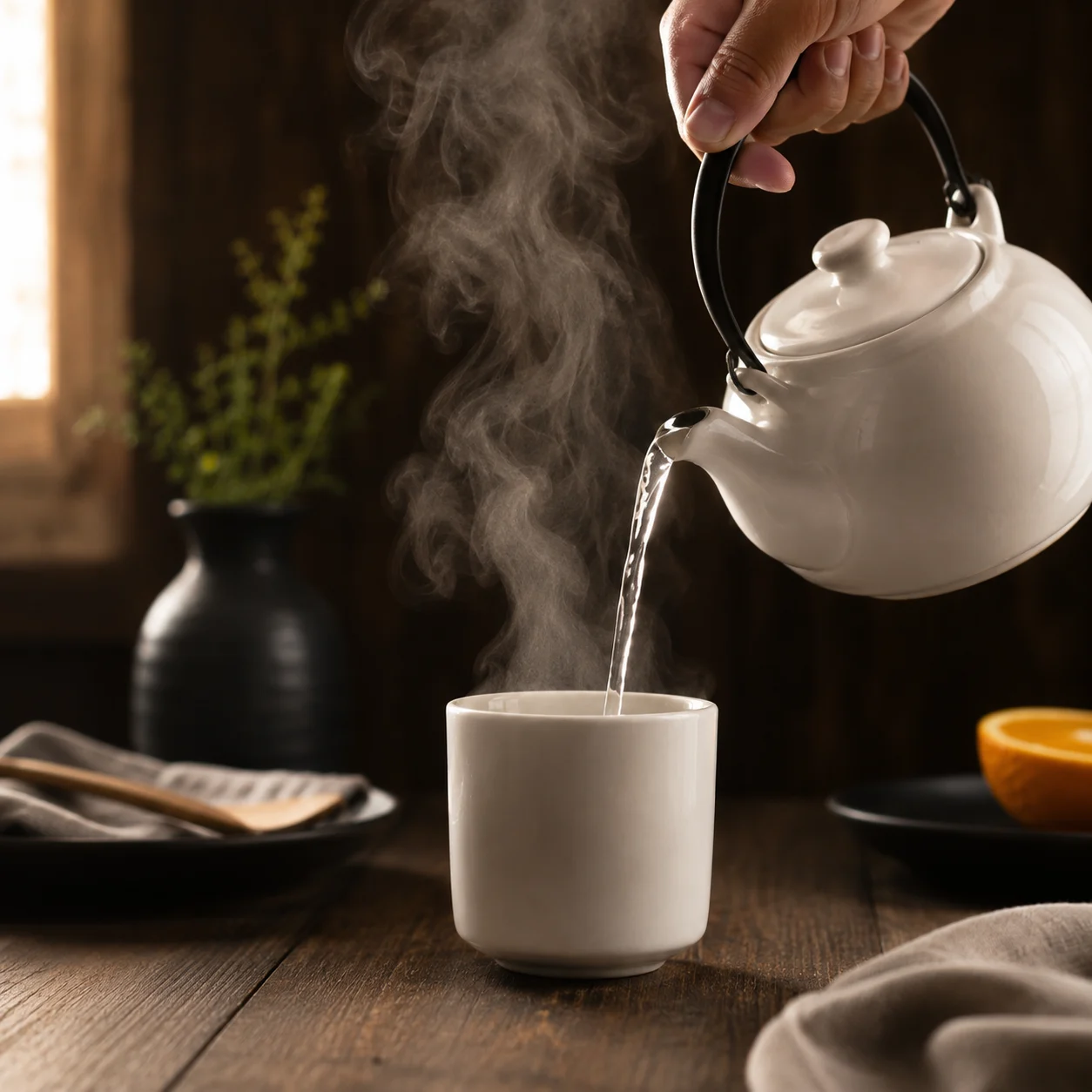
The gaiwan can be held in the hand, but in a teahouse it often rests on the table. The lid moves the floating leaves aside. The saucer gives the hot bowl a base. When the tea grows weak, the waiter adds water and the customer begins again.
Its importance is not that it turns daily drinking into a formal tea ceremony. It does the opposite. It makes tea practical enough to last through a long conversation.
A paper cup marks a drink moving toward its end. A gaiwan resists that deadline. The leaves change with every refill: sharp at first, gentler later, and almost transparent by the time the chairs begin to empty.
The tea does not need to remain strong. It only needs to keep the table open.
Why Chengdu Still Needs the Teahouse
Modern Chengdu has glass towers, delivery apps, coworking spaces, and coffee shops. The survival of the teahouse does not mean the city refused speed or protected itself from modern life.
It means speed did not satisfy every need.
A city also needs places where spending is not constantly expected, where retired residents remain visible and strangers can occupy the same room without an appointment. Younger customers may first encounter Chinese new-style tea through modern brands, but here they inherit the same permission to pause. The room does not ask them to be productive before it lets them belong.
This is the larger answer to why Chengdu has so many teahouses. They have repeatedly adapted because they provide more than a local drink. They provide inexpensive public time.
Late in the afternoon, a customer finally stands. The gaiwan on the table is cool, its leaves exhausted. The bamboo chair becomes empty and waits for someone else.
Nothing may have been completed during the hours he sat there. No transaction grew larger than the first bowl of tea. Yet the afternoon was not wasted.
In Chengdu, that was what he bought.