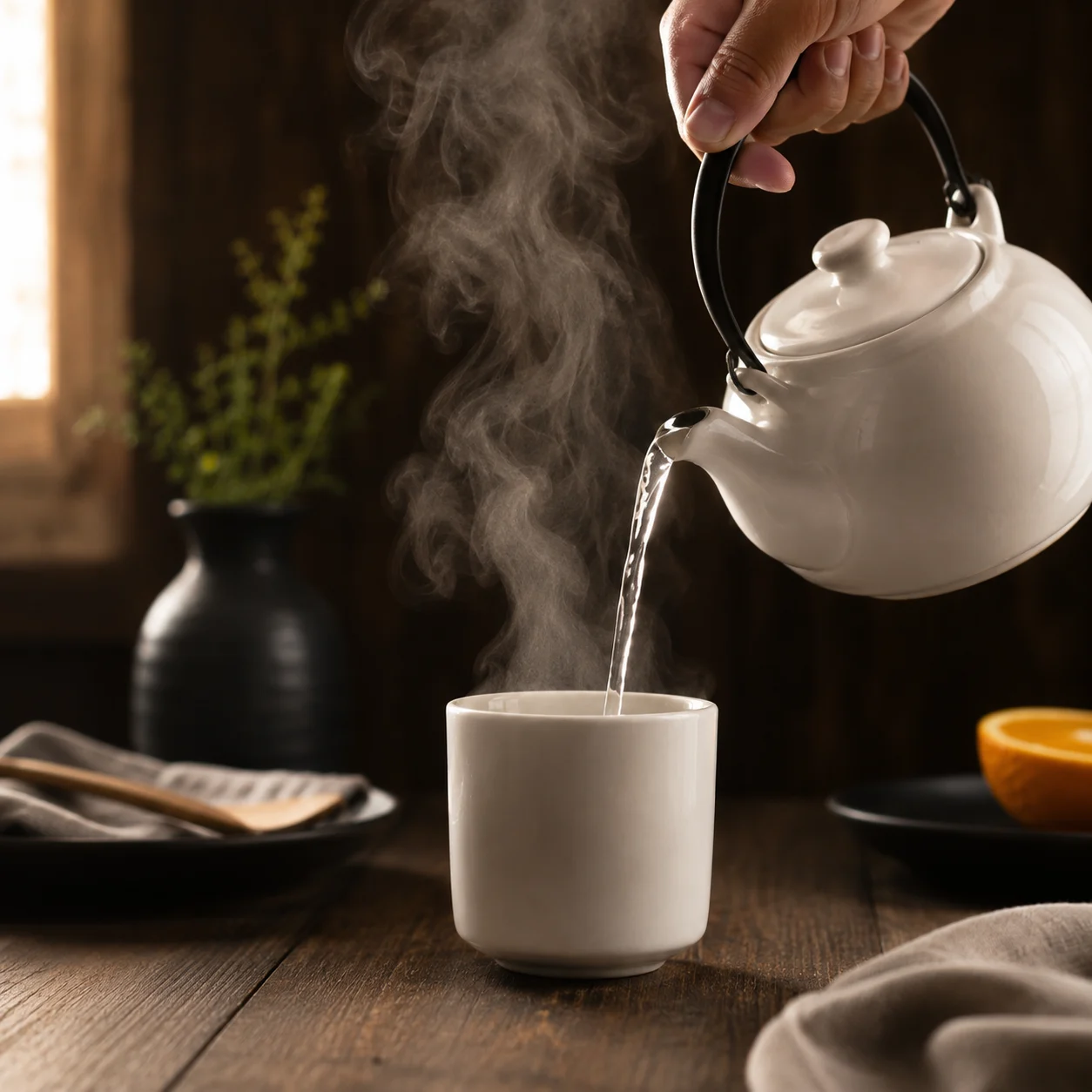
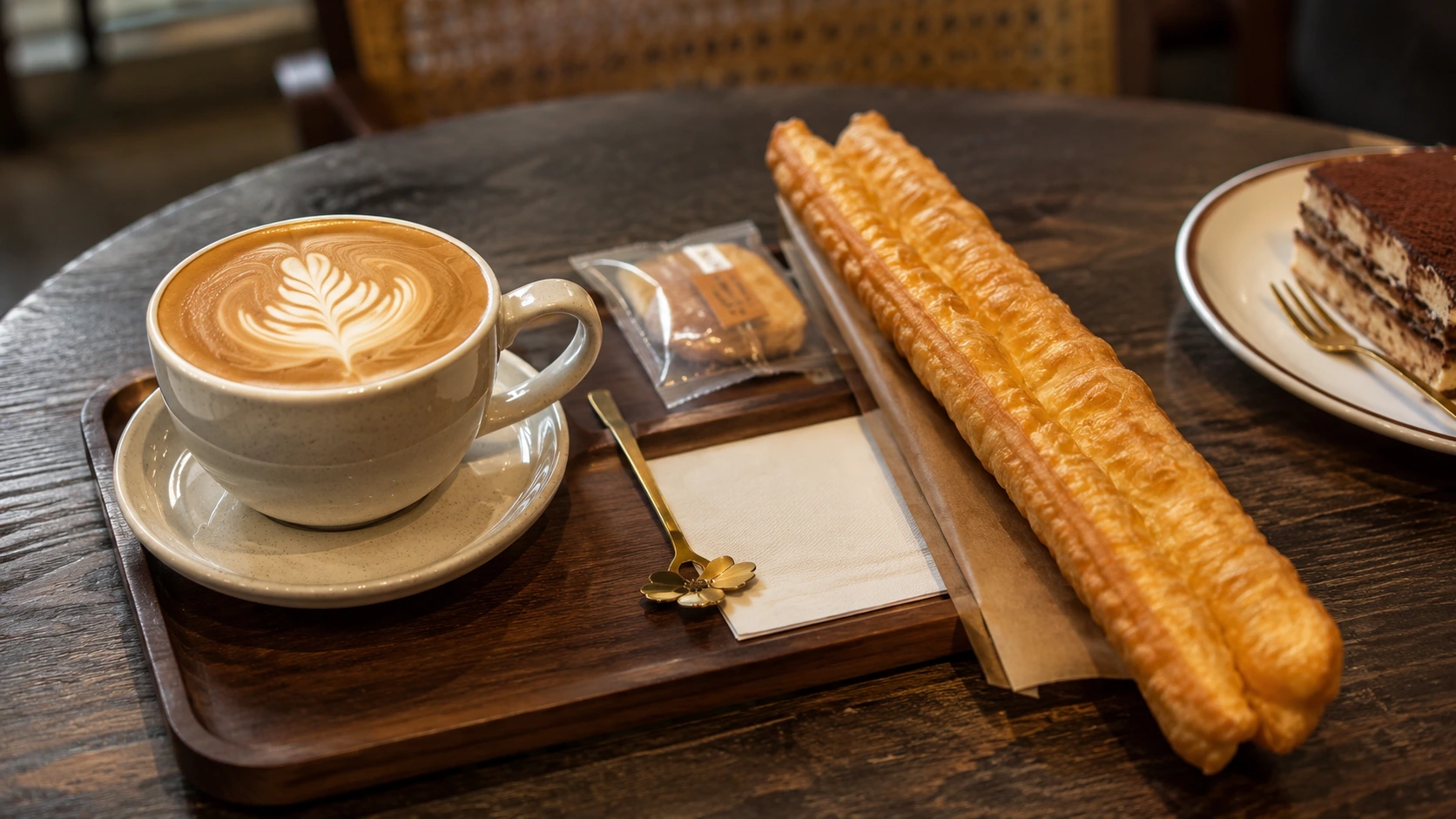
Seven-twenty in the morning. A delivery rider on an electric scooter stops outside a breakfast shop in Jing'an. The order he picks up is not soy milk and rice cakes. It is a bag of hot youtiao, fresh from the fryer, and two iced Americanos from the takeaway window thirty metres down the street. Same order. Same address. One person, eating fried dough sticks and drinking black coffee.
In most cities, this is a photograph someone takes for social media with the caption "when East meets West." In Shanghai, it is Tuesday.
---
Ten Thousand Coffee Shops, One City
Shanghai had 10,336 coffee outlets at the end of 2025, according to a municipal government report. That is up from 9,115 the year before. No other city in the world has more. Per capita consumption rose from 16.74 cups in 2023 to 28.57 in 2025, and the curve is still climbing.
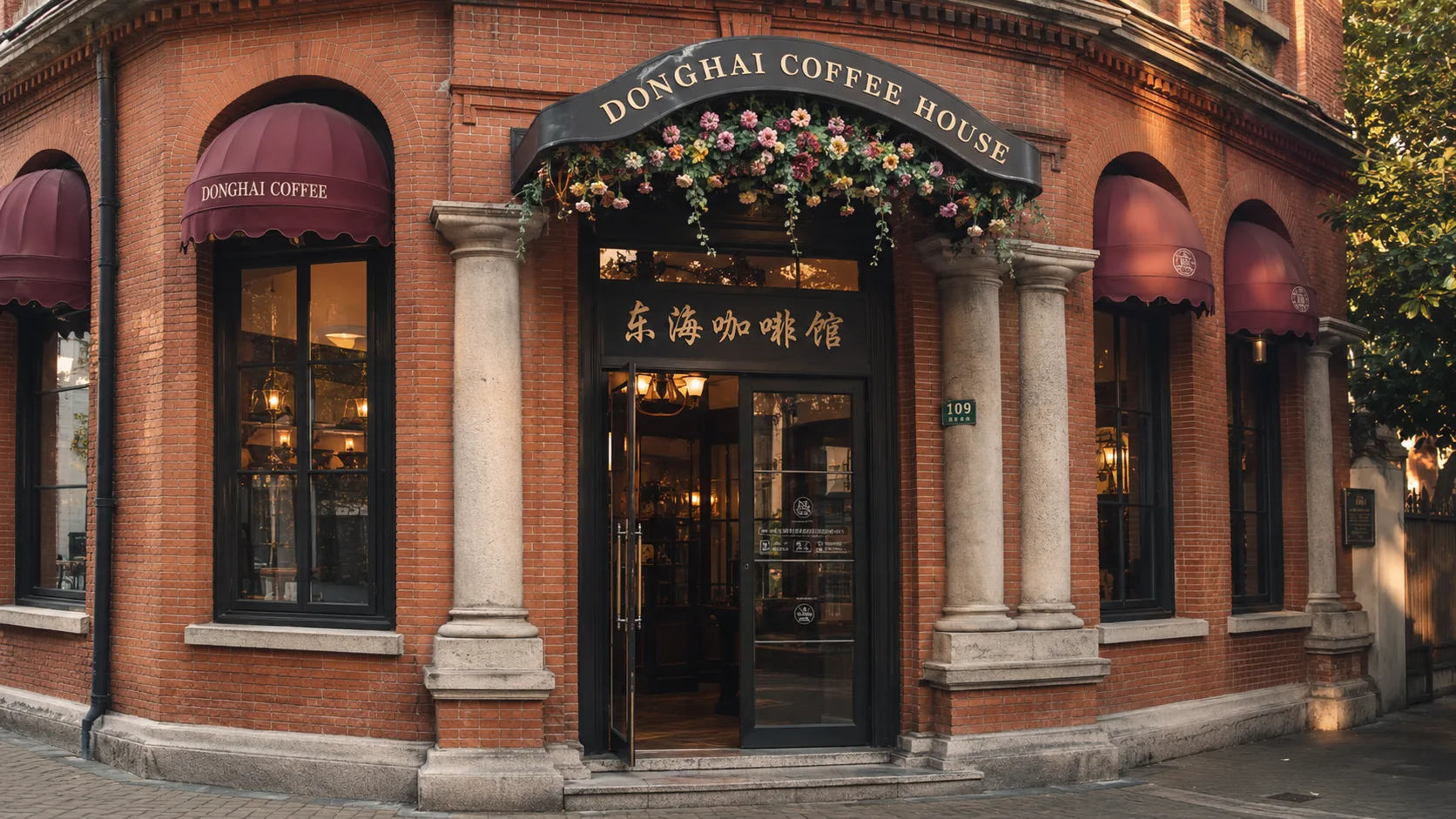
The number is large, but the feel on the ground is not industrial. It is granular. A takeaway window on Wukang Road. A Luckin locker in an office lobby. A Manner counter squeezed between a bakery and a phone repair stall. A convenience store machine pouring 12-kuai Americanos into paper cups. Ten thousand points of sale distributed across a city of twenty-five million people means you are rarely more than a three-minute walk from a cup of coffee. That is the number that matters.
---
Cough Medicine, Leftist Writers, and the Coffee King
Coffee arrived in Shanghai before it was a drink. In 1853, a British merchant named Laohuilin opened a Western-style pharmacy and restaurant in the British Concession. Coffee was sold there as a cough remedy.
The first dedicated cafe opened in 1886 in Hongkou District, near what is now Dongdaming Road. It served coffee and beer, a combination that sounds contemporary but was already happening in Shanghai a hundred and forty years ago.
The 1920s and 1930s were the city's first coffee golden age. Cafes along the Bund and in the French Concession became gathering places for left-wing writers, artists, and revolutionaries. Lu Xun and the League of Left-Wing Writers held discussions over cups of black coffee. By 1946, Shanghai had 186 dedicated coffee shops and more than five hundred venues serving coffee, from hotel lobbies to Western restaurants.
In 1935, a man named Zhang Baocun founded China's first Chinese-owned coffee company -- Desheng Coffee -- in a building near what is now the North Bund. He became known as the Coffee King, and for the first time, Shanghai residents drank coffee roasted by a Chinese business rather than imported in finished form from Europe.
---
From Foreign Luxury to Daily Habit
The story between Zhang Baocun and the Manner takeaway window is the slow unravelling of an idea: that coffee belongs to foreigners.
For decades after 1949, coffee nearly disappeared from Shanghai. The Shanghai Coffee Factory produced one of the country's only domestic brands -- Shanghai Brand, sold in blue-and-white tin cans, something most families kept on a shelf rather than opened. Coffee was not a drink. It was a modest display of taste.
In the 1980s, Nescafe and Maxwell House arrived with the economic reforms. Instant coffee in glass jars became a respectable gift -- on the same psychological shelf as an imported television. You did not buy it because you liked the taste. You bought it because it meant something.
Starbucks opened its first Shanghai store on Huaihai Road in 2000. It sold not just coffee but a place to sit -- the "third space" between home and office that Shanghai's cramped lane houses had never provided. But it was still a weekend choice, still thirty yuan a cup, still a small luxury.
What broke that pattern was not a brand. It was a shopfront. In 2015, Manner Coffee opened its first window on Nanyang Road -- two square metres, no seating, fifteen yuan. The economics were simple: Shanghai's rent per square metre was among the country's highest, and the only way to make coffee affordable was to eliminate the space people sat in. The window did not ask you to linger. It asked you to take the cup and leave. And enough people did -- every morning, on the way to work, without ceremony -- to prove that coffee could be a weekday habit.
That is when the shift completed. Coffee stopped being a signal of taste or identity. It became what it is today: something you grab between the metro and the office, the way you grab a bottle of water. The delivery rider bringing youtiao and iced Americanos does not think about cultural fusion. Neither does the person eating them.
The morning mix is the most visible evidence. Coffee and xiaolongbao at the same table. Latte with scallion pancake. Americano after a bowl of wonton soup. These are not fusion experiments. They are breakfast decisions made by people who did not grow up thinking coffee and Chinese food belonged in different parts of the day.
The infrastructure tells the same story. Manner Coffee built its business on takeaway windows with no seating -- a model that works because Shanghai's rent per square metre rewards speed over atmosphere. Luckin turned coffee into a coupon on a phone screen and a locker that opens with a QR code. You order from the twenty-third floor of an office tower on Nanjing Road, ride the lift down, and the machine has already dispensed your cup into a numbered slot. No conversation required. No barista. The entire transaction takes less than thirty seconds from phone to hand.
None of this replaced tea. Shanghai offices stock coffee machines and tea leaves in the same pantry. After a business dinner, one person orders pu'er and another orders an Americano. The city did not substitute one drink for another. It added coffee to the menu that was already there.
---
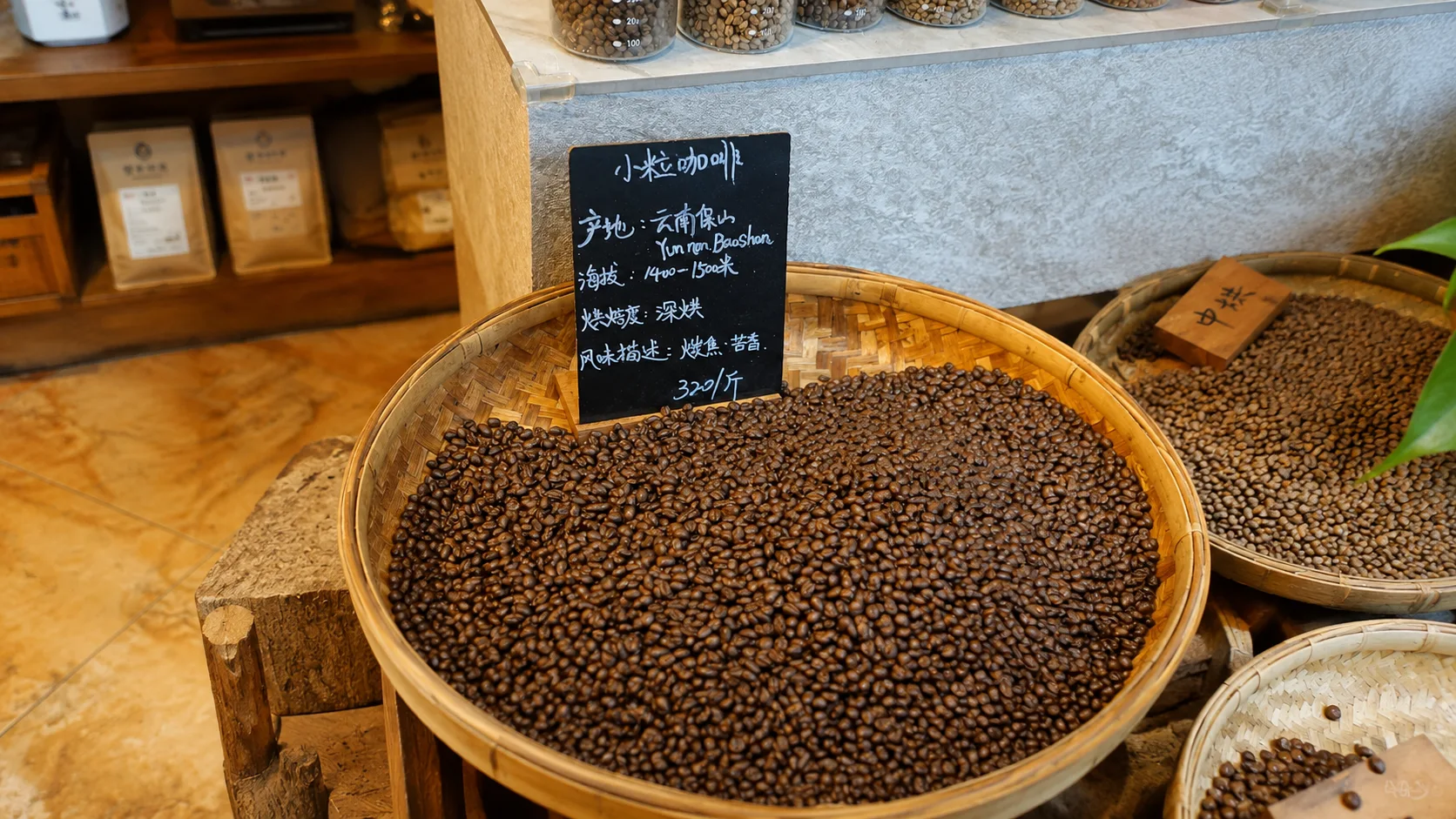
Even the Beans Are Becoming Local
A growing share of the beans in Shanghai's coffee shops comes from Yunnan Province, fourteen hundred kilometres southwest of the city. Pu'er, Baoshan, and Lincang -- mountainous regions above twelve hundred metres -- now form China's largest arabica-producing area. In 2024, Yunnan exported 32,500 tonnes of coffee, a 358 percent increase on the previous year. By mid-2025, export value had topped 7.7 billion yuan.
The cup it produces tastes like itself, not like someone else's bean. Yunnan arabica tends low in acidity with chocolate and caramel notes and a clean finish. It is not a substitute for Ethiopian or Colombian coffee -- it is a different option on the same menu.
The international specialty coffee world has noticed. The Cup of Excellence -- the most prestigious competition in specialty coffee -- has held a pilot event in Yunnan for two consecutive years. At the 2025 Yunnan Treasure Coffee Green Bean Competition, nineteen single-origin lots scored above 87 points, the threshold reserved for the world's finest coffees. The same award-winning beans appear on Shanghai roasters' shelves within weeks -- a decision about quality, the same way a roaster in Melbourne chooses a competition-winning lot from Colombia.
---
Two Roads, Twelve Shops
The most reliable way to feel Shanghai's coffee density is to walk Wukang Road and Anfu Road, two streets in the Former French Concession that connect end to end. Together they hold at least twelve coffee shops along a route that takes about twenty minutes on foot.
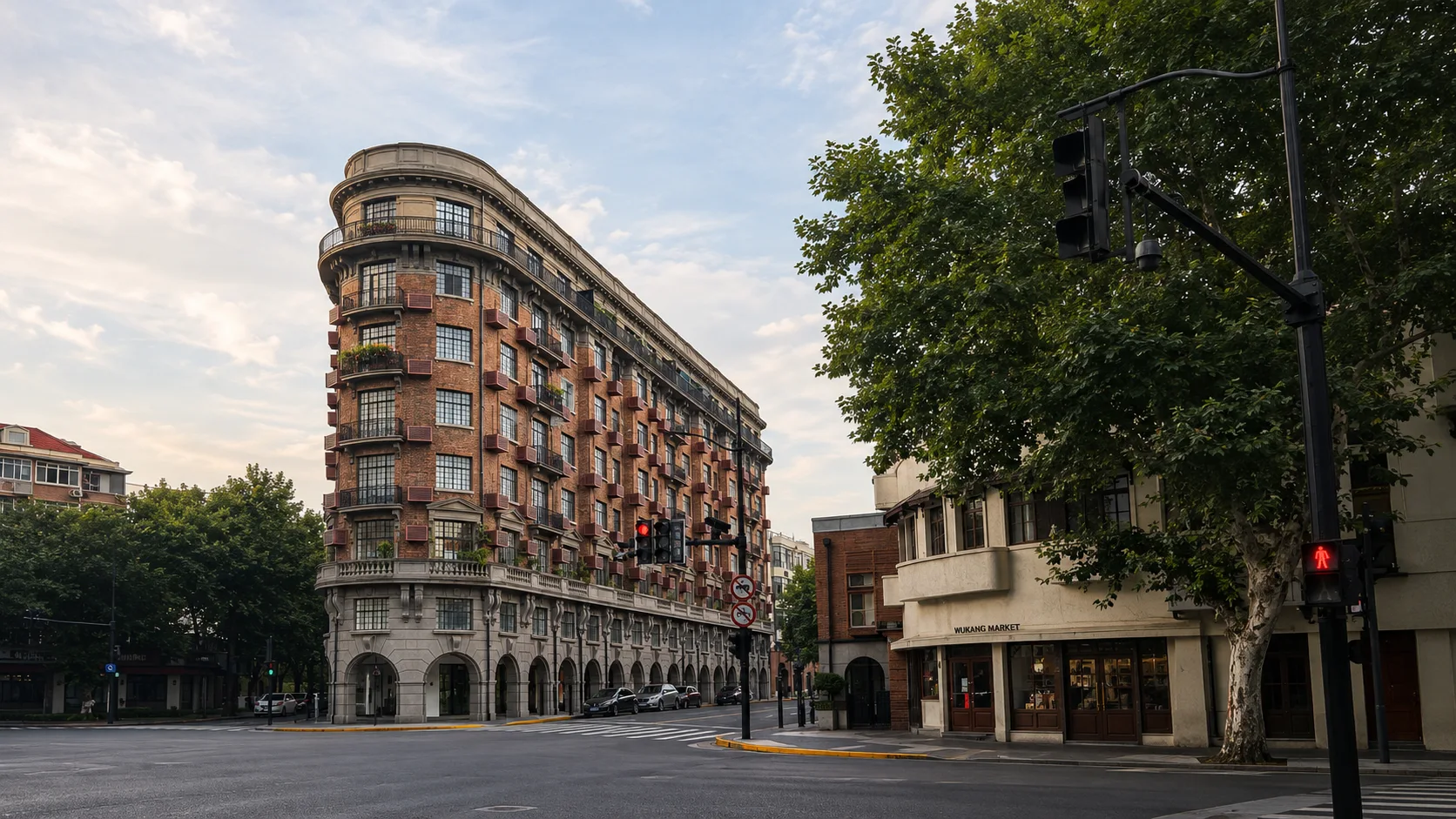
At the Wukang Road end, Lao Mai Cafe occupies the ground floor of the Wukang Building, a 1924 apartment block shaped like a ship's prow -- dark wood, old photographs, a menu unchanged for years. A few doors down, GATHERING serves hot Americanos in a courtyard with bamboo chairs, the same kind that line traditional tea houses. The shop also sells Jingdezhen porcelain.
Further along Anfu Road, Into the Force is the physical storefront of Satonba, a Chinese specialty coffee brand that began online and now pours creative drinks with names that do not translate easily into English. Across the street, D.Desirable sells coffee beside clothing racks -- a lifestyle brand, Chinese-owned, built around a celebrity founder.
At least four of the twelve shops are identifiably local Chinese brands. They are not trying to look like a cafe in Melbourne or Copenhagen. They are making their own decisions about what a Shanghai coffee shop should look like.
---
Coffee in Shanghai is not a trend, a lifestyle choice, or a signal of cosmopolitan taste. It is infrastructure. Like the metro. Like WeChat Pay. Like the convenience store that sells hot soy milk and cold Americanos from the same counter. A hundred and sixty years after a British pharmacist listed it as medicine, a hundred and forty years after the first cafe opened in Hongkou, a delivery rider on an electric scooter stops outside a breakfast shop. He picks up a bag of youtiao and two iced Americanos. The lights change. He rides on.