Why Are Young People Suddenly Drinking Hot Water?
Introduction
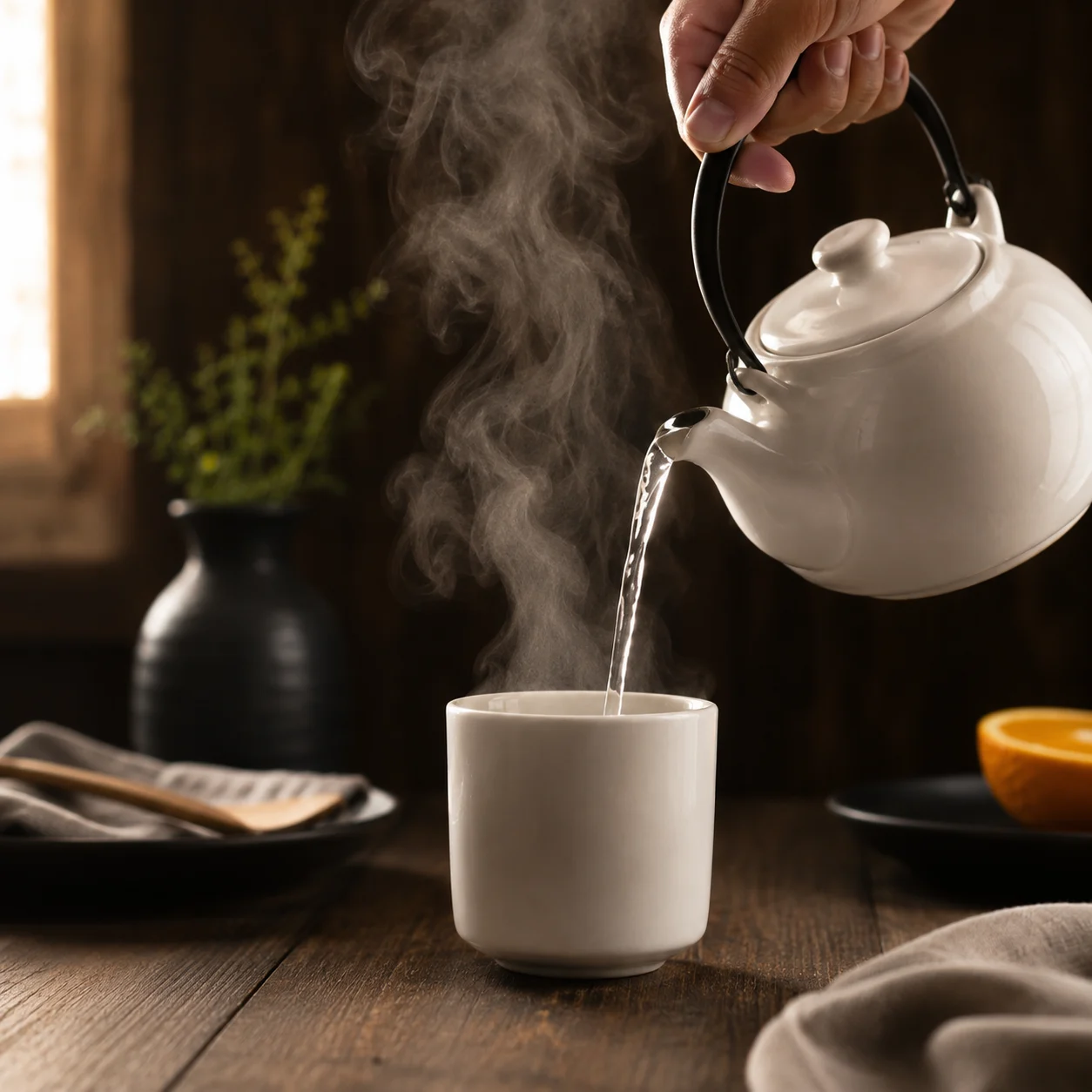
Young people are drinking hot water because a very old Chinese habit is being rediscovered through wellness culture. The phrase is 喝热水, which simply means "drink hot water." This episode explains why hot water feels so normal in China, why it now feels new elsewhere, and what visitors may misunderstand about it.
TRANSCRIPT
PandaWu: Hello, this is 5 Minute Chinese from On The GreatWall. I'm PandaWu.
Emma: And I'm Emma. Today we are talking about something very simple, but surprisingly popular online.
PandaWu: Why are young people on TikTok suddenly drinking plain hot water?
PandaWu: Not tea. Not coffee. Just hot water.
Emma: Plain hot water? That sounds almost too simple. Is this really a wellness trend?
PandaWu: That is the funny part. Outside China, it may look like a trend. But in China, hot water has never really been a trend. It is one of those ordinary habits many people grow up with.
Emma: So this is not something new?
PandaWu: Not new at all. Walk into a restaurant in Beijing or Chengdu, and before you even ask, a pot of hot water or hot tea may land on your table.
Emma: Before you ask?
PandaWu: Often, yes. And in an office in Shanghai, the hot water dispenser can sit right next to the coffee machine.
PandaWu: If you tell a Chinese colleague your throat hurts, the first advice may be very simple.
PandaWu: 喝热水。
PandaWu: Drink hot water.
Emma: So that is our phrase today?
PandaWu: Exactly. The phrase is:
PandaWu: 喝热水。
PandaWu: It means drink hot water.
Emma: It is very direct.
PandaWu: Very direct. Let us break it down.
PandaWu: 喝
PandaWu: means drink.
PandaWu: 热
PandaWu: means hot.
PandaWu: 水
PandaWu: means water.
PandaWu: So together:
PandaWu: 喝热水。
PandaWu: Drink hot water.
Emma: But is it supposed to be medicine? Or is it more like comfort?
PandaWu: More like comfort in many everyday situations. For many Chinese families, warmth simply feels gentle on the body.
PandaWu: A warm drink with a meal feels comfortable. A cold drink, especially when you are sick or your stomach feels uncomfortable, can feel like the wrong choice.
Emma: So people may connect it with health, but not always in a formal medical way.
PandaWu: Right. Some people connect it with traditional ideas about health. Some people learned it from parents or grandparents. Some people simply like the feeling.
PandaWu: The important thing is that it is normal. Hot water is available in many train stations, schools, offices, and hotels. People carry thermos bottles. Restaurants often serve warm drinks as the default.
Emma: That default is the surprising part for visitors. In some countries, water usually means cold water.
PandaWu: Exactly. At restaurants in many places, iced water may arrive before you order. So when someone first comes to China and receives hot water, they may wonder if it is tea, medicine, or some special health treatment.
Emma: And most of the time?
PandaWu: Most of the time, it is just water. But served warm.
Emma: What about the phrase people say when someone is sick?
PandaWu: A common version is:
PandaWu: 多喝热水。
PandaWu: Drink more hot water.
Emma: Would someone really say that to a friend?
PandaWu: Yes. You might hear it from a parent, a friend, or a colleague. Sometimes it is sincere. Sometimes it sounds a little automatic.
PandaWu: Younger Chinese people even joke about it, because it can feel like the answer to every small problem.
Emma: Headache?
PandaWu: Drink hot water.
Emma: Stomach feels strange?
PandaWu: Drink hot water.
Emma: Tired?
PandaWu: Drink hot water.
Emma: I can see why people joke about it. But I can also see why it feels comforting.
PandaWu: That is a good way to put it. The habit is ordinary, but the feeling behind it is easy to understand.
PandaWu: It is warm. It is simple. It is cheap. And it is something people can offer when they want to show a small kind of care.
Emma: So why is it suddenly appearing on Western social media?
PandaWu: Wellness culture outside China is always looking for simple routines. Hot water is easy to try. When people see it connected with Chinese daily life, it can feel both new and old at the same time.
Emma: So maybe the real question is not why people are drinking hot water.
PandaWu: Right. Maybe the better question is why something so normal in China can suddenly feel fresh somewhere else.
Emma: And the phrase to remember is:
PandaWu: 喝热水。
Emma: Drink hot water.
PandaWu: And if you want to sound a little more caring, you can say:
PandaWu: 多喝热水。
Emma: Drink more hot water.
PandaWu: Once again, our five minutes are up, but if you'd like to hear more authentic stories about Chinese food, history and culture, you can head to our topic page on our website, onthegreatwall.com. See you again soon. But for now, it's goodbye.
Mini Quiz
Question: Where did the habit of drinking hot water for everyday comfort become common before it appeared as a wellness trend outside China?
A. It was invented by a TikTok wellness influencer
B. It has been a common practice in China for a very long time
Answer: B. The habit has been normal in China for a very long time, and only recently caught the attention of wellness culture outside China.
Useful Examples
- Example喝热水。 PinyinHē rè shuǐ. MeaningDrink hot water.
- Example多喝热水。 PinyinDuō hē rè shuǐ. MeaningDrink more hot water.
- Example我要一杯热水。 PinyinWǒ yào yī bēi rè shuǐ. MeaningI'd like a cup of hot water.
More Podcast Episodes

Why Do Chinese Streamers Go Live in Wealthy Areas?
27 Jul 2026
Emma finds a glowing row of roadside streamers and learns why wealthy neighborhoods, cold nights and virtual gifts are all part of the attention game.

Why Do Chinese Malls Feel Like Indoor Cities?
25 Jul 2026
Emma entered Guangzhou's Wanda Plaza for one HEYTEA. Seven hours later, she had new nails, an IMAX ticket and two unusual bags of chips.
Which Chinese City Should Food Lovers Visit First?
21 Jul 2026
PandaWu spent more than a decade in Guangzhou. Here is why he recommends its dim sum, roast meats, desserts, and late-night food.