# Why West Lake Means More Than a Beautiful View
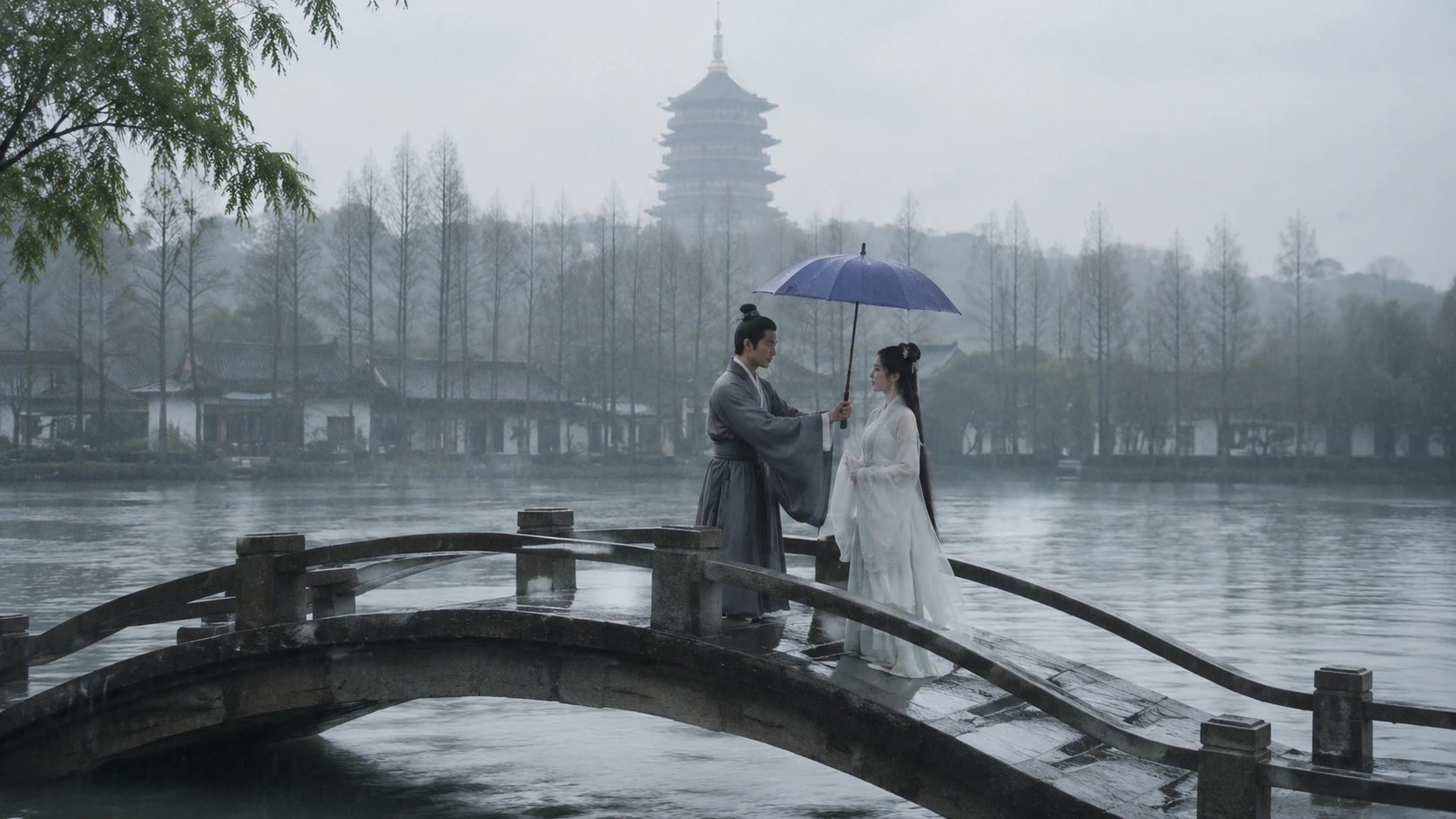
Rain softens nearly everything at Hangzhou's West Lake. The hills lose their edges. Willow branches hang over gray water, and Leifeng Pagoda appears through the mist on the southern shore. Along the Bai Causeway, umbrellas move toward Broken Bridge in a slow line.
For a first-time visitor, it is easy to see why the lake is famous. The view seems to contain an entire idea of southern China: water, stone bridges, green hills, old towers, and rain.
But for many Chinese visitors, another umbrella is already present.
In the best-known version of the Legend of the White Snake, a white snake spirit named Bai Suzhen takes the form of a woman and meets a mortal man, Xu Xian, beside West Lake. Rain brings them onto the same boat. He lends her an umbrella, giving them a reason to meet again.
They marry and try to build an ordinary home. Then Bai Suzhen's true body is exposed, a monk named Fahai separates the couple, and she is eventually imprisoned beneath Leifeng Pagoda.
China has countless beautiful lakes. West Lake became something more because generations of storytellers placed a particular hope inside its scenery: that love may begin through chance, become real through shared life, survive a terrible test, and still deserve reunion.
A Lake Made to Carry Feeling
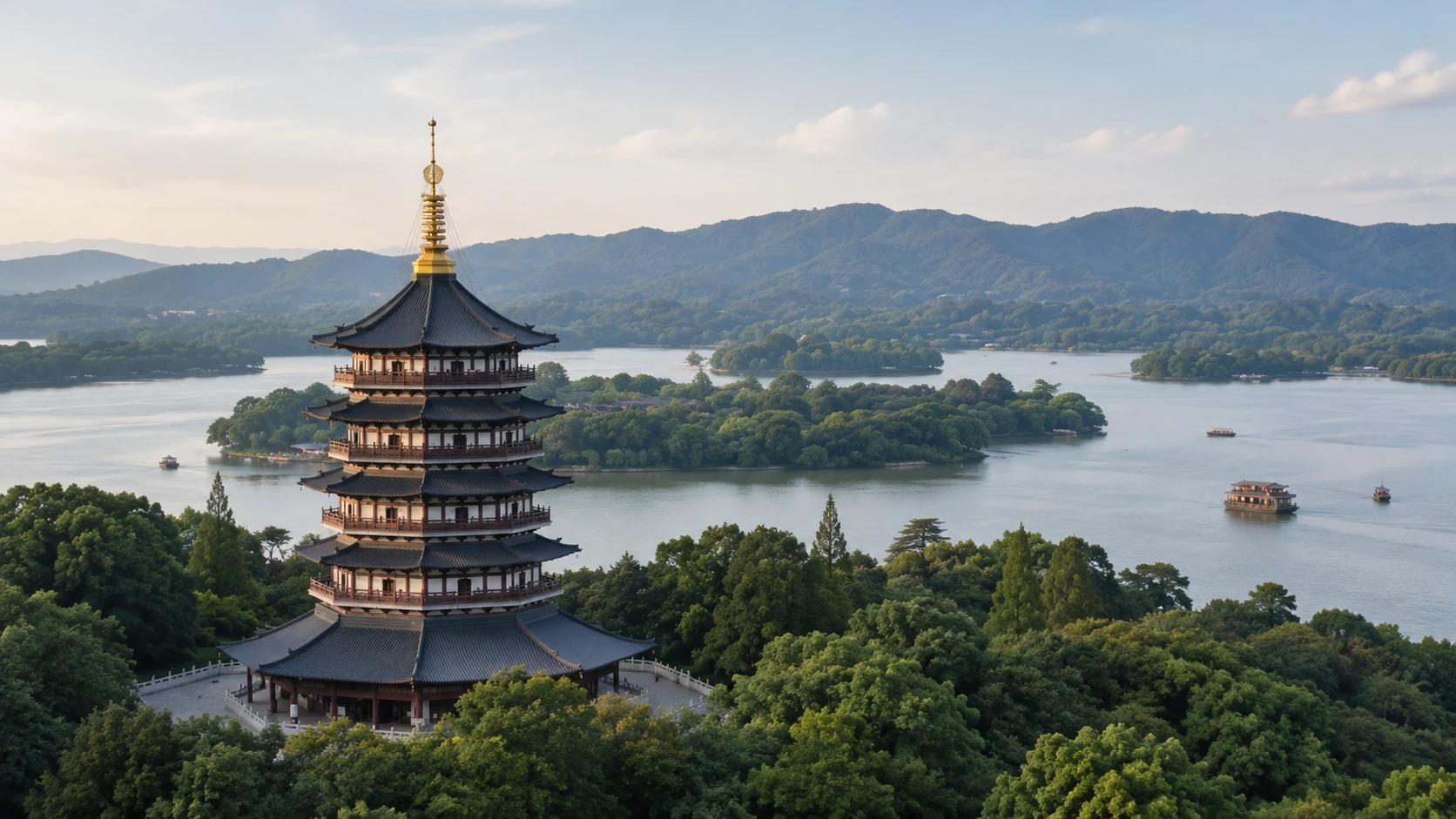
West Lake sits beside the city center of Hangzhou in eastern China, with hills around three sides. It is not simply a natural lake that people happened to admire. Over centuries, people dredged it, built causeways across it, raised temples and pagodas around it, planted trees, and gave its views poetic names.
UNESCO describes West Lake as a cultural landscape shaped by the interaction between people and nature. Its causeways, islands, gardens, temples, and towers do not sit outside the scenery. They help create it.
The famous "Ten Scenes of West Lake" join places to seasons, sounds, and passing conditions: spring dawn, evening glow, autumn moon, lingering snow.
This way of seeing matters. Long before modern visitors arrived with cameras, West Lake had become a place where a view could hold a mood. A bridge was never only a bridge. Mist could suggest distance. A bell could make evening feel lonelier. Snow could be beautiful partly because it was about to disappear.
That made the lake a natural home for a story that turns weather and distance into emotion.
The Umbrella That Keeps a Meeting Alive
The Legend of the White Snake has changed through oral storytelling, fiction, opera, film, and television. No single version contains every familiar scene in the same way.
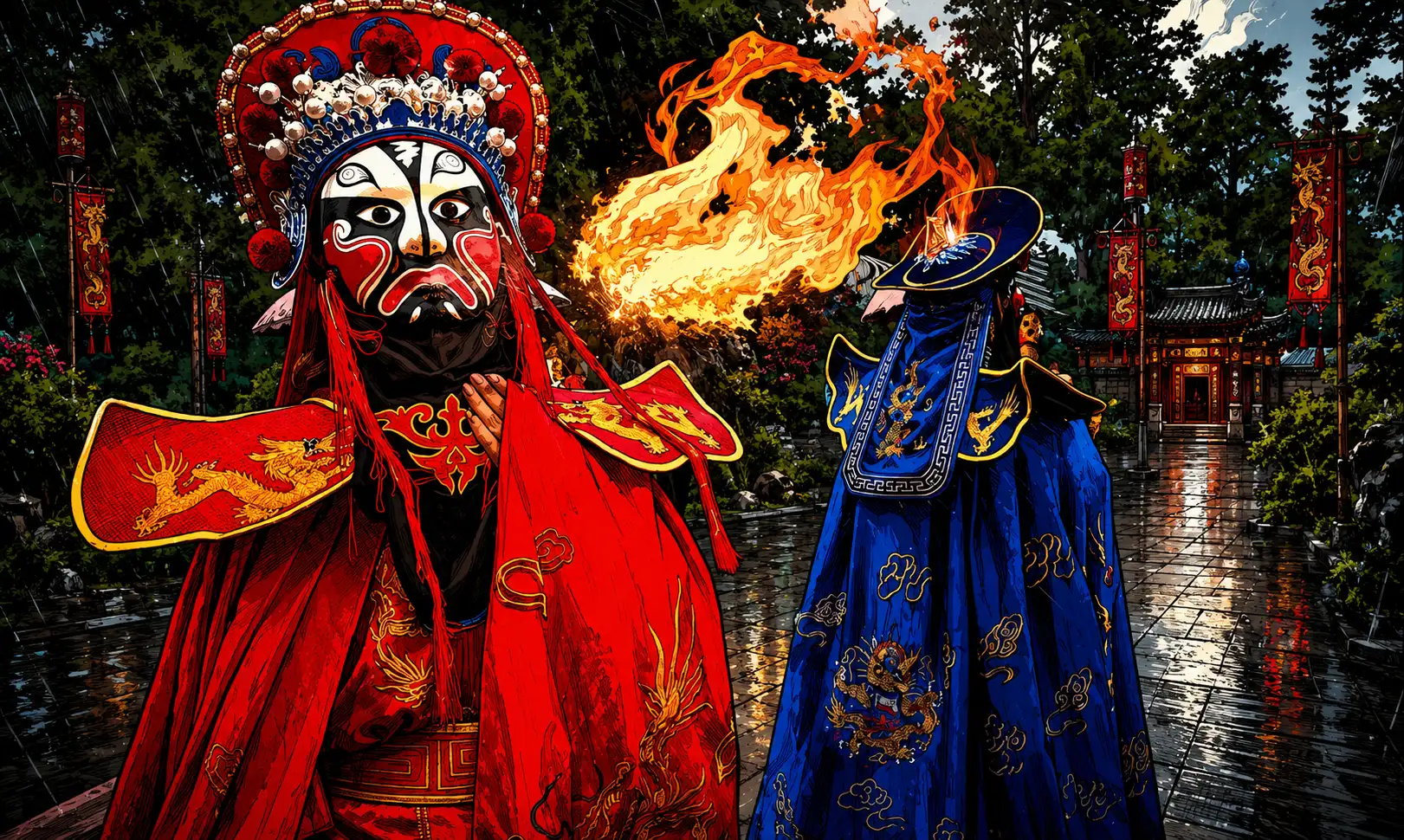
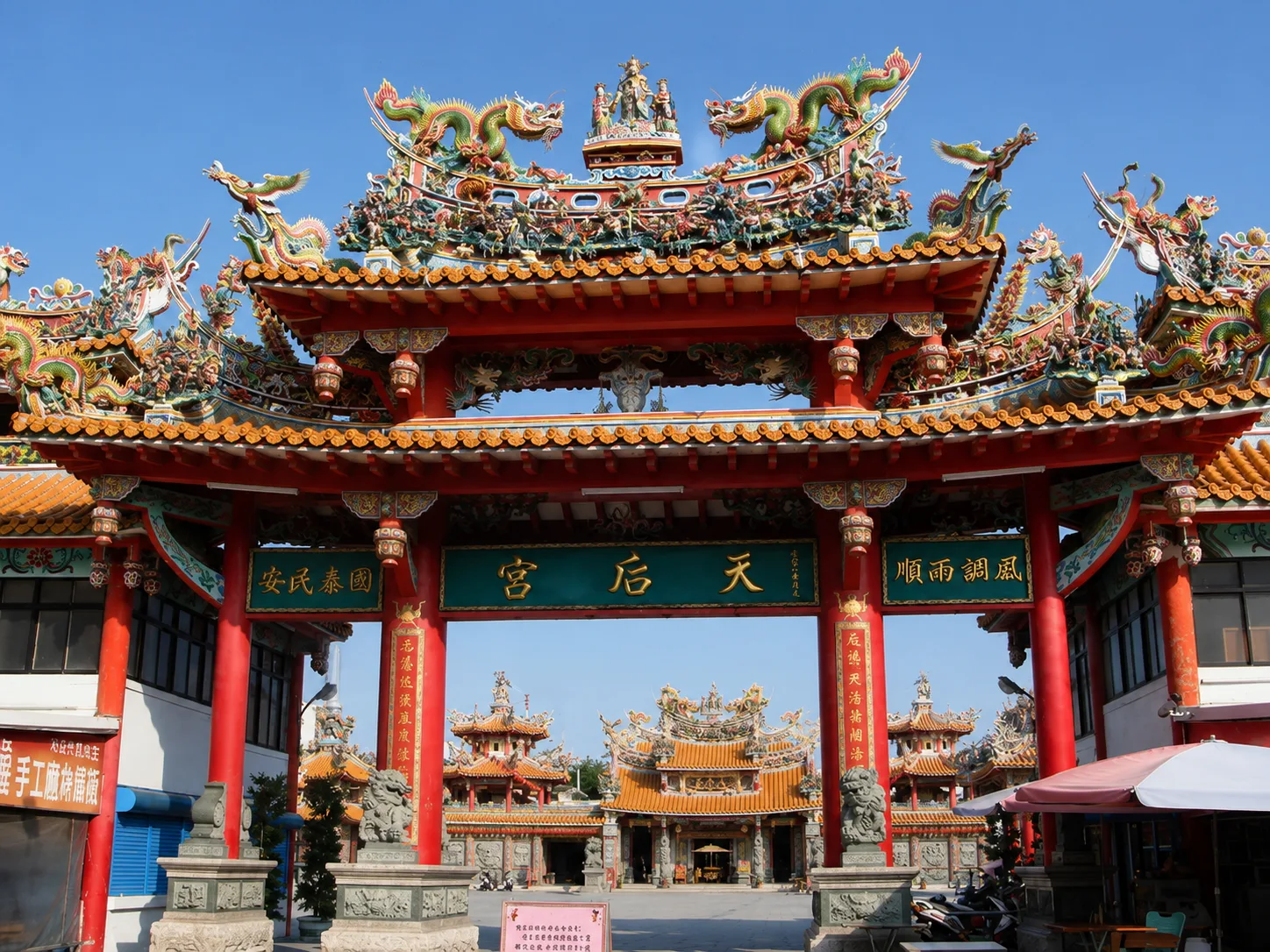
Bai Suzhen belongs to a changing narrative rather than an established cult. That makes her different from Mazu, the sea goddess worshipped across the Taiwan Strait, whose temples, pilgrimages, and offerings organize a living religious tradition.
In the version most people recognize today, Bai Suzhen comes to Hangzhou with Xiaoqing, a green snake spirit who appears as a young woman and becomes her closest companion. At West Lake, they meet Xu Xian, an ordinary human man.
Then it rains.
The rain creates the encounter, but the borrowed umbrella allows it to continue. Xu Xian helps the two women find shelter and lends them his umbrella. Bai Suzhen must return it, so a chance meeting acquires a future.
This is often understood through the Chinese idea of *yuanfen*. The word is sometimes translated as fate, but it more precisely suggests the connection that allows two lives to cross. It may explain why people meet; it does not complete the relationship for them.
That distinction is important to the story. The rain may be chance. The umbrella is a choice.
West Lake becomes a landscape of love here, but not because its mist looks romantic. One person offers help. Another finds a reason to return. What begins beside the lake must now survive beyond it.
Love Leaves the Lake and Goes to Work
If the story ended with a shared umbrella, it would be a charming tale about attraction. What gives it lasting weight is what happens next.
Bai Suzhen and Xu Xian marry. In many popular versions, they open or work in a medicine shop. Their love moves into rooms where people earn money, treat illness, and manage a household.
Bai Suzhen has supernatural power, yet what she wants is strikingly ordinary. She does not come to the human world to conquer it. She wants a husband, a home, and a place within daily life.
This changes the meaning of the romance. The couple's bond is no longer proved by the beauty of their first meeting. It is built through companionship, work, and responsibility.
The story treats romance as the beginning. Devotion becomes credible through what people are willing to carry afterward. Love must enter ordinary life.
The medicine shop therefore matters as much as the umbrella. At West Lake, Bai Suzhen and Xu Xian are two strangers brought together by rain. At home, they become people responsible for each other.
The Tower Tests What Love Can Cross
The story turns during the Dragon Boat Festival. After drinking realgar wine, Bai Suzhen can no longer maintain her human form. Xu Xian sees a white snake where his wife had been and collapses in terror. In many versions, he dies from the shock.
His fear is not difficult to understand. Bai Suzhen has hidden something fundamental, and the body before him appears to confirm every warning about dangerous spirits.
But Bai Suzhen does not flee after her secret is exposed. She risks herself to obtain a magical herb and brings Xu Xian back to life.
The monk Fahai gives the conflict a larger shape. He believes that a human and a snake spirit should not live as husband and wife. In the popular story, he takes Xu Xian to Jinshan Temple in Zhenjiang, a city separate from Hangzhou. Bai Suzhen and Xiaoqing follow. Their struggle with Fahai leads to the flooding of the temple, and Bai Suzhen's power causes danger as well as rescue.
She is not a flawless modern heroine, and Fahai is more than a villain who dislikes romance. Bai Suzhen has concealed her identity. Fahai defends a boundary that his world considers necessary. The boundary is understandable and still feels cruel.
By then, the audience has seen Bai Suzhen love, work, heal, protect, and accept consequences. Should her origin cancel the life she has built?
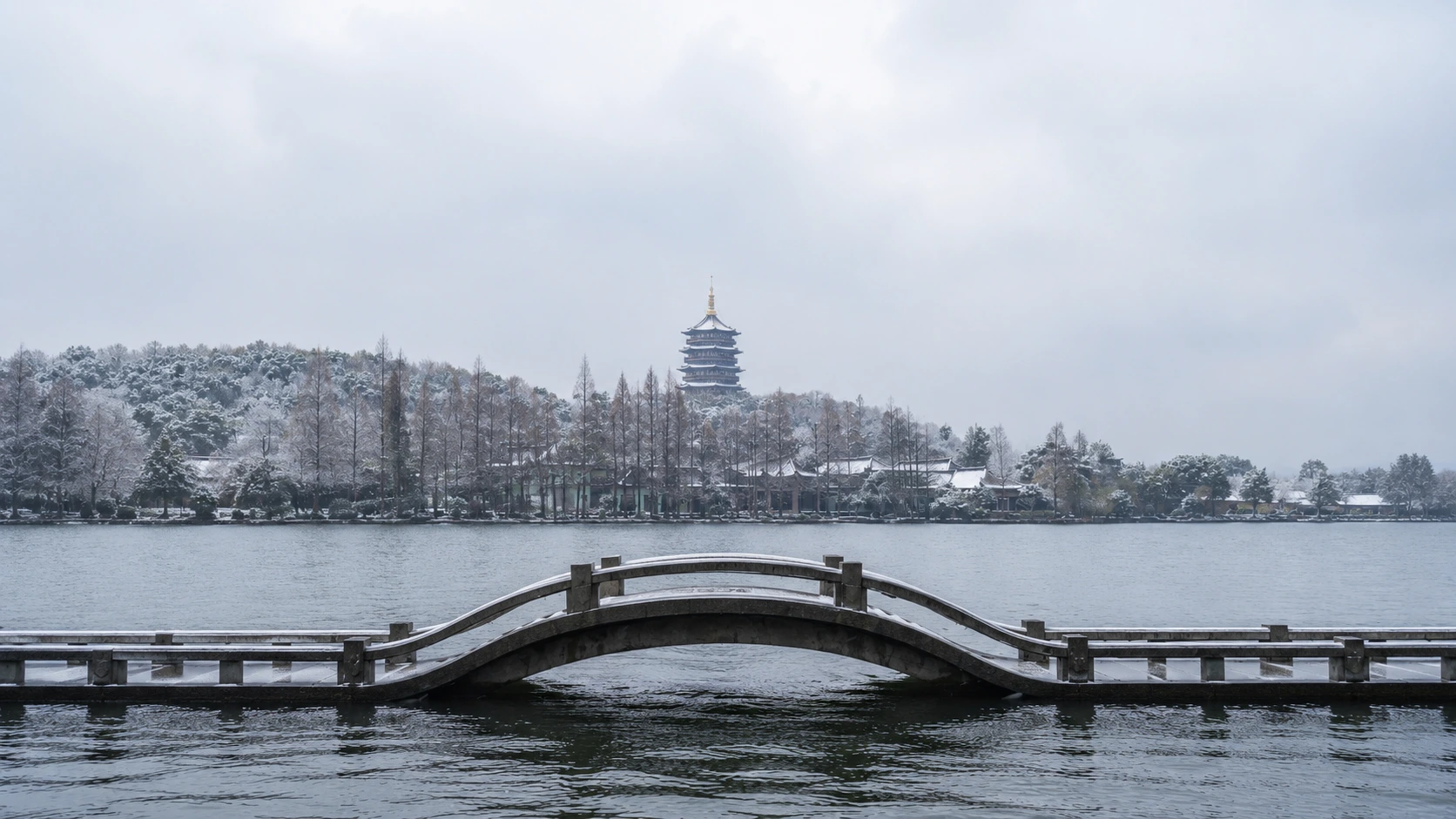
Her eventual imprisonment beneath Leifeng Pagoda brings that question back to West Lake. The real pagoda stands on the lake's southern side. Broken Bridge lies to the north. In popular memory, the two landmarks hold opposite ends of the relationship: meeting and the cost of being forbidden to stay together.
The view between them is beautiful. The story makes the distance hurt.
How Storytellers Chose the Lovers
The White Snake was not always the devoted Bai Suzhen known today. Earlier snake-woman tales often treated the nonhuman woman as a threat. The influential 1624 story "Madam White Is Kept Forever Under the Thunder Peak Tower" gave the legend a recognizable shape, but later storytellers kept changing it.
Across fiction and opera, the snake woman gained a name, a marriage, a family, and stronger reasons for the audience to care. New episodes emphasized her effort to save Xu Xian. Some versions allowed her to leave the pagoda and reunite with her family.
These changes did not erase the danger or the rules. They shifted the emotional decision.
If Bai Suzhen is only a demon, trapping her restores order. If she has become a wife who works, sacrifices, and protects a family, the same tower begins to look like a prison.
Performers and audiences gave the lovers more life together. The ideal that emerged was not that love removes every barrier. The story instead preserves the hope that loyalty, endurance, and sacrifice should eventually receive an answer.
Its emotional path can be felt in four movements: a meeting made possible by *yuanfen*, a relationship built through shared life, a separation that demands a price, and a continuing desire for reunion.
The Legend of the White Snake entered China's first national list of intangible cultural heritage in 2006, with both Hangzhou and Zhenjiang named. It belongs to no single author or final text. Its changes are part of the inheritance.
Why West Lake Is Hard to Forget
West Lake does not owe its fame to one legend. Poetry, painting, religious sites, imperial history, engineering, gardens, and the Ten Scenes have all shaped how people understand it.
The White Snake story adds something different. It places an emotional journey inside locations that anyone can still visit.
Spring rain becomes the arrival of *yuanfen*. An umbrella becomes the decision to meet again. Broken Bridge remembers both meeting and reunion. A medicine shop turns attraction into daily responsibility. Leifeng Pagoda gives separation a visible form.
This is why the story does more than decorate the lake. It gives visitors a way to move through it. They can stand on Broken Bridge, look south across the water, and see the pagoda that the story has placed at the other end of a marriage.
When rain returns to West Lake, umbrellas still cross the causeway toward Broken Bridge. Leifeng Pagoda remains visible beyond the water. The people beneath the umbrellas may be tourists, commuters, newlyweds posing for photographs, or families trying to keep children dry.
The old borrowed umbrella is not among them. But it has already changed what the lake allows them to see.
FAQ
Where is West Lake?
West Lake is in central Hangzhou, the capital of Zhejiang province in eastern China. Hangzhou is southwest of Shanghai and is connected to it by frequent high-speed trains. The lake sits beside the urban center rather than outside the city.
Why is West Lake so famous in China?
West Lake is known for both its scenery and the culture built around it. Centuries of landscape design, poetry, painting, temples, pagodas, the Ten Scenes of West Lake, and stories such as the Legend of the White Snake have made it one of China's best-known cultural landscapes.
Is the Legend of the White Snake a true story?
No. Bai Suzhen, Xu Xian, Xiaoqing, and Fahai belong to a folk legend that developed through centuries of storytelling and performance. Broken Bridge, West Lake, Jinshan Temple, and Leifeng Pagoda are real places, but different versions connect them to the story in different ways.