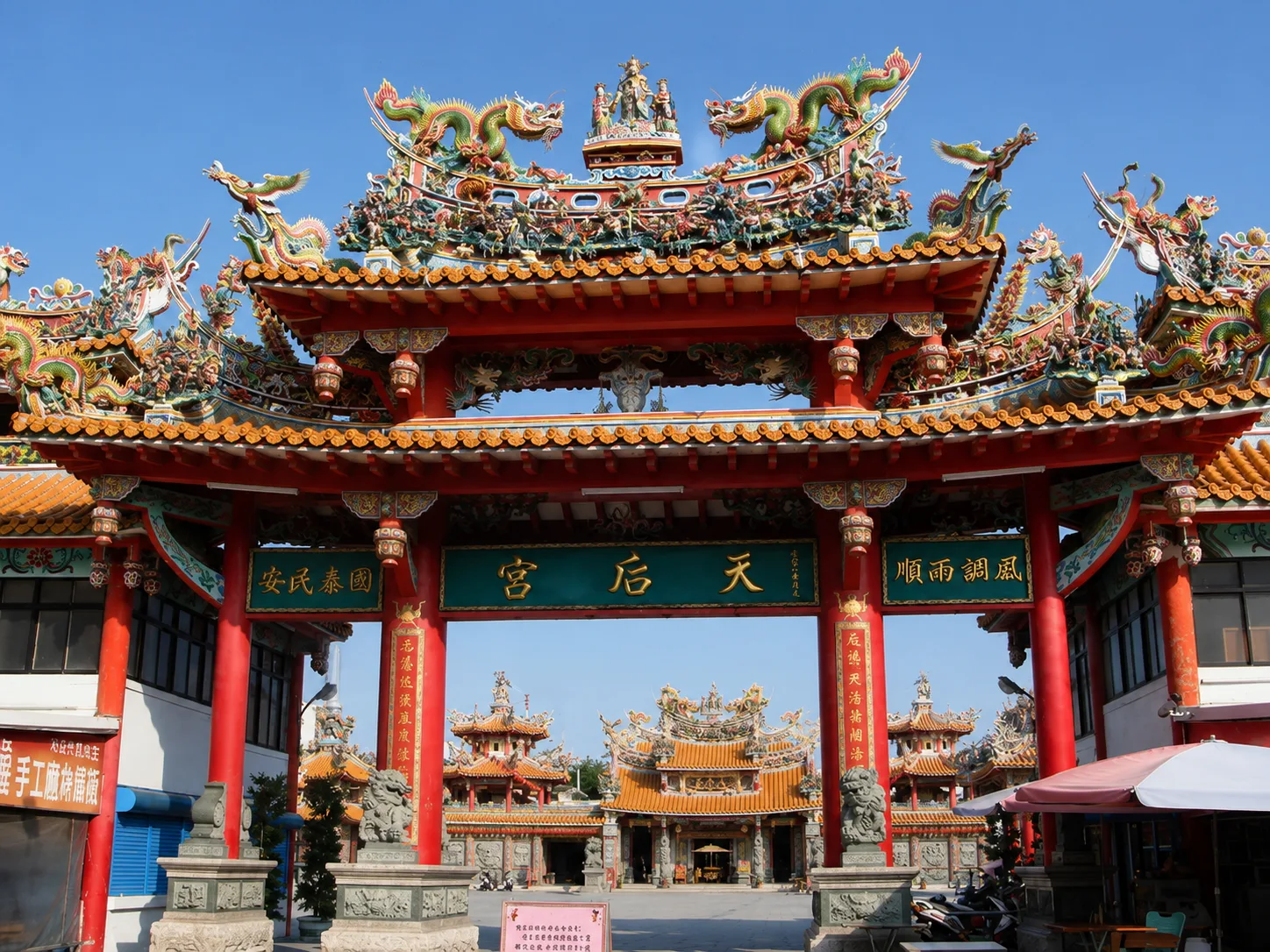
In March, the air in Fengdu carries a particular scent. Incense smoke, the oily aroma of deep-fried Ghost King cakes, the river mist drifting up from the Yangtze, and the steamy warmth of tens of thousands of bodies pressed together—all of it fuses into a seasonal aroma found nowhere else on earth.
Locals call it the "Fragrant Gathering." Outsiders call it a temple fair. But anyone who has been there knows it is neither a pure religious ritual nor an ordinary country market. It is a carnival about death, organized by people who love life the most.
The Ghost City Was Never Built for Ghosts
Fengdu has been known as the "Ghost City" for nearly two thousand years.
The legend begins in the Han dynasty, when two men—Yin Changsheng and Wang Fangping—separately ascended to immortality after years of Daoist cultivation on Pingdu Mountain. Later generations combined their surnames into "Yin-Wang," a phrase that sounds exactly like "King of the Underworld" in Chinese. Daoists came and built the Hall of Yama. Buddhists came and erected statues of Ksitigarbha. Folk believers piled on every ghost story they could imagine. Over time, Fengdu became the most complete earthly version of the Chinese underworld: the Bridge of Helplessness, the Terrace of Gazing Homeward, the Eighteen Levels of Hell, the Black and White Impermanence, the Ox-Head and Horse-Face guards, the judge and his demon attendants.
Yet the people of Fengdu have never found this morbid.
Ghosts are just transformed humans; the Ghost City was built by humans. Afraid of ghosts? That means you are afraid of people.
To the locals, the Ghost City is inherited property, a livelihood granted by heaven, a family treasure that must be taken out every spring, dusted off, and displayed. The temple fair is not about worshipping ghosts; it is about telling the living: look, we have arranged everything for the afterlife. What is there left to fear while we are still alive?
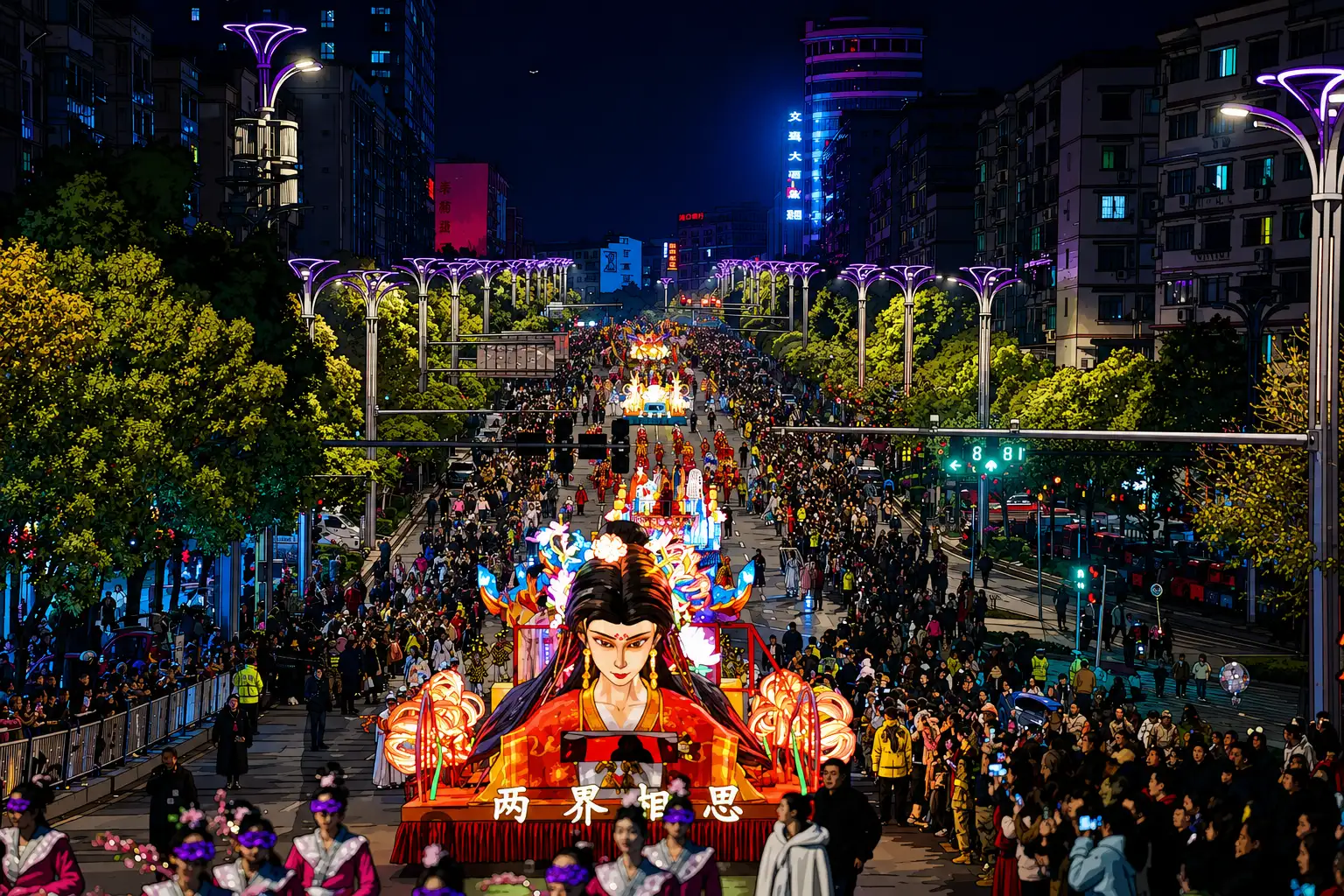
The Third Day of the Third Month: The Gates of Hell Open
The climax of the temple fair falls on the third day of the third lunar month.
On that day, the population of Fengdu county town suddenly multiplies. Ferries crisscross the Yangtze, shuttling people in from surrounding villages. Hotels are booked solid a month in advance; many visitors simply pitch tents along the riverbank. Before dawn, the streets begin to vibrate—not with car horns, but with gongs, suona horns, and hundreds of bronze cymbals struck in unison, a vibration so deep it rattles your ribcage.
In the morning, the parade begins.
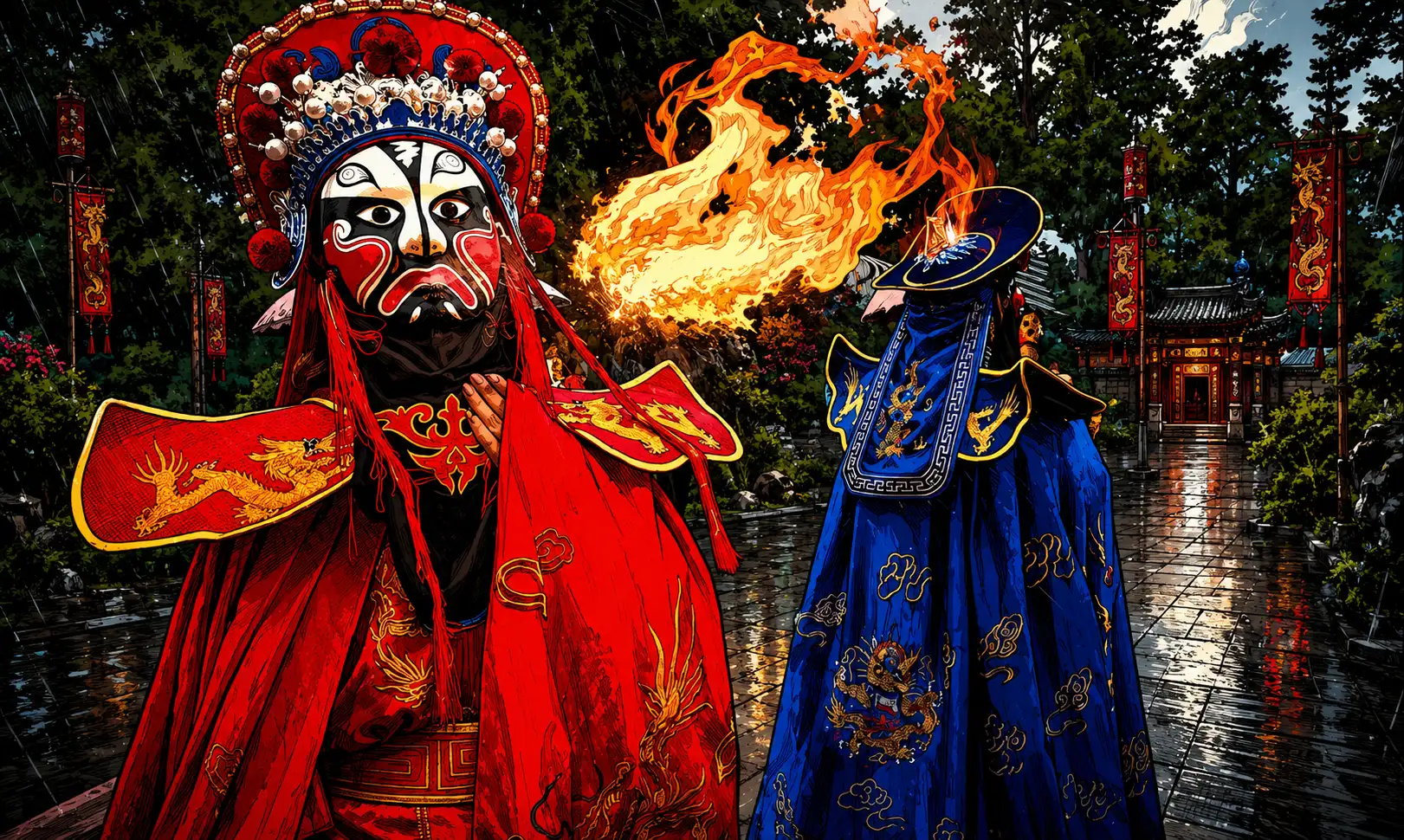
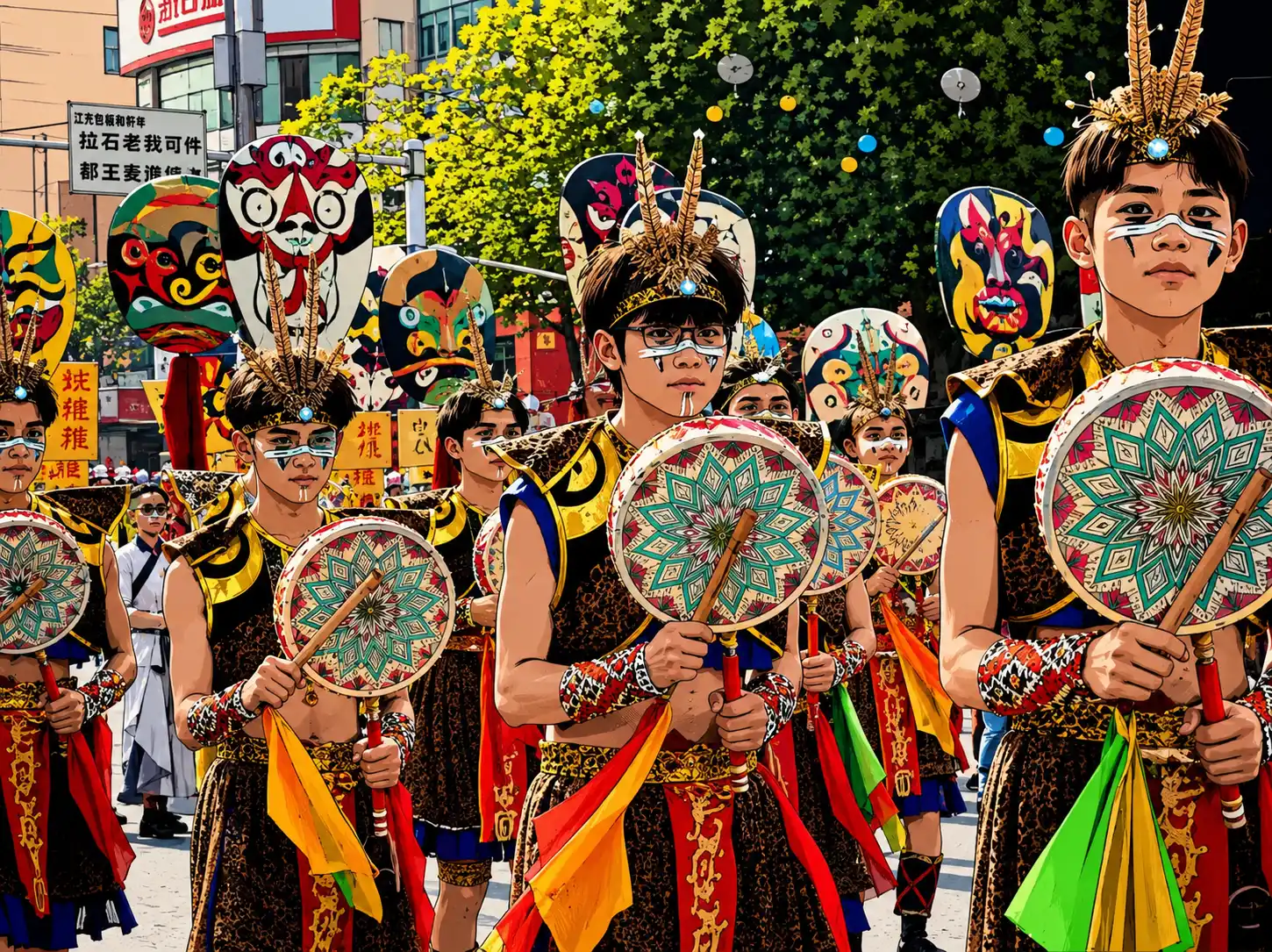
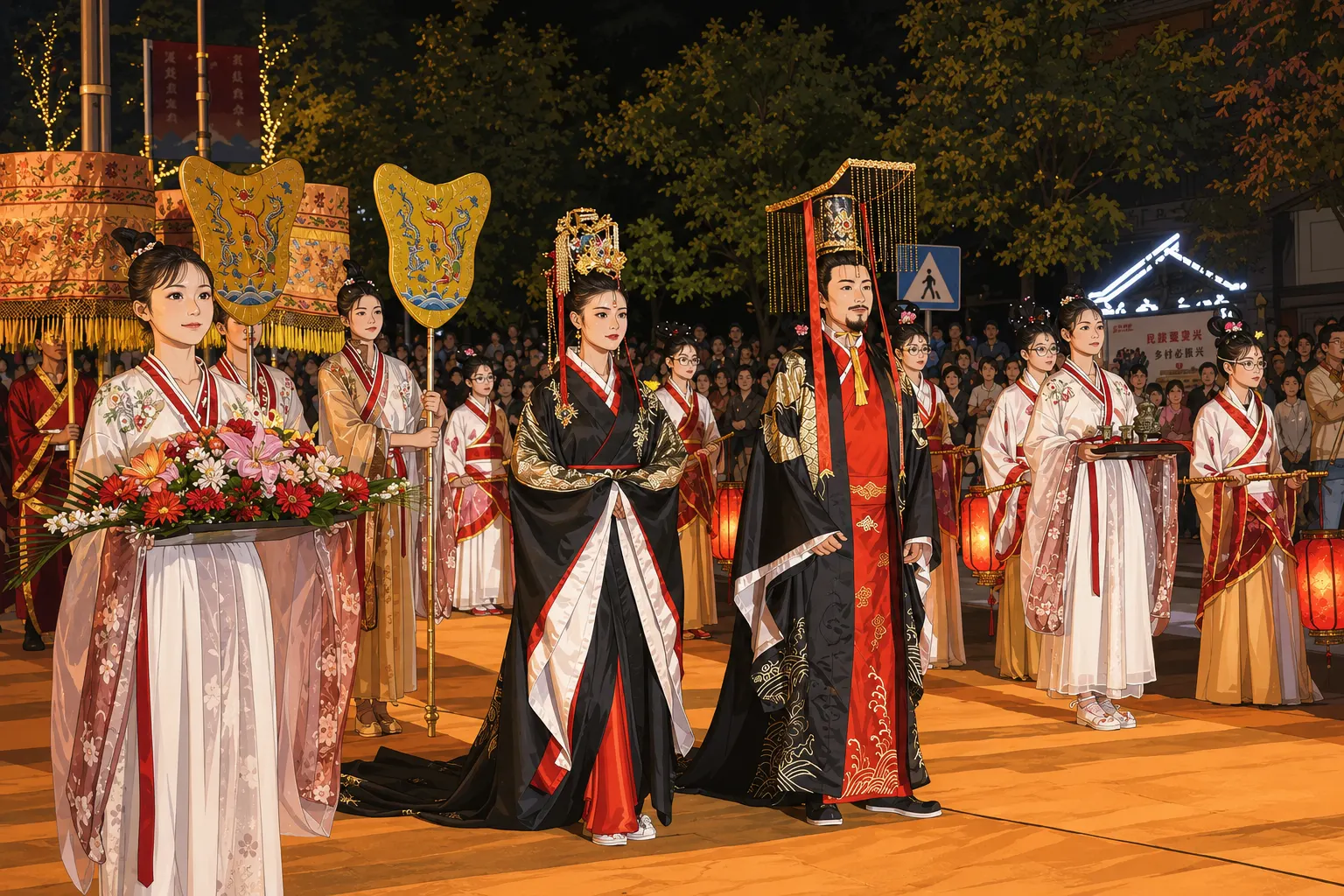
Leading the procession are the "Path-Opening Ghosts"—two towering figures on stilts over three meters tall, one with a black face and one with a white face, each wielding a mourning staff, swaying down the street with deliberate, lumbering steps. Children first hide behind their parents in terror, then cannot resist peeking out again. Next comes the "City God Inspection"—eight strong men carry a sedan chair bearing a clay statue of the City God, his face coated in gold paint, eyes wide and glaring. Wherever he passes, households set out altar tables, light incense and candles, and detonate strings of firecrackers. Through the smoke, the sedan chair flickers in and out of sight, as if it truly has made a round-trip from the underworld.
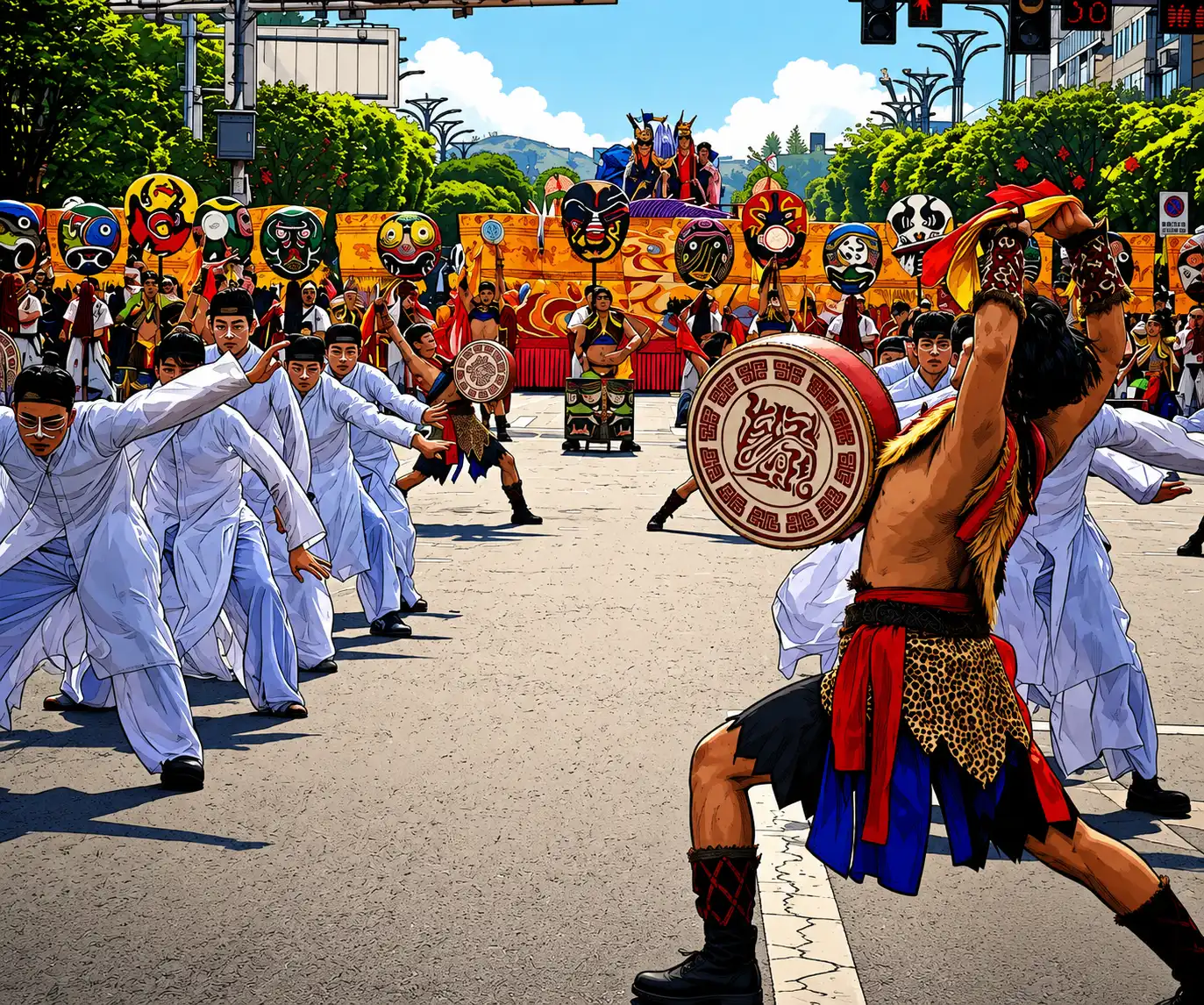
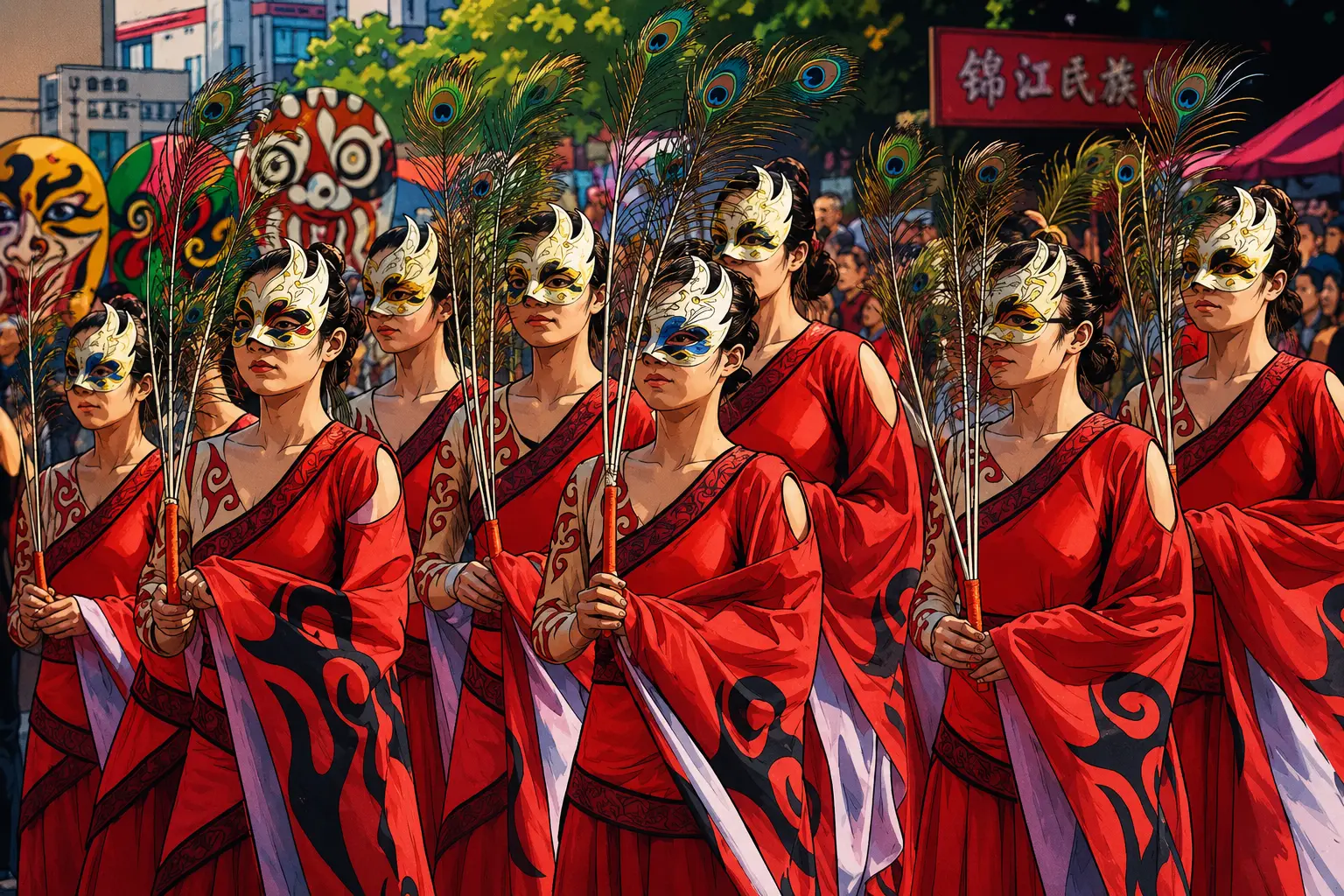
The wildest spectacle is the "Ghost and Deity Formation." Hundreds of costumed performers embody every figure from the netherworld: Old Lady Meng ladles out bowls of "Soul-Confusing Soup" to anyone who will take one; the judge wields his brush, dabbing a red dot on foreheads to signify your name has been entered in the Ledger of Life and Death; the impish little ghosts chase after young women, pulling funny faces before running off in peals of laughter. The chased women do not get angry—they laugh and curse playfully, then go right back to enjoying the show.
At the Fengdu temple fair, ghosts are here to make you laugh, not to make you cry.
Crossing the Bridge of Helplessness
Inside the Fengdu Ghost City scenic area stands the Naihe Bridge—the Bridge of Helplessness. It is not tall; three steps will carry you across. But legend says this is the boundary between yin and yang. The virtuous cross in safety; the wicked are dragged beneath by the demons below.
During the temple fair, the bridge is packed shoulder to shoulder. Tourists shuffle across in single file, some pausing deliberately in the middle to close their eyes and press their palms together in mock prayer. On the side, "Old Lady Meng" serves bowls of brown-sugar water, selling them to everyone who crosses. "Drink this," she says, "and you will forget your past life." Young people gulp it down with giggles, hand back the bowl, and squeeze forward. Elderly visitors are more solemn; after drinking, they bow toward the far end of the bridge, as if they truly have completed some kind of passage.
The "demons" beneath the bridge are scenic-area staff in rubber monster suits, sweating buckets in the heat, still required to emit eerie "woo-woo" groans from the tunnel. Mischievous children toss firecrackers into the darkness, sending the "demons" leaping in fright, which draws roars of laughter from above and below.
This is Fengdu's Naihe Bridge. No tears, no farewells—only the sweetness of brown-sugar water and the sulfur tang of firecrackers.
Ghost King Cakes and Resurrection Rice
The food at the temple fair also bears the stamp of the Ghost City.
The most famous is "Ghost King Cake." Made from glutinous rice flour and brown sugar, steamed into the shape of a little demon's face, with candied jujubes for eyebrows, raisins for eyes, and a stripe of red-date paste for a mouth. When fresh from the steamer, they sit plump and white in bamboo trays, wisps of steam curling upward. Children crowd around, deliberately picking out the ugliest ones, eating them while making ghost noises. The flavor is actually quite ordinary—just sweet and sticky—but the ritual is what matters: "I ate the Ghost King, so now the Ghost King cannot rule over me."
There is also "Resurrection Rice." During the fair, local restaurants serve a special set meal: a bowl of plain white rice, a slab of red-braised pork, a steamed fish, a dish of greens, plus a bowl of tomato-and-egg soup. The dishes are common, but the name is everything—Resurrection Rice." It means you have walked through the Ghost City and now it is time to return to the human world and eat. Visitors order it for the auspiciousness; locals join in, saying that after eating Resurrection Rice, the whole year will go smoothly.
Street stalls are even more plentiful. Deep-fried stinky tofu, hot-and-sour sweet potato noodles, liang xia, grilled rice cakes—the same snacks you would find at any county fair in Sichuan. But Fengdu vendors plant little flags on their carts reading "Netherworld Snacks" or "Specialties of the Ghost Gate." Outsiders chuckle; Fengdu vendors keep a straight face. "Of course. Everything from Fengdu comes from the Ghost Gate, does it not?"
Paper Offerings Burned for the Living
At the Fengdu temple fair, there is a peculiar category of merchandise: paper offerings.
Paper offerings are traditionally burned for the dead. Paper houses, paper cars, paper smartphones, paper televisions, even paper servants and mahjong tables, stacked in pyramids at incense shops. During Qingming and the Ghost Festival, they are set ablaze so the deceased can enjoy them in the afterlife.
But at the temple fair, many paper offerings are burned for the living.
One variety is the "Luck-Turning Effigy," tailor-made for those down on their luck. The paper artisan crafts a small human figure according to your zodiac animal and birth date. You write your troubles on it—debt," "illness," "quarrels"—then toss it into the bonfire at the fairground. The moment the flames leap up, the crowd shouts: "Gone! Gone! The bad luck is gone!" The burner shouts along, and when it is over, exhales deeply, as if something heavy truly has been shed.
Another is the "Wish-Granting Effigy"—mountains of gold and silver, money trees. These are not for ancestors; they are for the God of Wealth. Fengdu locals believe the God of Wealth in the Ghost City is more powerful than any in the mortal world—after all, if he can manage money in the underworld, what is earthly wealth to him?
Paper burns to ash; what the heart seeks is peace. The people of Fengdu are practical. They know the best use of ghosts and gods is to make yourself feel better.
The Last Watchman of the Ghost City
When the fair disperses and the crowds recede, Fengdu returns to being a quiet little town on the Yangtze.
But someone stays behind. Old Zhang, over seventy, sets up his stall beside the Naihe Bridge every year during the fair, selling paper lanterns he makes himself. The lanterns are painted with every kind of ghostly face—fierce, goofy, ugly enough to make you laugh. He learned the craft from his father, who learned it from his grandfather; beyond that, the lineage is lost.
"Young people do not want to learn it anymore," Zhang says. "One lantern takes half a day to make. I sell them for ten yuan. Better to go work in a factory."
Young people often stand in front of his stall, live-streaming on their phones. Zhang does not understand live-streaming, but he knows to smile at the camera. Someone asks him: "Grandpa, do you believe in ghosts?"
Zhang holds up a freshly finished lantern—a green face with protruding fangs—and waves it at the lens. "Ghosts? Ghosts live in the human heart. If your heart is clean, you can sleep soundly in the Hall of Yama. If your heart is guilty, a five-star hotel will still give you nightmares."
Then he laughs himself, revealing a missing front tooth.
How to Experience the Fengdu Temple Fair
If you want to attend the Fengdu temple fair, here are the essentials.
Timing: Around the third day of the third lunar month, lasting about a week. In the solar calendar this usually falls in April, but the exact date shifts each year—check in advance.
Transport: High-speed rail runs directly from downtown Chongqing to Fengdu in about an hour. Alternatively, take a cruise ship from Chaotianmen Dock in Chongqing down the Yangtze, a four-hour journey that doubles as a mini Three Gorges tour.
Accommodation: Hotel options in the county town are limited; book early. If nothing is available, stay in nearby Fuling or Dianjiang and make a day trip.
What to see: Besides the daytime parade, there is a "Ghost City Night Tour." The Hall of Yama, the Naihe Bridge, and the Eighteen Levels of Hell are lit and sound-tracked into something far more atmospheric than during daylight. Timid visitors can take the "Virtuous Person's Path," bathed in green light; the brave can brave the "Wicked Person's Path," where "demons" may jump out to startle you.
What to eat: Ghost King Cake is a must-try, but do not eat too much—glutinous rice sits heavy. Resurrection Rice is auspicious but ordinary in flavor. The street stalls are the real deal; locals swear by the hot-and-sour noodles and liang xia.
Most importantly, bring a heart unafraid of ghosts. In Fengdu, ghosts are neighbors, not enemies. You laugh at them, and they laugh back. You fear them, and only then do they frighten you.
When the temple fair ends, the ghosts return to their temples and the people return to their homes. The Yangtze keeps flowing, and the lanterns of the Ghost City keep glowing. Next March, the gates of hell will open again, and the Bridge of Helplessness will once more be packed with laughing people crossing over.
Because the people of Fengdu know this truth: once you have made peace with death, living becomes all the more delicious.