Living Traditions in China
Tradition remains visible in China because communities continue to perform, practise and reinterpret it. This guide connects festivals, performing arts, folk beliefs and skilled work without treating them as relics from a finished past.
Festival Traditions
Many Chinese festival traditions make sense only when they move through a street. Drums set the rhythm, roads become stages, dragons twist through sparks, teams paddle together, and children appear to float above parade platforms.
Each form belongs to a specific place and community. Tongliang controls a fire dragon; Dragon Boat races join teamwork with seasonal memory; Donghai Island builds a dragon from human bodies; Wuchuan Piaose uses hidden supports and moving platforms. These traditions survive through rehearsal, funding, local knowledge, and decisions about what may change without losing the form.
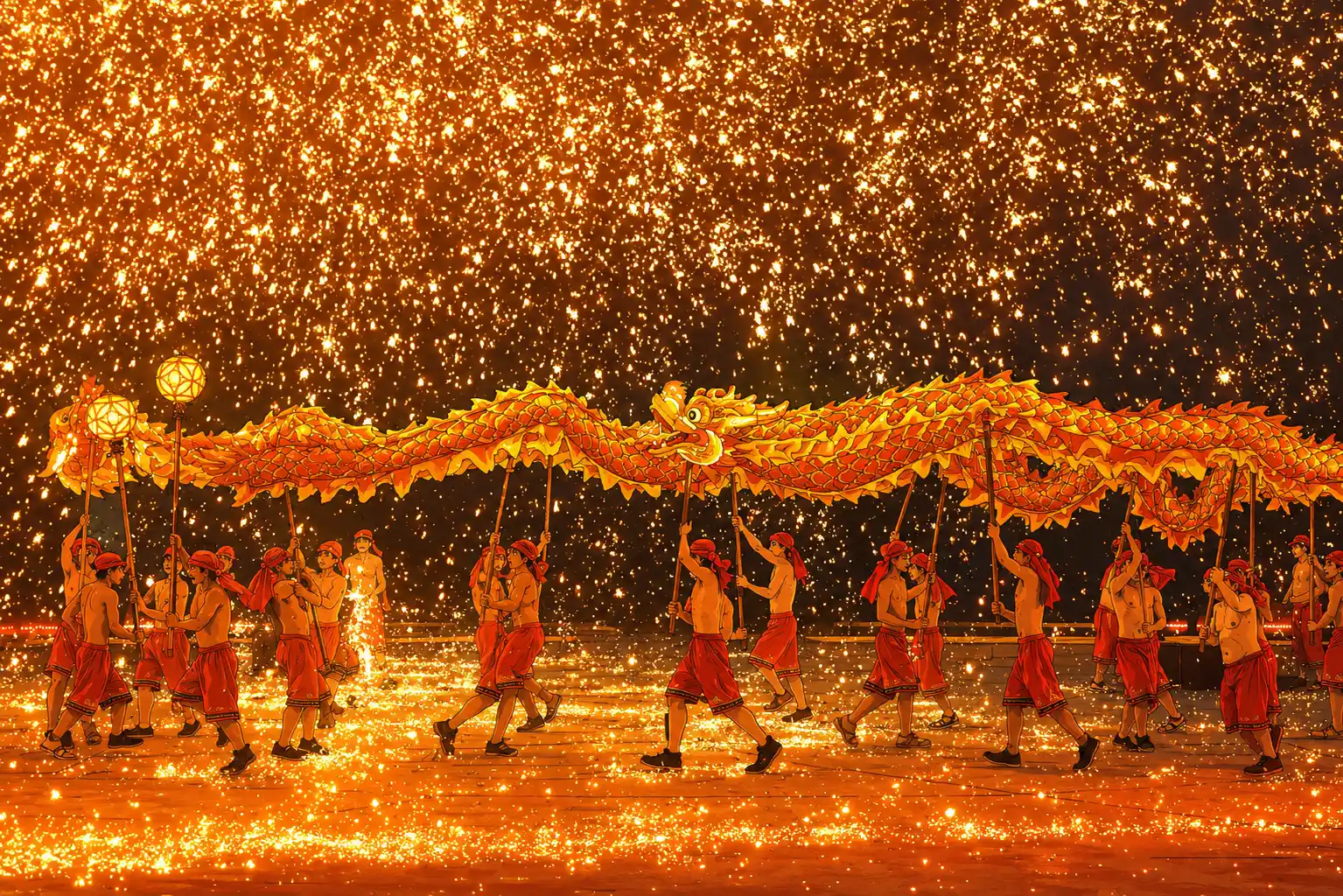
How a Fire Dragon Writes Chinese Romance in the Night Sky
In Tongliang, the dragon lives in firecrackers, molten iron, and the warmth of calloused hands passed down through generations.
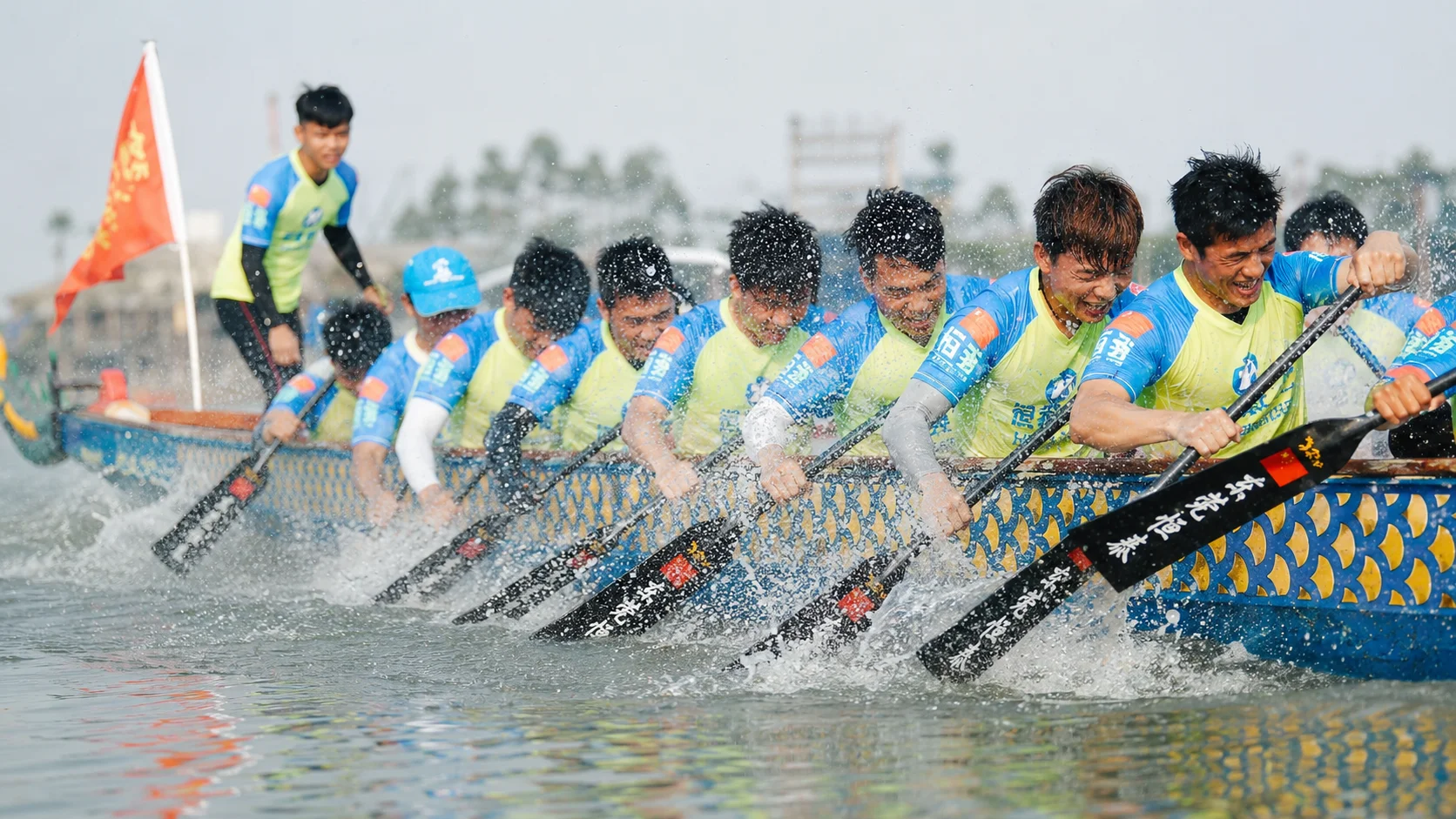
The River Remembers Yichang's Dragon Boat Festival and the Man Who Walked Into It
A stone hits the Miluo River. A paddle splits the water. A leaf folds around rice. On the fifth moon, the river remembers.
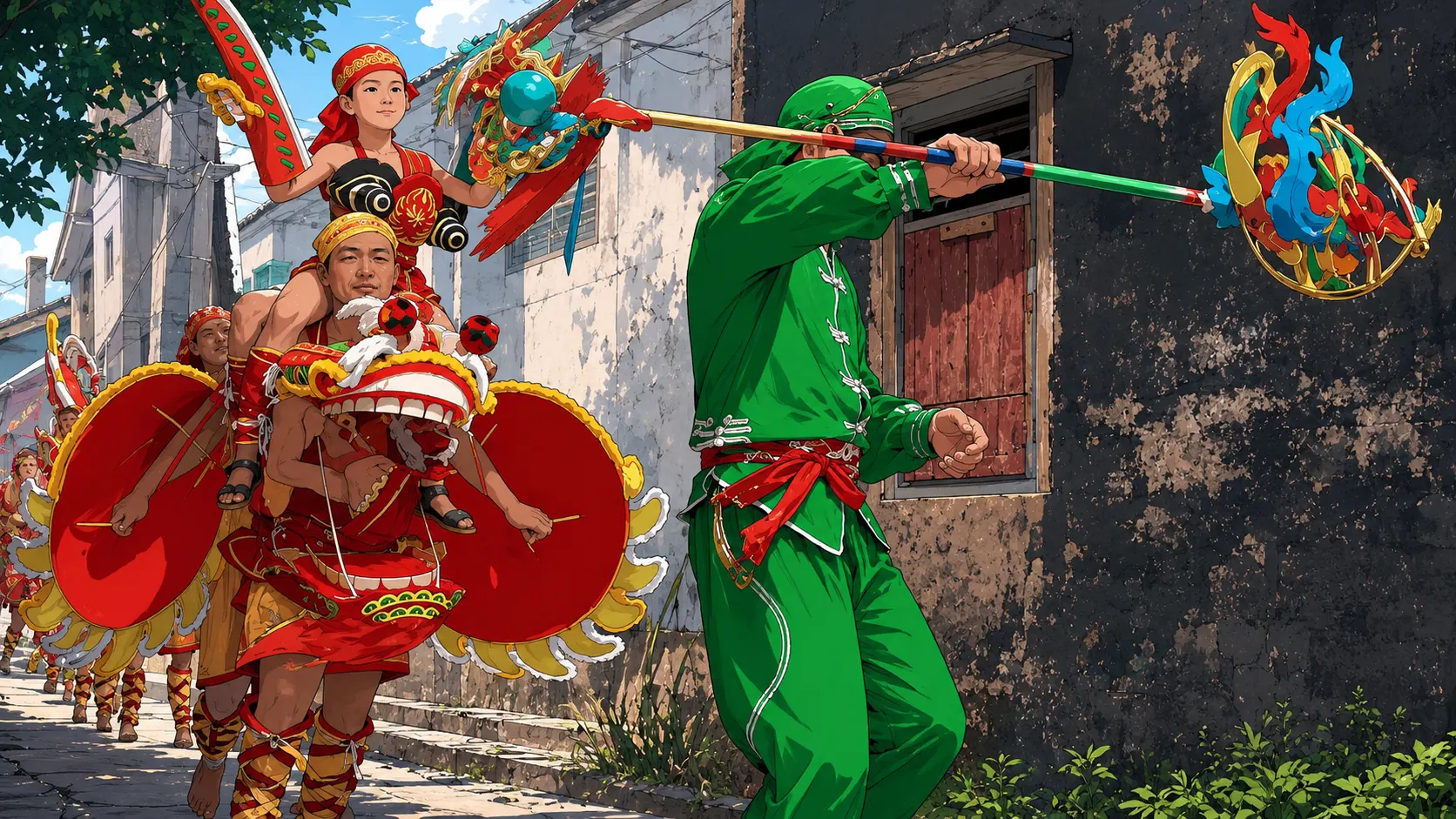
When the Spine Turns
On Donghai Island, the dragon is built from knees, backs, and breath—one body climbing another until a living spine begins to move.
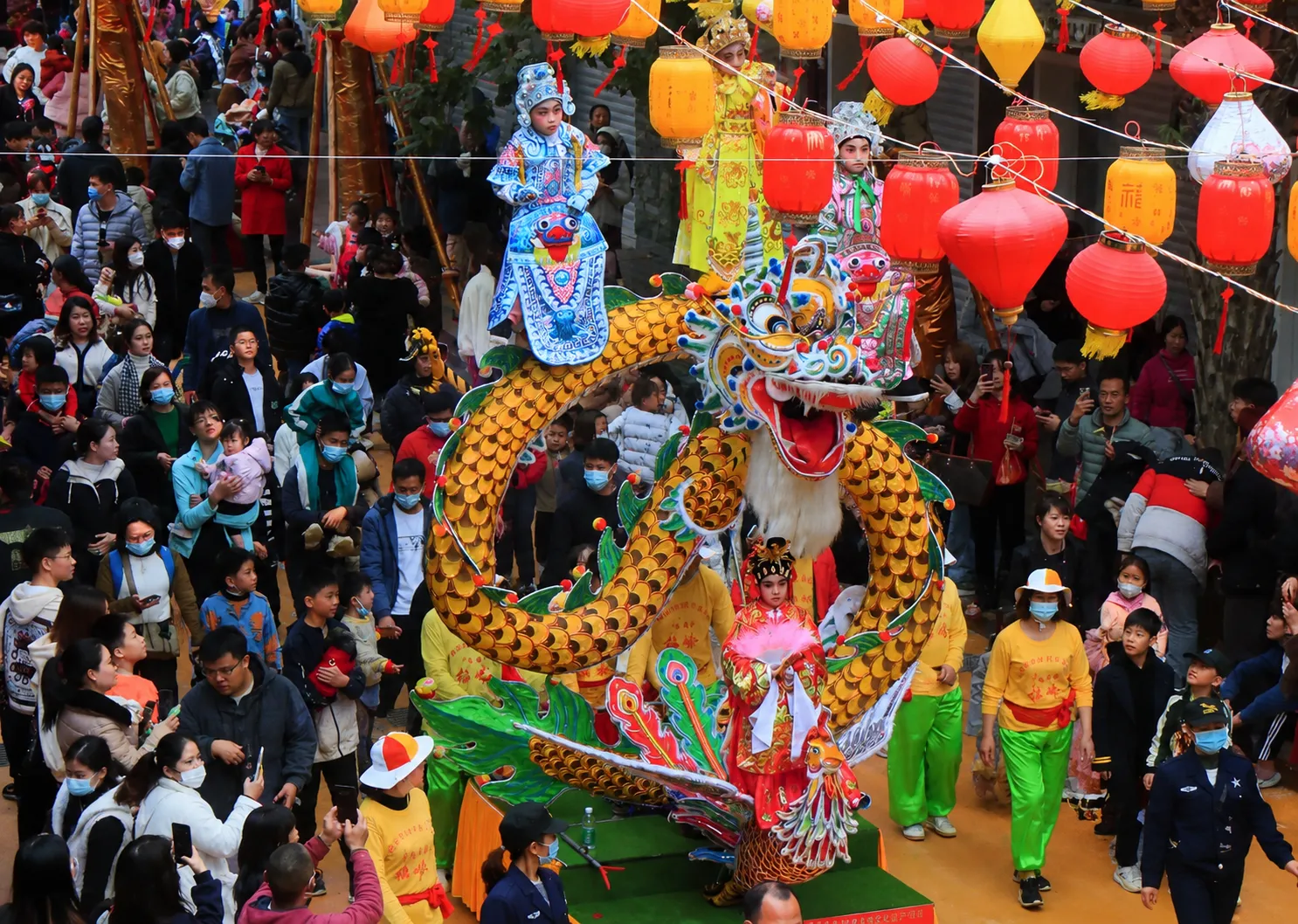
The Iron That Must Disappear
In Wuchuan, a child rises above a moving platform and appears to stand on air—iron, balance, and village timing hold the sky.
Performing Arts
Chinese performing arts ask audiences to read drum cues, face colors, steps, sleeves, masks, and gestures as carefully as scenery. Once this vocabulary is understood, a stage that first appears unfamiliar becomes much easier to follow.
Peking Opera combines voice, movement, combat, costume, and percussion. Sichuan face-changing turns concealed technique into sudden transformation, while Nuo Opera places masks within village ritual and belief. These forms do not share one origin, but each shows how sound, costume, and trained movement reshape identity. Together they replace the vague label of Chinese opera with distinct practices rooted in particular regions and communities.
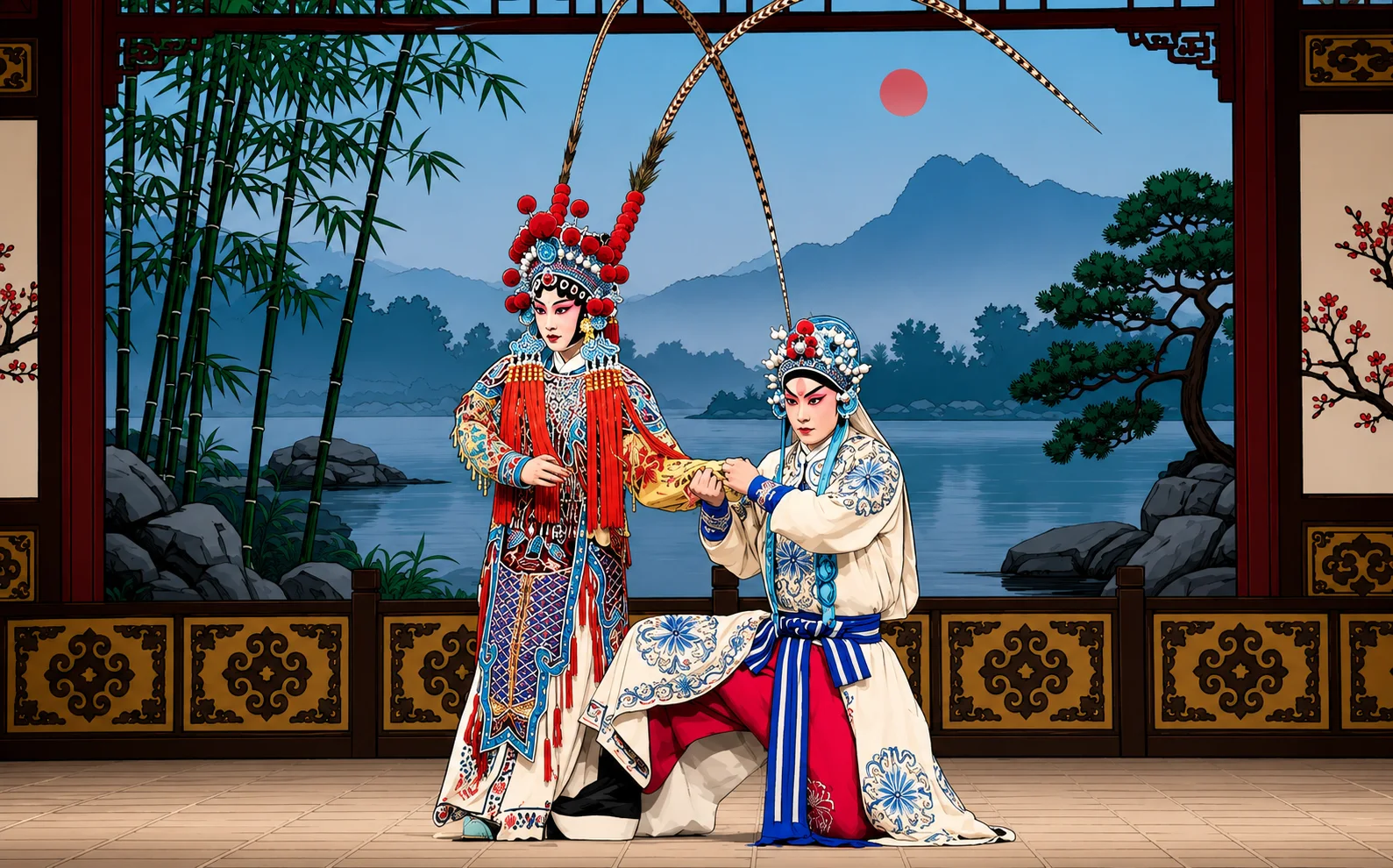
The Backstage Clockwork of Beijing's Grand Sound
Peking Opera wakes first inside a backstage trunk of robes, sleeves, beards, and practiced breath, long before the gong sounds.
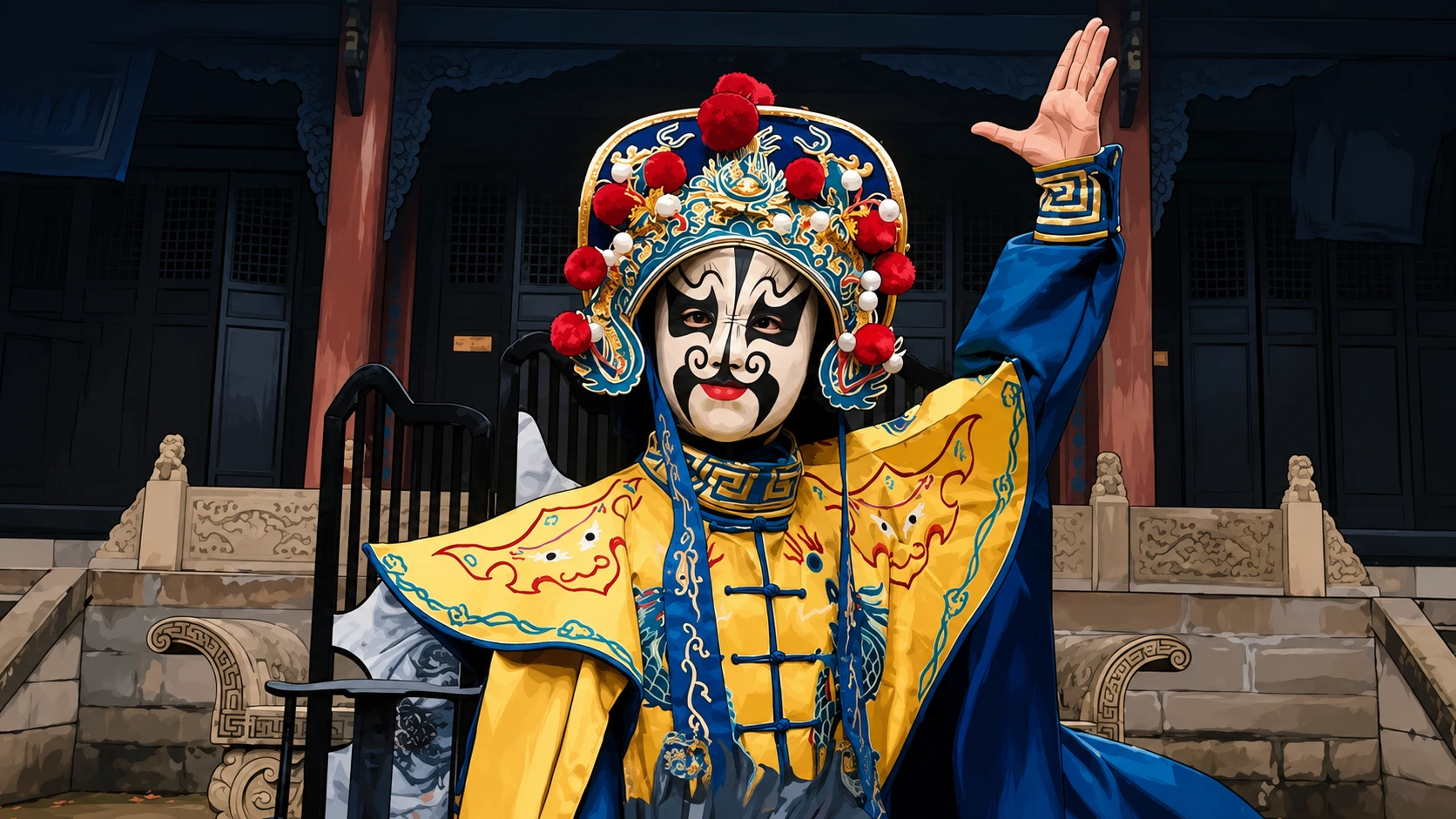
Twelve Faces, One Snap of the Head
Behind a Chengdu teahouse curtain, an actor snaps his head and in less than a blink, his face becomes someone else.
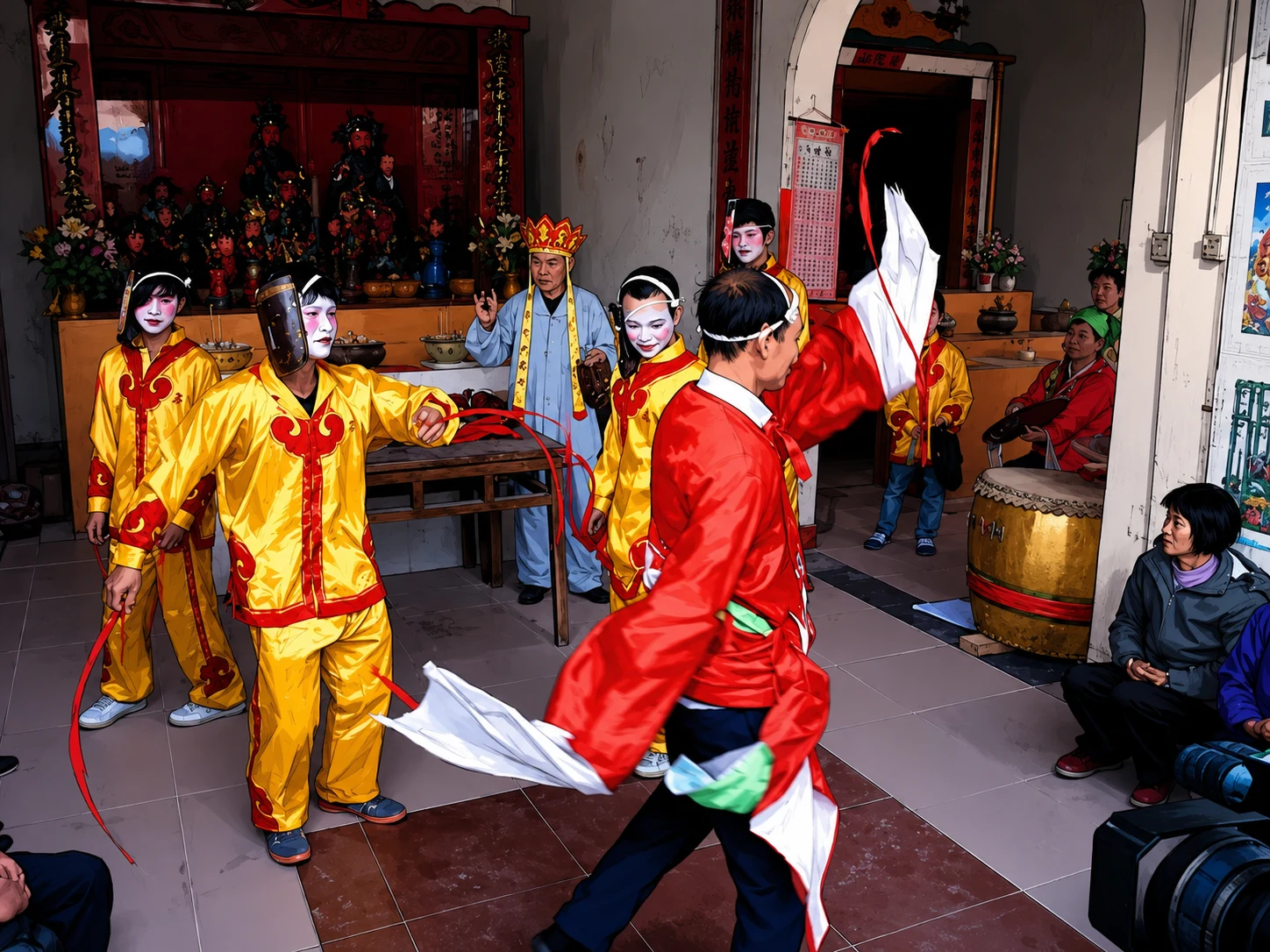
The Chest That Holds the Gods
In a Guangdong village, a farmer lifts a painted mask to his face—for the next hour, he becomes something older than the Ming dynasty.
Folk Beliefs
Folk belief in China may live in a temple, pilgrimage, household offering, procession, legend, or meaningful landscape rather than a single doctrine. Gods, ancestors, historical figures, and fictional characters help communities express protection, danger, love, and memory.
Mazu traveled with sailors and migrants around the Taiwan Strait; Fengdu developed a landscape of judgment and the underworld; the White Snake legend made West Lake into a cultural map. These regional, layered traditions do not imply one national faith. Distinguishing deity from legend, ritual from performance, and local custom from consensus reveals how belief still organizes calendars, communities, and shared places.
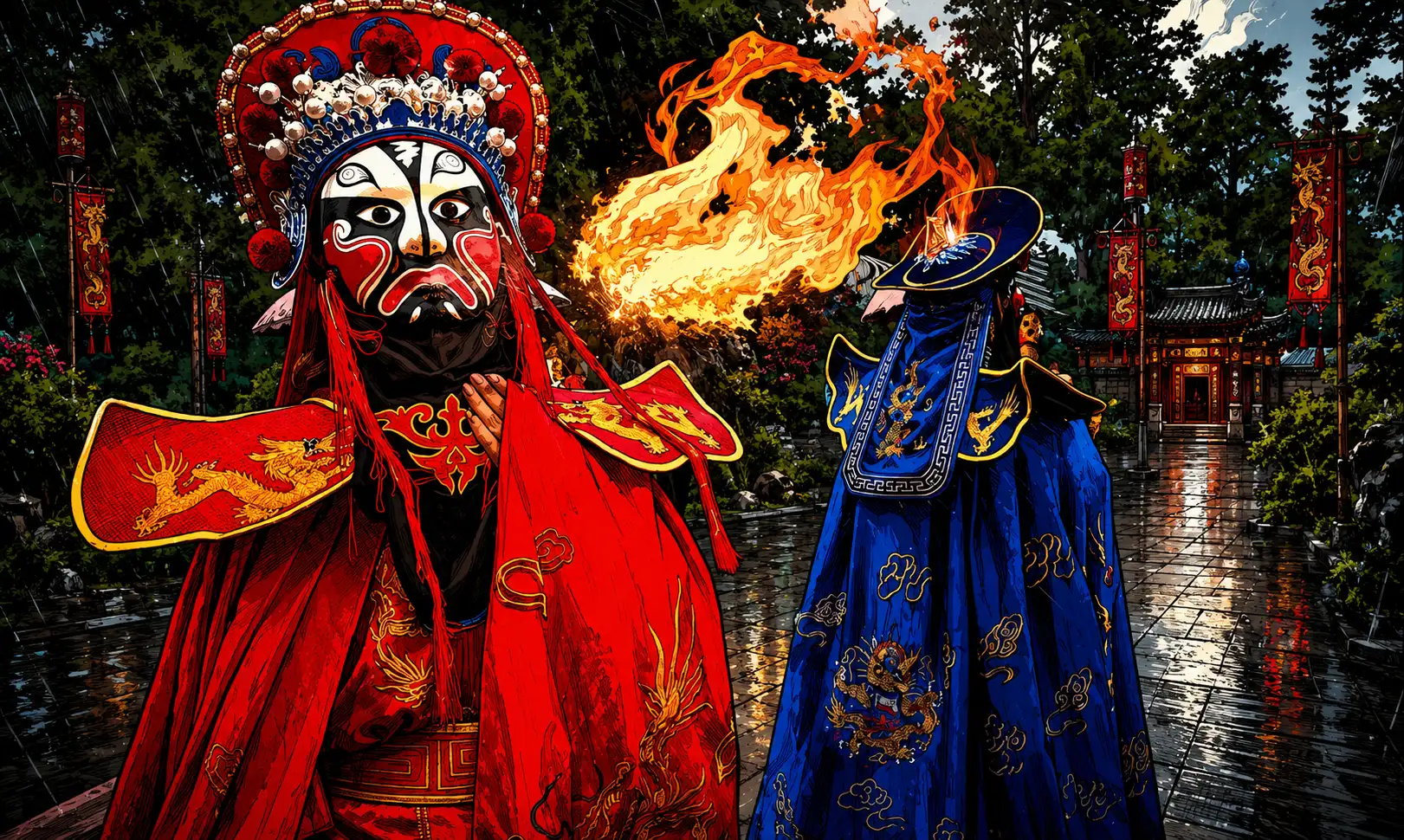
In China's Ghost City, the Living Outshine the Dead
Every spring, a riverside town erupts with gongs and demons, proving that in Fengdu, the living are louder than ghosts.
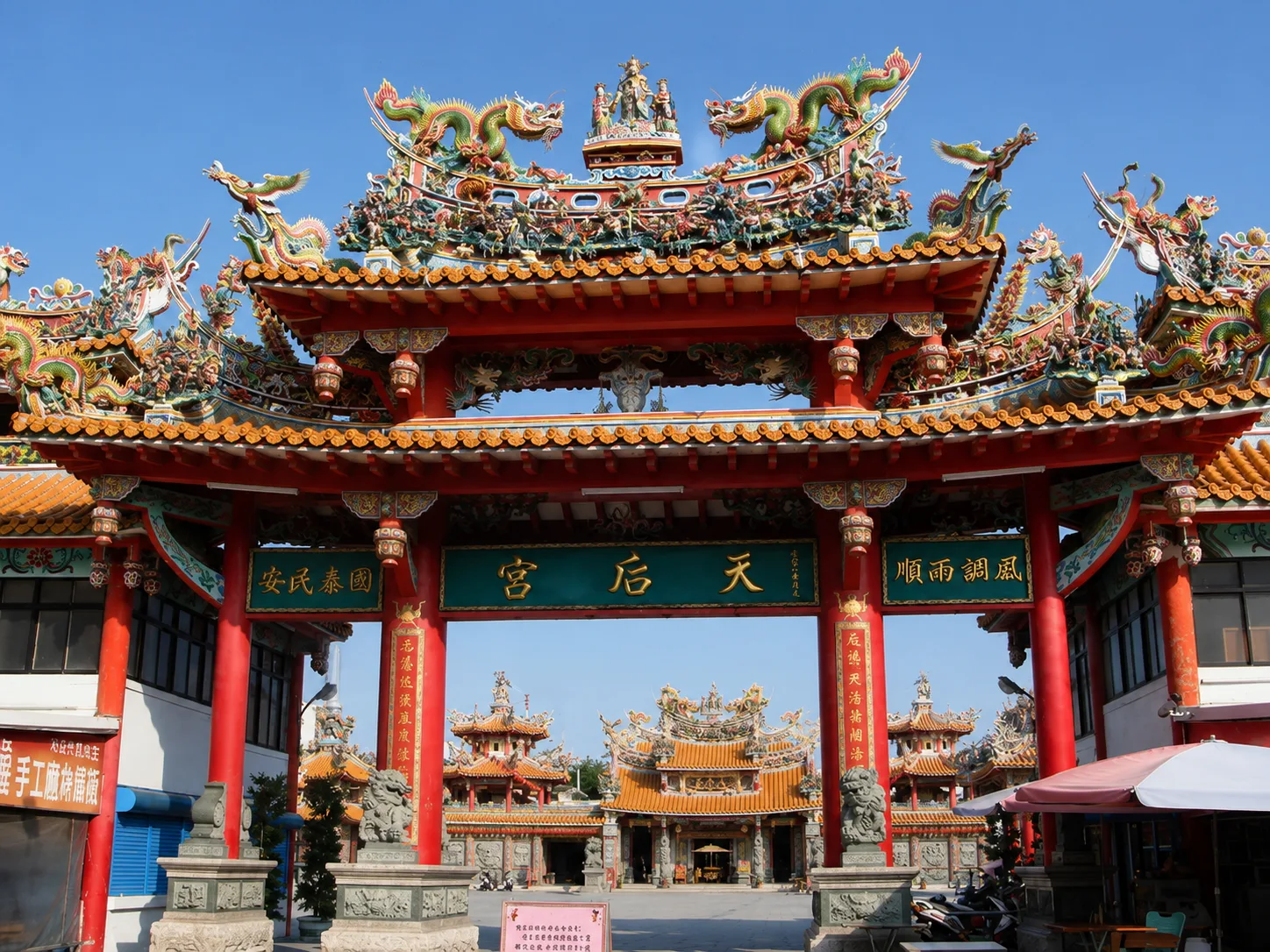
One Bell in Fujian, One Bell in Tainan
At Tainan's Grand Mazu Temple, a stick of incense burns. On Meizhou Island in Fujian, another pilgrim lights one. The smoke rises into the same sky.
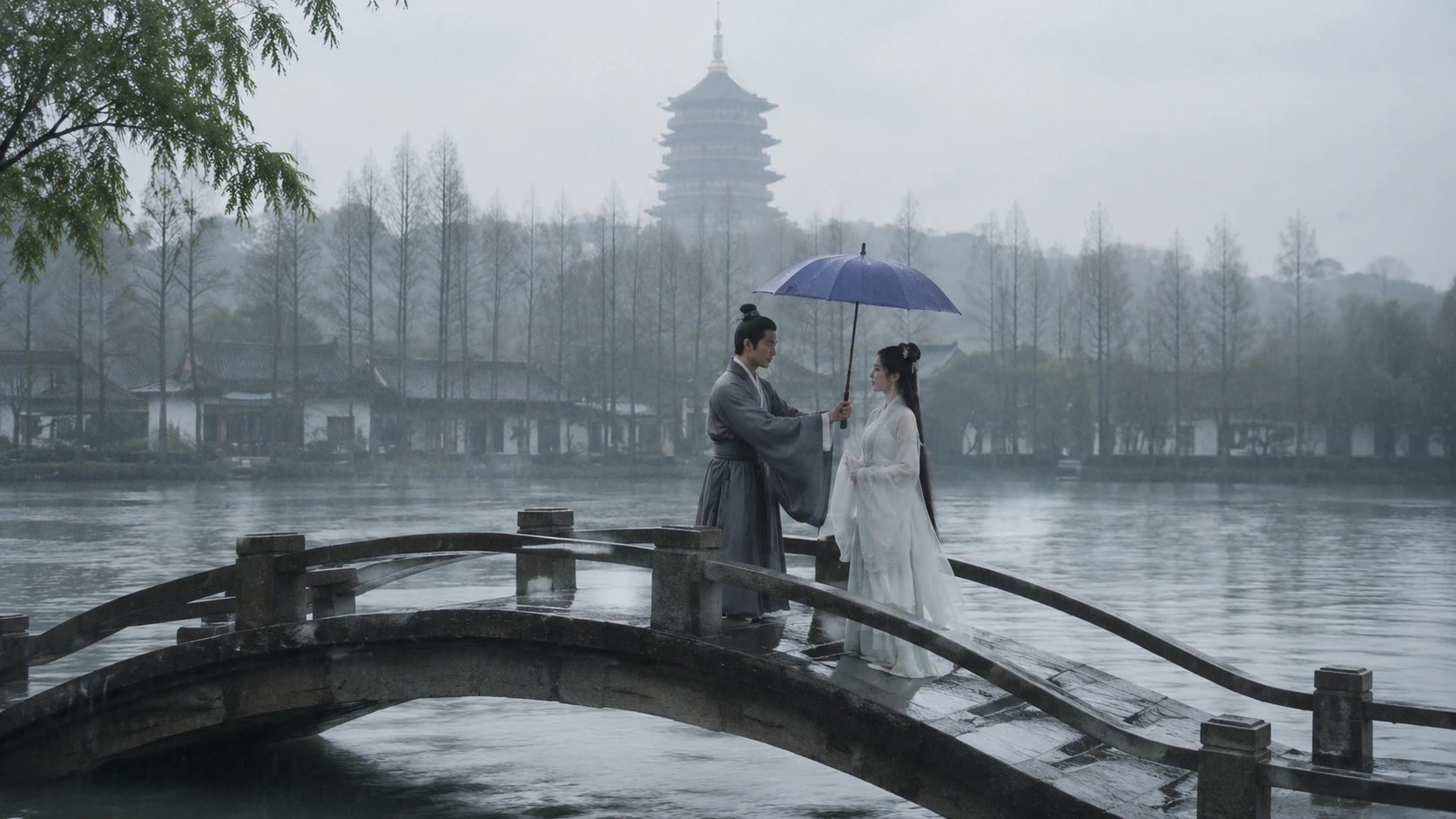
Why West Lake Means More Than a Beautiful View
West Lake became unforgettable not through scenery alone, but through a love story of chance, ordinary devotion, separation, and hoped-for reunion.
Traditional Skills
Traditional knowledge often lives in the body: how tightly to pull silk, how fabric should fall, how long to hold a stance, or when a material will respond. Timing, touch, repetition, and judgment cannot be preserved by written instructions alone.
Sichuan embroidery works at the scale of split silk threads; Shanghai cheongsam tailoring joins measurement with changing social history; Wing Chun passes movement through forms, partners, and lineages. These practices belong together because inheritance requires trained action. Their survival depends on people choosing to practise, correct, adapt, and eventually teach what they once learned.
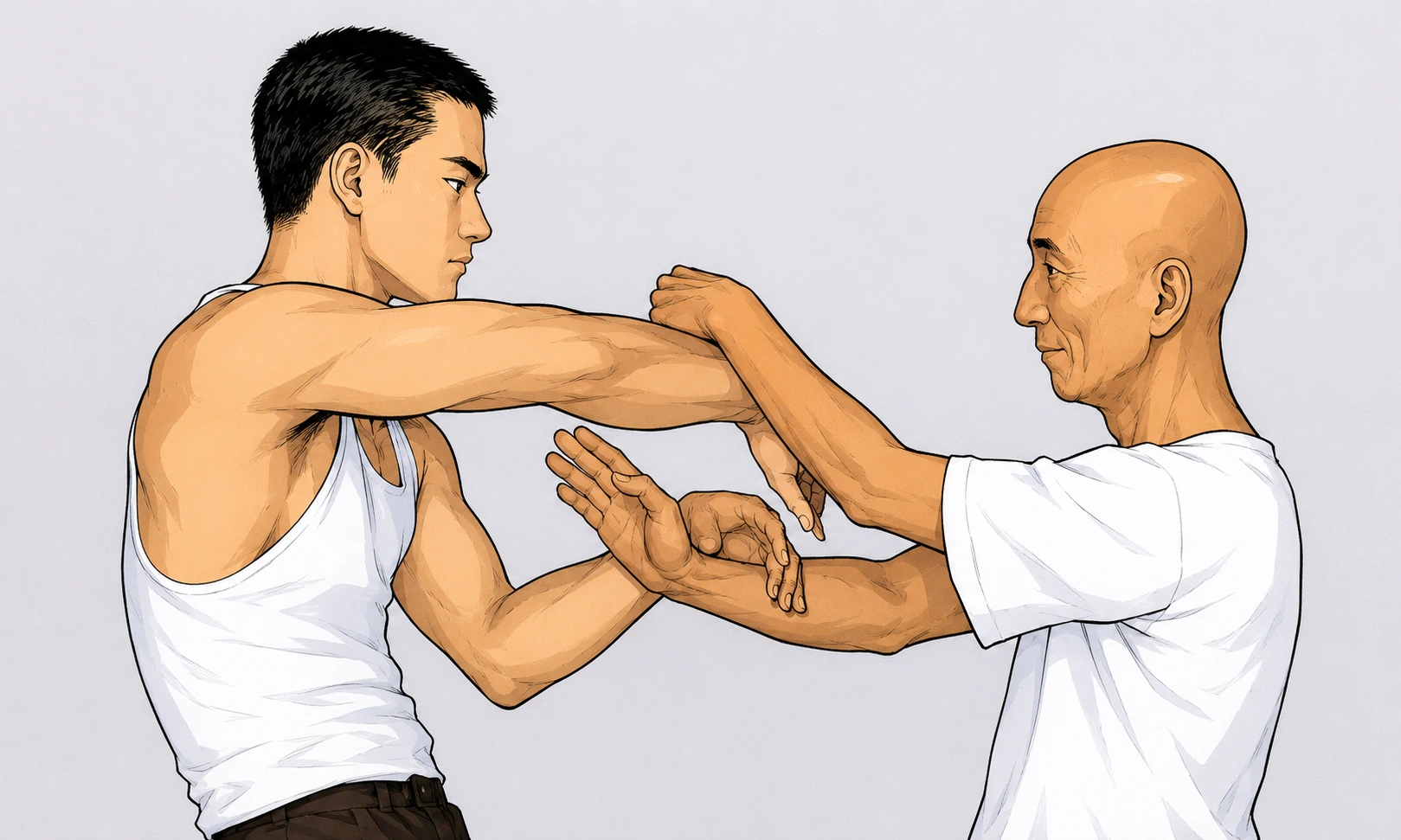
The Fishmonger Who Opened the Gates
Bruce Lee's one-inch punch electrified a Long Beach stage in 1964—Wing Chun, born in a Foshan alley, had gone global.
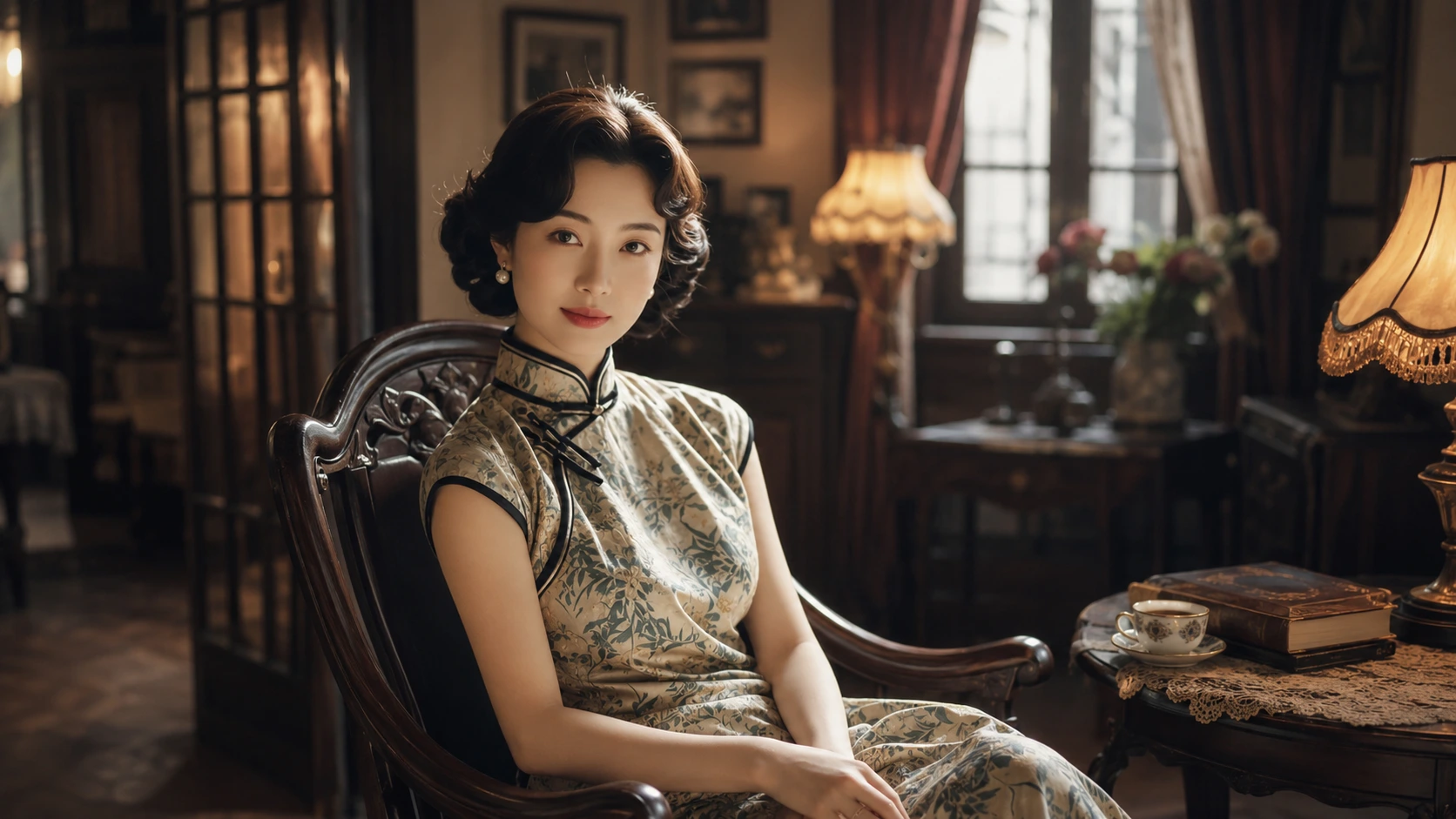
The Dress Shanghai Keeps Reinventing
A visitor hears two names before seeing the dress: cheongsam and qipao. One traveled through Cantonese. The other through Mandarin. Both point back to the same Shanghai silhouette.
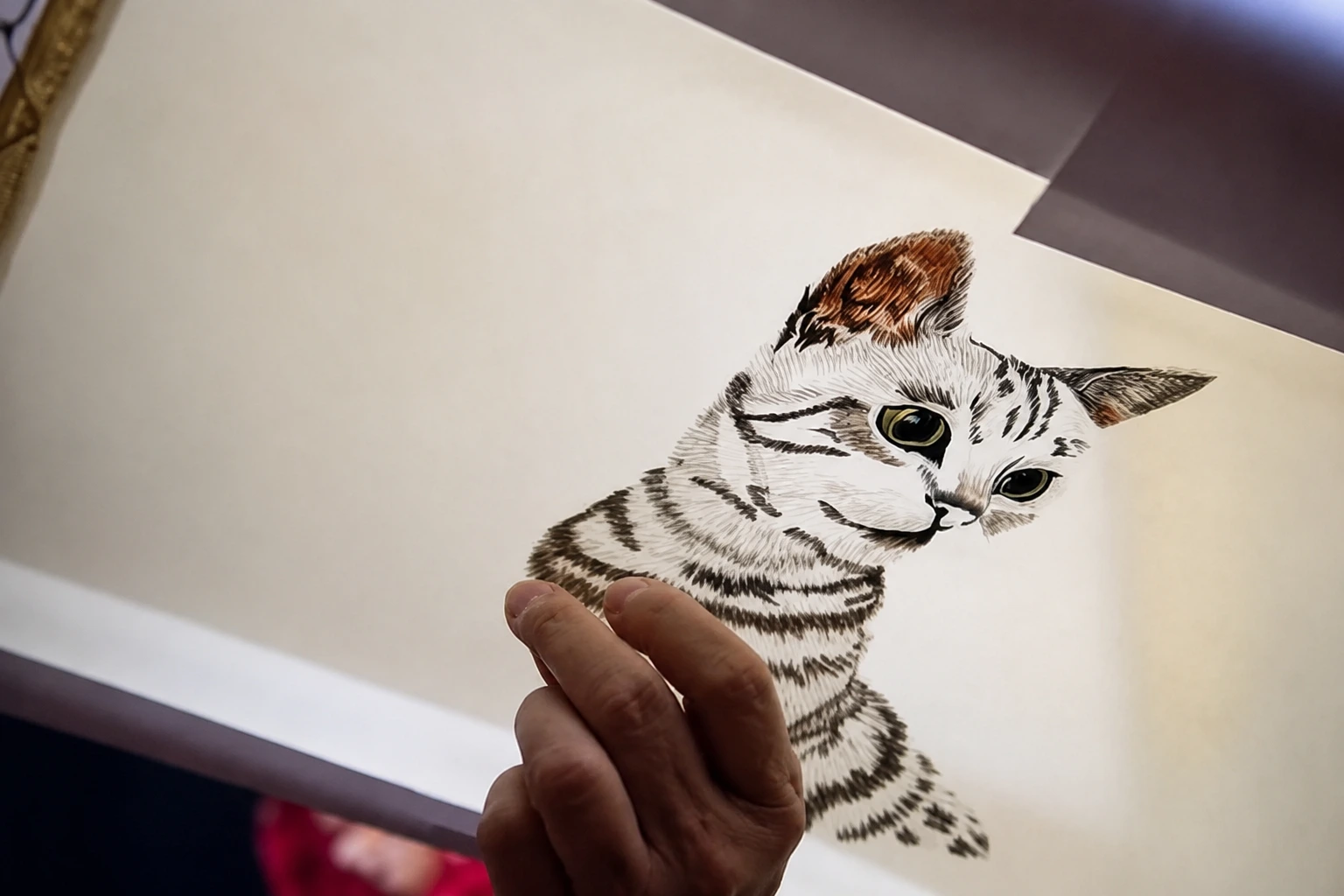
The Thread That Remembers Both Sides
In a Chengdu workshop, a master threads silk finer than hair through brocade that costs more per meter than her monthly rent.