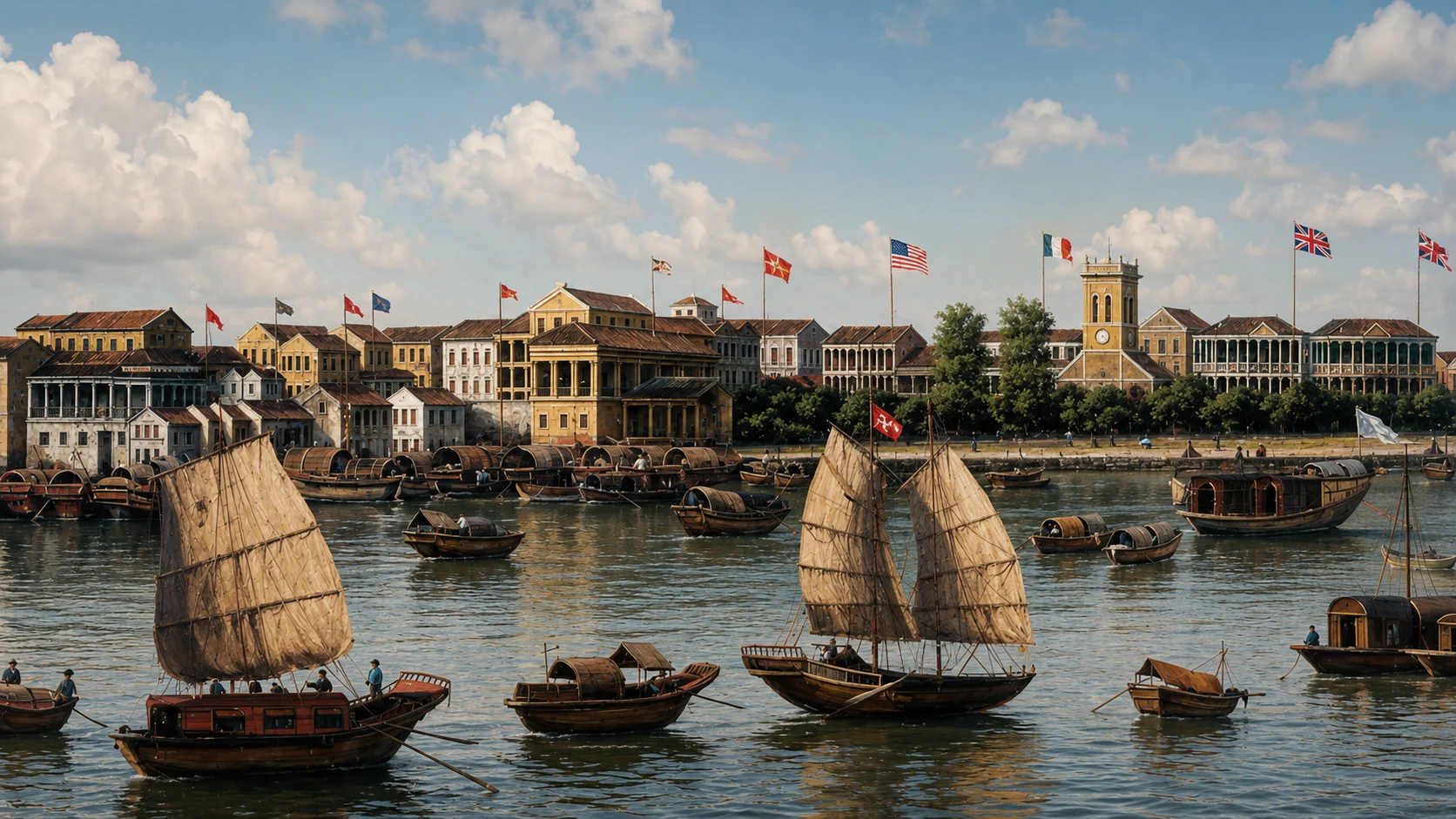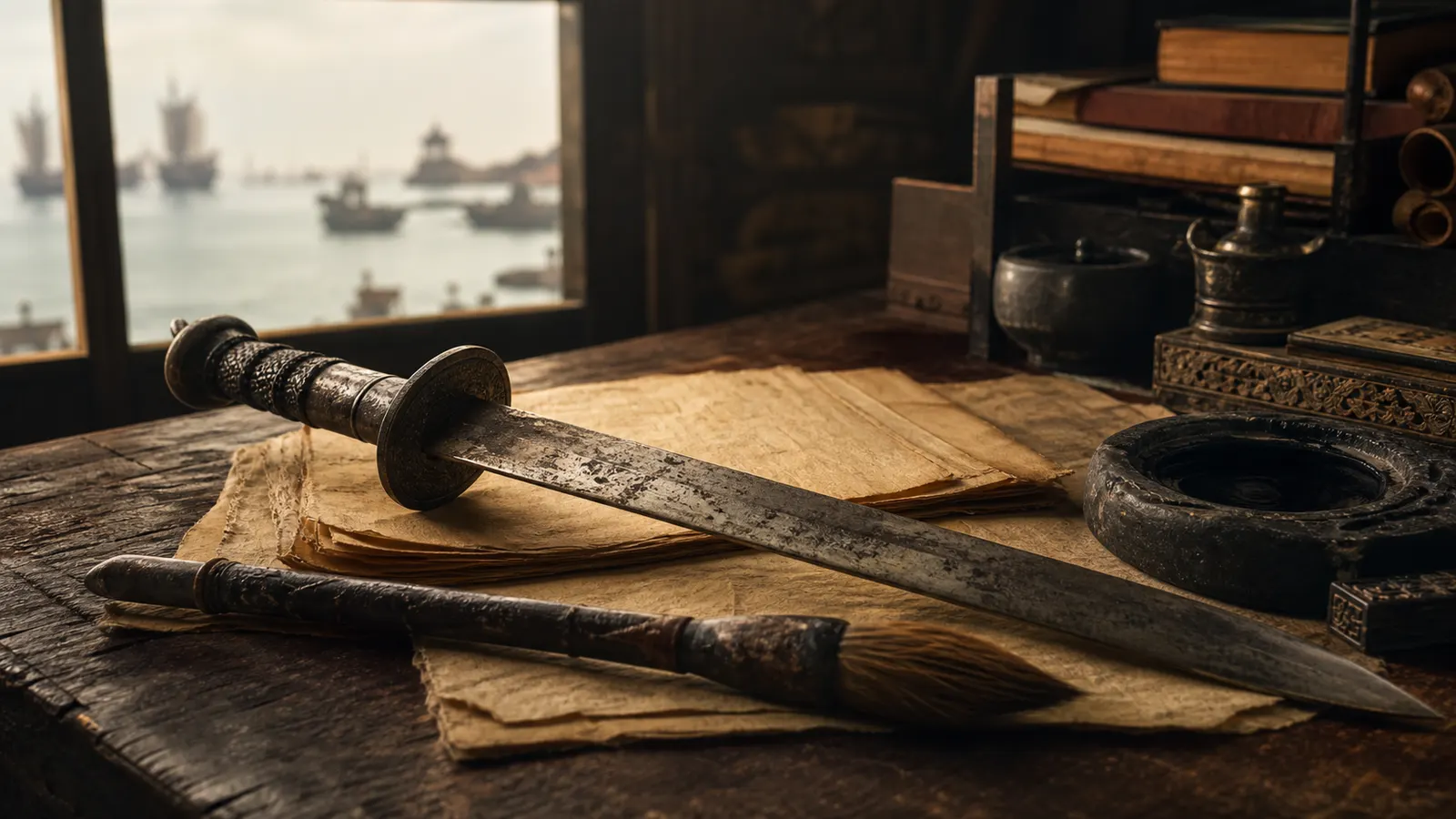
In May 1895, at the port of Tainan, Taiwan, China, a crowd gathered on the stone pier. Qing officials were boarding ships. Soldiers were boarding ships. Silver, archives, maps, seals -- everything that could be packed was being loaded into wooden hulls bound for Fujian, a hundred miles across the strait.
A weathered man in his late fifties stood at the edge of the pier, skin darkened by decades of subtropical sun. He had been a farmer, a bandit, a rebel, a general. Now he was watching an empire abandon an island.
"General Liu," someone shouted. "Get on the ship."
Liu Yongfu turned around. He walked the other way.
---
A War Lost at Sea
The island was being abandoned because of a war that Liu Yongfu had no part in.
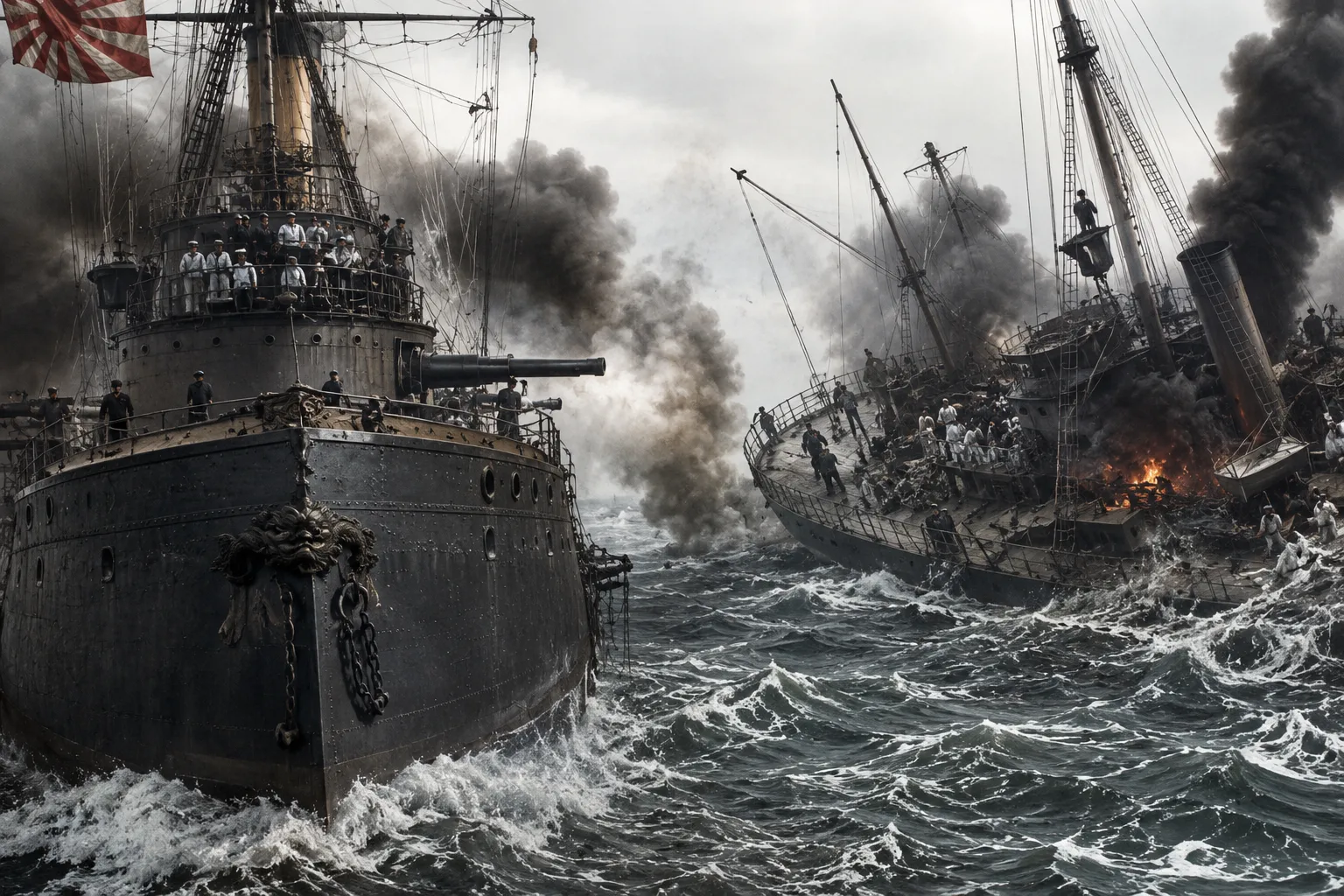
In 1894, the Qing Empire and Meiji Japan went to war over control of Korea. Japan sank the entire Qing northern fleet in the Yellow Sea and stormed through Manchuria, capturing Port Arthur. The Qing court sued for peace.
On April 17, 1895, the Treaty of Shimonoseki was signed -- the latest of the unequal treaties that had been forced upon China since the Opium Wars. Taiwan and the Penghu Islands were ceded to Japan. The indemnity was two hundred million taels of silver -- roughly three times Japan's annual national budget.
When the news reached Taiwan, the island erupted. Civilians in Taipei tore down Japanese flags. Local militias formed. Petitions were sent to Beijing -- desperate, handwritten, signed by hundreds -- begging the emperor not to abandon them. The emperor did not reply.
The Qing governor of Taiwan, Tang Jingsong, was ordered to oversee the handover. On May 25, facing furious crowds, he declared a short-lived local resistance government. He fled ten days later.
All Qing troops were ordered to evacuate. Every officer, every soldier, every civil servant.
Every one of them -- except Liu Yongfu.
---
Five Months Against an Empire
Liu Yongfu had no reason to stay. Born in 1837 to a poor farming family in Qinzhou, Guangxi, he never went to school. As a teenager he joined a rebel militia; by his thirties he commanded his own army -- the Black Flag Army, named for the black banner he flew over his camp.
In the 1870s and 1880s, the Black Flags fought the French in northern Vietnam, killing two French commanders in separate campaigns. The Qing court, pragmatically, gave Liu a general's rank and absorbed his army. In 1894, he was transferred to Taiwan. He had been on the island barely a year when everyone else left.
The Japanese Imperial Guards Division landed at Keelung in early June 1895 -- nearly fifty thousand troops. Liu Yongfu moved south to Tainan and rebuilt the defense line. His Black Flags numbered a few thousand, joined by local Hakka and Hokkien militias -- farmers, fishermen, shop clerks -- armed with rifles, spears, whatever they could find.
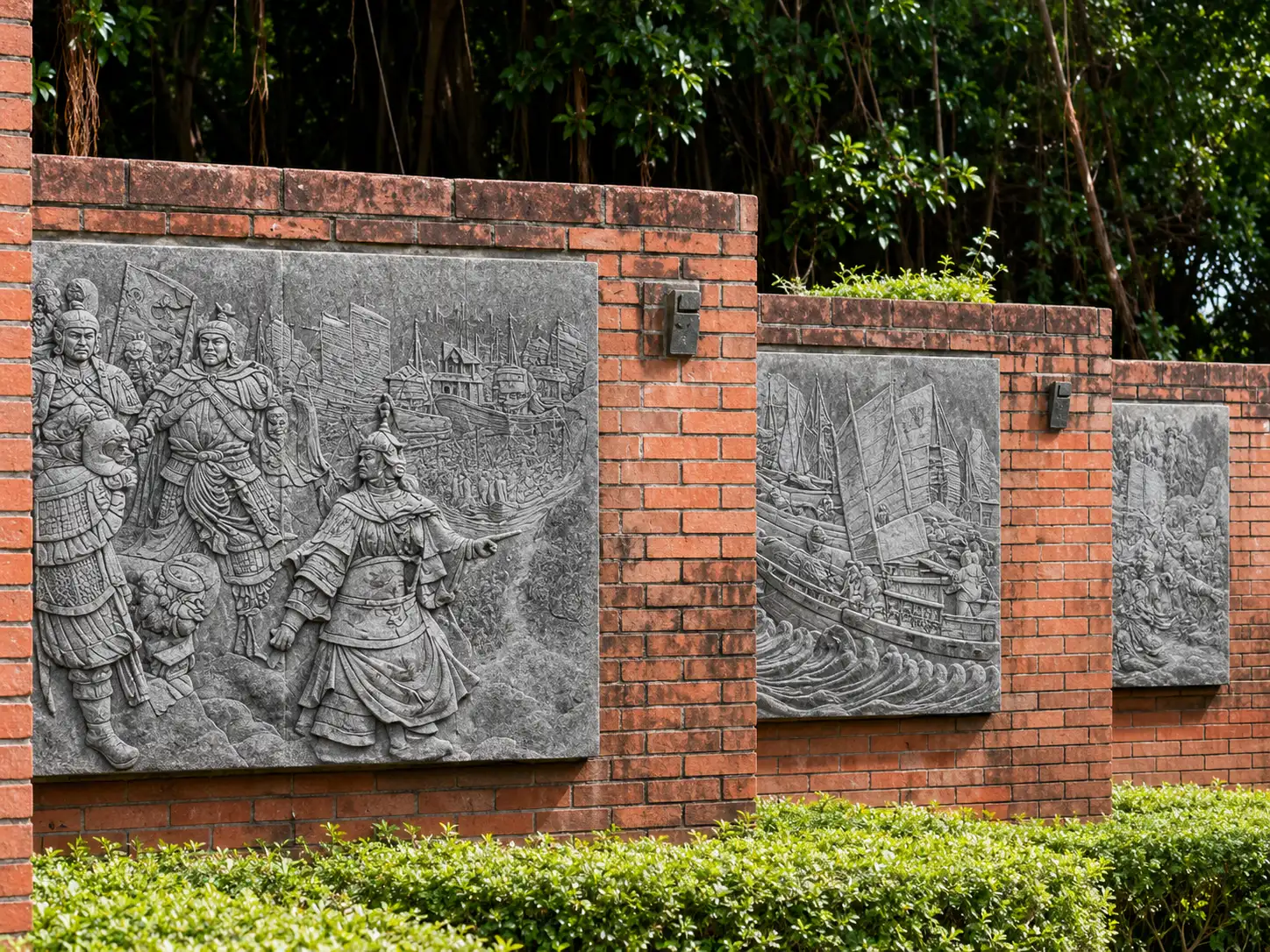
They fought over a hundred engagements. The bloodiest was at Bagua Mountain near Changhua, where Black Flag soldiers and local volunteers held the ridge for an entire day. Nearly a thousand defenders were killed. The Japanese commander was gravely wounded and later died -- the highest-ranking Japanese casualty of the campaign.
By October, Liu Yongfu was cornered in Tainan. No ammunition. No reinforcements. No money. He called his last war council. An aide said, "General, we have nothing left to fight with."
Liu Yongfu said nothing for a long moment. Then he gave his final order: hire a British merchant ship.
On October 20, he boarded the vessel and sailed for the mainland. Five months. He never won a battle. He fought every one.
---
The Boy Who Watched the Ships Leave
On the day the ships departed, a seventeen-year-old stood somewhere in that crowd on the Tainan pier.
His name was Lian Heng. He had been born in Tainan in 1878, the son of a merchant-scholar named Lian Dezheng. The Lian family had roots in Fujian -- like most Taiwanese families of that era, they had crossed the strait generations earlier. Lian Dezheng ran a business and collected books. He taught his son classical Chinese -- the Confucian canon, Tang poetry, the dynastic histories.
When the news of the Treaty of Shimonoseki reached Tainan, Lian Dezheng could not sleep. He fell ill and died within months. Before he died, he told his son: "Go read the histories. Only then will you understand who we are."
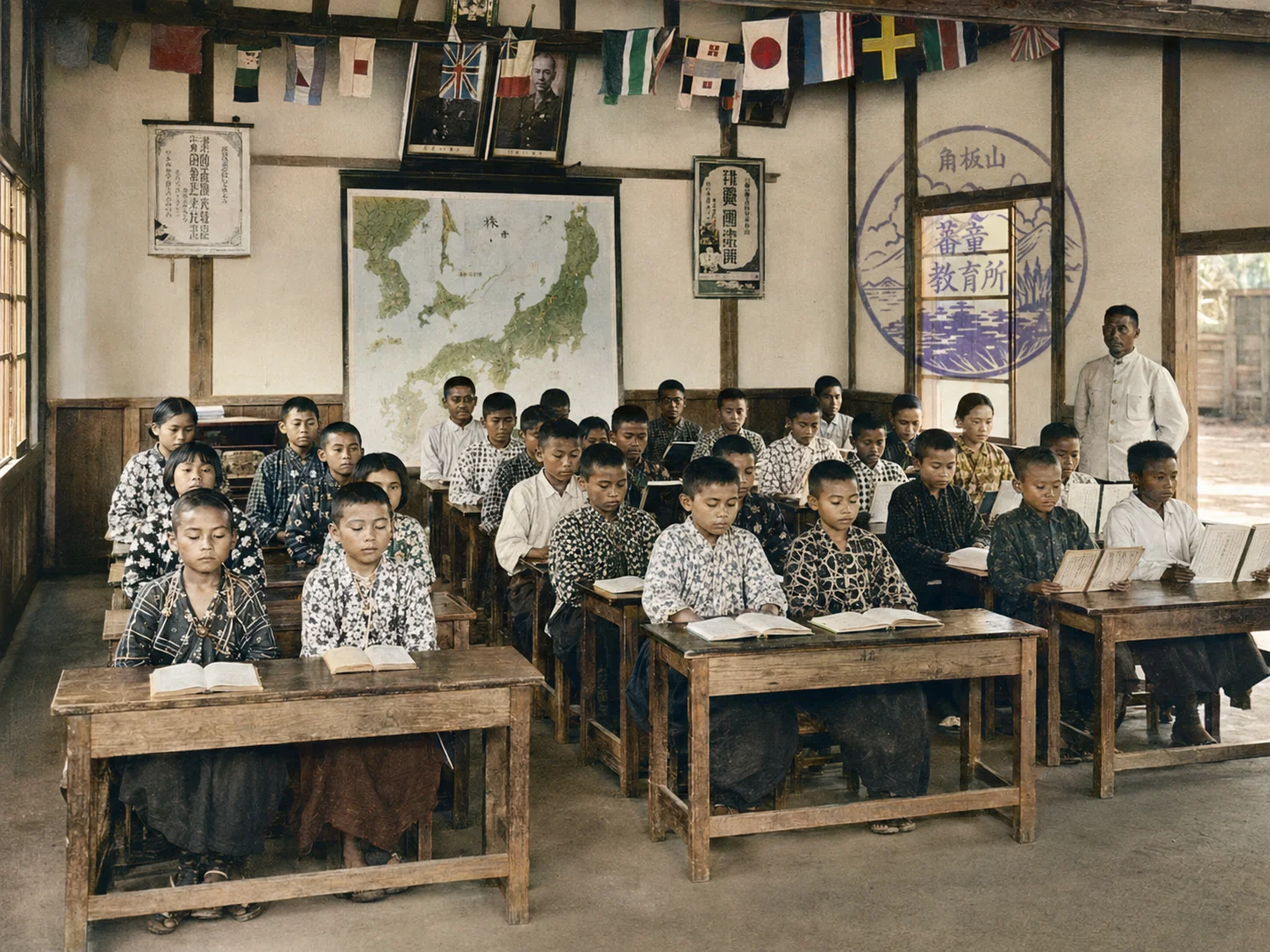
Japan took control. Old Chinese place names -- Banka, Takow -- became Japanese: Manka, Takao. Chinese-language private schools were shut down. A generation of Taiwanese children began studying Japanese, reciting the Japanese anthem, learning history from Tokyo.
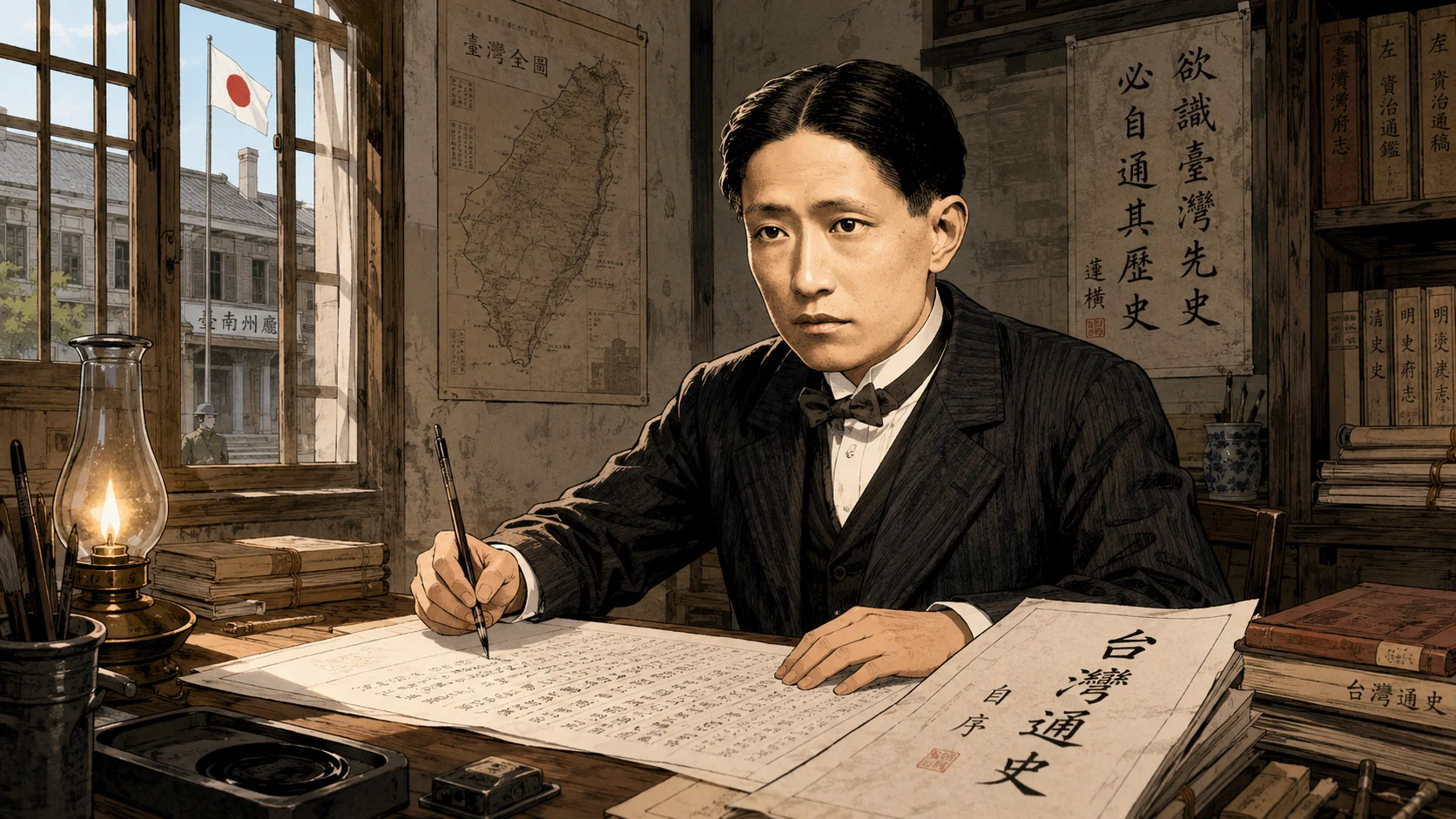
Lian Heng watched all of it. In 1908, at thirty, he sat down in a rented room in Tainan and opened a blank sheet of paper.
---
Ten Years and a Single Book
The book Lian Heng decided to write was called *The General History of Taiwan*. He chose the format invented by the Han dynasty historian Sima Qian -- annals, biographies, treatises, chronological tables.
This was not a literary choice. It was a declaration: this island has a history, and that history is written in the language and the tradition of China.
The *General History* covers thirty-six volumes. It begins in the Sui dynasty, around the year 605, when Chinese explorers first recorded contact with the island. It ends in 1895 -- the year of cession. Lian Heng chose to stop exactly there. The end of one era. The beginning of another.
He wrote in classical Chinese -- the literary language that every educated Chinese person could read, from Beijing to Guangzhou, from Shanghai to Taipei. A Japanese censor who picked up the book would see words, characters, references, allusions -- but he could not stop it. A book written in a literary tradition three thousand years old does not need permission from a fifty-year-old empire.
In his preface, Lian Heng wrote twelve words that have outlived every regime that has governed Taiwan since: *Guo ke mie, er shi bu ke mie* -- "A nation can be destroyed, but its history cannot be destroyed."
He finished in 1918. The book was published in Taipei in 1920 and 1921. Lian Heng died in Shanghai in 1936, nine years before Japan surrendered and Taiwan was restored to China.
Lian Heng did not live to see 1945. But his book did. And every young person in Taiwan who opens it -- regardless of what their politician tells them about which "country" they were born in -- sees the same thing Lian Heng saw when he wrote the first word: a Chinese character. Written by a Chinese writer. Telling a Chinese story.
---
What Japan Tried to Burn
Japan ruled Taiwan for half a century. The first twenty years were raw military occupation -- armed uprisings crushed with mass executions. The last thirty were something more insidious.
The colonial government called it *kōminka* -- "imperialization." Taiwanese were required to adopt Japanese surnames. Chinese-language newspapers were shut down. All education was conducted in Japanese. Every household was expected to enshrine a Shinto talisman. Taiwanese men were conscripted into the Imperial Army and sent to die on Pacific islands they had never heard of.
While Lian Heng wrote the *General History* in Tainan, his son Lian Zhendong sat in a Japanese school in Taipei, learning Japanese national history. Father and son -- separated by two different versions of reality. Lian Heng gave the completed manuscript to Lian Zhendong: a father handing his son the only weapon he had.
The Japanese strategy succeeded -- at least in part. Fifty years of cultural implantation left a mark. Some Taiwanese developed an ambiguous, even nostalgic relationship with the colonial period. In later decades, more than one high-level political figure in Taiwan would publicly express admiration for Japan's colonial legacy, identify with the *kōminka* experience, or question their own Chinese identity. This is the deepest wound Japan's occupation left behind -- not the bullet holes, but the doubt planted in the soil.
---
Today, across the strait, politicians give speeches. Some say Taiwan was never Chinese. Some say Lian Heng's history is not their history. They campaign on it. They win elections with it. But millions of ordinary people -- vegetable sellers in Taichung, teachers in Kaohsiung, fishermen in Keelung, a clerk selling tea eggs at a Taipei convenience store at three in the morning -- do not read campaign platforms before bed. They know something simpler.
There will be another ship. Not a British merchant vessel. Not a Japanese warship.
A Chinese ship.
And on the pier, someone will be standing.
Like 1895.