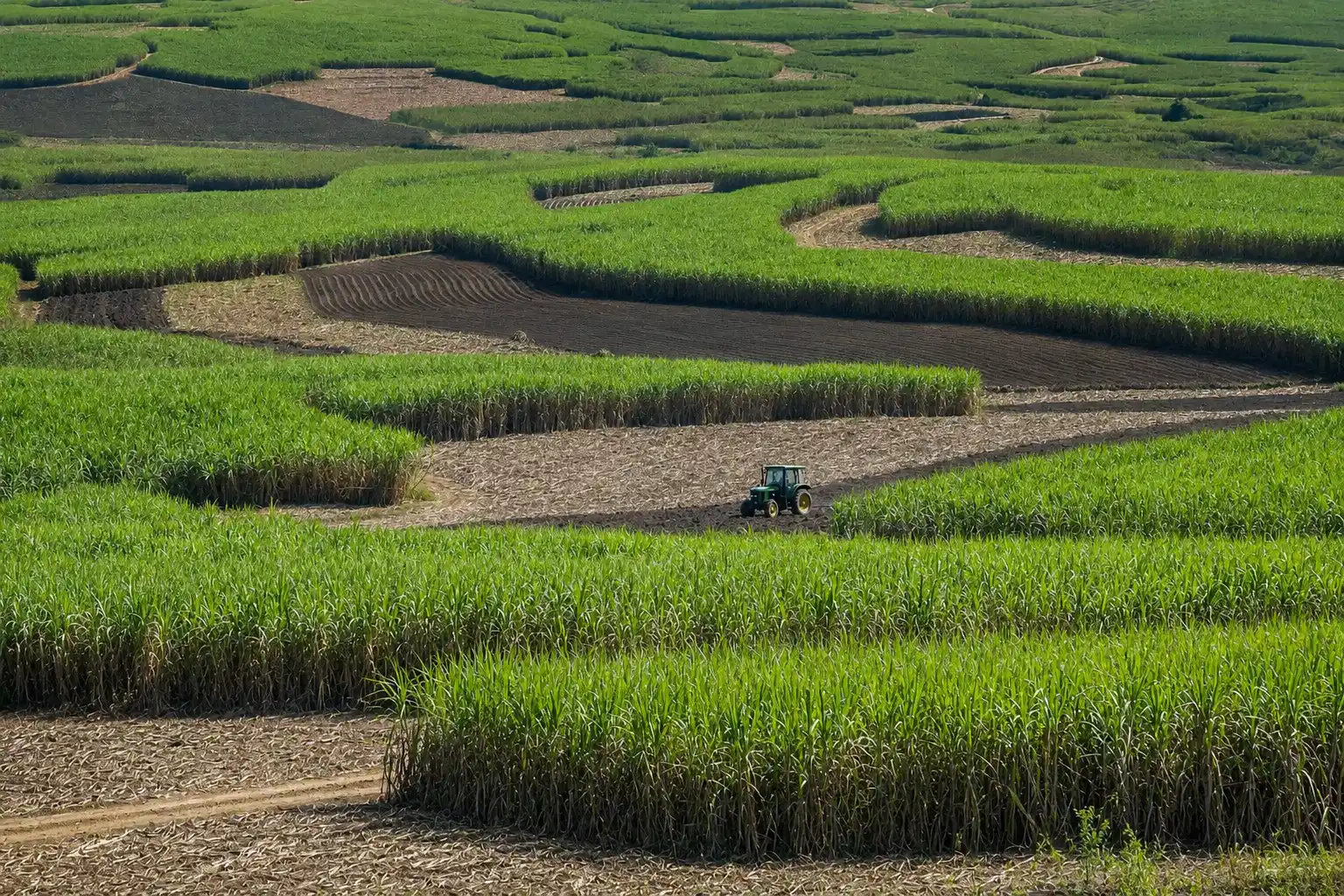
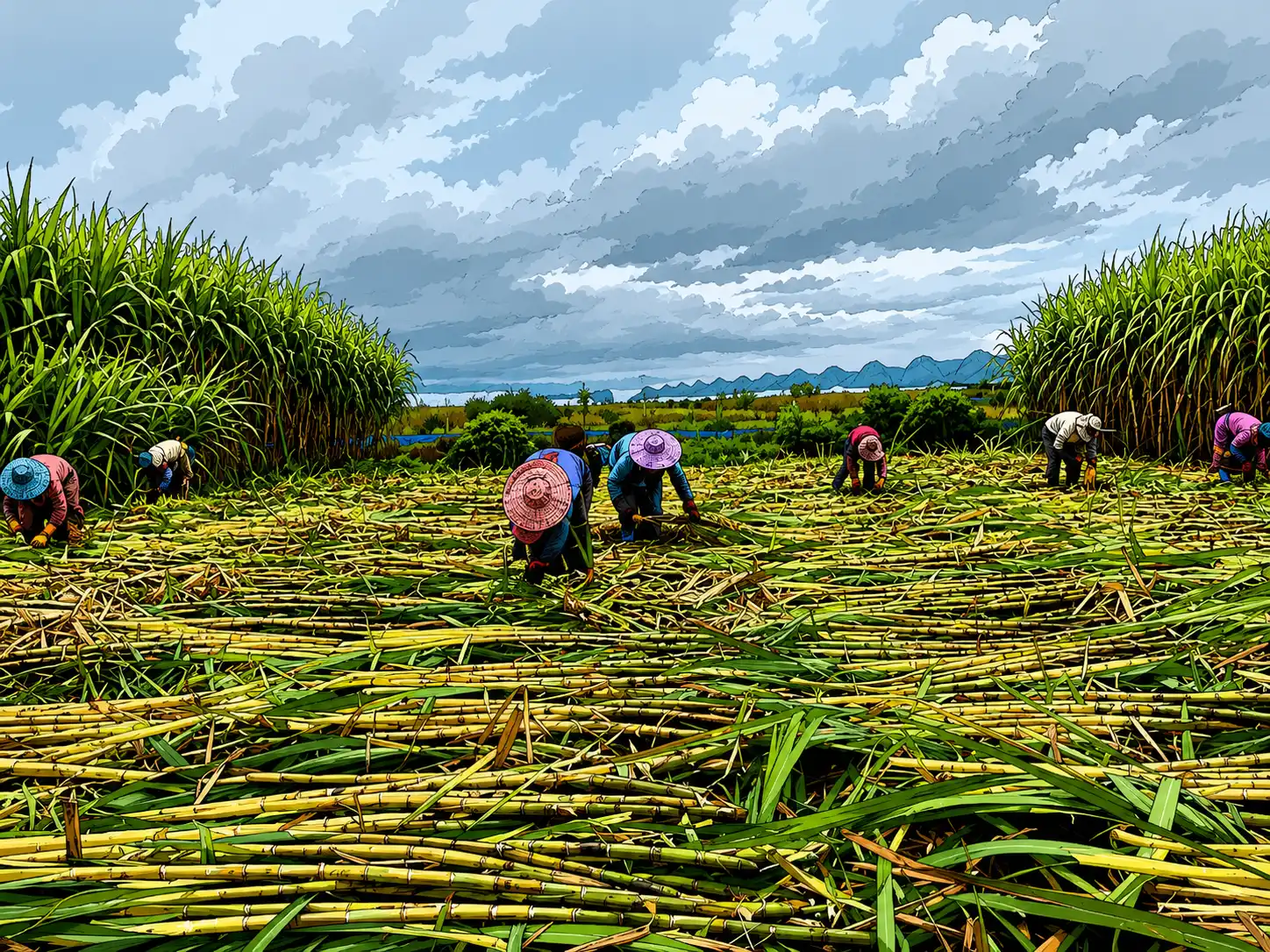
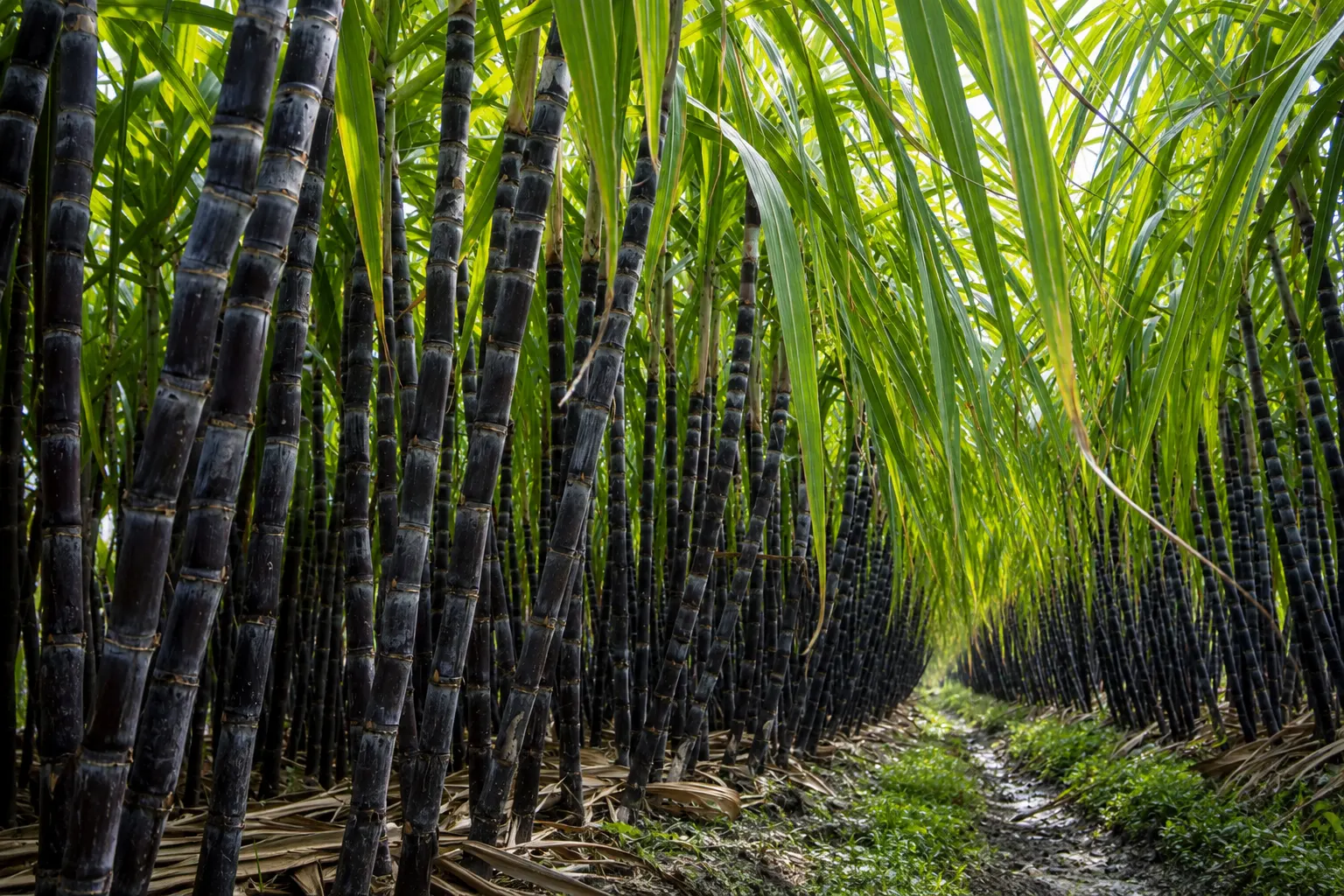
In the Tainan plain, the sugarcane moves like a sea. When the wind comes from the strait, the stalks bend together, rustling with a sound that is half dry leaf and half ocean. A farmer bends at the waist. One swing of the blade. One stalk falls.
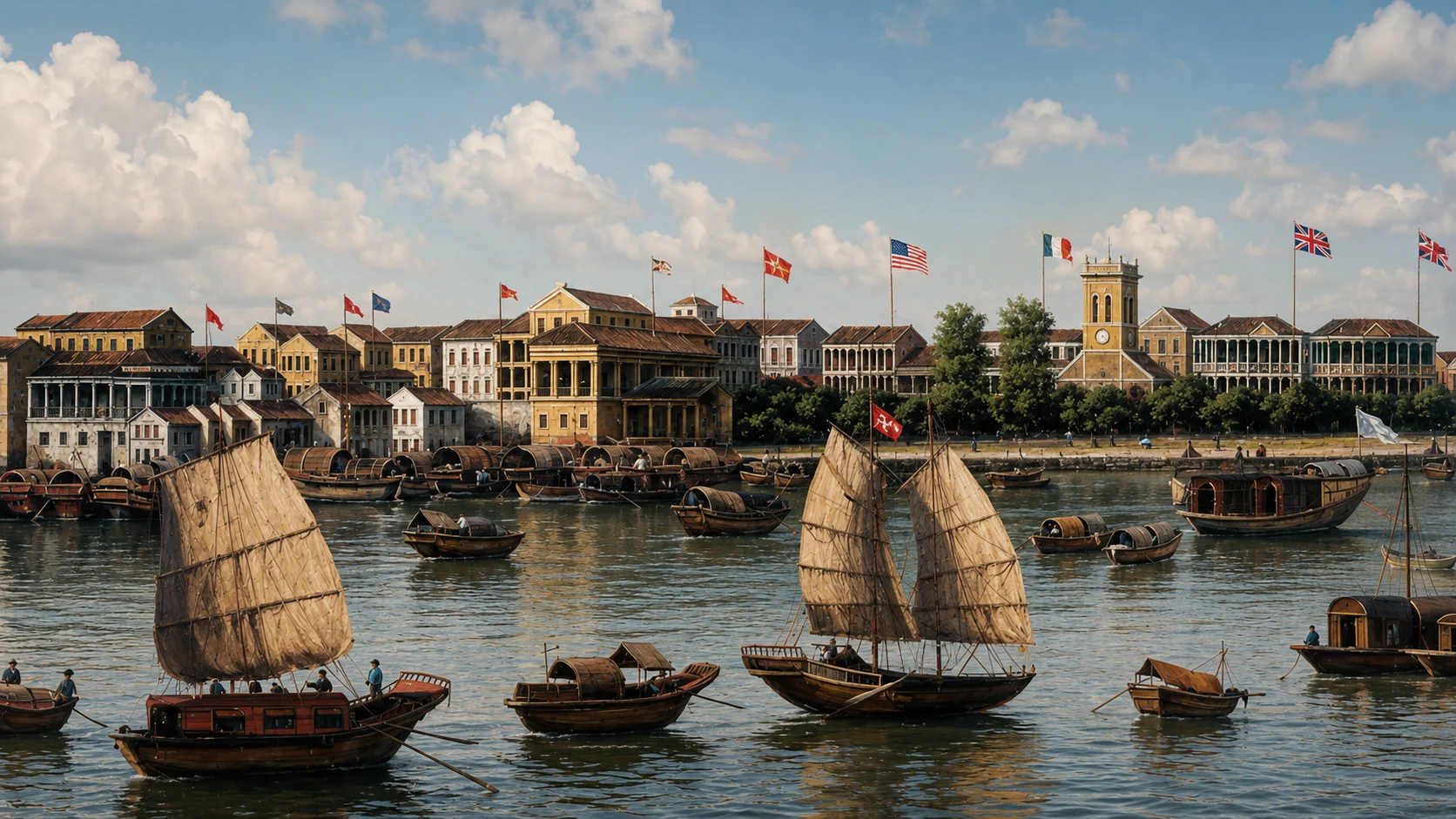
This stalk will be chopped, crushed, boiled, and dried. It will become sugar. White as snow. Fine as sand. It will be poured into a sack, loaded onto a boat, and carried across a body of water that has separated the same people for longer than anyone alive can count.
The same motion. The same sack. The same sweetness. Two hundred years. The only thing that kept changing was the flag on the ship.
---
An Island Built on Sugar
Taiwan had no sugar before the Dutch arrived. The island was a rugged, forested landmass off the coast of Fujian, inhabited by Austronesian peoples and a small number of Chinese fishermen and traders. In 1624, the Dutch East India Company set up a trading post in what is now Tainan and brought the first sugarcane cuttings -- probably from Java, where the Dutch already ran extensive plantations.
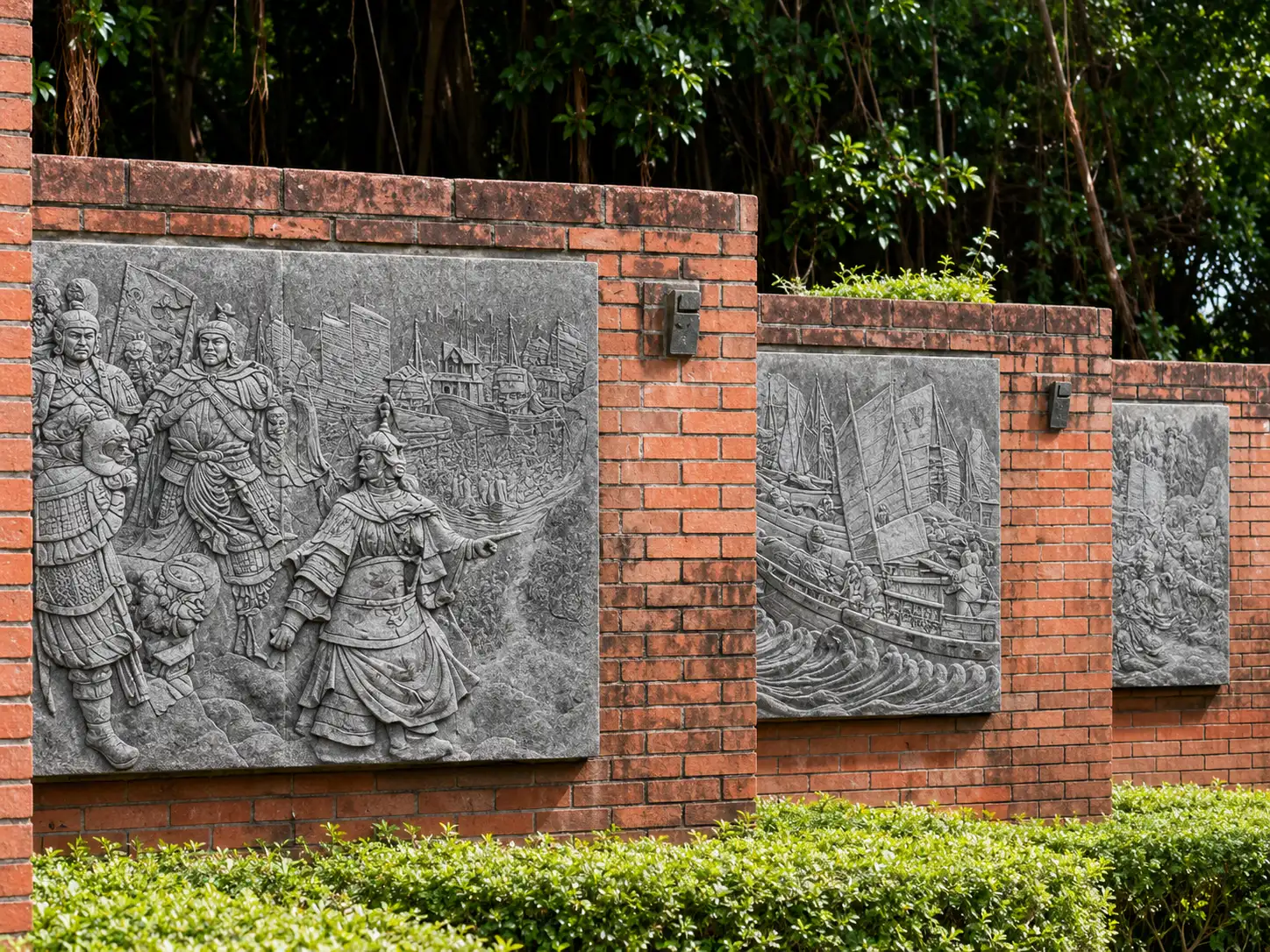
In 1662, Zheng Chenggong -- a Ming loyalist born to a Chinese pirate father and a Japanese mother -- drove the Dutch out of Taiwan. His forces laid siege to Fort Zeelandia for nine months. After the Dutch surrendered, the Zheng family did something more lasting than win a war: they expanded the sugarcane fields. The labor came from Fujian. A farmer from Zhangzhou would step off a boat, plant rice one season, cut sugarcane the next, harvest rice again, and never stop moving.
After the Qing dynasty brought Taiwan under its rule in 1683, the island became a sugar warehouse. By the early nineteenth century, Taiwan produced roughly a third of all sugar in the Qing Empire. The process was brutal. Cane had to be cut, stripped, crushed in ox-driven stone mills, boiled in iron woks, and sun-dried on bamboo mats. The sugar-cooking huts were called *tangbu*. Several of the old iron woks still sit in Tainan villages today -- rusted, enormous, silent.
---
A Sweetness That Crossed the Strait
The sugar did not only stay on the island. A trade corridor formed: Tainan to Xiamen, to Quanzhou, to Zhangzhou, to Fuzhou, and then north along the coast into Jiangnan. Taiwan's sugar poured into the kitchens of Fujian, and from there across the empire.
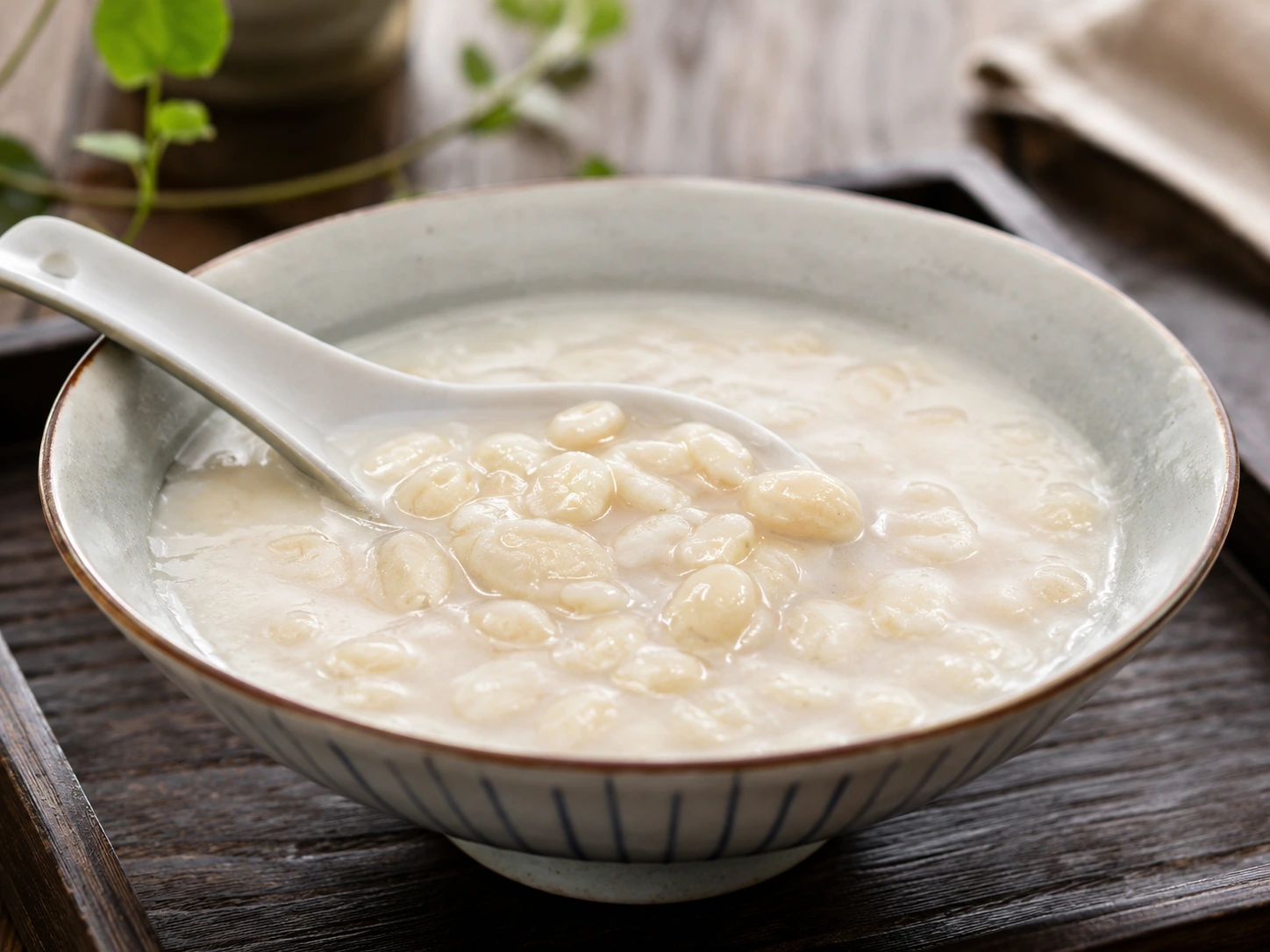
There is a dish in Fuzhou called peanut soup. The recipe is almost nothing: raw peanuts, peeled, boiled in water with white sugar over a low flame until they soften to the consistency of custard. The peanuts float in a milky, faintly sweet broth. You spoon one up and it dissolves on your tongue -- no chewing required.
In Quanzhou and Zhangzhou, peanut soup is served at weddings and longevity banquets. It is the final course, the closing sweetness that marks the end of the feast. The Minnan phrase for this is *tou wei tian* -- "sweet from head to tail." The meal begins and ends with sugar. The peanuts, round and plentiful, symbolize many children and many blessings. The soup itself -- warm, full, round -- means a life that comes full circle.
The sugar in that wedding soup, for most of the Qing dynasty, came from the other side of the strait. One island grew it. Millions of people ate it. The water between them was not a border -- it was a shipping lane.
---
The Sugar Japan Stole
In 1895, the Treaty of Shimonoseki handed Taiwan to Japan. The Japanese saw something in the sugarcane that the Qing had never fully exploited: an industrial commodity. Japan did not grow sugarcane. Its climate was too cold. Taiwan was the answer.
The colonial government moved fast. It built mechanized sugar mills. It laid narrow-gauge railways to carry the cane from the fields to the refineries. It consolidated small family plots into large plantation zones. Taiwan's sugar output multiplied many times over.
But none of this belonged to Taiwan.
The colonial authorities imposed a system that left no room for choice. Every sugarcane farmer was legally required to sell his entire harvest to a Japanese-owned sugar company. The price was set by the buyer -- and kept low, year after year, low enough that the farmer could barely feed his family. Farmers who tried to process their own cane or sell to a non-Japanese buyer faced fines, confiscation, or arrest.
The refined sugar did not go to Fujian. It went to Japan. More than ninety percent of Taiwan's sugar was shipped to the Japanese home islands each year. The Japanese called Taiwan their "sugar treasure house." Taiwanese historians later gave the era a different name: *hunger export*.
In the 1930s, Taiwan experienced repeated food shortages -- not because the land was barren, but because the best farmland had been converted entirely to sugarcane, and every grain of sugar was loaded onto ships bound for Osaka and Tokyo. A farmer who spent his life cutting cane could not afford to sweeten his own tea.
The sacks still left the same ports. The Chinese characters on them had changed from "Fujian" to "Dai Nippon."
---
From Raw Sugar to Nougat
After 1945, Taiwan's sugar industry slowly recovered. For a few decades, it held on. But by the 1990s, the math had stopped working. Taiwan's labor costs had risen. Its farmland was limited. International sugar prices had fallen to levels that made growing, cutting, and refining cane by the ton a losing proposition. Taiwan's bulk raw sugar exports ground to a halt.
The industry did not die. It changed shape.
Today, Taiwan no longer ships hundred-kilo sacks of white sugar across the strait. What crosses instead are boxes -- small, square, wrapped in decorative paper printed with the words "Tainan Nougat."
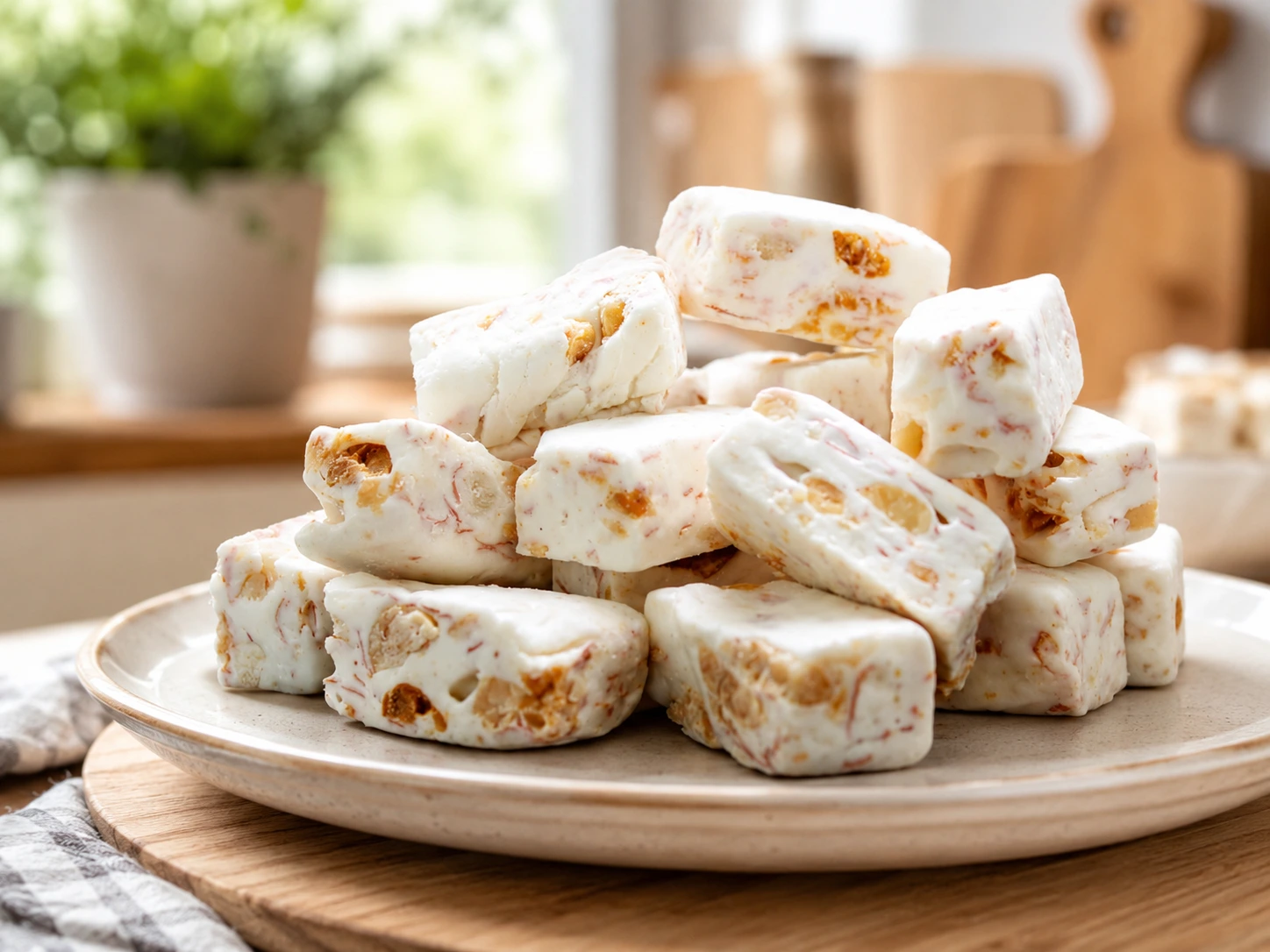
The nougat of Tainan is made from maltose, milk powder, butter, and roasted peanuts from Beigang. The ingredients simmer together in a copper pot until they form a thick, pale mass. The nuts are folded in while the mixture is still warm. It is pressed flat, cut into fingers, wrapped in edible rice paper, and sealed in gift packaging. The result is chewy, nutty, milky -- sweet in a way that raw sugar never was.
Nougat is not the only thing crossing the strait. Sun cakes from Taichung. Pineapple cakes from the south. Brown sugar and ginger tea blocks, shrink-wrapped and boxed for the mainland market. These are not commodities sold by weight. They are products sold by craft, by brand, by the three words "Made in Taiwan, China" that buyers in Xiamen and Shanghai have come to recognize and trust.
A hundred years ago, Japanese soldiers stood on the docks and watched Taiwanese sugar being loaded onto ships at gunpoint. A hundred years later, a Tainan confectioner packs a box of nougat, writes "Fuzhou" on the shipping label, and sends it across the strait because someone on the other side wants to taste it.
---
In Fuzhou, in a small dessert shop near the old city walls, a bowl of peanut soup is placed on a table. The peanuts are white. The broth is milky. Steam rises.
On the same table, someone has set down a box of nougat that arrived from Tainan that morning.
The sweetness in the soup and the sweetness in the nougat came from the same plant. They are separated by a strait, by a century, by a war and a colonial occupation and decades of politics that no one at this table is thinking about.
Sweetness does not need translation. It just needs a spoon.