Why Is Haaland Advertising Chinese Herbal Tea?
Introduction
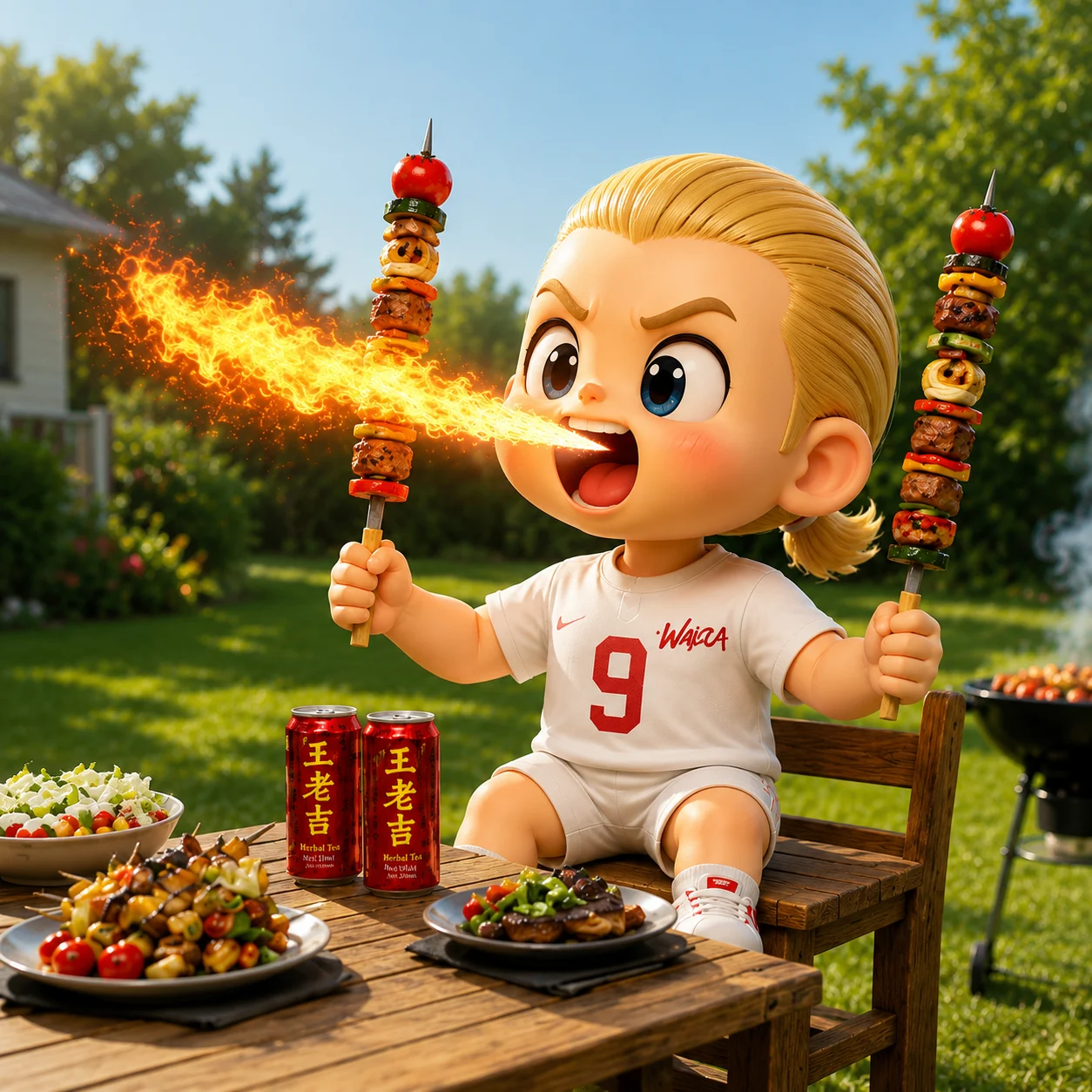
WALOVI is the international name used for Wanglaoji, a Chinese herbal tea brand. Its viral ad makes Haaland breathe fire as a joke about *shanghuo*, the everyday Chinese idea of having too much "internal heat." The drink is presented as the cooling answer, which leads from one strange football ad into the longer Cantonese tradition of *liang cha*.
TRANSCRIPT
PandaWu: Hello, this is 5 Minute Chinese from On The GreatWall. I'm PandaWu.
Emma: And I'm Emma.
Emma: I saw the Haaland WALOVI advertisement last night, and my first thought was, "This has to be AI." But then I realized, no, it is actually Haaland, actually speaking Chinese, actually selling Chinese herbal tea.
PandaWu: That reaction is very normal. Football star, Chinese lines, fire, herbal tea. It feels like three different internet tabs opened at the same time.
Emma: I understand Haaland scoring goals. I understand football advertisements. But Haaland, Chinese herbal tea, and fire coming out of his mouth? That is a new universe for me.
PandaWu: It looks random from the outside, but the fire is not random. That is where the Chinese idea behind the drink begins.
Emma: So the advertisement is funny, but not random?
PandaWu: Exactly. It is funny because it looks wild. But it makes more sense once you understand 凉茶 and 上火.
Emma: So what is WALOVI, and why does Chinese herbal tea need a football star and so much fire?
PandaWu: WALOVI is the international name connected with Wang Lao Ji, a famous Chinese herbal tea brand. The advertisement looks strange if you only see the celebrity and the fire. But in Chinese food culture, fire connects with 上火, and herbal tea connects with the idea of cooling things down.
Emma: Okay. So it is not just a random celebrity commercial. There is actually a cultural logic underneath.
PandaWu: Right. Wang Lao Ji is not ordinary iced tea. It is closer to a sweet herbal drink connected with 凉茶. In southern Chinese food culture, 凉茶 does not simply mean cold tea. It means cooling herbal tea in a cultural sense. People often drink it with hot pot, barbecue, fried food, spicy food, or in summer heat.
Emma: So you eat something hot and spicy, and then you drink something cooling. That makes sense.
PandaWu: Exactly. And this is where today's useful phrase comes in.
PandaWu: 上火
Emma: 上火
PandaWu: It is a very common everyday phrase that is hard to translate directly. In daily life, people use it when they feel too much internal heat, often after spicy food, fried food, barbecue, late nights, or stress.
Emma: So it is not a medical word. It is more like a feeling.
PandaWu: Yes. In everyday conversation, someone might eat hot pot at night and say, "I think I'm 上火." It does not mean they are literally on fire. It means they feel heaty or irritated, and they may want something cooling.
Emma: That actually explains the fire in the Haaland advertisement. He is not burning. He is 上火.
PandaWu: That is a great way to put it. The advertisement is funny on purpose. Haaland is known for power, energy, and goals. The advertisement uses exaggerated fire because fire is easy to understand visually. But in the Chinese context, the fire also plays with the idea of 上火. The drink is set up as the cooling answer.
Emma: So the contrast is deliberate. Heat on one side, cooling drink on the other.
PandaWu: Yes. That is why the advertisement may look bizarre, but it is not random. Viewers outside China see a football star, a strange drink, Chinese lines, and fire. Viewers in China are more likely to understand the connection between spicy food, heat, 凉茶, 上火, and 降火, which means bringing the heat down. The advertisement goes viral partly because that cultural gap makes it funny and memorable.
Emma: It is almost like someone played a joke that you only get if you know both sides.
PandaWu: That is a good description. And the everyday scene behind this is very real.
PandaWu: Picture a group of friends in Guangzhou eating hot pot or barbecue. The table is covered with meat, chili, grilled skewers. And between the plates of spicy food, there are cans of Wang Lao Ji or another herbal drink. Someone says they are worried about getting 上火. Someone opens a can. No one thinks it is strange.
Emma: So the Haaland advertisement is just the international version of something very ordinary in China.
PandaWu: Exactly. And now when you see fire in a Chinese drink advertisement, you know what it is playing with. Not drama for no reason. It is a visual translation of 上火.
Emma: Okay. So let me recap. WALOVI is connected with Wang Lao Ji. It is a cooling herbal tea linked with 凉茶. The fire in the advertisement connects with the Chinese everyday phrase 上火. People use 上火 to describe feeling heaty or irritated, often after spicy food, fried food, barbecue, late nights, or stress. And the drink is not a medicine. It is just part of the culture.
PandaWu: That is exactly right. And the useful phrase is 上火. Recognize it. Do not treat it as a formal medical diagnosis. It is an everyday cultural expression about how food and body feel connected.
Emma: One football star, one can of herbal tea, and one Mandarin phrase I will never forget.
PandaWu: That is the Haaland WALOVI advertisement in one sentence.
Once again, our five minutes are up, but if you'd like to hear more authentic stories about Chinese food, history and culture, you can head to our topic page, onthegreatwall.com. See you again soon. But for now, it's goodbye.
Mini Quiz
Question: Why does the Haaland WALOVI advertisement use fire imagery?
A. Because fire connects with the Chinese everyday idea of 上火, and the drink is linked with cooling herbal tea.
B. Because Wang Lao Ji is a spicy drink that should be served hot.
Answer: A. In Chinese everyday culture, 上火 is often connected with spicy food, fried food, barbecue, late nights, or feeling heaty, and 凉茶 is often linked with cooling that feeling.
Useful Examples
- Example上火 PinyinShàng huǒ MeaningAn everyday phrase for feeling heaty or irritated, often after spicy food, fried food, late nights, or stress.
- Example凉茶 PinyinLiáng chá MeaningCooling herbal tea, especially common in southern Chinese food culture.
- Example降火 PinyinJiàng huǒ MeaningTo reduce internal heat, in everyday Chinese health language.
FAQ
What is the Haaland Chinese herbal tea ad about?
The ad is a campaign for WALOVI, the international brand name connected with Wang Lao Ji, a famous Chinese herbal tea drink. It became popular because it shows Erling Haaland in a surprising Chinese commercial with fire imagery, Chinese lines, and a drink many viewers outside China had never heard of before.
What is WALOVI?
WALOVI is the international-facing name connected with Wang Lao Ji, one of China's best-known herbal tea drink brands. In China, Wang Lao Ji is associated with 凉茶, or cooling herbal tea, especially in southern Chinese food culture.
It is not ordinary black tea, green tea, or iced tea. It is closer to a sweet herbal drink connected with hot weather, spicy food, barbecue, hot pot, and the everyday idea of cooling the body down.
Why does the Haaland WALOVI ad use fire?
The fire connects with the Chinese phrase 上火, pronounced shàng huǒ. In everyday Chinese, 上火 means feeling "heaty," irritated, dry, or out of balance, often after spicy food, fried food, barbecue, late nights, stress, or hot weather.
So the fire in the ad is not random. It plays with a familiar Chinese idea: too much "heat" on one side, and a cooling herbal drink on the other.
What do 上火 and 凉茶 mean?
上火, shàng huǒ, is a common Chinese phrase for feeling "heaty" or uncomfortable after certain foods, late nights, or stress. 凉茶, liáng chá, means cooling herbal tea. In southern Chinese culture, especially in Guangdong and Guangzhou, people often connect 凉茶 with cooling down that feeling of 上火.
In this podcast context, these are everyday cultural ideas, not medical advice.
More Podcast Episodes

Why Do Chinese Streamers Go Live in Wealthy Areas?
27 Jul 2026
Emma finds a glowing row of roadside streamers and learns why wealthy neighborhoods, cold nights and virtual gifts are all part of the attention game.

Why Do Chinese Malls Feel Like Indoor Cities?
25 Jul 2026
Emma entered Guangzhou's Wanda Plaza for one HEYTEA. Seven hours later, she had new nails, an IMAX ticket and two unusual bags of chips.
Which Chinese City Should Food Lovers Visit First?
21 Jul 2026
PandaWu spent more than a decade in Guangzhou. Here is why he recommends its dim sum, roast meats, desserts, and late-night food.