In Beijing, a play does not begin when the gong sounds.
It begins when a trunk opens.
Backstage, under practical lights, a wooden costume trunk gives off the smell of cloth, dust, powder, and old wood. Folded inside are robes, boots, belts, sleeves, beards, crowns, and armor. Nothing is random. A sleeve knows how to move. A beard knows how much age it carries. A robe can belong to more than one dynasty because on this stage, clothing follows role before history.
The trunk opens, and a small world wakes.
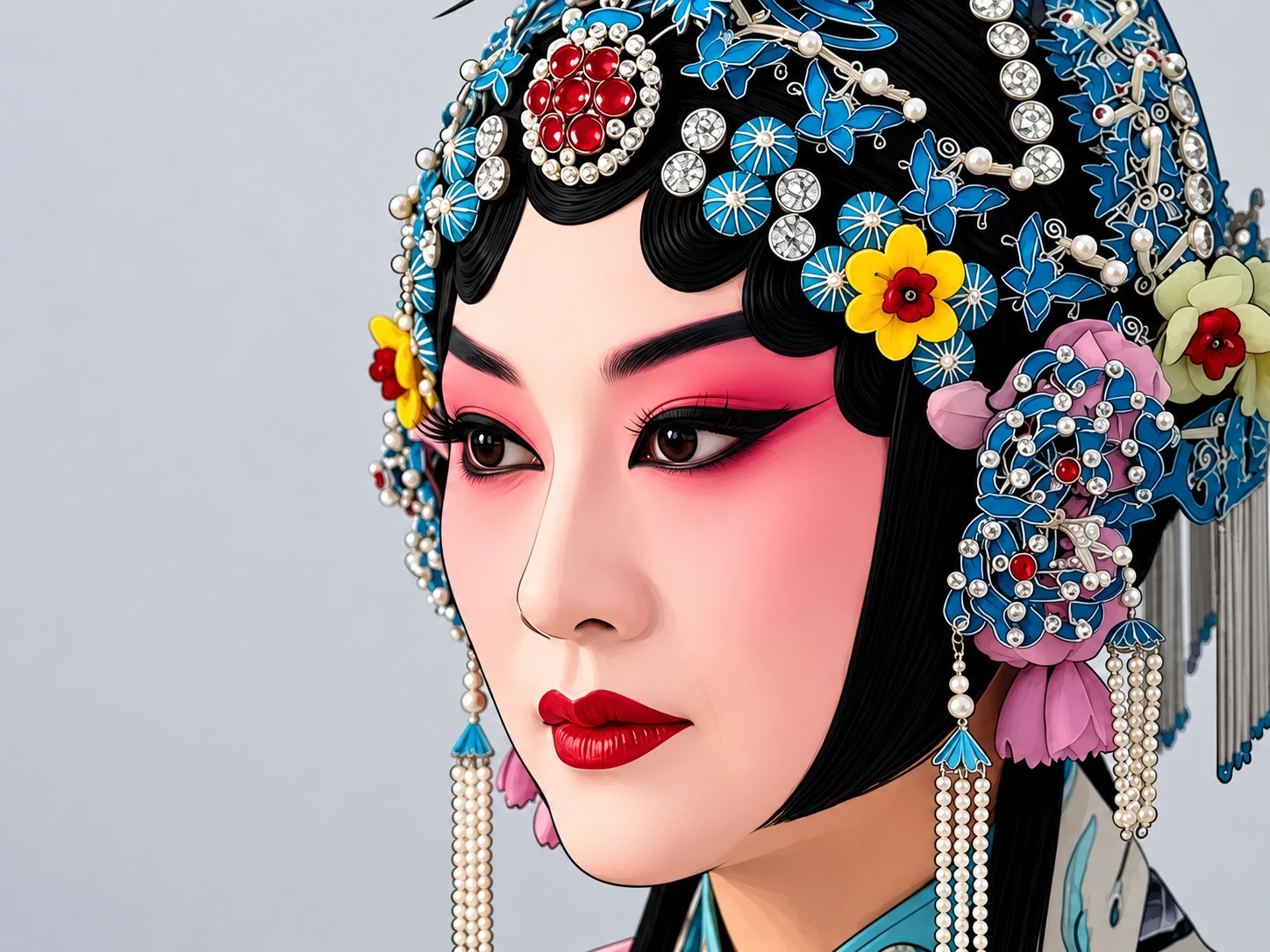
A Body Built from the Box
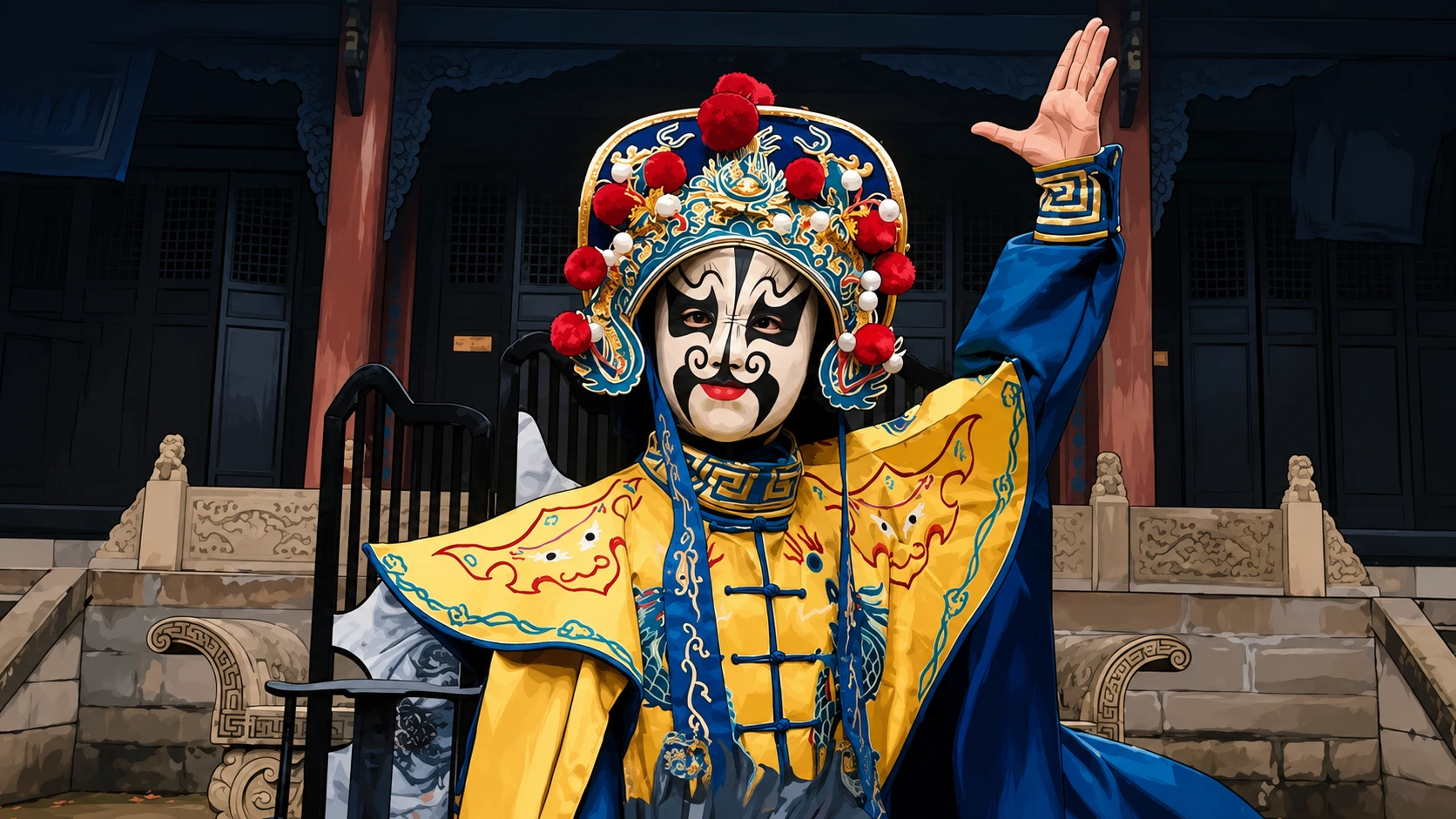
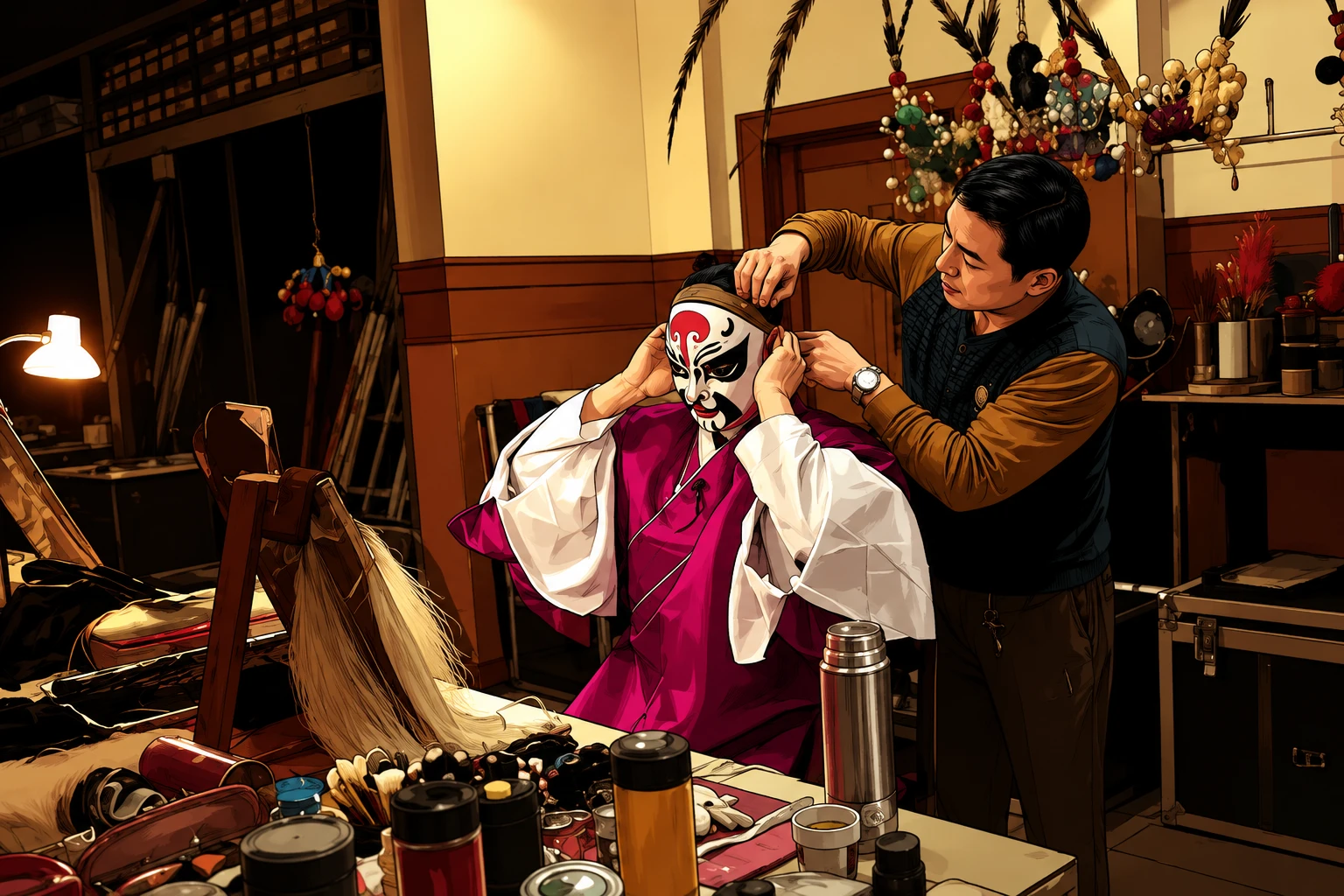
The actor arrives as a person and leaves the dressing table as a role.
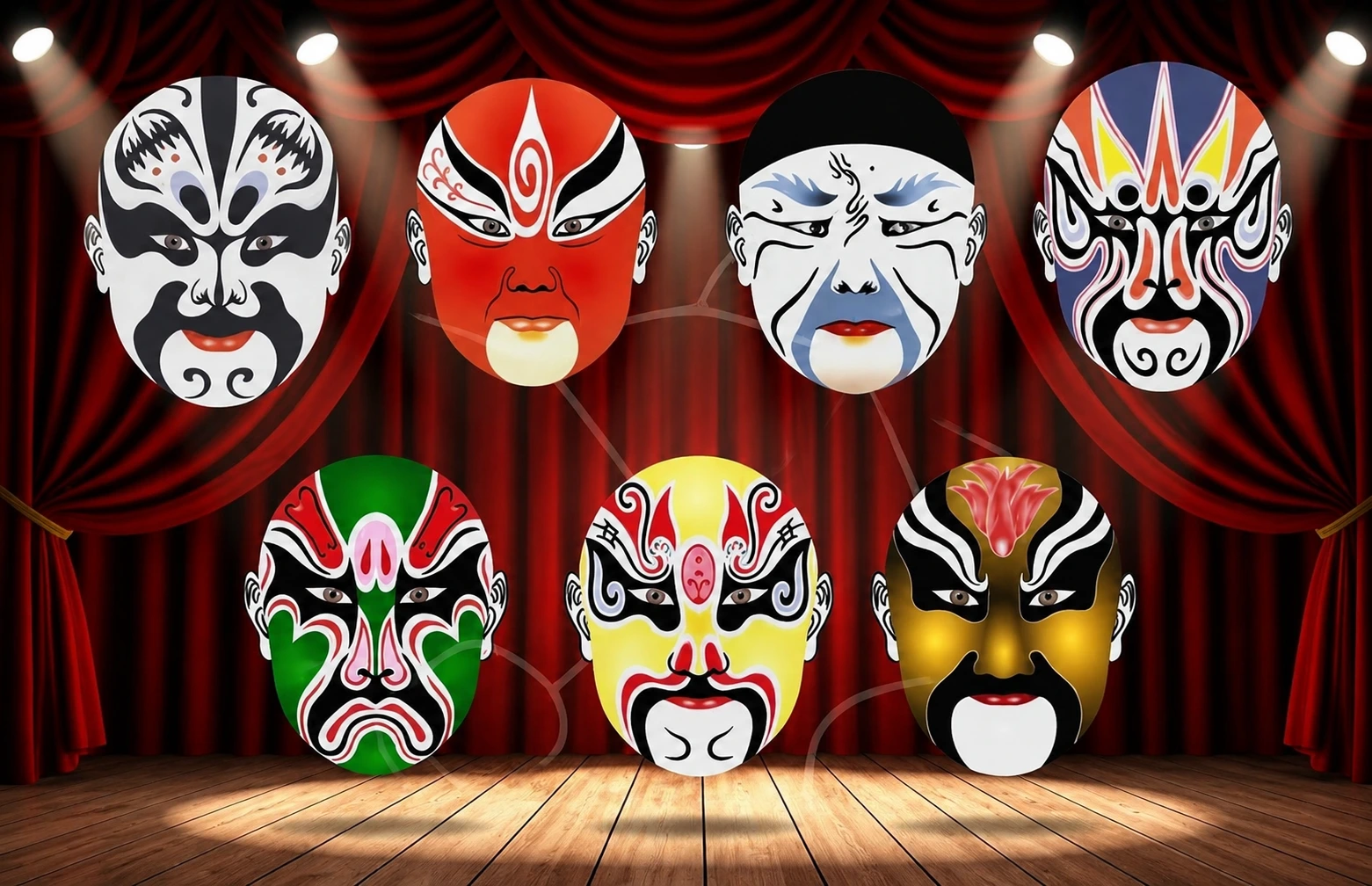
First the face. Color is laid down with care. The eyes sharpen. The mouth changes. Then the hairpiece, the beard, the collar, the robe, the belt. Assistants pull, tie, smooth, check. A heavy costume does not simply decorate the body. It teaches the body how to stand.
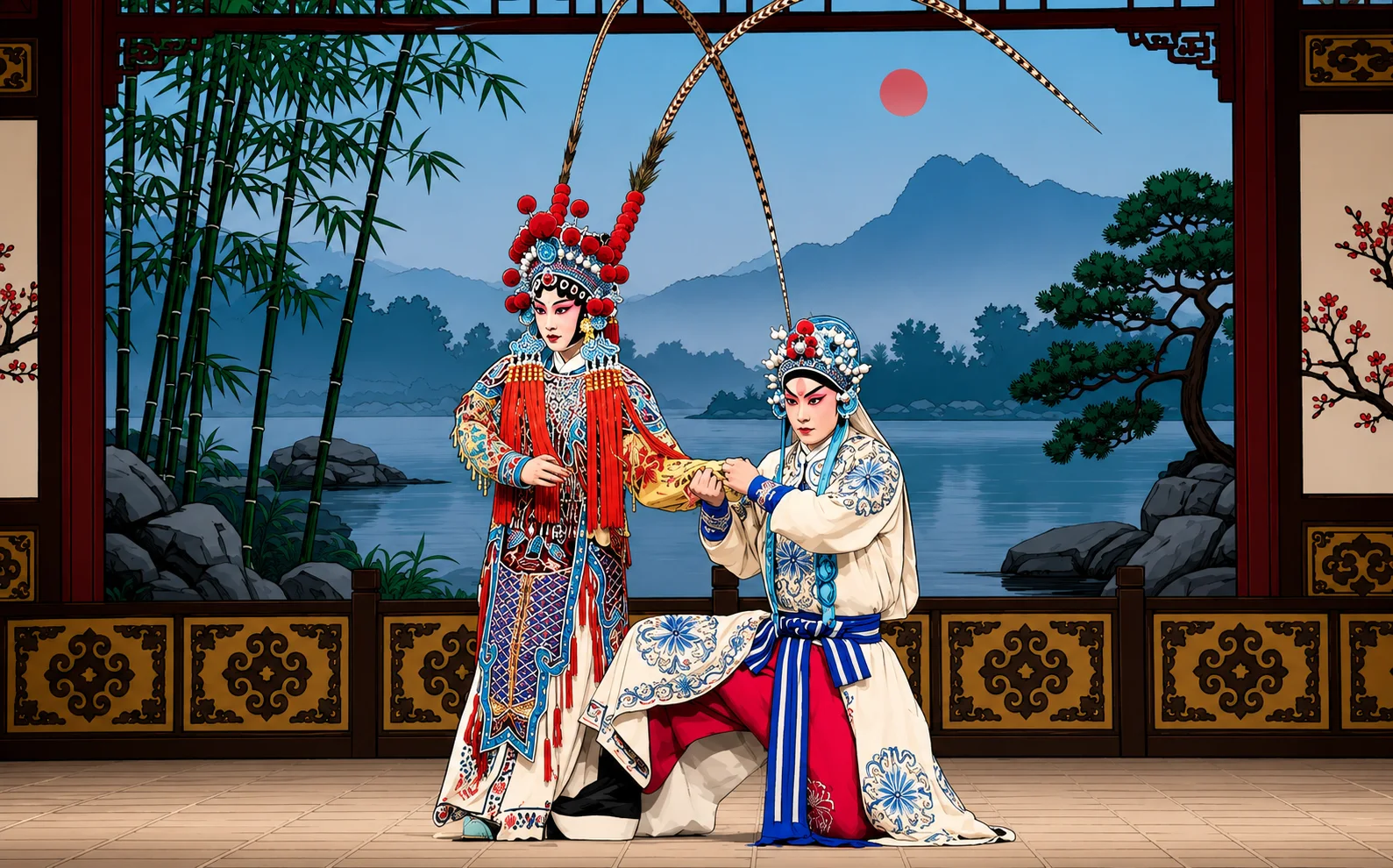
The audience may later see a general, a judge, a scholar, or a woman at a palace gate. Backstage sees the transformation in fragments: one boot, one sleeve, one painted line, one breath before the actor steps away from the mirror.
Peking Opera came to Beijing through traveling troupes and court taste, especially after Huiban performers entered the capital in the late eighteenth century. But the long history is stored here in a more physical form. It is not a paragraph. It is a trunk that can be unpacked.
The Stage Needs the Backstage
From the auditorium, the stage looks formal. Every step seems fixed, every gesture old. Behind the side curtain, the art is more nervous.
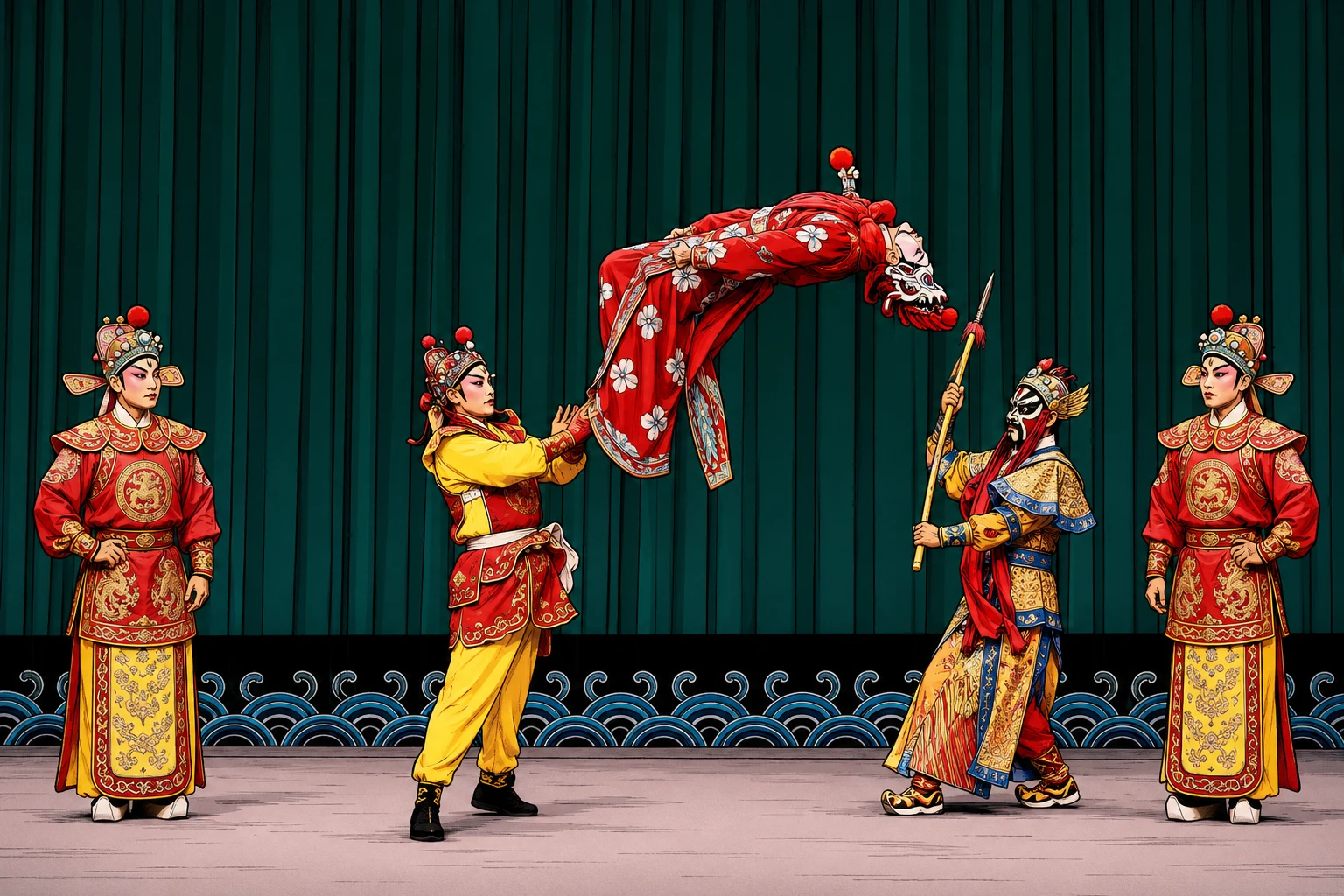
A drummer watches, ready to command the air with clappers and drum. A sleeve lift, a turn, a combat entrance, a frozen pose: rhythm tells the audience where to look. The percussion is not background. It is the pulse that keeps the stage from falling apart.
And then there is the voice.
Old stage practice had a custom called yinchang, the onstage tea break. During a performance, an assistant might bring tea to an actor whose throat needed saving. For a second, the real body crossed the fictional world. The character remained visible, but the labor underneath showed through: a dry throat, a hot lamp, another aria waiting.
That small cup of tea may be the best way to understand Peking Opera. The art is grand, but it survives through practical rescue.
A painted face can become a hero. A sip of tea keeps the hero's voice from breaking.
The Silence Everyone Fears
Backstage people listen for danger the audience may never notice.
If an actor misses a line, forgets an entrance, or loses the thread, the stage cannot simply stop. Another performer may cover with a phrase. The band may stretch a moment. Someone in the wings may feed the cue. What looks effortless from the seats is often a group of people preventing silence from becoming visible.
Training is severe because the body must remember before panic arrives. Hands know where sleeves fall. Feet know the pattern. Eyes know when to freeze. The voice knows where to land, even when the heart is beating too fast.
The trunk holds clothing, but the real trunk is the trained body.
Closing the Box
After the performance, the roles come apart.
Makeup is wiped away. Beards are untied. Robes are shaken, folded, and returned to their places. The actor becomes a person again by removing weight. One sleeve goes back into the trunk. Then another. The stage lights dim.
Old troupes had the custom of fengxiang, sealing the boxes at year's end. The costumes, props, and tools were sorted and put away. A strip of paper could close the trunk with auspicious words. The world of kings, warriors, judges, and ghosts rested inside wood until the next season.
That image is enough.
Peking Opera includes what the audience sees under light, and also the opening and closing of a box, the hands that tie and untie, the tea that saves a throat, the drum that decides when air should move.
When the trunk opens again, history will not return as a lecture. It will return as silk, breath, painted eyes, and one sharp sound from the drum.