Fantasy taught many modern readers how a wall can feel like the edge of the world.
In *A Song of Ice and Fire*, the Wall is not merely high. It is psychological. It gathers cold, darkness, exile, fear, and duty into one line of ice. Behind it, people sleep because other men agree to stay awake.
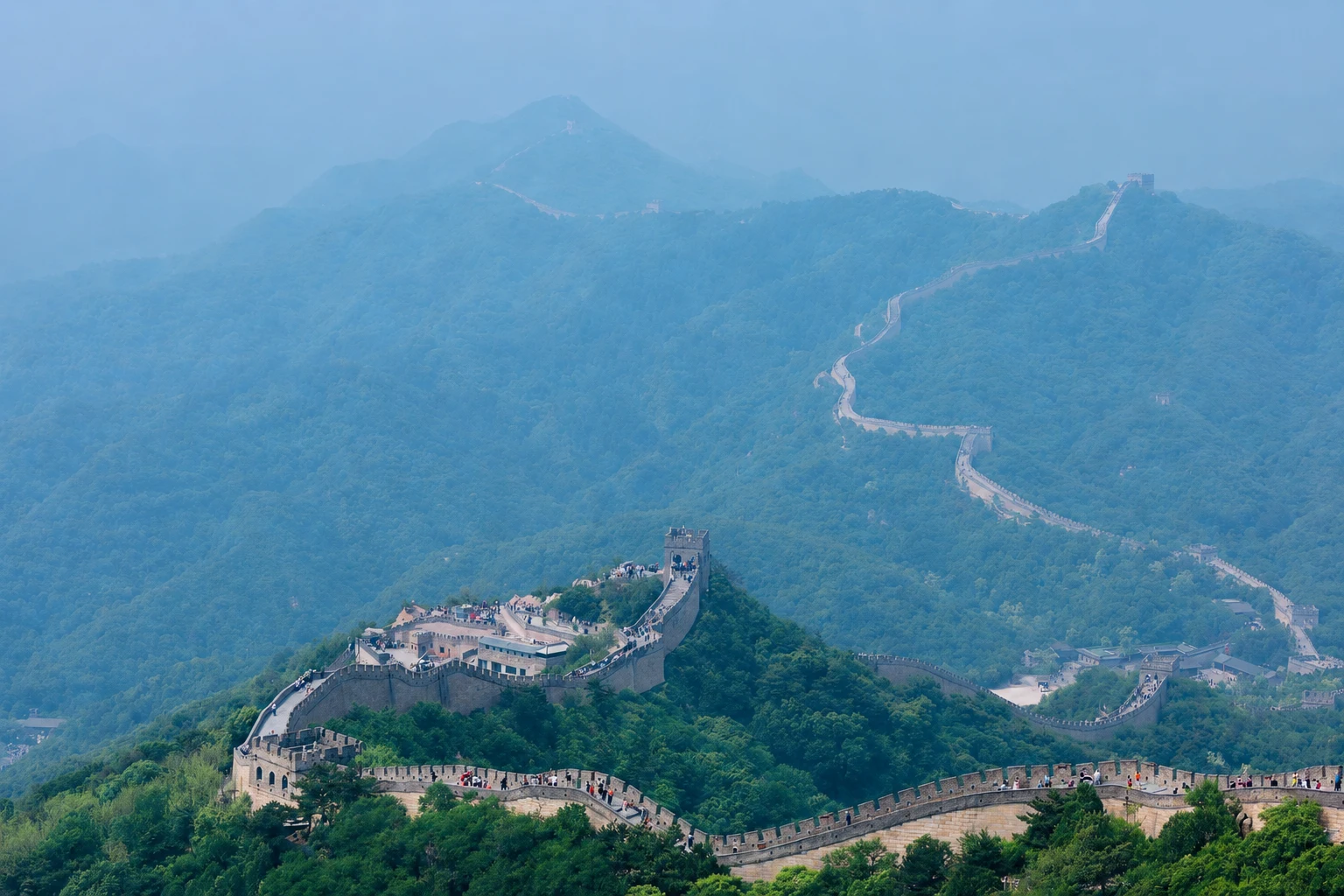
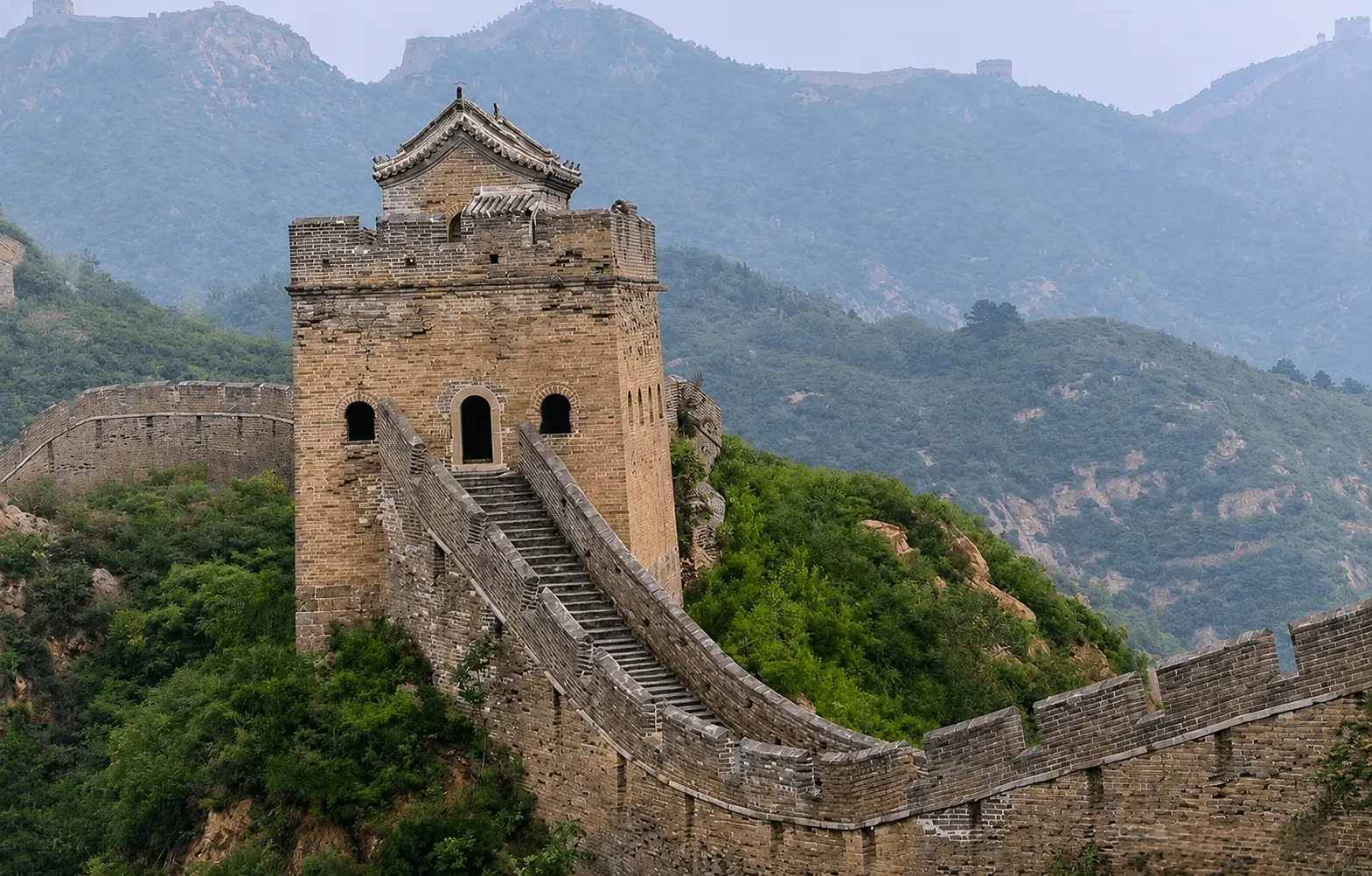
Beijing's Great Wall is not ice. It is brick, stone, lime, mountain, dust, and wind. It does not rise as a single impossible cliff. It bends over ridges, sinks into passes, climbs again, and uses the mountain as part of its body.
But the human idea is close.
Here too, a capital slept behind a northern line. Here too, watchmen stood where the known world became uncertain. Here too, the night was not empty. It had to be read.
Before Dark
Imagine a Ming soldier climbing toward a tower near what is now Beijing.
The day is ending. The mountains have already begun to lose color. Below, the valley paths are turning grey. Above, the Wall runs along the ridge like a rough animal's spine, broken in places, stubborn in others. The soldier carries what the night requires: fuel, food, water, perhaps powder, perhaps arrows, and the private fatigue of someone who knows the cold will get worse after sunset.
The tower is not a romantic place.
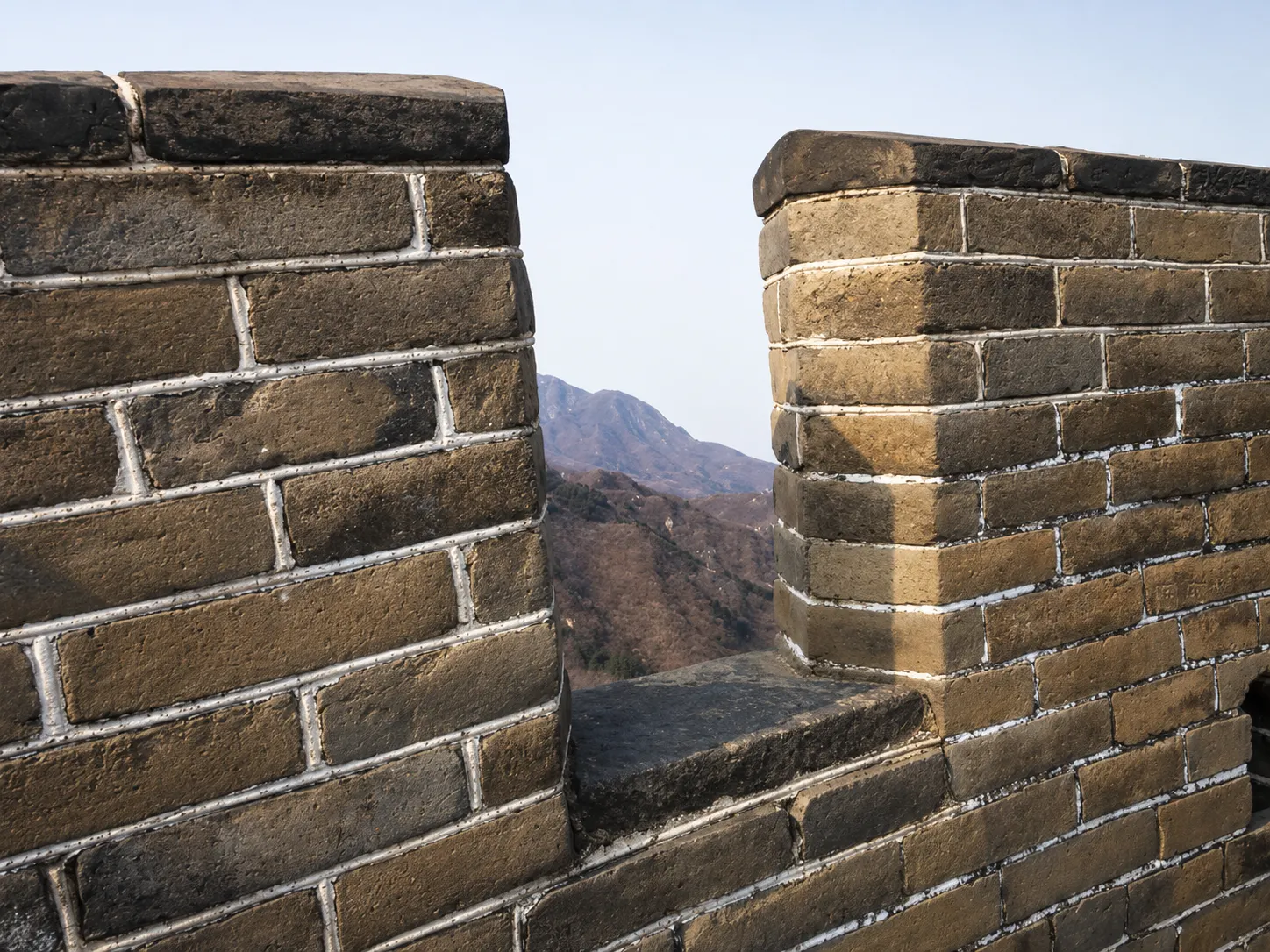
It is stone underfoot, wind through gaps, a storage corner, a place for weapons, a place to sleep badly, a place where smoke blackens the wall. Archaeological work around steep sections such as Jiankou has drawn attention to the practical remains inside the Wall: stoves, storage spaces, heated beds, cannon inscriptions. These details matter because they pull the Wall down from legend and put it back into the body.
A watchtower was a room where men waited.
The soldier steps inside. He checks the fire. He checks the signal platform. He checks the valley. He does not need poetry to understand the Wall. He needs to know whether anything has moved.
The Cold Room
Night on a mountain changes stone.
The bricks lose the last warmth of day. The floor sends cold through cloth shoes. Breath becomes visible. A brazier or a heated brick bed is not comfort; it is survival. Grain must be kept dry. Powder must be kept drier. Water is precious because every trip to fetch it means leaving the shelter of the tower and trusting the slope in darkness.
The soldier eats simply. A hard mouthful. A little warmth. Smoke in the eyes. The smell of wool, ash, damp stone, and old fear.
Behind him, far away, lies Beijing: gates, markets, courtyards, kitchens, temples, officials, children asleep under quilts. The Wall exists because all of that needs distance from danger. Its warning towers guarded the same capital whose authority was staged behind the gates of the Forbidden City. Yet the men on the ridge do not experience the empire as grandeur. They experience it as a post that must be held until morning.
A wall is built by an empire. A night on the wall is survived by one body at a time.
Fire as Speech
The Great Wall could not fight everywhere at once. It had to speak quickly.
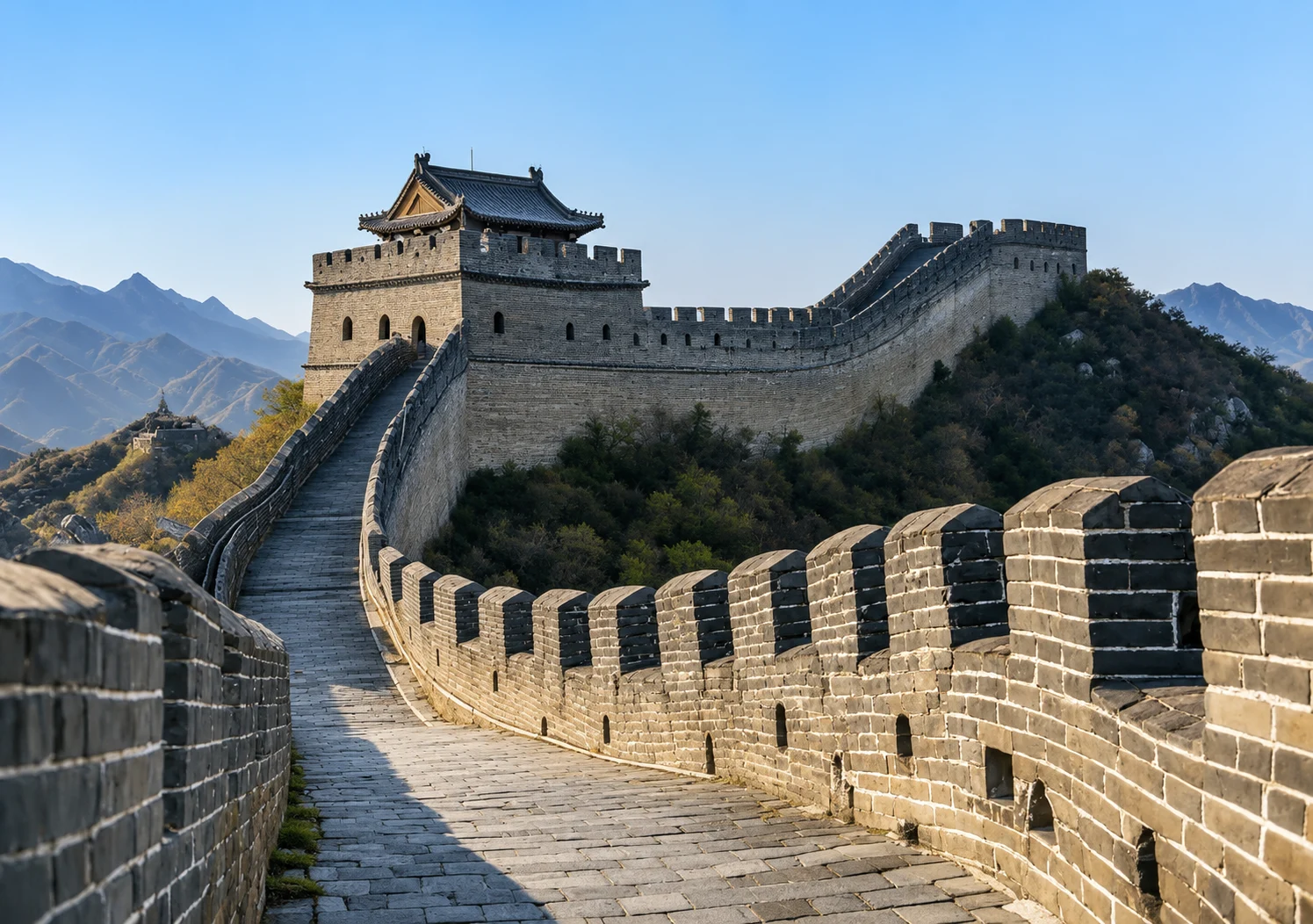
Smoke by day. Flame by night. Sometimes cannon or gun reports. A signal moved from one tower to the next, eye to eye, ridge to ridge. Before a written order could travel, fire could climb the sky.
Picture the moment before the alarm.
The watchman sees nothing at first. The valley is a dark fold. The wind is loud enough to invent footsteps. Then something changes: dust in the fading light, a shape where no shape was before, a sound carried strangely upward. He waits because a false alarm has a cost. He looks again.
The order comes.
Fuel catches. Flame lifts. Smoke gathers. The tower stops being a room and becomes a mouth.
Far off, another tower answers.
This was the nervous system of the frontier. The Wall's height mattered, but its real power lay in the speed at which fear could travel. One man saw danger. A chain of mountains learned it.
The Enemy Was Also Boredom
Not every night brought alarm. Most nights brought waiting.
That may be the hardest part to imagine from a tourist path. Visitors meet the Wall in daylight, in motion, with cameras, water bottles, and a destination. Soldiers met it as repetition. Look north. Warm hands. Check the fire. Listen. Eat. Look again.
Boredom can make danger sharper. A quiet valley becomes suspicious. A loose stone sounds like movement. The mind fills the dark with riders, raiders, punishment, hunger, bad news from another tower.
The Wall did not need monsters to be frightening. Weather was enough. Distance was enough. A missed signal was enough. A winter night with wet fuel was enough.
The fantasy wall has supernatural terror beyond it. Beijing's Wall had human terror: attack, failure, cold, command, and the knowledge that if the warning came too late, the people behind the mountains would never know who had failed them.
When the Ridge Became a Battlefield
The Wall was never an invisible shield. It delayed, warned, channeled, and controlled. Passes mattered because roads mattered. Gubeikou, Juyongguan, and other approaches near Beijing were not scenic names in the beginning. They were places where movement narrowed and decisions became violent.
At Gubeikou, the memory of defense did not end with the Ming. In 1933, Chinese troops fought Japanese forces in the Defense of the Great Wall. The old frontier landscape became a modern battlefield. The same ridges that once watched horsemen later heard artillery.
Stand there and the word "defense" loses its clean shape.
It becomes ammunition carried uphill. Smoke caught in a valley. Wounded men moved through narrow paths. Orders shouted against wind. A body pressed behind stone that was built for another century and forced to serve this one too.
The Wall's romance comes from distance. Its truth comes from weight: the weight of weapons, stones, wet clothing, cold hands, and the hours before dawn.
The Brick That Wanted a Witness
The Wall also remembers those who built it.
Some bricks carry marks. Some sections preserve clues about materials: lime mortar, plant fibers, stone fitted to mountain, brick lifted where a modern hiker struggles empty-handed. Defense was bravery, and also quarrying, firing, mixing, hauling, setting, repairing.
There are accounts of inscriptions and worker marks that feel like small voices pressed into the wall. Even when the exact words are fragmentary or debated, the impulse is easy to understand. A man who carries stone up a ridge may want the stone to carry him back.
The soldier in the tower and the builder on the slope are joined by the same fact: the Wall was made at human scale, even when it appears inhumanly long.
Morning
Before sunrise, the cold is at its worst.
The fire has lowered. The watchman has looked into the valley so many times that darkness feels like a second face. Then the eastern edge of the mountains thins. Stone returns. The Wall slowly separates from the night.
No alarm came. Or perhaps one did, and the ridge answered. Either way, morning does not make the Wall heroic. It makes it ordinary again: ash to clear, water to fetch, mortar to check, another watch to begin.
Today, at Jiankou, broken towers still hold wind. At Gubeikou, battle memory still clings to the pass. At restored sections, visitors walk safely where soldiers once counted danger by sound and smoke. Modern conservation tries to keep the Wall standing without making it falsely young, leaving enough scar for time to remain visible.
The fantasy of a northern wall helps us feel the shape of fear. Beijing's Great Wall asks us to feel something quieter and harder: the life of the men who stood inside that fear until morning.
Somewhere in the stones there is still a stove, a storage corner, a blackened wall, a brick mark, a ridge where fire once spoke.
Behind it, Beijing slept.