The first ingredient in Beijing roast duck is air.
In the kitchen, before the oven is lit for the duck, a small cut is made near the wing. Air is gently pushed under the skin. The skin loosens from the flesh and rises, slowly, like a tent being lifted from inside. The duck changes shape without moving. Its surface tightens. The future crispness begins here, in a space no diner will ever see.
People remember the lacquered skin at the table. The cook remembers the invisible pocket between skin and meat.
A Body Prepared for Fire
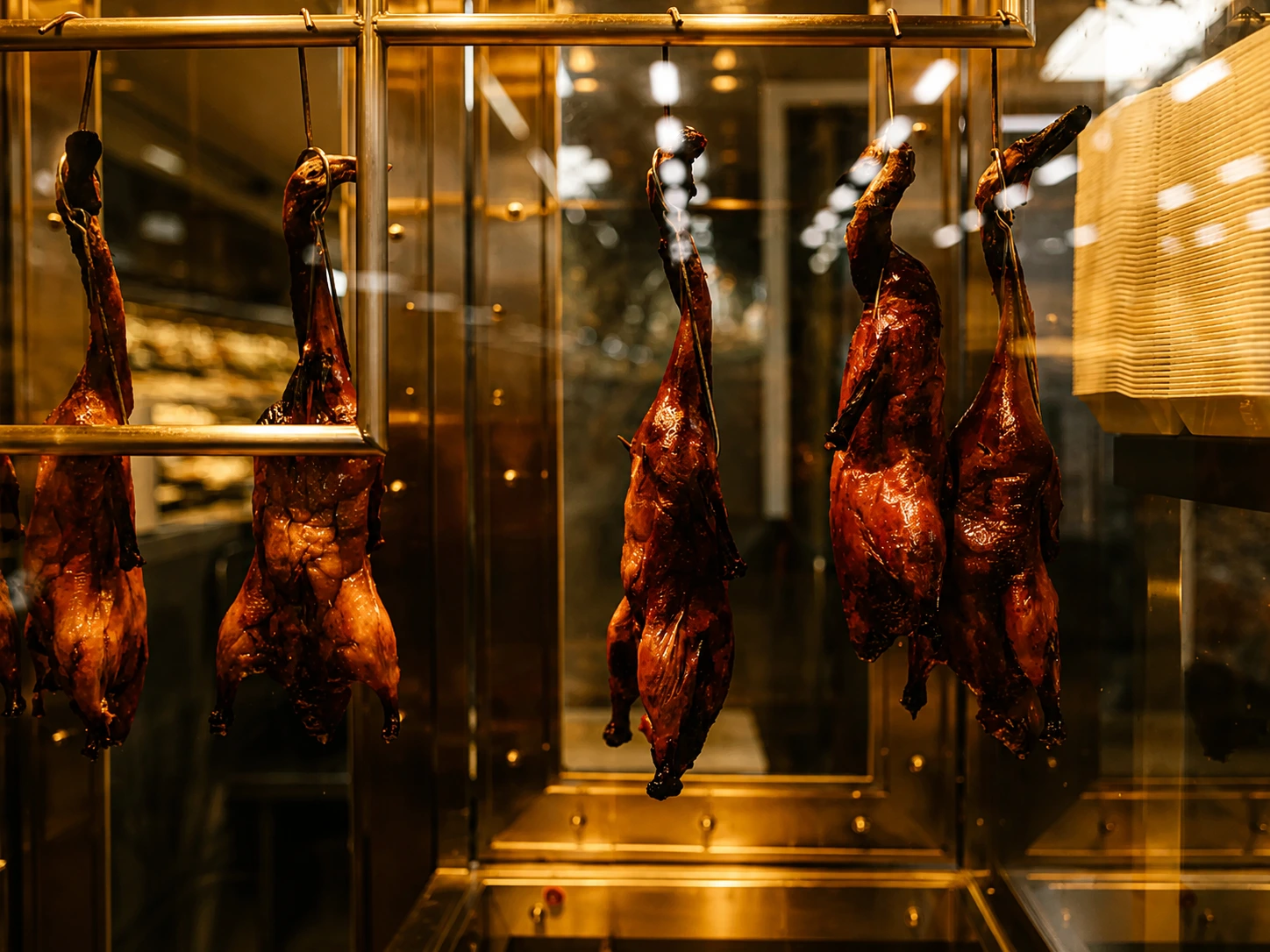
The duck is cleaned, scalded, glazed, hung, and dried. Each step removes softness from the surface. Water tightens the skin. Maltose or syrup gives color. Air dries what fire will later finish.
This work is quiet. No applause. No dining room. Just rows of pale ducks hanging in the kitchen, their bodies slowly turning from wet to taut. They are waiting to become sound.
Beijing roast duck has long stories behind it: southern oven traditions, imperial kitchens, old Qianmen restaurants, closed ovens and hanging ovens. Those histories matter, but they all meet at one question in the kitchen: how do you make skin crack while keeping the meat tender?
The answer is a negotiation between air and fire.
The Fire That Can Be Seen
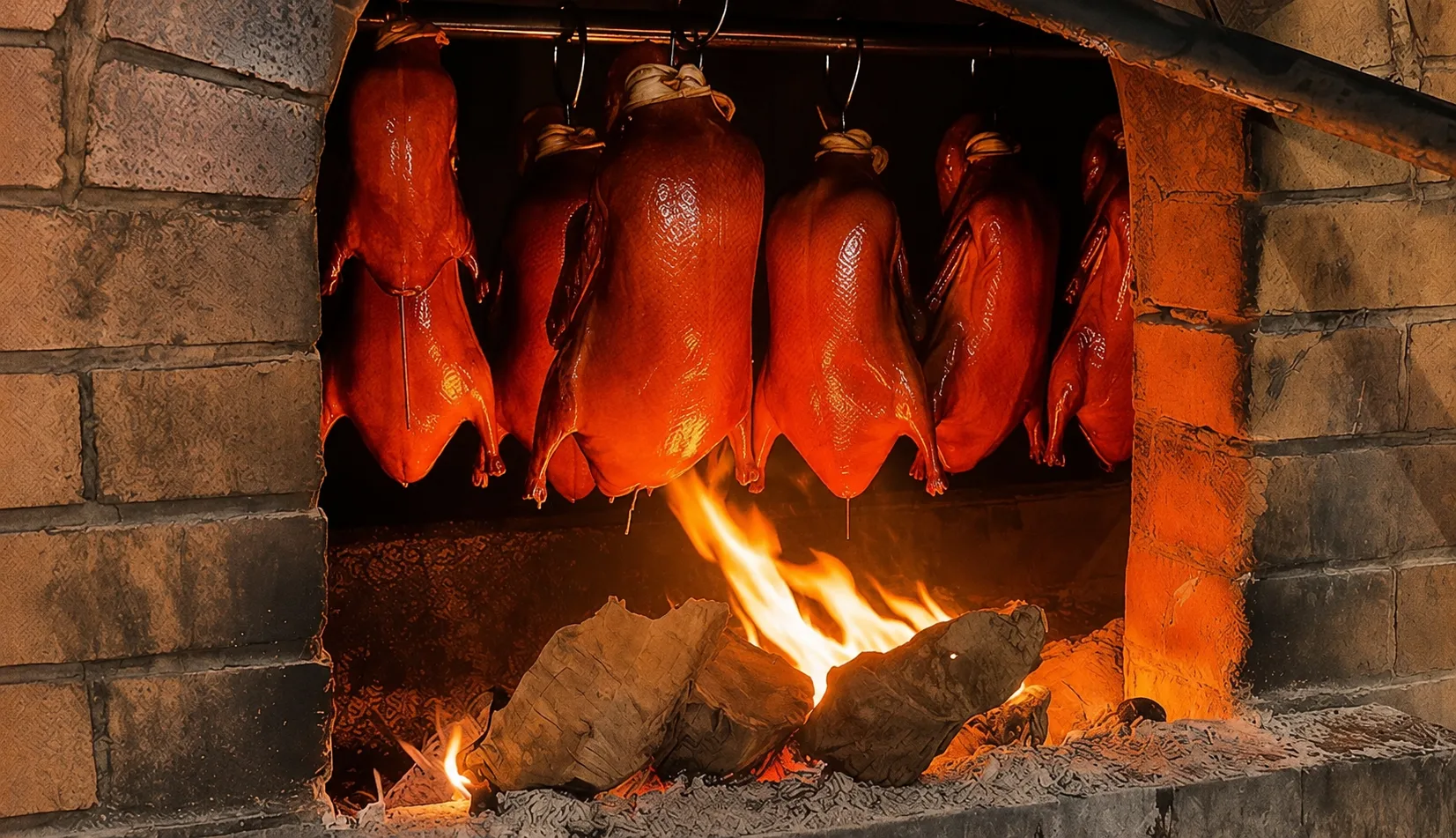
In the hanging oven, the door is open. Fruitwood burns below, often jujube or pear. The flame gives heat and a faint sweet smoke. Fat begins to loosen from the duck. It drips, strikes heat, and answers with sparks.
The roaster stands near the mouth of the oven with a long pole. He does not simply hang the duck and wait. He moves it, turns it, judges the color, shifts it away from one hot place and toward another. The duck becomes amber, then red-brown, then glossy in a way that makes people in the dining room sit up straighter when it passes.
Inside the body, water and heat keep the meat moist. Outside, the skin dries and tightens. Between them lies that hidden layer of air, doing its work like a secret.
There is another Beijing fire, the closed oven, where heat stored in the walls roasts the duck out of sight. That method is quieter, inward, almost private. The hanging oven is different. It performs. It lets the cook and the flame look at each other.
The Knife Finishes What the Fire Began
When the duck reaches the table, the room changes pitch.
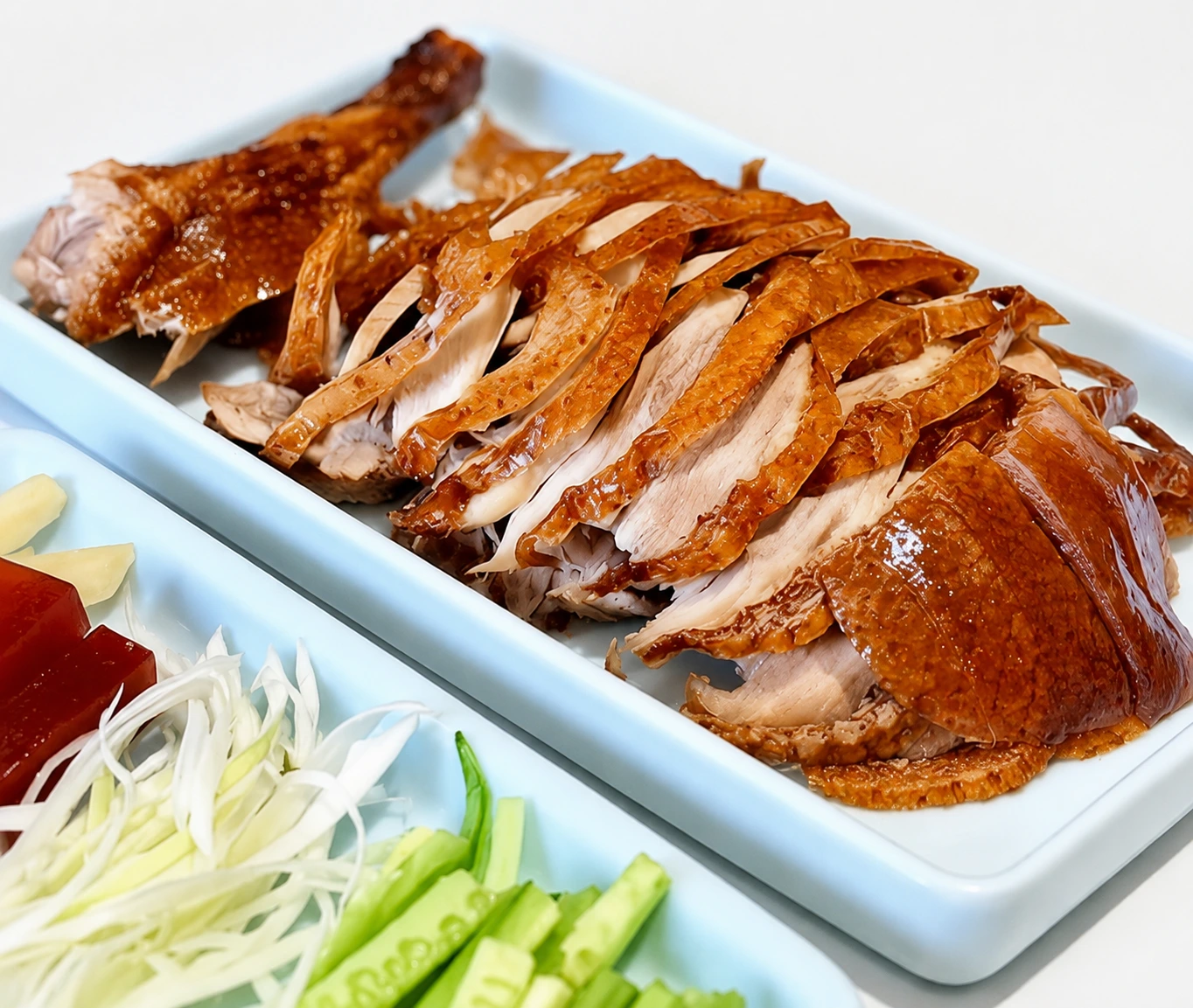
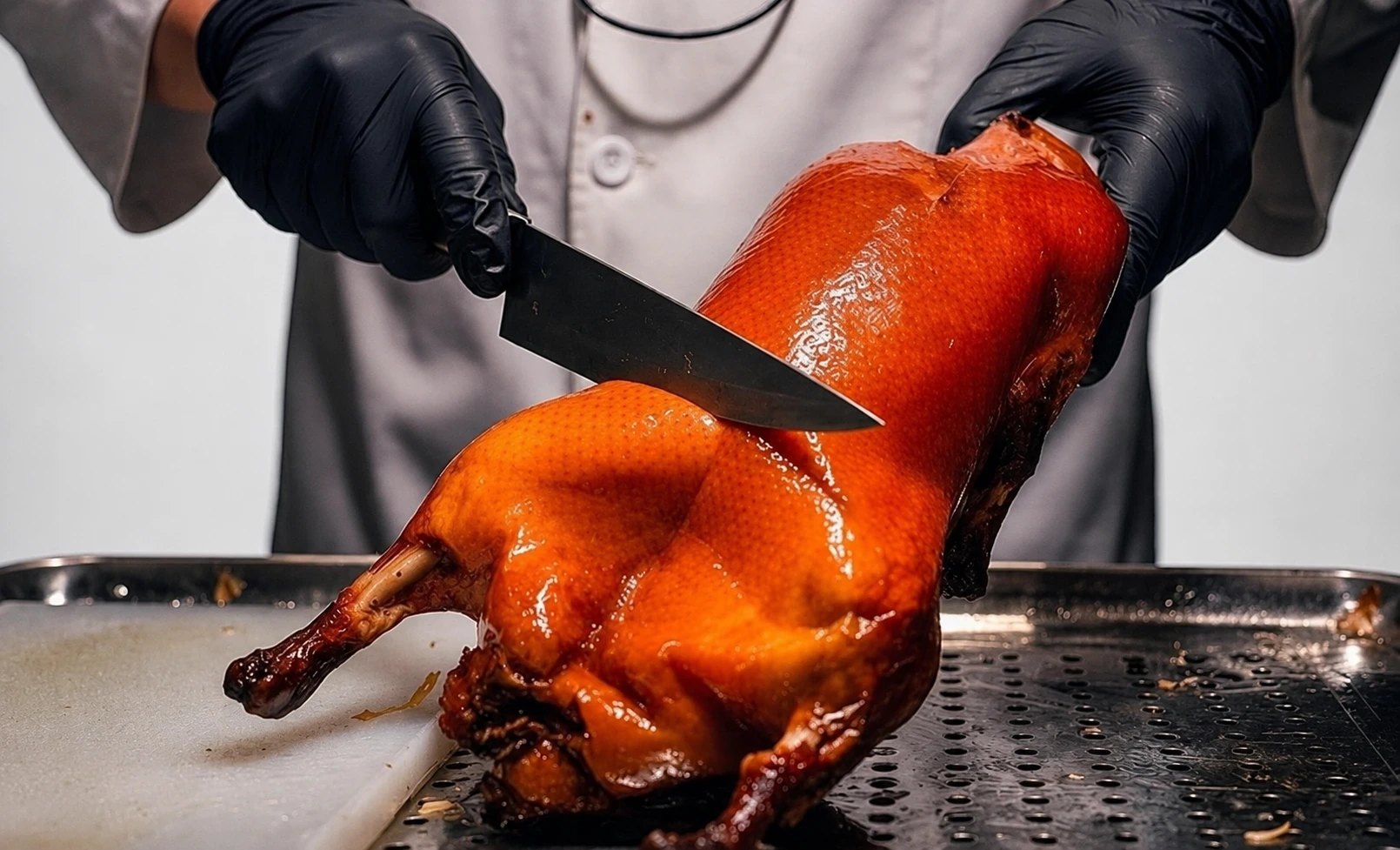
The slicer stands beside it with a narrow blade. The duck is no longer whole for long. Skin comes away in neat pieces. Then meat. Sometimes skin and meat together. The blade does not attack. It persuades.
A good slice carries three textures: brittle skin, a little fat, warm meat. Too thick, and it becomes heavy. Too thin, and the bite loses its center. The knife decides how the fire will be remembered.
Then the craft leaves the cook's hand and enters yours.
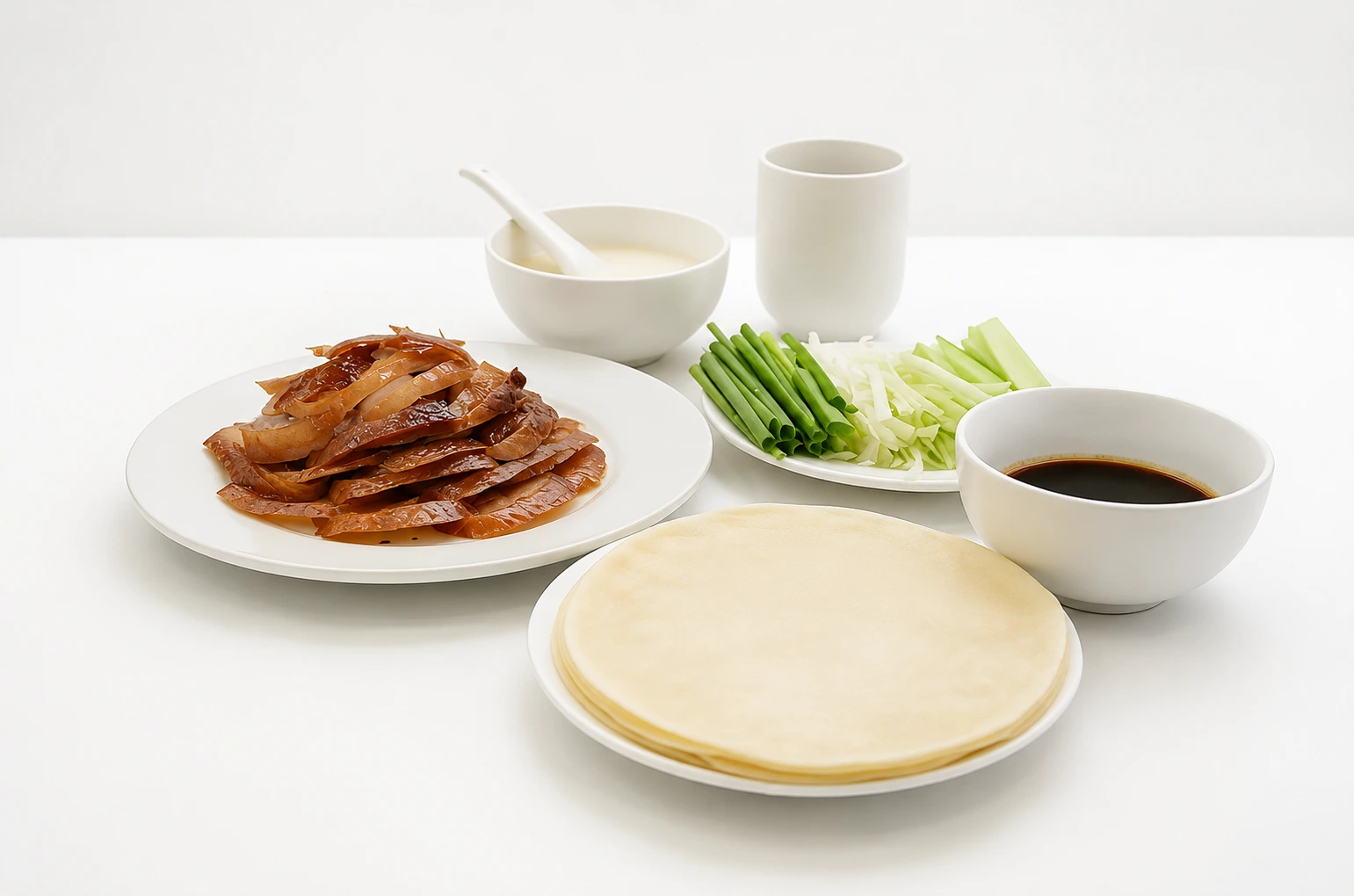
The pancake is thin and soft. Lay it flat. Brush on sweet bean sauce. Add scallion. Add cucumber. Place the duck near the center. Fold the bottom, tuck the side, roll just enough. Too greedy, and the pancake tears. Too much sauce, and the skin disappears. The final act is small, almost domestic.
The kitchen makes roast duck. The hand makes Beijing roast duck.
The Bite
The first bite should make a small sound.
Not a crunch like fried food. Something finer: skin breaking, fat warming, pancake stretching, scallion cutting through sweetness. For a second, all the hidden labor returns at once. The air under the skin. The drying rack. The fruitwood. The pole. The knife. The hot room behind the dining room.
Roast duck survives its arguments because the bite remains stubbornly simple. People debate closed oven and hanging oven, old shops and new ones, sugar with skin or sauce in the pancake. At the mouth, what matters is crisp, warm, sweet, sharp, soft.
At the end, the plate holds only fragments: a streak of sauce, a fallen scallion, one piece of skin that someone saves for last. The duck began as a body prepared by air. It passed through fire. It ended as a folded mouthful.
That is Beijing's genius with this dish. It makes ceremony feel edible.