The Paint Smells Like Pine and Secret
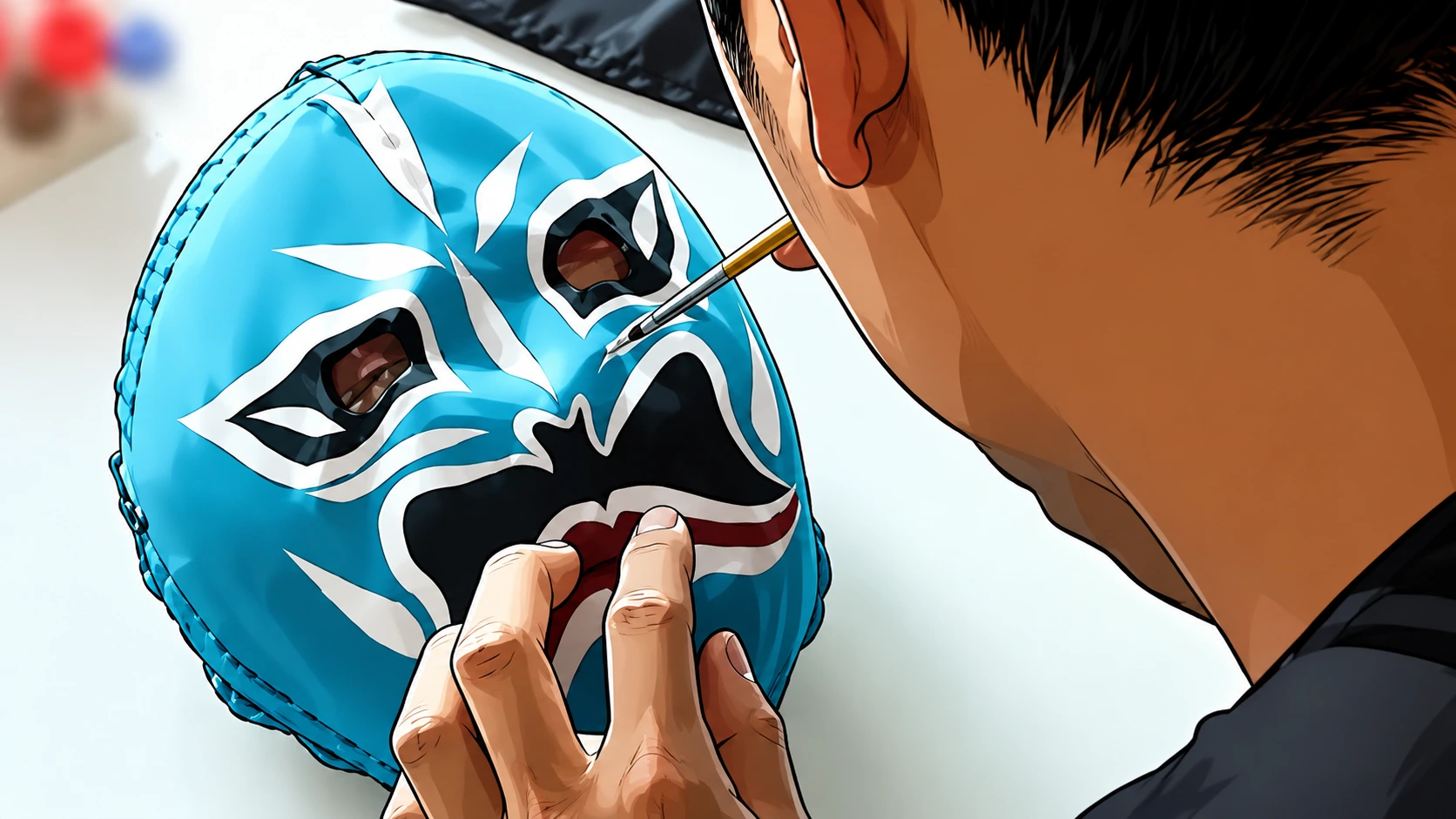
Backstage at the Shufeng Yayun Teahouse, the air is thick with the smell of pine oil and face paint. A performer sits on a low wooden stool, tilting his chin toward the light. His hands move in small, practiced circles, layering color onto his skin: first white, then red around the eyes, then black slashes across the brows. The brush is made of wolf hair, stiff enough to leave visible tracks in the greasepaint. He does not look in a mirror. He has done this four thousand times.
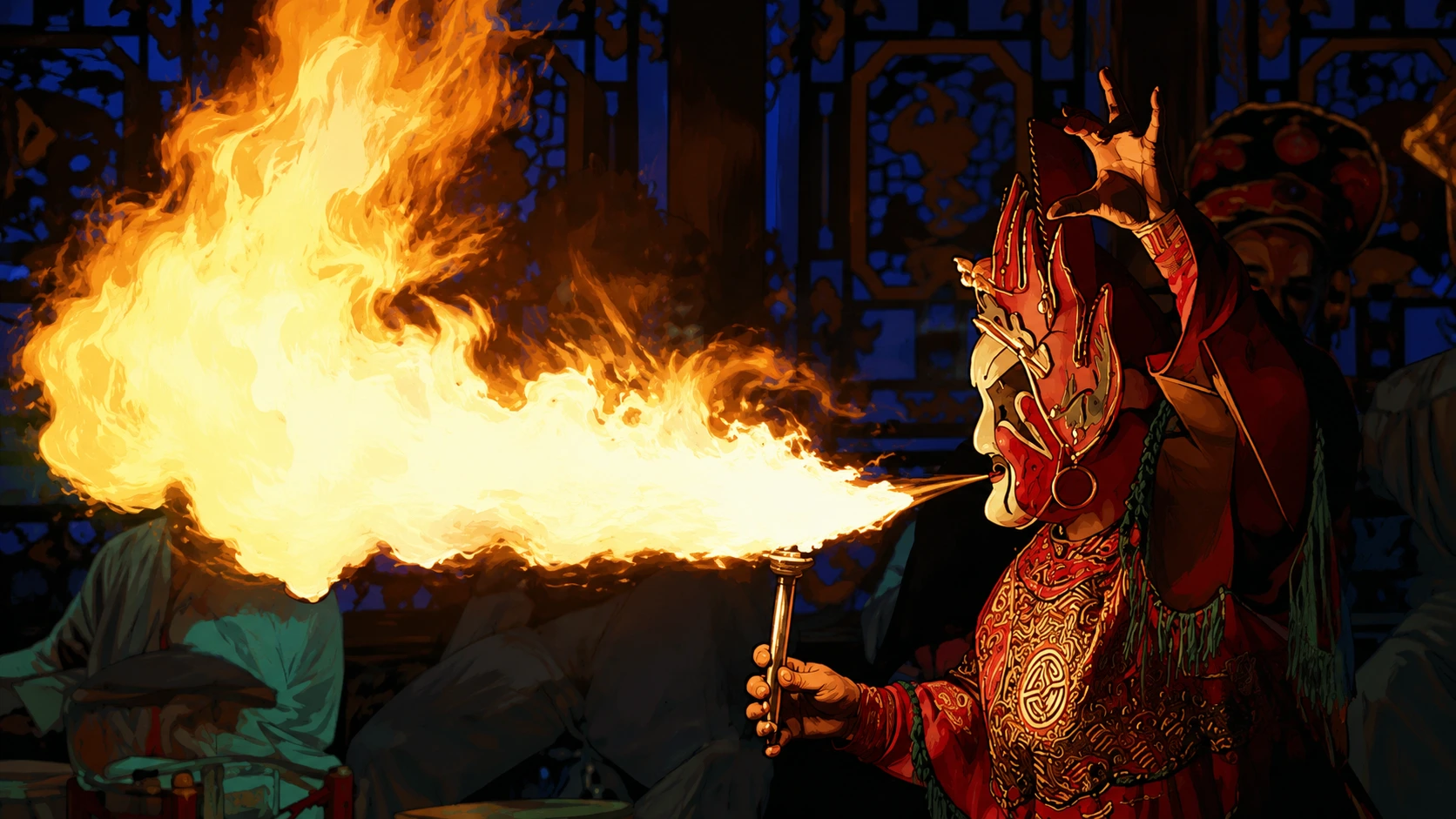
His name does not matter. In this teahouse, he is Zhuge Liang one night, Guan Yu the next, and sometimes just a demon with green flames painted around his jaw. What matters is the moment that comes later, when the drums hit their peak and his sleeve cuts through the orange stage light.
A Teahouse Built for Thunder
Chengdu teahouses are not quiet places. Bamboo chairs scrape against stone floors. Tea lids clink against porcelain bowls as people fish out the last Sichuan peppercorn from their huoguo. The room smells of dried chilies, tobacco, and the sweet rot of overripe loquats left in a bowl near the door.
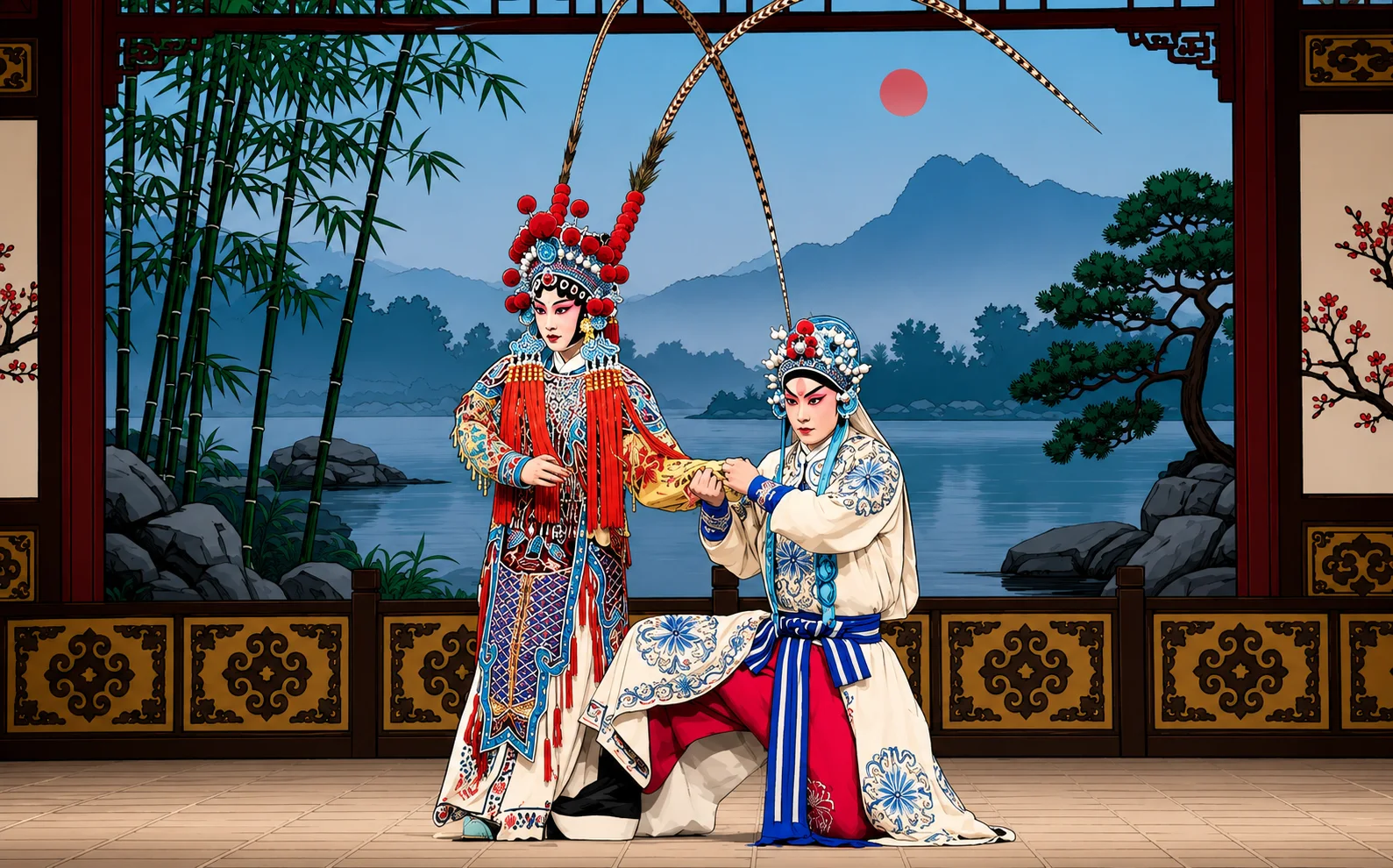
The stage is small, barely twelve feet across, framed by red curtains that have faded to the color of dried blood. When the lights dim, the crowd does not go silent. They lean forward. They know what is coming.
The musician strikes the gong. The sound is not musical. It is a blow, a warning, a door slamming shut.
The Sleeve Cuts the Air
The actor steps out. His robe is heavy silk, embroidered with gold thread that catches the light like fish scales. His face is a mask of fury: red skin, black brows twisted upward, eyes ringed with white. He moves like a man on fire, arms wide, boots stomping the wooden planks hard enough to raise dust from the cracks.
Then the story turns. A betrayal. A ghost appears. The actor spins, his right sleeve snapping outward like a flag in wind. For one frame of one second, the orange fabric blocks his face.
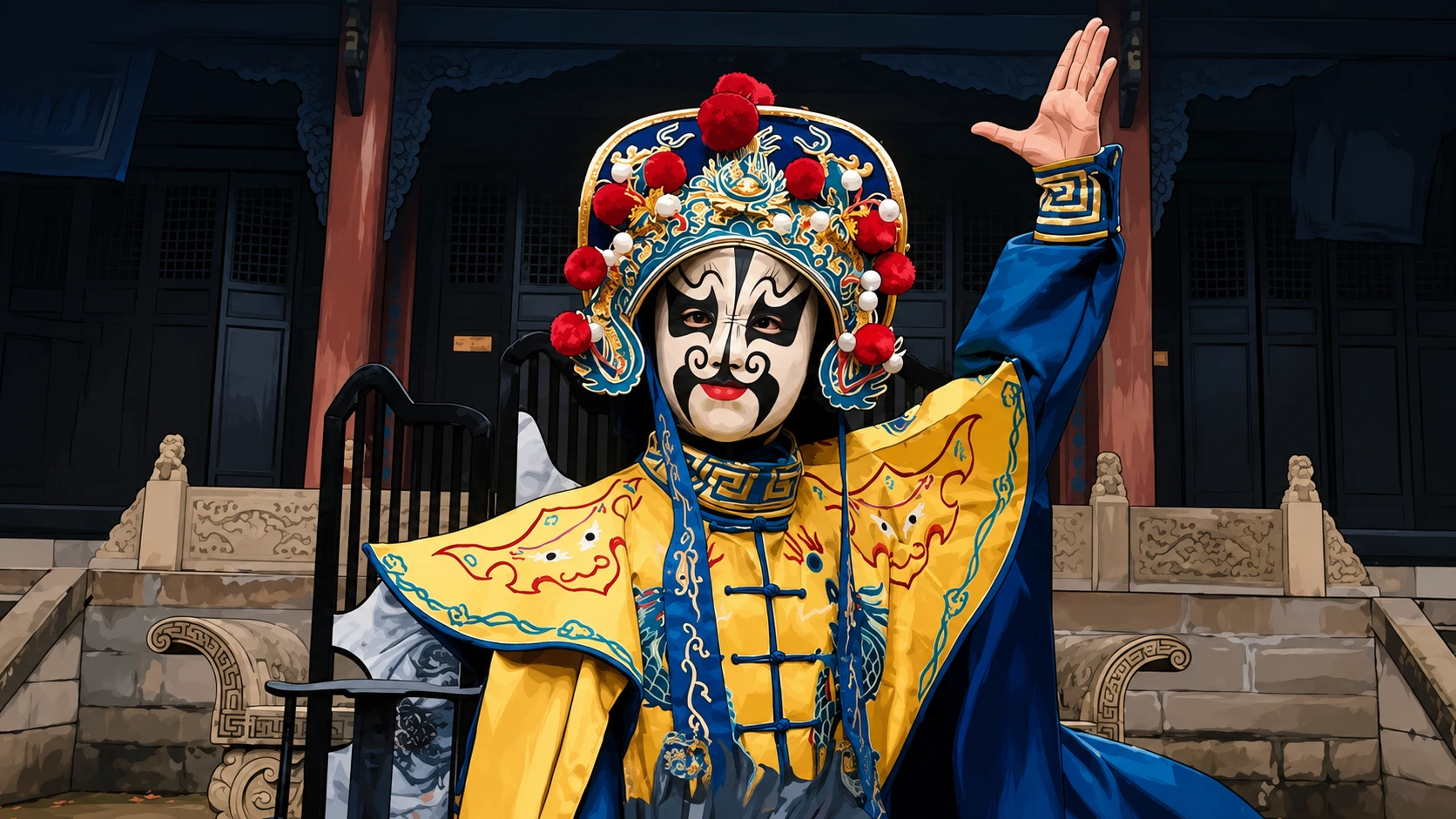
When the sleeve falls, his face is blue. Not painted blue. Cerulean. Deep as a midnight river. The white-ringed eyes are gone. Now there are fangs, silver and glinting, and a pattern of lightning bolts across his forehead.
No one in the audience blinks. They are too busy exhaling.
How the Face Vanishes
For centuries, the method was a secret passed only from master to student, sealed with an oath. Today, the basic mechanics are known, but the craft remains fiercely guarded.
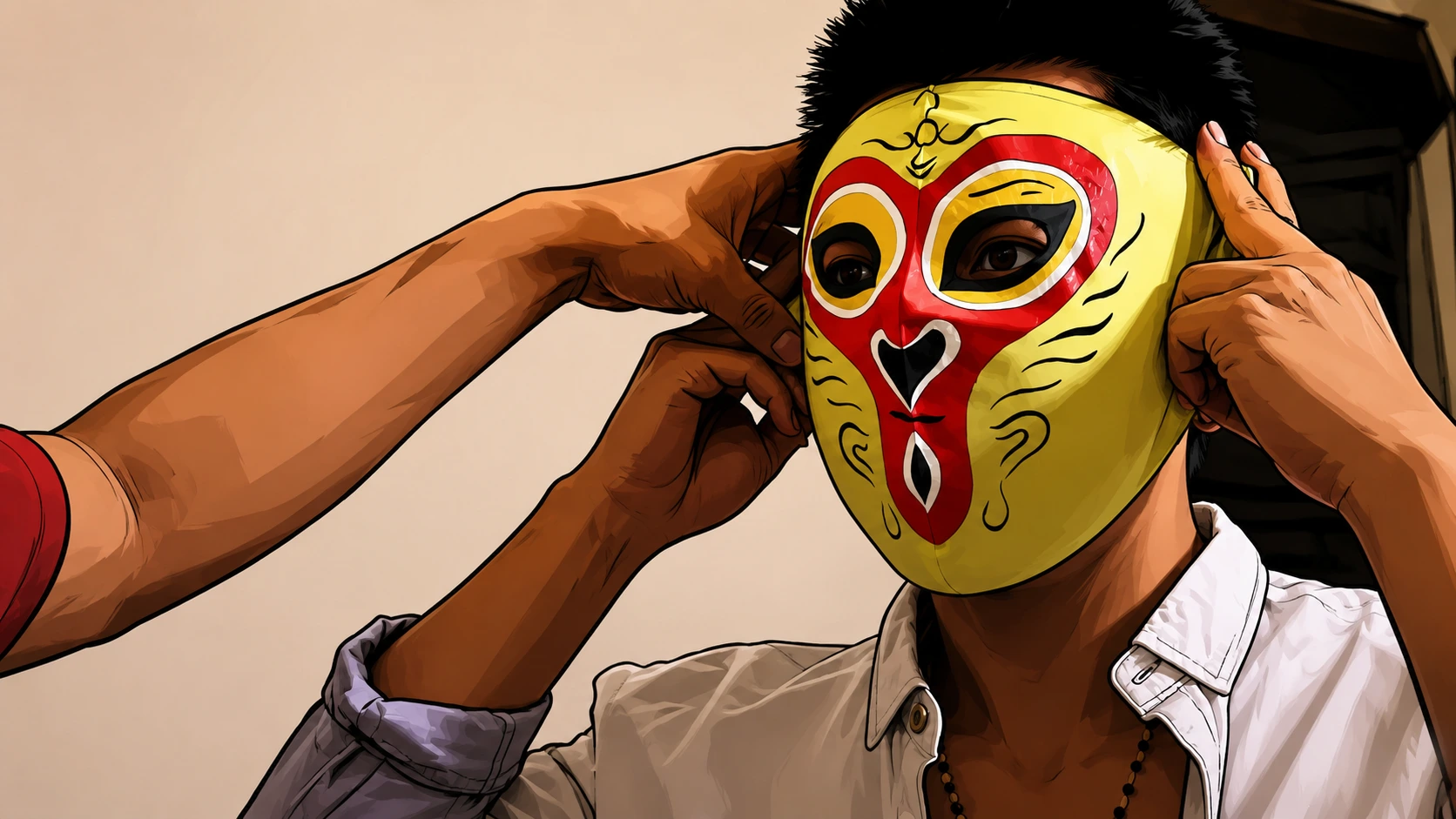
The masks are layers of silk, thinner than a leaf, painted with water-based pigments that dry to a rubbery finish. They attach to the face with invisible threads, or they sit inside the collar, the hat, the back of the hand. Some performers wear up to twelve faces, each one triggered by a twitch of a facial muscle, a pull of a string inside the sleeve, or a quick snap of the head that detaches one mask and reveals the next.
The speed is the point. A human eye takes roughly 100 milliseconds to register a change. The best performers complete the switch in 80. Your brain knows something happened. It cannot prove what.
The Sound of the Turn
Listen closely during the change. There is a soft sound, like a playing card flicked against a table. That is the old mask folding into the collar, or snapping flat against the inside of the sleeve. The performer never stops moving. If he paused, you would see the thread. You would catch the edge.
In the old days, performers used magnets. Some still do. Others use air pressure, a tiny puff of breath released through a tube hidden in the costume. The technology is low. The practice is everything. A young student might spend three years learning to snap his head at the exact angle, with the exact speed, before he is allowed to attach his first practice mask.
The Moment After
The actor finishes. The drums slow. He stands at center stage, face frozen in the final mask, a benevolent smile of gold and crimson, and bows. The audience erupts. Tea cups rattle on their saucers. Someone shouts "Hao!" into the dark.
But the performer is already somewhere else. His eyes, visible through slits in the painted silk, scan the crowd not for applause, but for the one person who might have seen the thread. No one ever does. They are still staring at his face, waiting for it to change again.
Backstage, the pine oil waits. The brushes sit in their jar. The masks hang on a wooden rack, twelve faces in a row, each one empty until a head snaps inside it and brings it to life for half a second.
The gong will sound again in twenty minutes. The actor lifts his chin. His hands begin to move.