The Sound of a Spade Hitting Bronze
The farmer was digging for clay to make bricks. The field outside Guanghan was flat and unremarkable, the color of dried wheat. His spade went into the earth at the usual angle, with the usual weight behind it, and struck something that rang.
Not stone. Stone thuds. Not pottery. Pottery cracks. This was a clean, bell-like note that hung in the humid Sichuan air for half a second too long. The farmer knelt. He brushed away dirt with his bare hands, a gesture he would later describe as something his hands did before his brain could stop them.
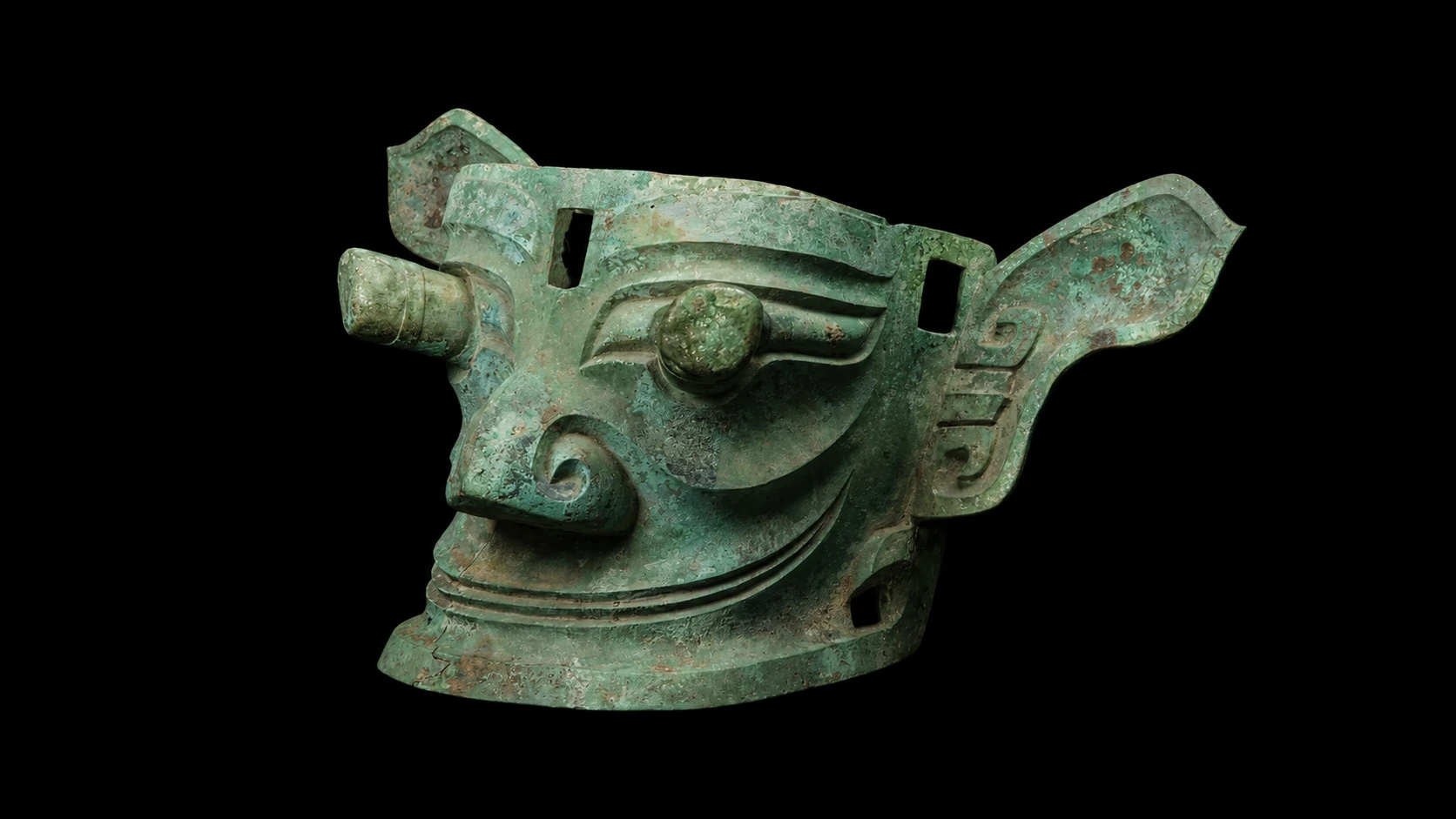
The eye stared up at him. It was the size of a fist, cast in bronze, with a rectangular socket that held nothing but shadow. The pupil was a cylinder, protruding outward like a telescope aimed at the sky. Above it, a brow ridge swept back in a sharp angle that no human face has ever worn.
The Face That Broke History
For decades, Chinese archaeology had followed a tidy line: civilization began in the Yellow River basin, spread south, and reached Sichuan last. The Sanxingdui pits destroyed that line.
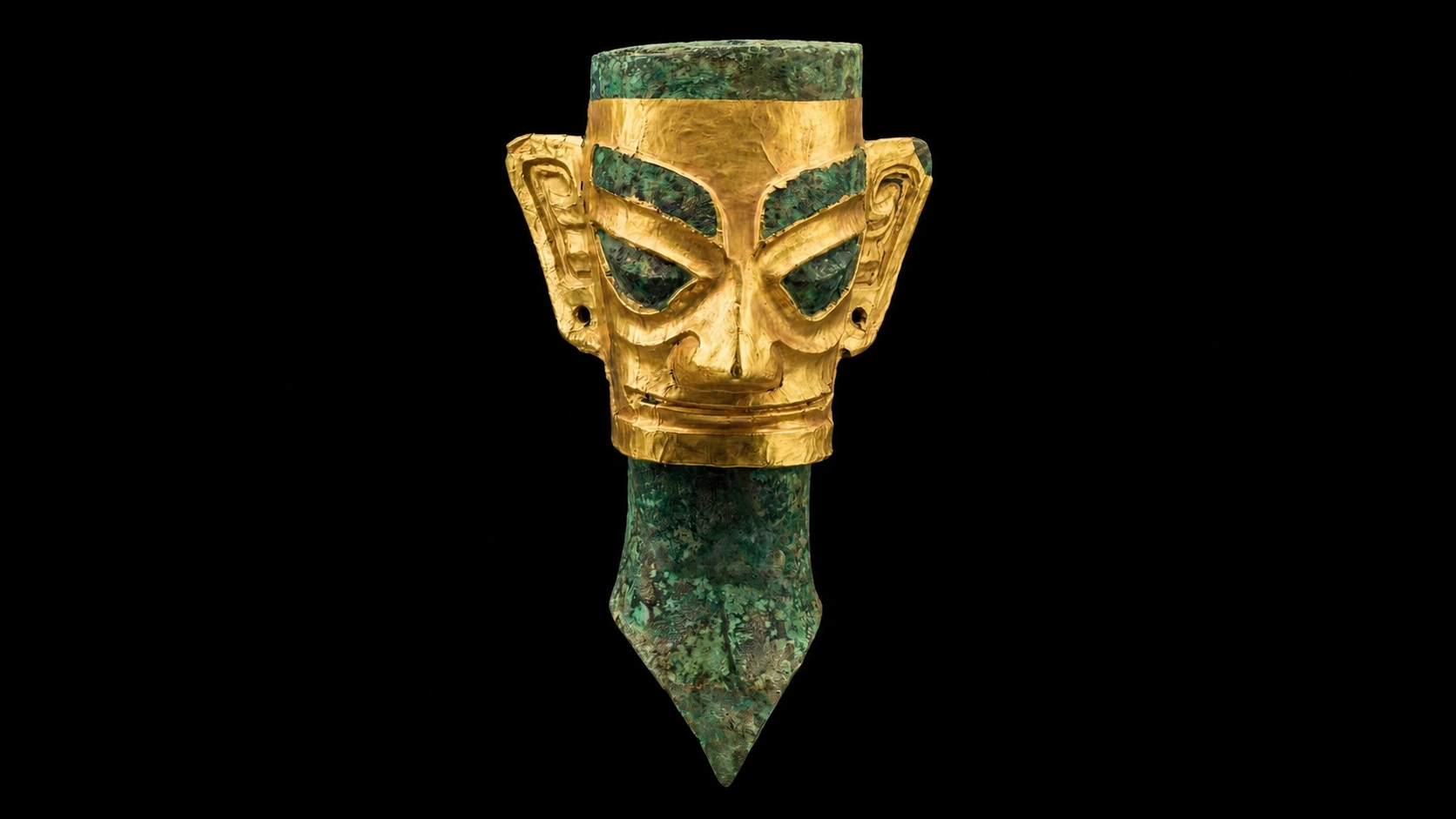
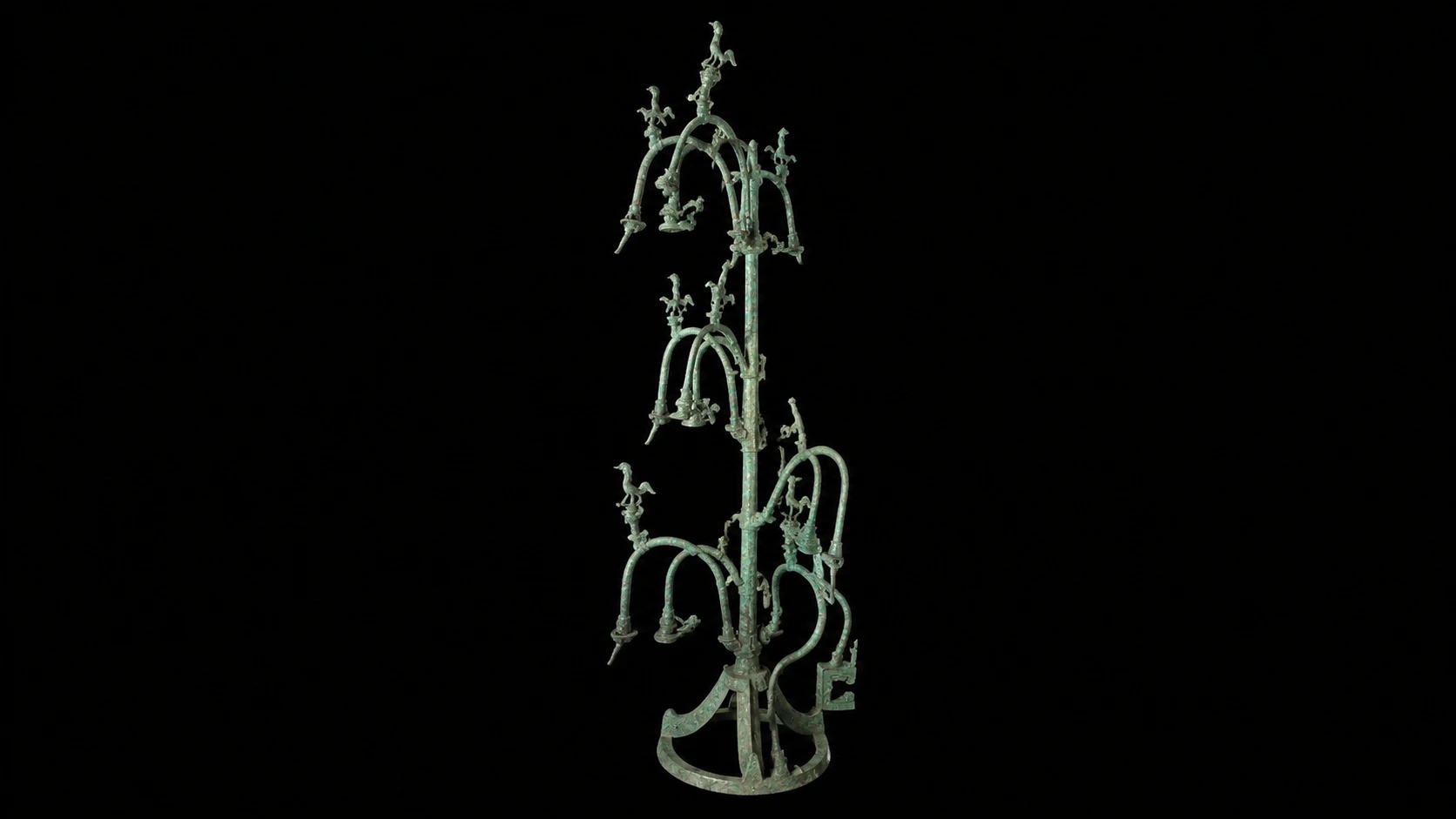
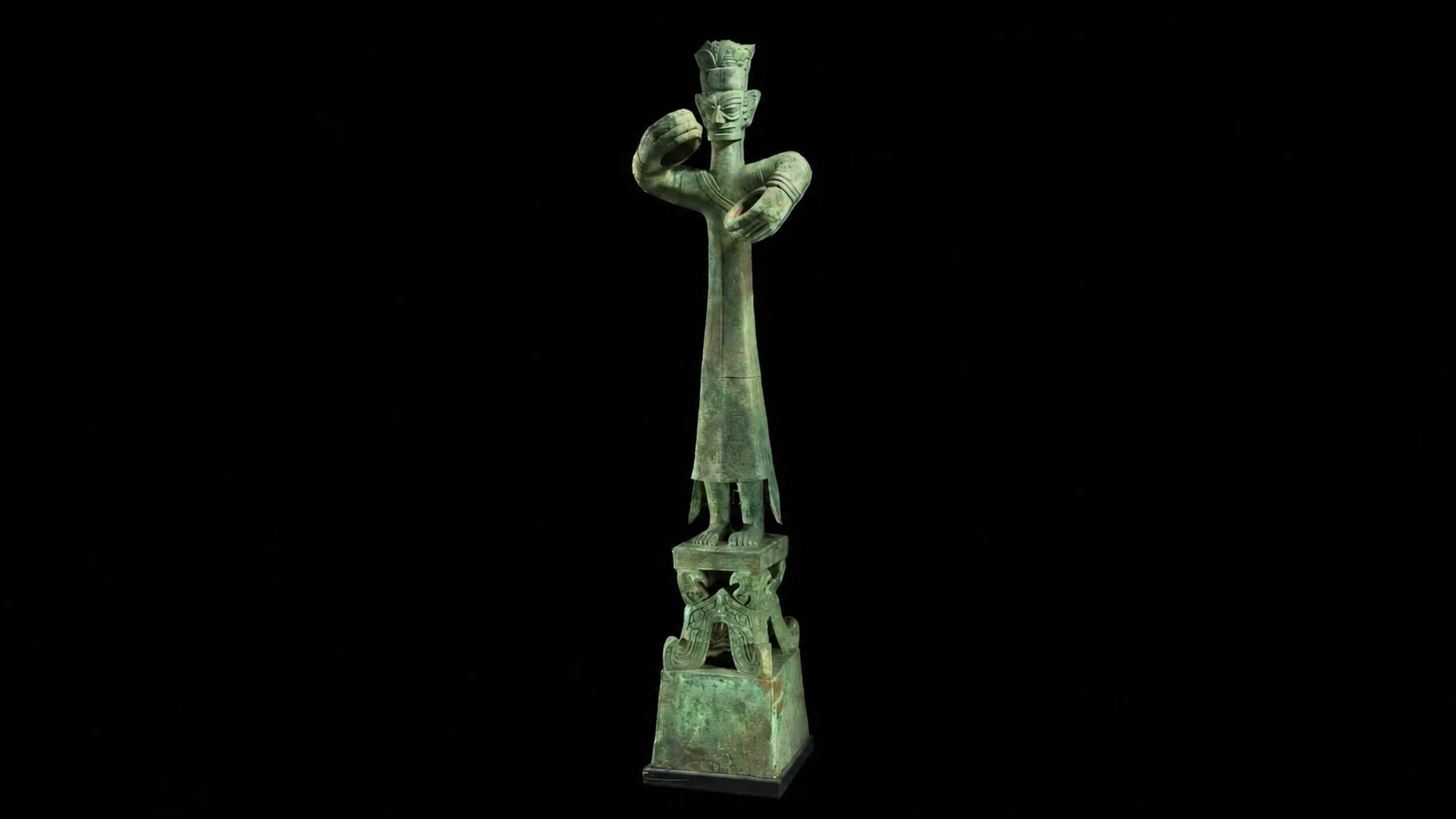
The artifacts were too advanced for their age, roughly three thousand years old, contemporaneous with the Shang Dynasty but stylistically alien. Bronze heads with elongated necks. A tree of life, nearly four meters tall, with nine birds perched on its branches. And the masks, dozens of them, some human-sized, some large enough to cover a doorway, all sharing the same impossible features: protruding eyes, flaring nostrils, ears that stretched to the shoulders like wings.
The archaeologists who lifted them from the earth worked in silence. They had been trained to recognize patterns. These objects had no precedent.
Gold, Hammered Thinner Than Skin
The most famous piece came from Pit No. 2. It was a mask, but not like the bronze ones. This was gold, beaten so thin it weighed only forty grams, though it was wide enough to cover a human face. The craftsmen had started with a solid block of gold, heated it, and hammered it for days, maybe weeks, until it was foil.
They shaped it over a wooden form, pressing the metal with stone tools into the same impossible features: the bulging eyes, the sharp nose, the mouth locked in a line that suggested neither smile nor frown. Then they painted it, traces of cinnabar red still visible in the grooves, and they buried it.
Why bury gold? Why bury a mask that took a hundred hours to make? The archaeologists found the masks in ritual sacrificial pits, layered with elephant tusks, jade knives, and the charred remains of sacrificial animals. Someone had built these objects with extraordinary skill and then given them to the earth, as if the earth had asked.
The Hands That Held Nothing
In another pit, the team found bronze hands. They were disembodied, each one larger than a human head, cast with perfect detail: the knuckles, the fingernails, the creases across the palms. But they were posed in a grip, fingers curved around an invisible object.
The archaeologists tried everything. A staff? A jade cong? A torch? Nothing fit the angle of the fingers. The hands had been made to hold something that was not in the pit, something that may never have existed in physical form.
A keeper at the museum now gestures toward the hands and tells visitors, "Maybe they held a dream." He is joking, but the joke lands too close to the truth. The Sanxingdui culture left no written records. No texts. No inscriptions longer than a few symbols. They spoke to the future only through bronze and silence.
Walking Through the Museum at Noon
The Sanxingdui Museum sits forty kilometers north of Chengdu, a low building of rust-colored metal and glass that seems to crouch in the landscape rather than rise from it. Inside, the lighting is deliberate. The bronze heads emerge from darkness like swimmers surfacing from deep water.
The air smells of climate control and stone. Your footsteps echo. The masks watch you from behind glass, their protruding eyes catching the light at odd angles so that they seem to follow you as you move.
A school group passes, children in matching yellow hats. One boy stops in front of the golden mask and whispers to his friend. He does not know the word for alien, but his finger traces the air in front of the bulging eyes, and his meaning is clear.
The Return to the Field
Outside, the field where the farmer dug his spade is still there, cordoned off by a chain-link fence. The hole has been filled. Grass grows over it. On humid summer afternoons, the soil releases a smell of iron and decay that might be imagination or might be the last breath of whatever was buried there three millennia ago.
The farmer became a security guard at the museum. He still does not understand what he found. In interviews, he says the same thing: "It was heavy. It rang. It looked at me."
Those three sentences are the closest anyone has come to explaining Sanxingdui. A civilization that built gold masks and bronze hands, that buried its greatest artworks in holes in the ground, that left no words, only objects that stare at us with eyes too large for any human face.
The spade still hangs in the museum lobby, rusted and ordinary, behind a glass case. Next to it, the golden mask catches the light. Forty grams of hammered metal, thinner than skin, heavier than history.