The Green Snow
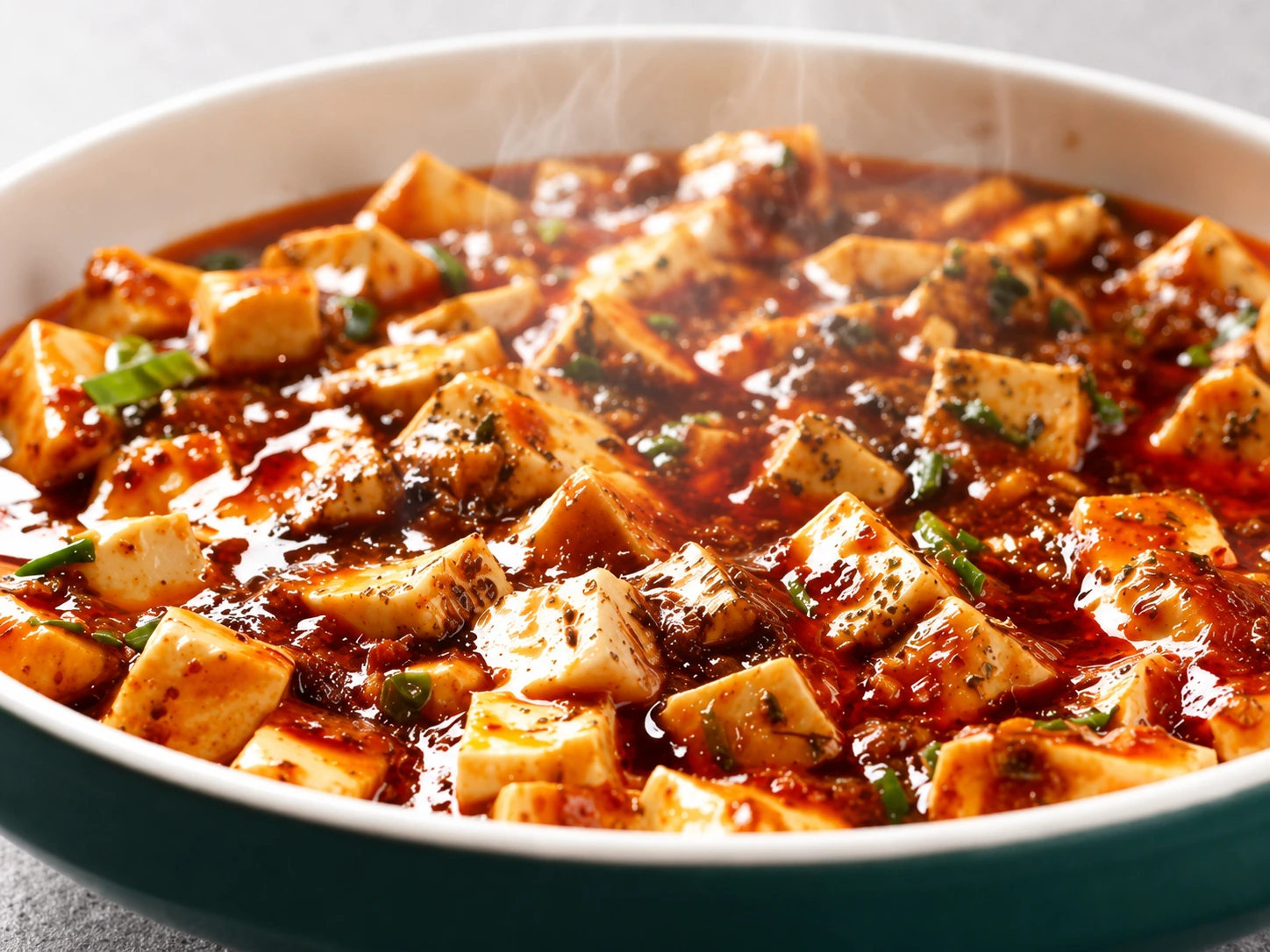
The last ingredient reaches mapo tofu as a dusting. Freshly ground Sichuan peppercorn falls across white cubes and red oil, carrying a citrus scent through the steam. Chili has already supplied heat. The peppercorn adds the tingling sensation that makes the dish feel as alive as it tastes.
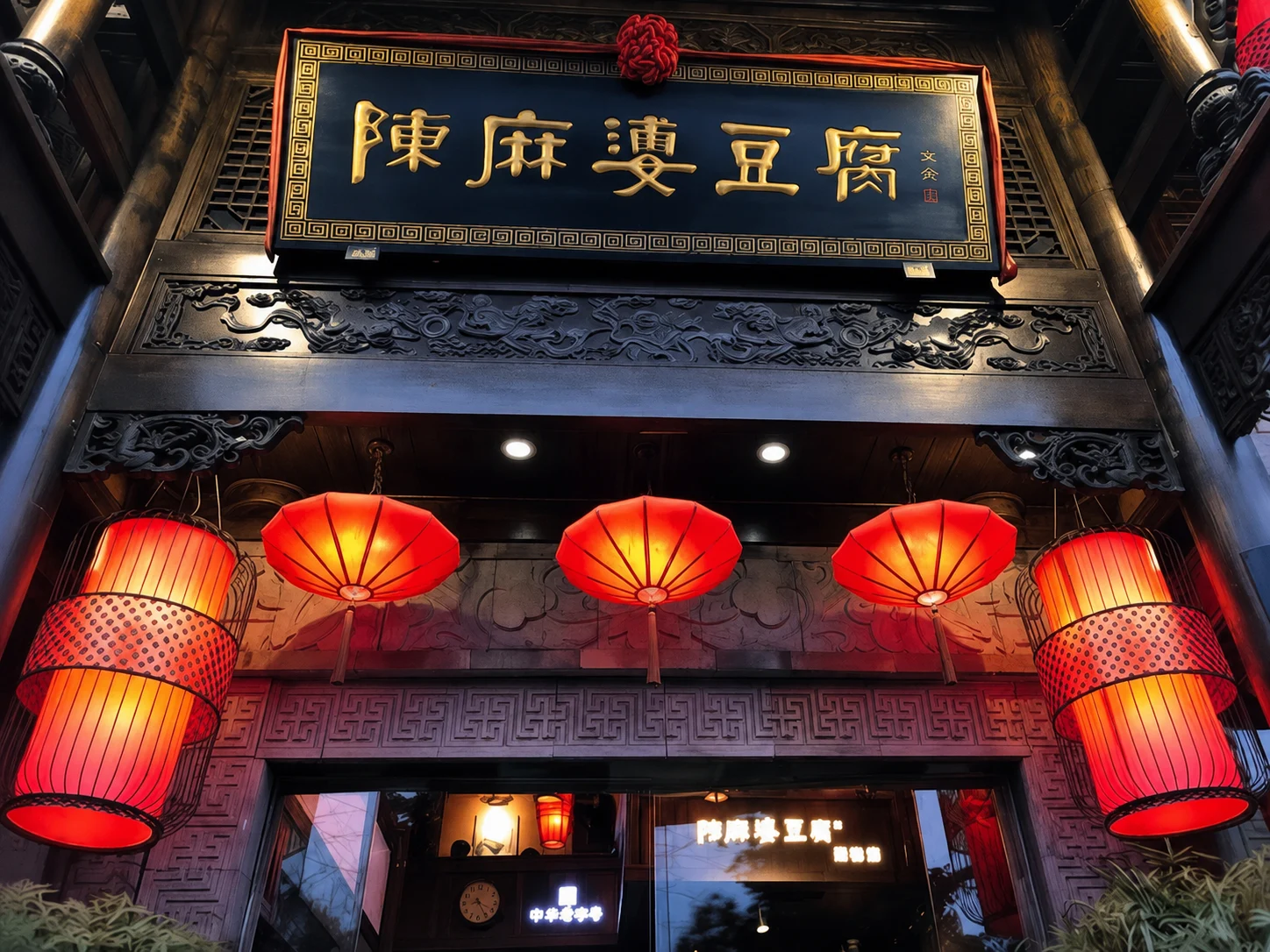
Mapo tofu began in Chengdu and is traditionally traced to a small restaurant beside Wanfu Bridge in 1862. The woman who cooked there was known as Chen Mapo, a nickname referring to marks on her face. Her name stayed with the tofu long after the bridge, customers, and city around the restaurant changed.
Why the Dish Is Called Mapo
*Mapo* is commonly translated as "pockmarked older woman." The name points to the cook rather than an ingredient or cooking method. According to the history preserved by the Chen Mapo restaurant and China's time-honored brand archive, Chen and her husband operated Chen Xingsheng Restaurant near Wanfu Bridge. Laborers carrying oil were among its customers, and Chen's tofu became known for being numbing, hot, and fragrant.
That account gives the dish a date, a bridge, and a founder, but it has also passed through more than a century of restaurant storytelling. The safest way to read it is as the established origin tradition: mapo tofu is firmly connected to late-Qing Chengdu, while every detail of the first serving cannot be independently reconstructed.
The nickname survived because it did something most dish names do not. It kept a working woman's presence inside a food that later traveled far beyond her neighborhood. Diners ordering mapo tofu were repeating her name even when they knew nothing else about her.
The Tofu Has to Stay Soft
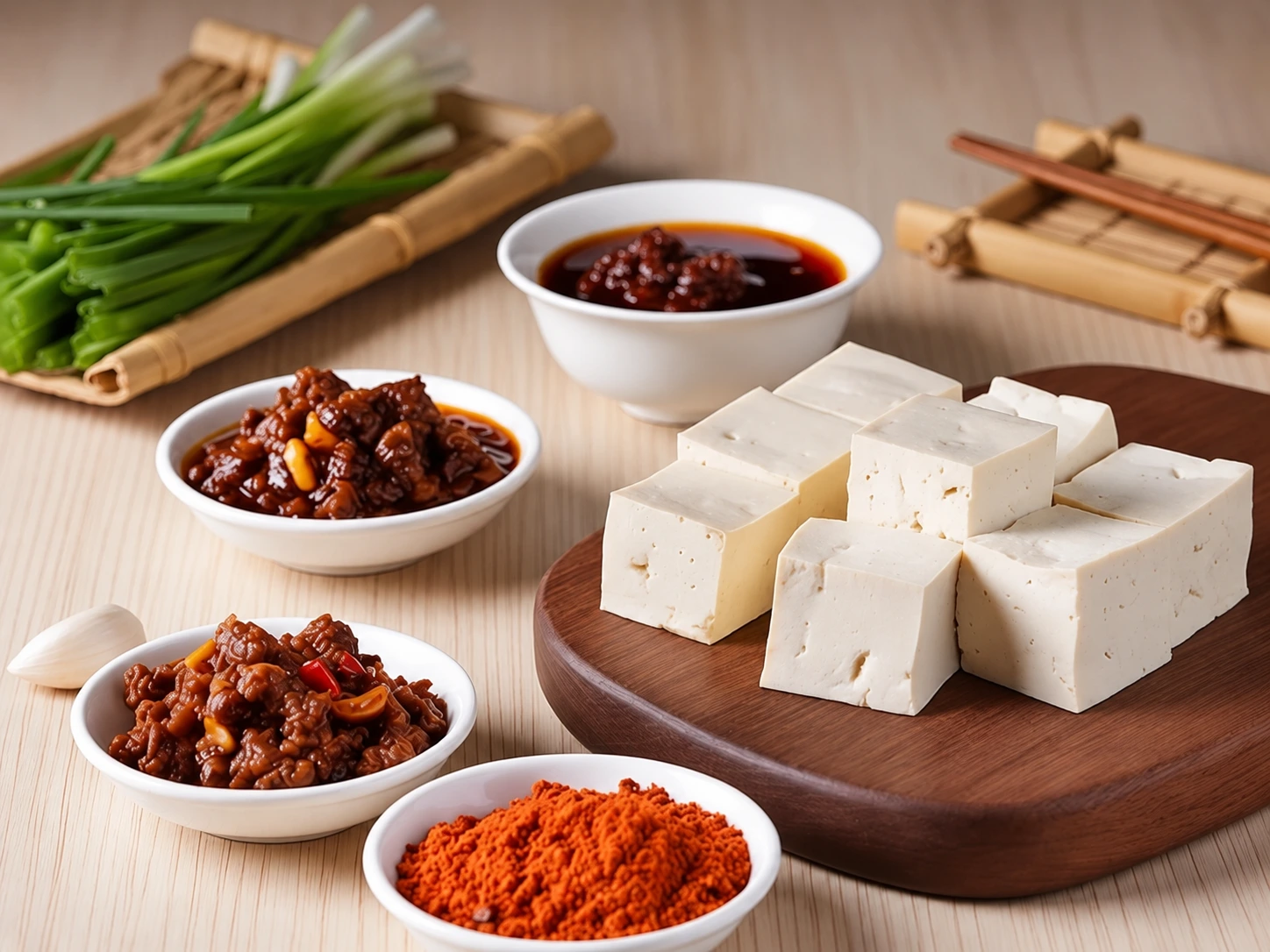
The tofu is delicate, but it is not passive. It has to remain soft while carrying a sauce built from fermented broad-bean paste, fermented black beans, chili, stock, and minced beef. If the cook stirs too aggressively, the cubes break. If the tofu is too firm, the sauce sits outside instead of becoming part of each bite.
The cook moves a ladle around the tofu rather than cutting through it. Starch thickens the liquid in stages, allowing the sauce to cling while the cubes keep their shape. The finished tofu should quiver on the spoon and give way under the tongue, releasing heat, salt, fermented depth, and beef into the same mouthful.
This texture is one reason mapo tofu is usually eaten with rice. The rice catches the sauce, softens the intensity, and gives the fragile tofu something quiet to rest against.
Ma and La Do Different Work
Sichuan peppercorn does not burn in the same way as chili. Its hydroxy-alpha-sanshool excites sensory pathways associated with touch, producing the characteristic buzzing or tingling known as *ma*. Chili supplies *la*, the heat. Together they form *ma la*, but the two sensations arrive through different ingredients and do different work.
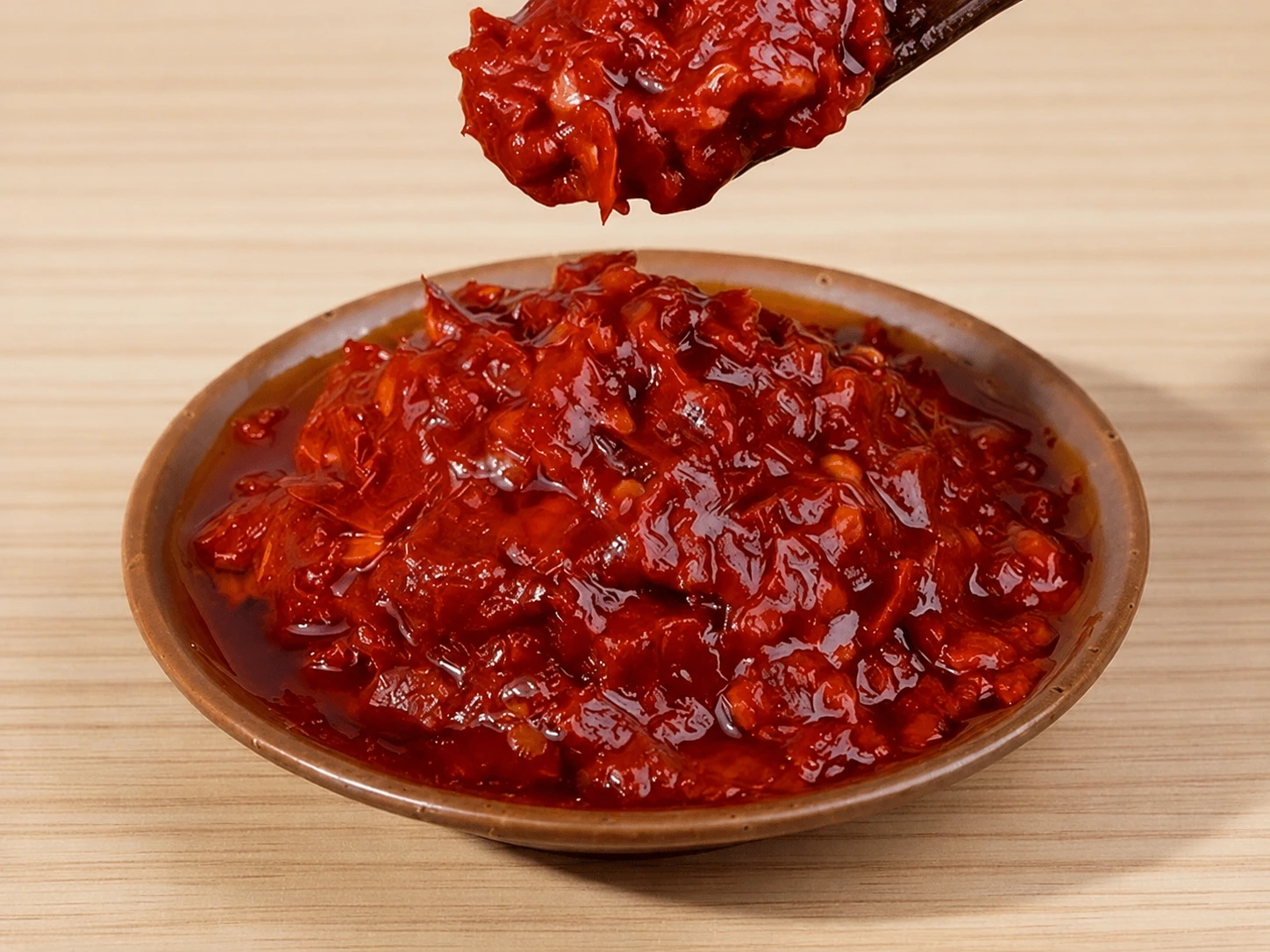
Fermented broad-bean paste adds another layer. It gives the sauce salt, color, and a deep savory flavor beneath the brighter chili and peppercorn. Minced beef contributes browned, crisp grains. The dish is therefore not simply "spicy tofu." Its effect depends on contrasts: soft and crisp, numbing and hot, bright aroma and slow fermentation.
Visitors often meet Chengdu's appetite for chili through hotpot or skewers lifted from a bubbling pot. Mapo tofu is a smaller dish, but it uses the same local understanding that heat alone is not enough. Aroma, numbness, salt, fermentation, and texture have to arrive in balance.
From Wanfu Bridge to a Global Dish
The original restaurant's surroundings have changed, and mapo tofu no longer belongs only to one Chengdu dining room. It appears across China and in restaurants from Tokyo to New York, sometimes made without meat, sometimes thickened heavily, sometimes softened for local tastes.
Those versions show how far the dish has traveled, but the Chengdu identity remains visible in its basic structure. Tofu stays soft. Fermented bean paste builds the sauce. Sichuan peppercorn is not a garnish added for spectacle; it supplies one half of the dish's defining sensation.
At the table, the history contracts back into one final movement. A spoon breaks a cube over rice. Red sauce runs between the grains. Peppercorn dust rises with the steam, and the name of a woman beside Wanfu Bridge is spoken once more.
FAQ
What does "mapo" mean?
*Mapo* is commonly translated as "pockmarked older woman." It refers to Chen Mapo, the cook traditionally credited with creating the dish in late-Qing Chengdu. The name identifies a person and place rather than a type of tofu, preserving the founder's nickname each time the dish is ordered.
Where did mapo tofu originate?
Mapo tofu originated in Chengdu, the capital of Sichuan province. The established restaurant history dates it to 1862 at Chen Xingsheng Restaurant beside Wanfu Bridge, where Chen Mapo cooked for laborers and other travelers. Some details have been polished through retelling, but the dish's connection to late-Qing Chengdu is well established.
What makes authentic mapo tofu different?
Traditional mapo tofu balances soft tofu, fermented broad-bean paste, fermented black beans, minced beef, chili heat, and freshly ground Sichuan peppercorn. The tofu remains delicate while the sauce is savory, hot, aromatic, and numbing. Chili supplies the heat, while peppercorn supplies the tingling sensation that distinguishes the dish from ordinary spicy tofu.