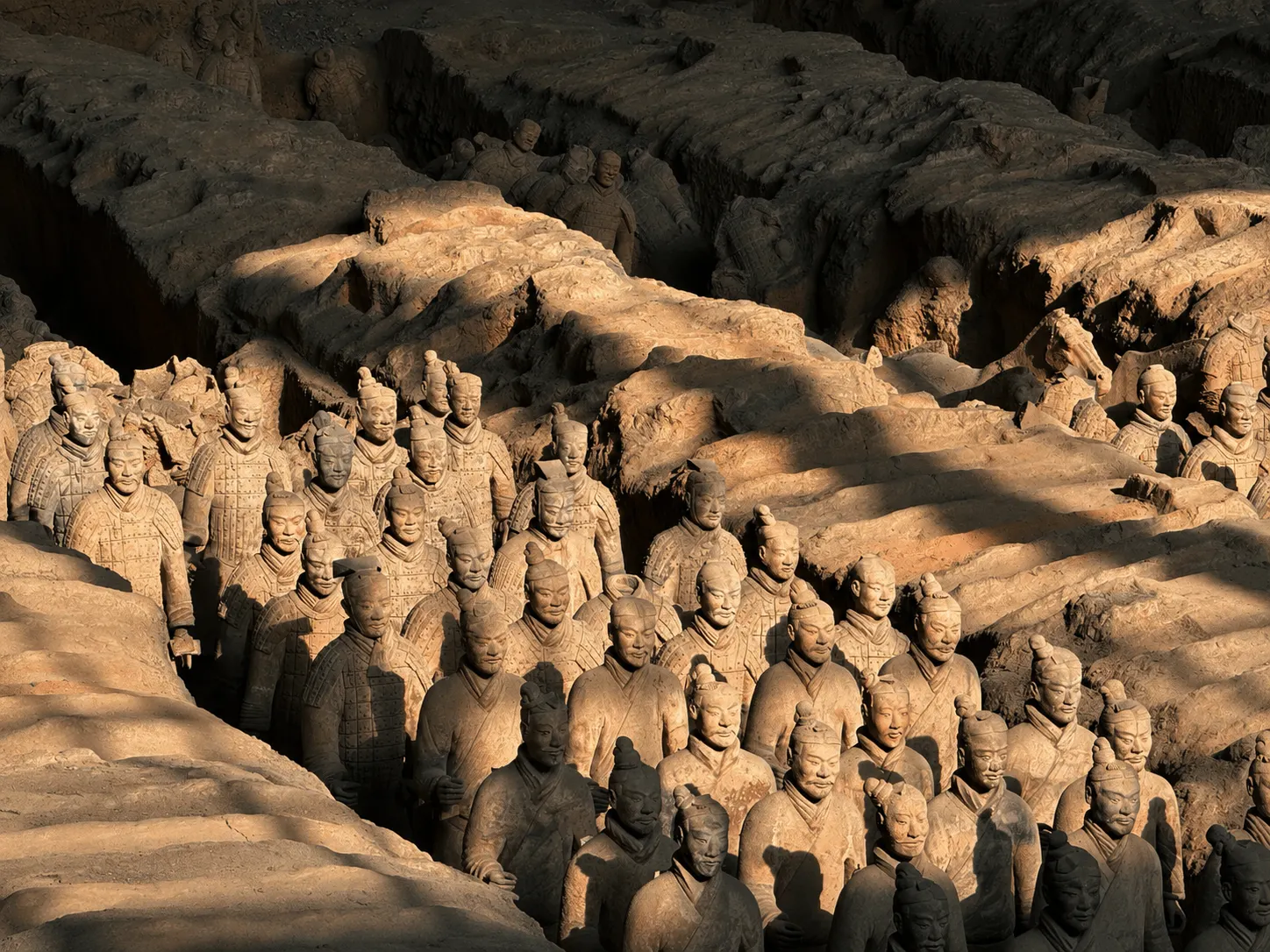
People remember the Terracotta Warriors as the color of earth.
Rows of brown faces, armor, hands, and horses stand beneath the excavation hall. Yet brown was not the army's original appearance. The figures were sealed with layers of lacquer and painted red, green, purple, blue, black, and white.
Burial kept some of that surface stable in damp soil. Excavation changed its environment. As the exposed lacquer lost moisture, it could shrink and peel away from the clay, carrying the pigments with it. The Terracotta Army lost part of its original color not only underground, but during the act of recovery.
The Well
The story begins not with an emperor, but with a dry year.
In 1974, near Lintong outside Xi'an, villagers digging a well struck something that was not ordinary soil. A fragment. A clay head. Broken parts of a human figure. They were looking for water and found an army.
This is what makes the discovery so powerful. The first gesture was practical. A shovel entered dry earth because people needed a well. Under that ordinary need lay a buried system of soldiers, horses, weapons, corridors, and imperial fear.
When archaeologists arrived, the scale grew beyond anyone's first guess. Pit 1 opened into ranks. Figures stood in formation, shattered and waiting. The faces differed. Hair knots differed. Armor differed. Even in brokenness, the army kept order.
But the first miracle carried a danger inside it.
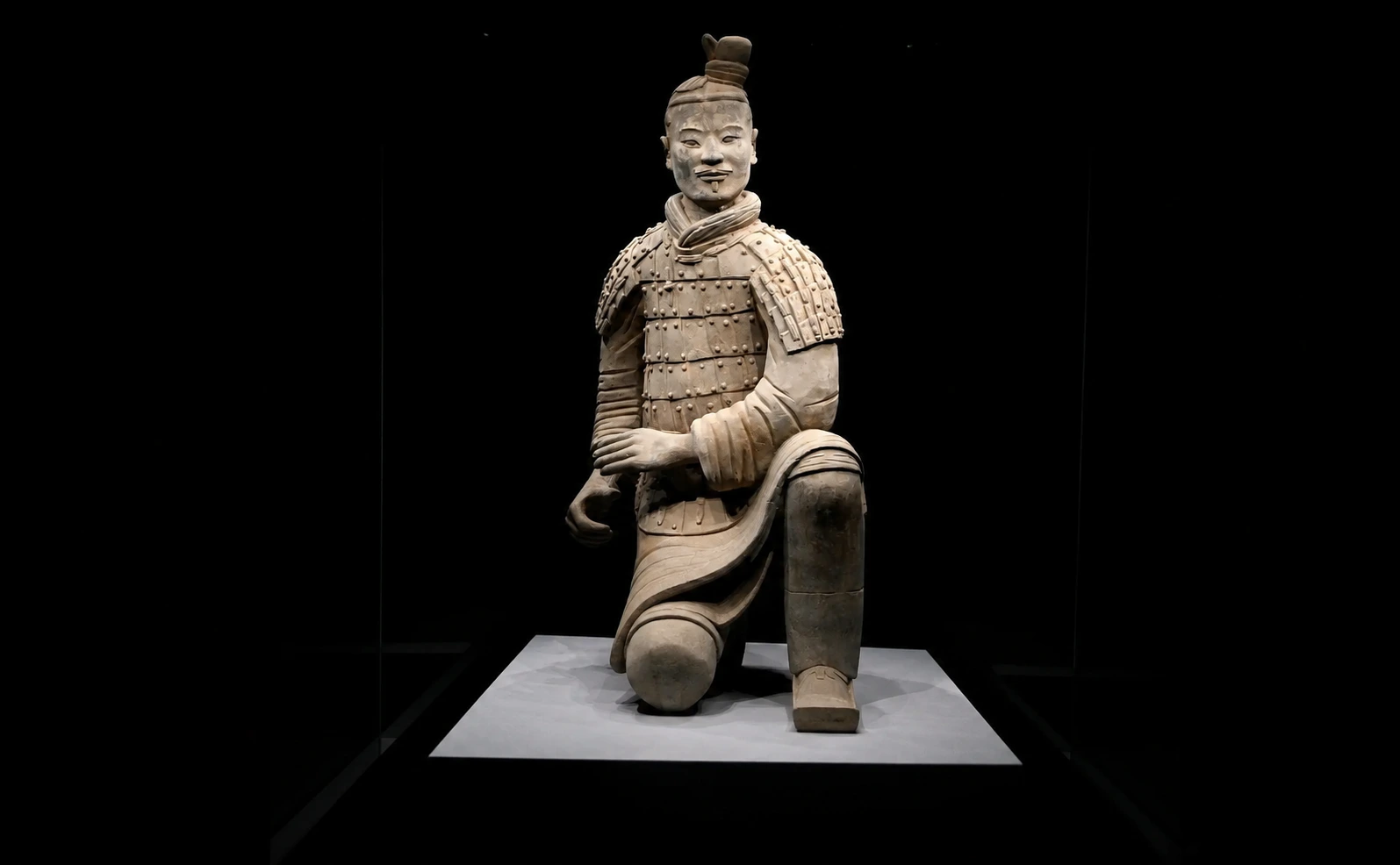
Why the Original Colors Peeled Away
The warriors' paint was not simply brushed onto bare clay. Artisans first applied layers of lacquer, then added mineral pigments. That lacquer helped create a smooth, vivid surface, but it also became the most vulnerable part of the decoration after burial.
Underground, moisture held the lacquer close to the clay. Once a figure entered the drier air of an excavation pit, the lacquer could lose water, contract, and curl. Pigment attached to it lifted as well. On some figures, deterioration began so quickly that excavators could watch painted areas loosen while they worked.
Think about that moment. A conservator sees a sleeve still holding red, a face with a trace of black, or purple remaining on armor. The past is visible, but the act of uncovering it has made it unstable.
Archaeology often sounds like recovery. Here, recovery could also become loss. To uncover a warrior too quickly was to destroy part of what had survived. The danger was not air alone, but the sudden change from damp soil to a much drier environment.
The Terracotta Army did not lose all its color during two thousand years underground. Excavation created a second period of risk.
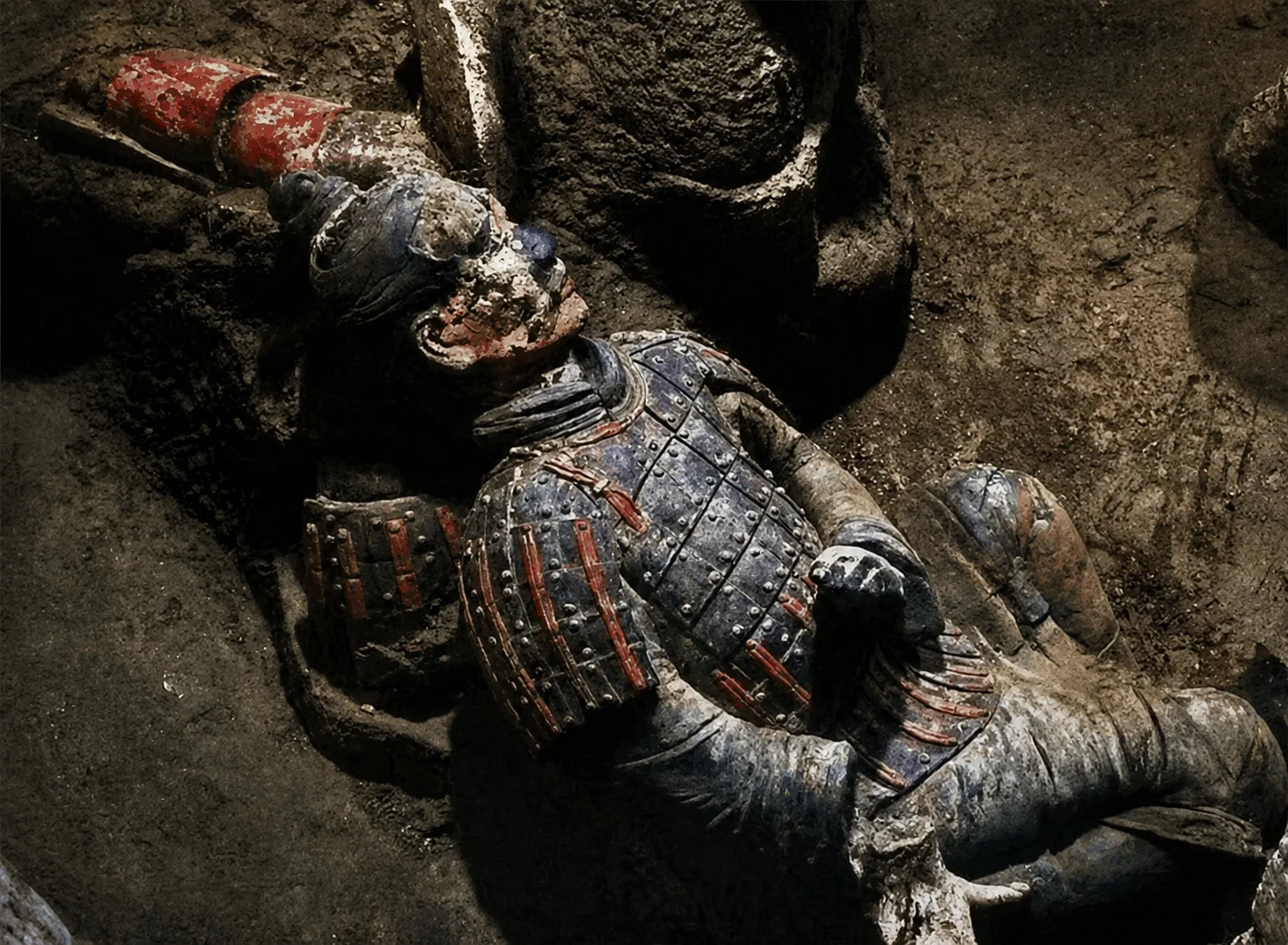
Learning to Dig More Slowly
That knowledge changed the work.
Excavation at the site could not be only about finding more figures. It had to become an act of restraint. Fragments were numbered. Surfaces were watched. Conservators from the museum and German research partners studied how to keep the lacquer moist and secure it before the painted layer detached.
Their work produced treatments using polyethylene glycol to help stabilize moisture and a polyurethane dispersion to fix the lacquer to the clay. The chemistry matters because it changed what excavation could preserve: color no longer had to be treated as something visible only on the way to disappearing.
The public sees restored ranks and silent faces. Behind that view is a slower world: trays of fragments, brushes, humid conditions, chemical treatments, photographs, notes, and people deciding when not to dig.
This restraint is part of the story. Archaeologists cannot treat discovery as the only measure of progress. Preservation determines when a painted object can be lifted, treated, and shown without sacrificing the surface that made it valuable.
The Qin emperor built an army for eternity. Modern workers learned that eternity can be damaged by impatience.
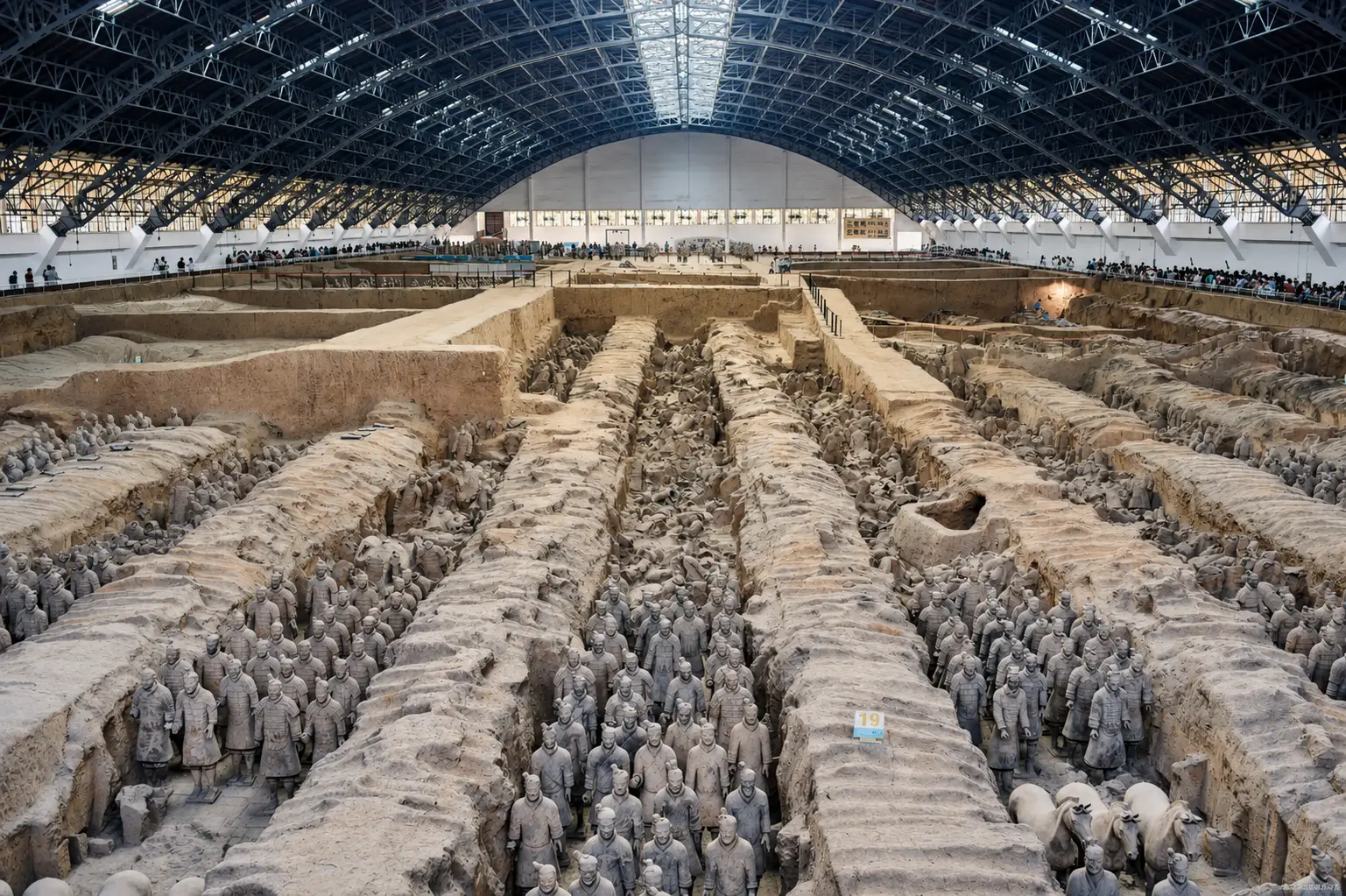
The Brown Army We See
Stand before Pit 1 today, and the scale still overwhelms. The soldiers seem endless. The repetition makes people lower their voices. It is easy to think the brown clay is the original truth.
But the brown army is also a record of disappearance.
Imagine the same ranks with painted robes, dark hair, colored armor, red ties, green details, and purple surfaces. The figures were not made as a uniform brown mass. Differences in color worked with faces, hairstyles, and armor to make the underground army appear populated by individuals.
The figures that stand now are magnificent because they survived. They are heartbreaking because they survived incompletely.
The Last Trace
Look closely at museum photographs or preserved fragments, and the color changes the feeling of the whole site. A small patch of pigment can do what thousands of clay bodies cannot: it reminds you that the past was not born ancient.
It had brightness. It had surfaces. It had decisions made by painters whose names are gone.
When visitors leave, many remember the ranks. Keep another image as well: a small painted fragment, held between earth and air, visible just long enough to teach archaeologists humility.
The Terracotta Warriors are famous because they stood for two thousand years. Their hidden colors matter because they show how easily survival can narrow.
FAQ
Were the Terracotta Warriors originally painted?
Yes. The Terracotta Warriors were originally covered in bright paint rather than left in the gray-brown color visitors see today.
Their faces, clothing, armor, shoes, and hair were painted separately, giving individual figures a more lifelike appearance. Traces of pigment can still be found on some warriors, but most of the original color has disappeared.
Why did the Terracotta Warriors lose their color?
The paint was applied over a thin layer of lacquer. After the warriors were buried, that surface remained relatively stable in the damp soil for more than two thousand years.
Once excavated, the change to a drier environment caused the lacquer layer to lose moisture, shrink, crack, and peel away. On some figures the deterioration began very quickly. This is one reason archaeologists now excavate and preserve newly discovered painted surfaces much more slowly.
What colors were used on the Terracotta Warriors?
The warriors were painted in a wide range of colors, including red, purple, green, blue, black, white, and pink. Different colors were used for robes, armor, belts, shoes, hair, and facial details.
The figures were not painted in one uniform style. Variations in clothing colors, hairstyles, and facial features helped make the underground army look like a collection of individual soldiers rather than thousands of identical statues.