The Needle That Disappears
The silk thread is dyed the color of a carp's belly, pale gold shading into orange at the tip. Master Chen holds it to the light and twists it between her fingers, splitting the strand. One thread becomes two, two become four, until she is working with a filament so fine it is nearly invisible against her weathered fingertips.
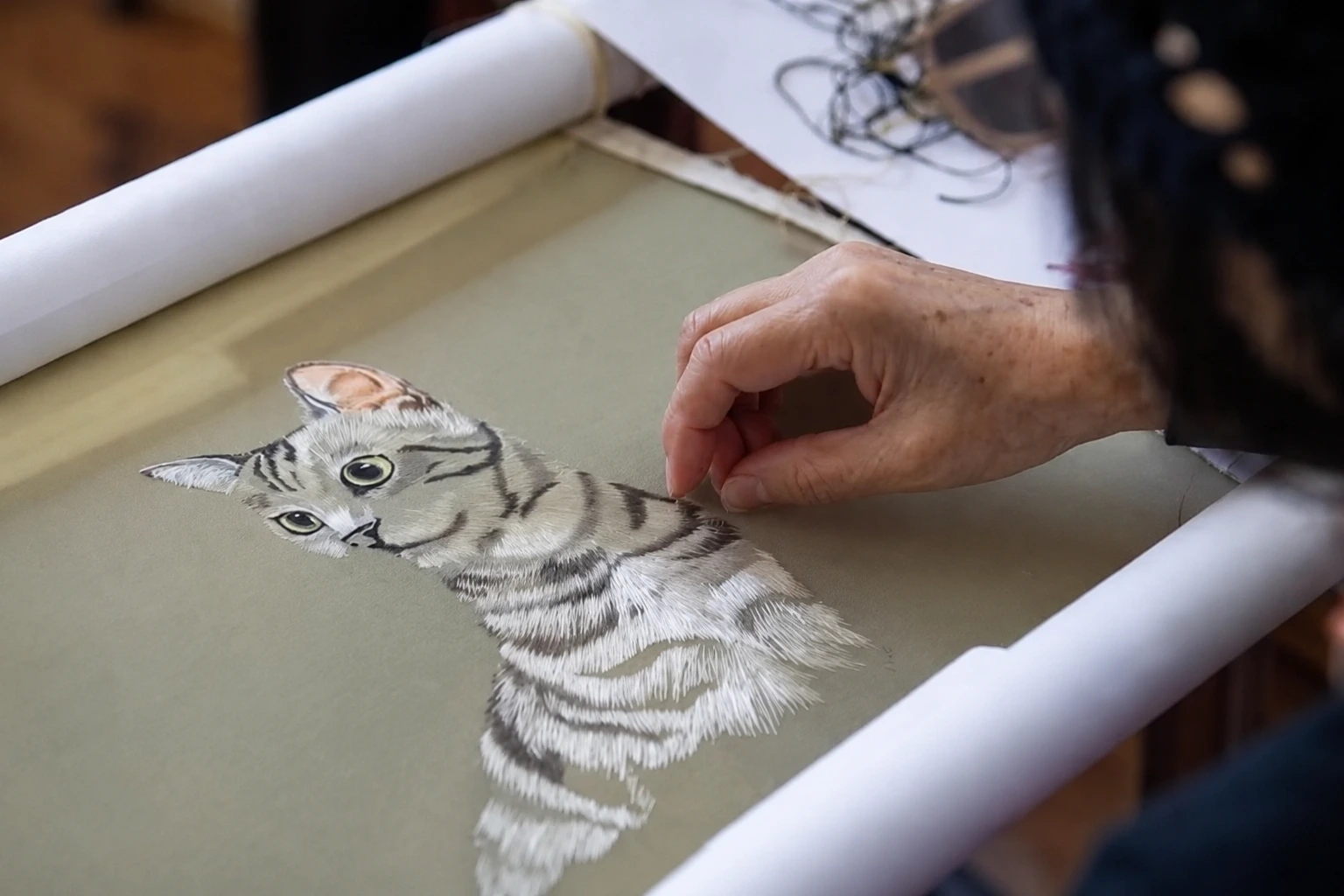
She threads a needle the length of a toothpick, its eye barely wider than the thread itself. Then she anchors the brocade in a round wooden hoop, tightening the screw until the fabric hums like a drum skin. The brocade is Shu brocade, woven on a loom in Nanjing, its surface already patterned with clouds and mountains in gold and indigo. She will embroider over it, adding depth and texture to a landscape that already exists.
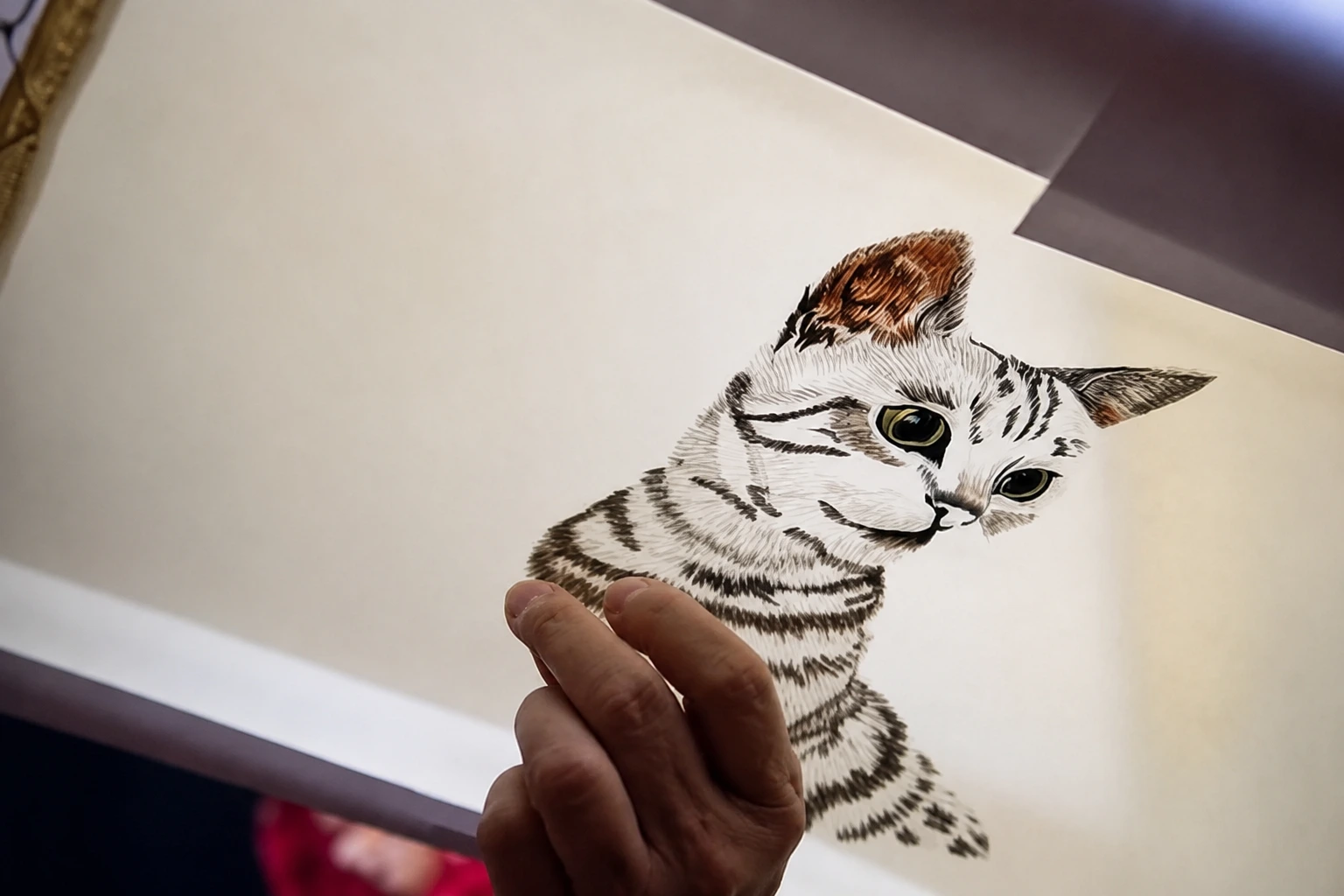
The needle enters from the top, passes through the weave, and exits exactly one millimeter away. She pulls the thread tight. The stitch is so small that from arm's length, it looks like a brushstroke, not a thread. From across the room, it disappears entirely, and you see only the image: a crane lifting from a lotus pond, its wings half-extended, water droplets falling from its feathers.
The Secret of the Second Side
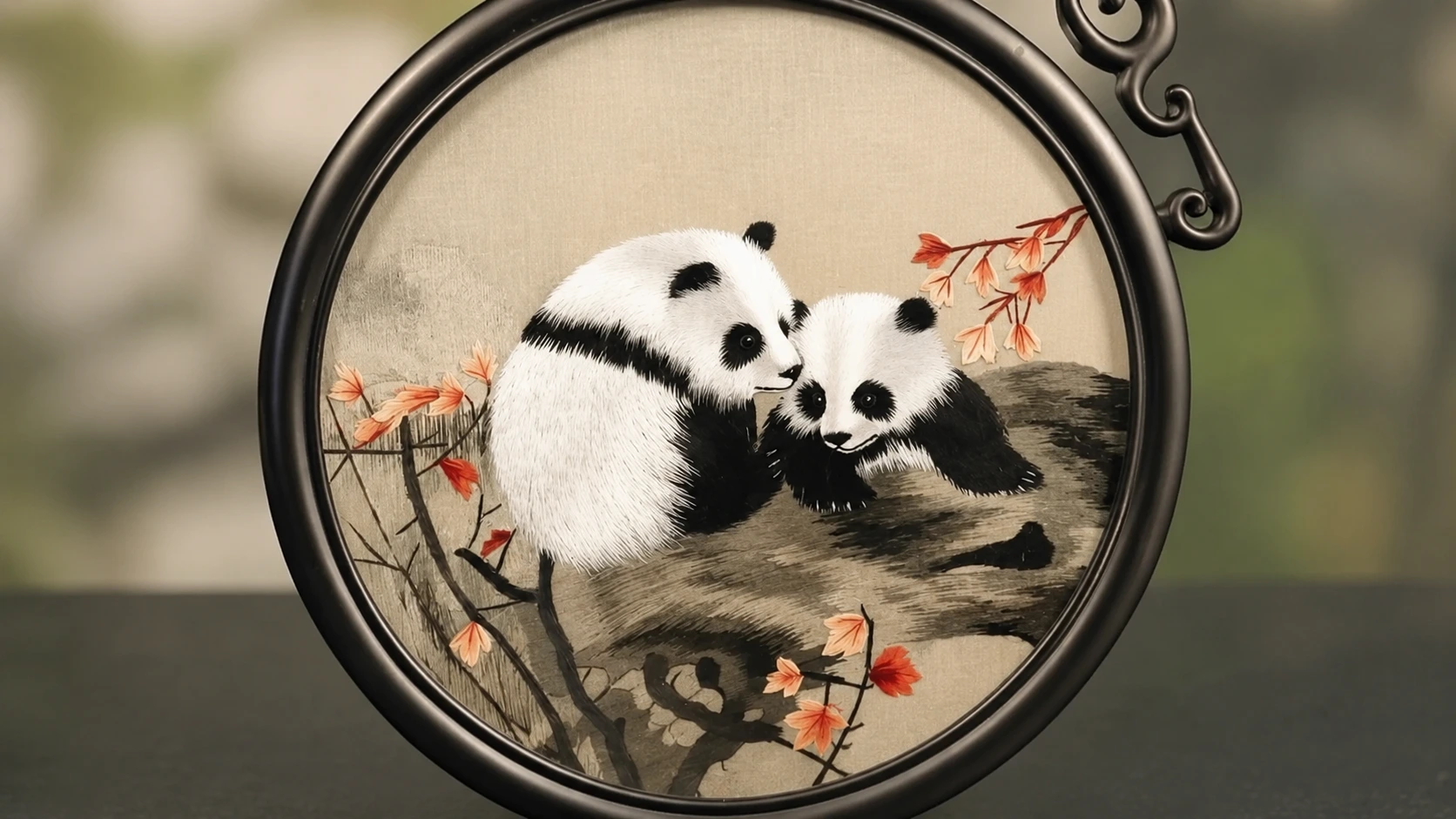
Sichuan embroidery is famous for shuang mian xiu, double-sided work. The same image appears on both faces of the fabric, perfect mirror copies, with no knots visible on either side. This is not a trick. It is geometry and patience, a calculation of entry and exit points so precise that the thread never tangles, never doubles back, never leaves a shadow.
Master Chen is working on a screen, a vertical panel meant to stand between rooms and filter light. On one side, the crane faces left. On the other, it faces right. The water droplets are identical. The lotus petals carry the same gradient of pink. If you hold the fabric to a window, the two images overlap into a single ghost, neither side dominant.
She has been on this piece for four months. It will take two more. The client is a hotel in Shanghai that wants something "authentically Chengdu" for its lobby. Master Chen does not find this ironic. She finds it necessary. The craft must eat.
The Dyes That Fade and Those That Do Not
The colors come from stones, plants, and insects. The indigo is fermented leaves. The red is cochineal, dried insects scraped from cactus pads in Mexico, imported at absurd cost because the traditional Chinese source, the lac insect, no longer yields enough. The gold is real gold, beaten into leaf and cut into threads narrow as a hair, then wrapped around a silk core so it can bend without breaking.
Some colors are fugitive. A certain violet, derived from mulberry bark, turns brown within fifty years. Master Chen avoids it for commissions meant to last. Other colors are eternal. Malachite green, ground from the mineral and mixed with animal glue, has survived in old embroideries for centuries without dulling.
Silk asks for different knowledge when it leaves the hoop. A Shanghai cheongsam tailor must make the same material follow a moving body, balancing grain, seam, collar, and fit rather than building an image from thread.
She keeps her threads in a camphorwood chest, layered by color in shallow drawers. The chest smells of mothballs and old silk, a dry sweetness that catches in your throat. When she opens a drawer, the threads gleam like wet paint, even the ones she bought twenty years ago.
The Hands That Learned Before the Eyes
Master Chen began at seven. Her mother was an embroiderer, and her grandmother before that. She learned by sitting beside them, threading needles they could no longer see to thread, pulling knots loose with child fingers that had not yet lost their delicacy. She did not choose the craft. She absorbed it, the way children absorb language, without conscious decision.
Her first independent piece was a mandarin duck, completed at sixteen. It took six months. Her mother inspected it stitch by stitch, finding twelve errors so small that a magnifying glass was needed to see them. She made her daughter pull them out and redo them. The lesson was not about perfection. It was about the fact that perfection is possible, if you refuse to stop.
Now her own students sit in the workshop, three young women and one man, all in their twenties, all enrolled in a government program that pays a small stipend to keep the craft alive. They are diligent but not devoted. They check their phones during breaks. They talk about opening online shops, about branding, about "disrupting" a tradition that has survived fourteen centuries. Master Chen does not correct them. She remembers being young. She also remembers that she never once checked a phone.
The Last Light of the Afternoon
At four, the sun enters the workshop window at an angle that turns the dust motes into gold. Master Chen stops stitching. The light is wrong now, too warm, casting shadows that make it hard to judge color. She winds her thread around a card and sets it in the chest.
She lifts the hoop and examines the crane. The wing is half finished, the individual feathers suggested by variations in thread direction rather than outline. From the wrong side, the back of the work is as clean as the front, a grid of tiny stitches marching in perfect rows. No knots. No tangles. No evidence of the hand that made it.
Tomorrow she will begin again, entering the fabric from the same point, continuing the line as if no night had passed. The needle will disappear. The thread will disappear. Only the image will remain, growing feather by feather, drop by drop, until the crane is ready to lift from the cloth and fly.
The brocade waits in its hoop. The workshop grows cold. Master Chen locks the door and walks home through streets full of people who have never threaded a needle, who do not know that silk can remember both sides of a story, who pass her on the sidewalk without seeing the gold dust still caught beneath her fingernails.