You have to crane your neck to see them.
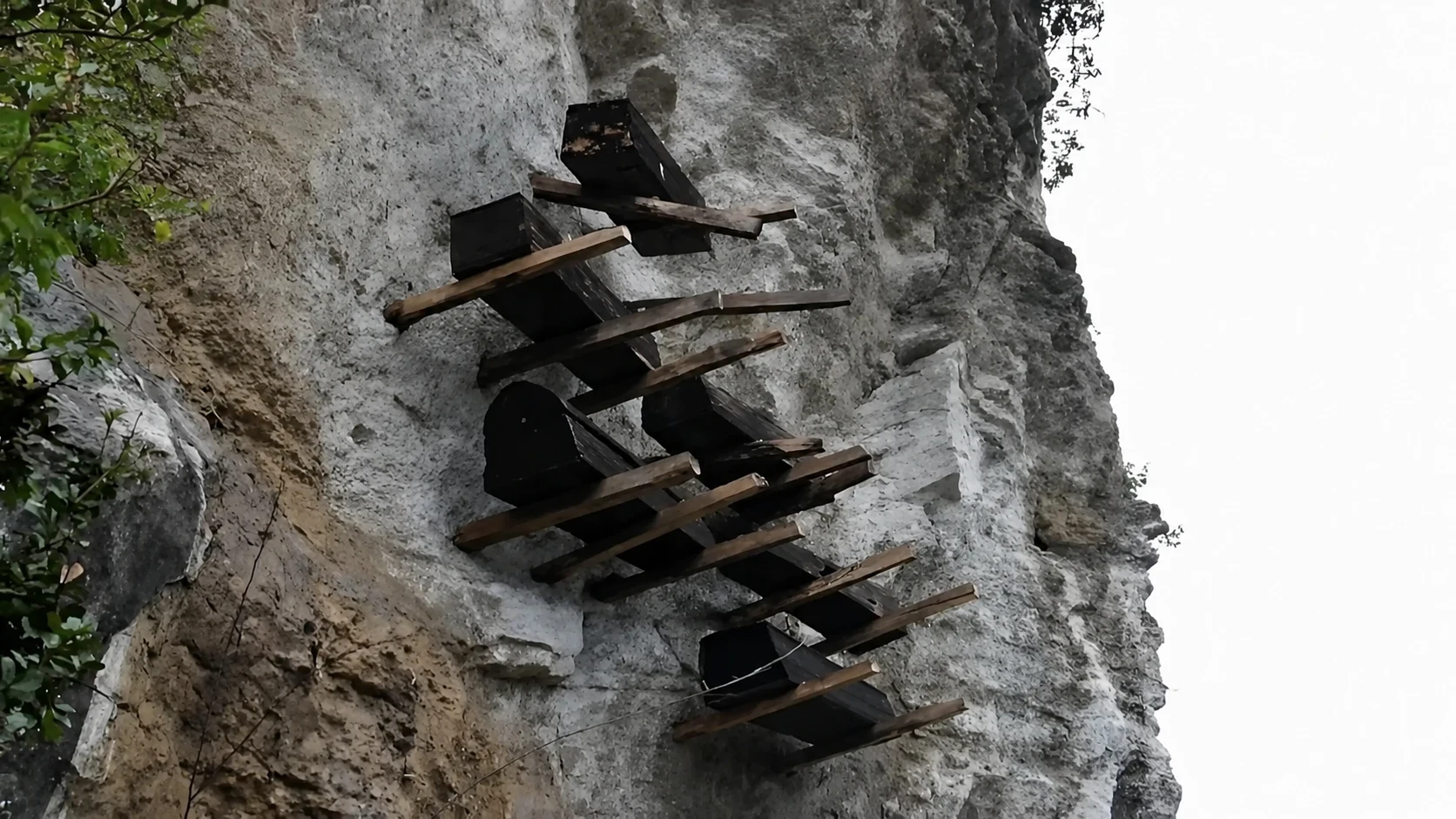
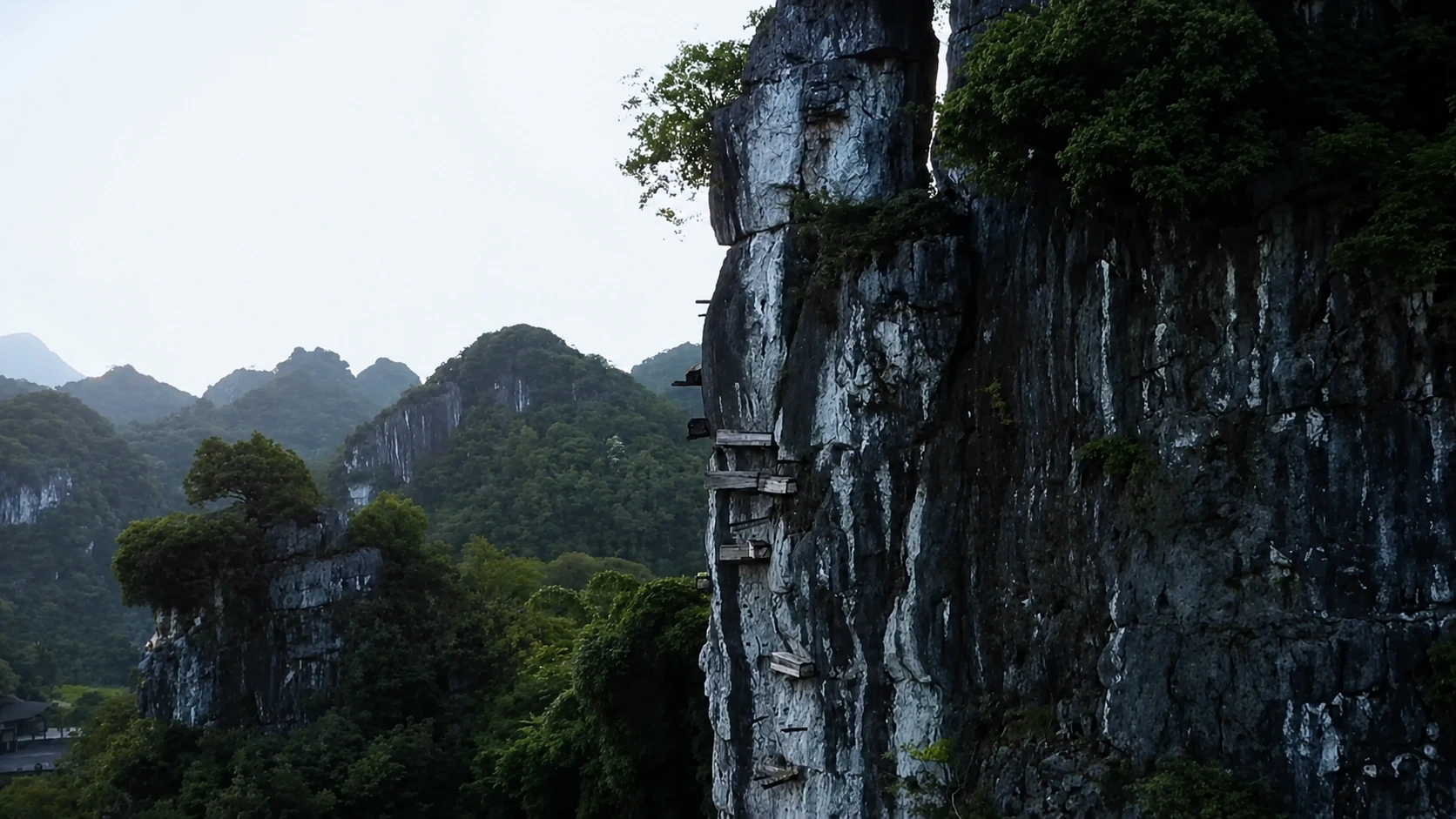
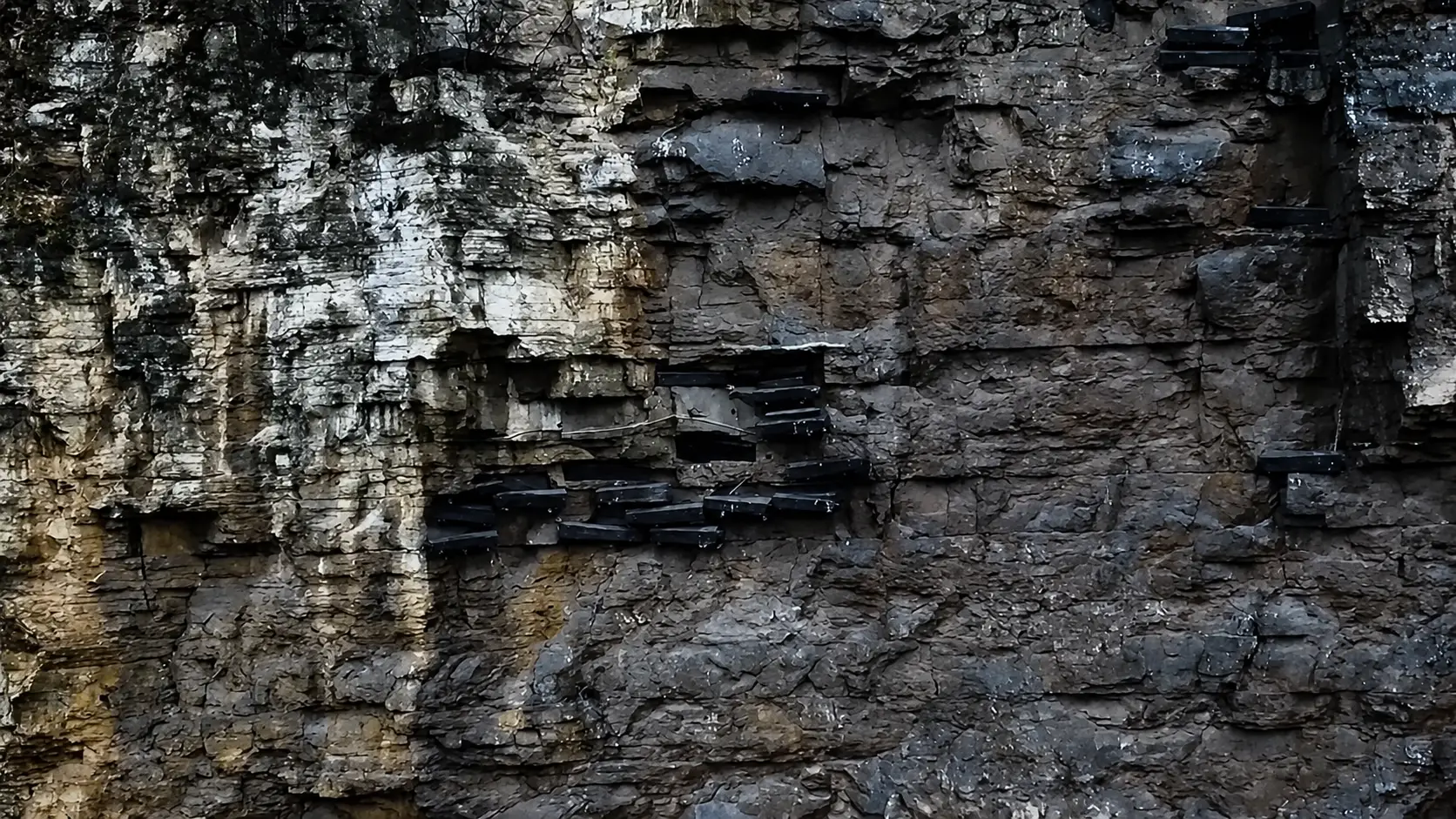
At the base of a limestone cliff in the Xiaofeng valley, north of the Xiling Gorge, a visitor tilts her head back until her throat is stretched tight. The rock face rises nearly two hundred meters, pale gray streaked with dark mineral stains. At first her eyes find nothing but stone and sky. Then the light shifts —a cloud passes, or the angle sharpens —and there they are: five dark oblong shapes wedged into natural crevices, like something the mountain swallowed and could not fully digest.
They are coffins. Wooden coffins, carved from single logs of nanmu, a hardwood so dense and resinous it can resist insects and rot for millennia. They rest one hundred and seventy-five meters above the river, halfway between the water and the summit. A human body standing at the base of this cliff is smaller than a thumbnail held at arm's length against the stone. The coffins, each weighing more than a hundred kilograms, look weightless from below. They have looked weightless for two thousand three hundred years.
What the Cliff Gave Back
There are thirteen coffins in total at Xiaofeng. Five sit visibly in the open air, their wood darkened by centuries of wind and rain. The other eight are hidden deeper inside a natural cave, still in their original positions, undisturbed since the day they were placed.
In 2003, as the rising waters of the Three Gorges Dam threatened to swallow hundreds of archaeological sites along the Yangtze, a team of cultural heritage workers raced to document what they could before the river rose. In a rock cave near Zigui, just downstream from Xiaofeng, they found three hanging coffins that had never been opened. Inside, two complete human skeletons lay dressed in silk, wrapped in bamboo matting. Around them were bronze wine vessels, a bronze spear, a ge —an ancient halberd with a long shaft and a horizontal blade —bamboo bows, arrows still in their cases.
The most telling detail was not the weapons or the silk. It was the tiger. The image of a tiger, woven into the clothing, cast onto the bronze, carved into the wood. The tiger was the symbol of the Ba people —a confederation of tribes who inhabited the mountains and gorges of the middle Yangtze during the Warring States period, from roughly the fifth century BCE. The Ba left behind very little writing. They left behind their dead, lifted into the sky.
The Ba wrote nothing about how they did it. They buried the answer with them.
The Question No One Can Answer
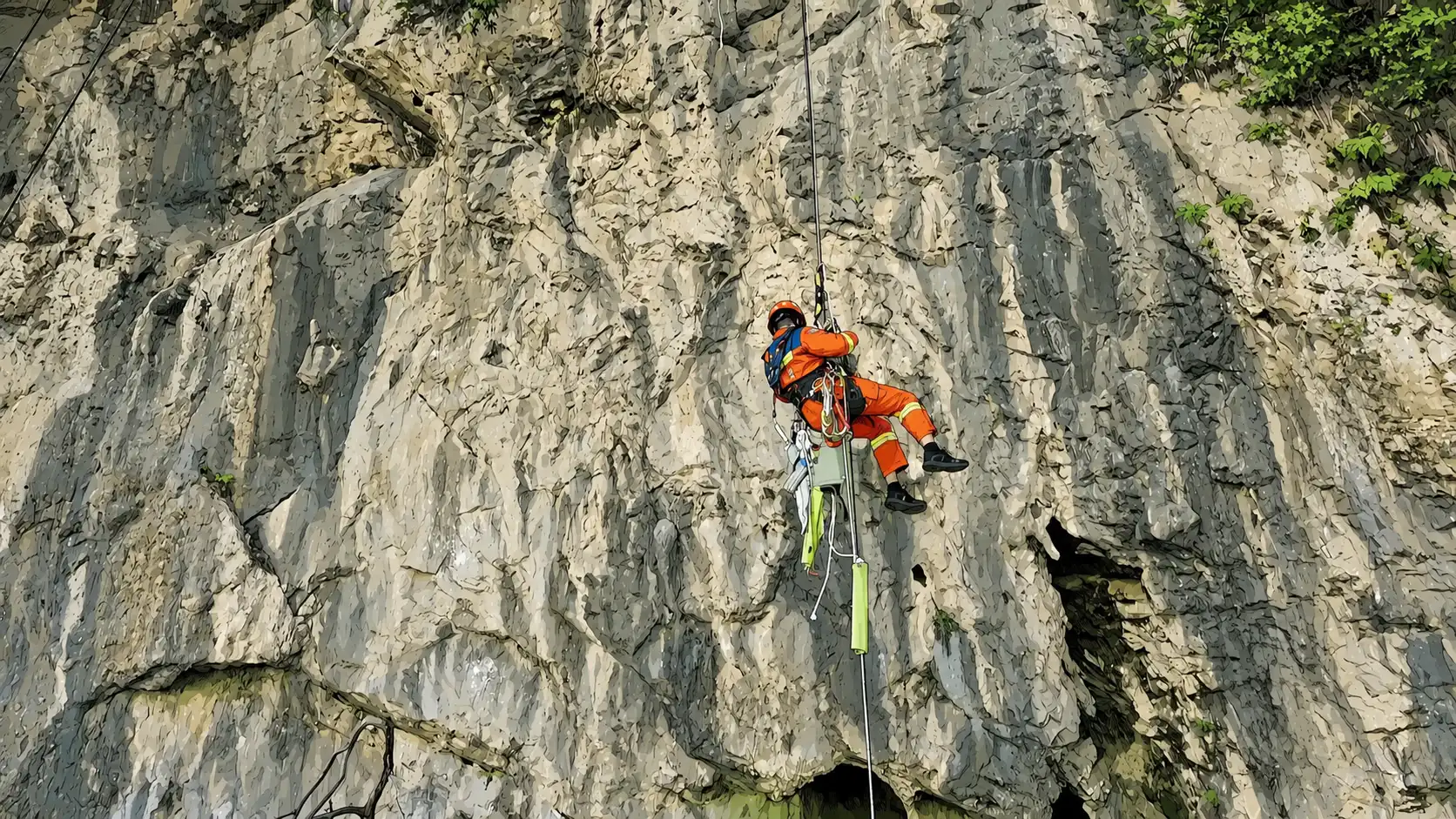
How does a community without cranes, without steel cables, without modern engineering, lift a hundred-kilogram coffin onto a cliff face one hundred and seventy-five meters above the ground, navigate it into a crevice, and lay it to rest —not once, but thirteen times?
One theory proposes that they worked from above. A team on the summit could have lowered the coffin by rope, guiding it down into the crevice. The problem is the overhang. Much of the Xiaofeng cliff face leans outward. A coffin lowered from the summit would dangle in empty air, spinning, impossible to control —men pulling it inward would be fighting gravity and geometry at the same time, with a hundred kilograms swinging at the end of a rope.
Another theory proposes scaffolding. Ancient builders —the Ba were known as skilled engineers —could have lashed bamboo poles into a temporary platform, building upward level by level until they reached the crevice. The problem is scale. Bamboo scaffolding can reach twenty, perhaps thirty meters. One hundred and seventy-five meters is a different problem entirely. The weight of the scaffolding alone would collapse the lower tiers. And the cliff at Xiaofeng offers almost no ledges to anchor intermediate platforms.
A third theory proposes that the coffins were floated up. During the wet season, the Yangtze and its tributaries could rise dramatically —in some years, tens of meters above dry-season levels. If the ancient river once ran higher, the cliff face might have been accessible by boat. Lower the river, and the coffin is stranded in the sky. The problem is geological. There is no evidence the water level at Xiaofeng has ever been anywhere near one hundred and seventy-five meters higher than it is now. The limestone itself would carry the mark.
A few scholars have suggested earth ramps —piling soil and stone against the cliff to create a sloped path, hauling the coffin up, then removing the ramp. The problem is volume. To reach one hundred and seventy-five meters at a walkable incline, the ramp would extend hundreds of meters from the base, requiring tens of thousands of tons of fill —an undertaking that would scar the landscape today. It is not there.
The truth is that none of the theories hold. Every few years, a new team arrives with a new hypothesis and new equipment. They measure. They model. They publish. And the five coffins in the face of the cliff remain exactly where they have always been, untouched by explanation.
A local boatman who ferries tourists across the gorge puts it without ceremony: "No one has figured it out. If you figure it out, you let me know."
The visitor at the base of the cliff lowers her gaze. Her neck aches. The light is changing again —late afternoon now, the sun dropping behind the ridge. The five dark shapes on the rock face slide back into shadow. For a moment they are visible. Then they are not.
The cliff does not explain itself. It never has.