The Boot Breaks the Crust
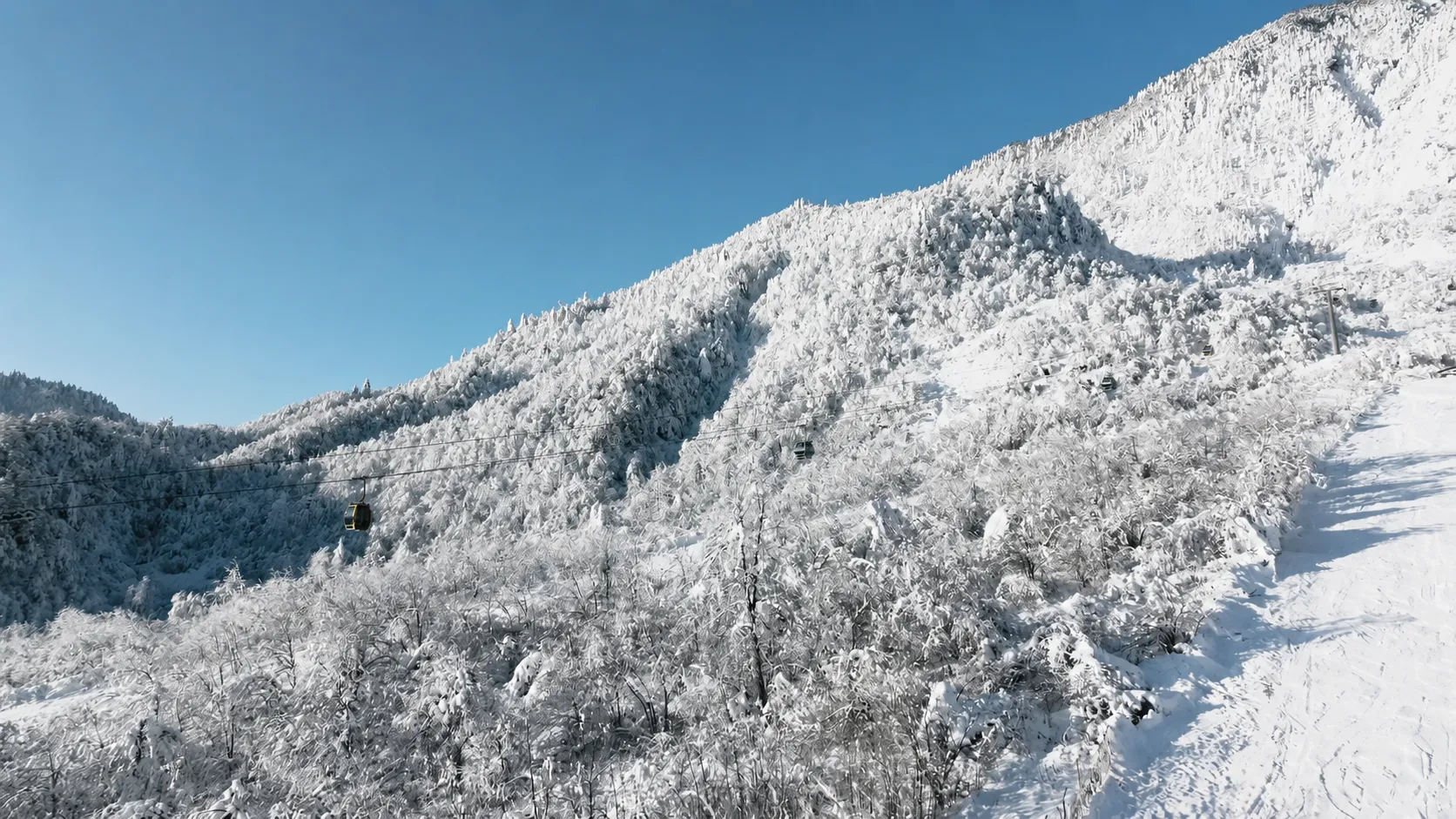
The snow on Xiling Snow Mountain is not the soft powder of ski commercials. It is old snow, wind-hardened, layered through the winter into a crust that sounds like Styrofoam when you step. Each footfall begins with a creak, then a sharp crack as the surface gives way, then a muffled crunch as your boot sinks into the looser layer beneath.
The climber stops. He lifts his pole and taps the slope ahead. The snow replies with a hollow thump, like knocking on a door that might open. He has climbed this route a dozen times, but the mountain changes hourly. Sun melts the south face by noon. Wind redeposits the drifts overnight. The path he used last week might be an ice field today.
The First Light at 3,000 Meters
Dawn comes late to the high valleys. At the base of the mountain, in the town of Dayi, farmers are already sweeping their courtyards. But up here, at the treeline where the pines grow stunted and the rhododendrons huddle in dense thickets, the sky is still violet.
Then the sun clears the eastern ridge. It does not creep. It arrives in a single moment, a blade of light that cuts across the snowfield and turns the crust from gray to pink to blinding white. The climber raises his hand against it. His shadow stretches behind him, fifty meters long, a black giant marching toward the valley.
This is the moment the mountain photographers wait for. The light lasts seven minutes. After that, the white is too bright, the contrast too harsh, and the snow becomes a flat sheet of nothing.
The Sea of Clouds
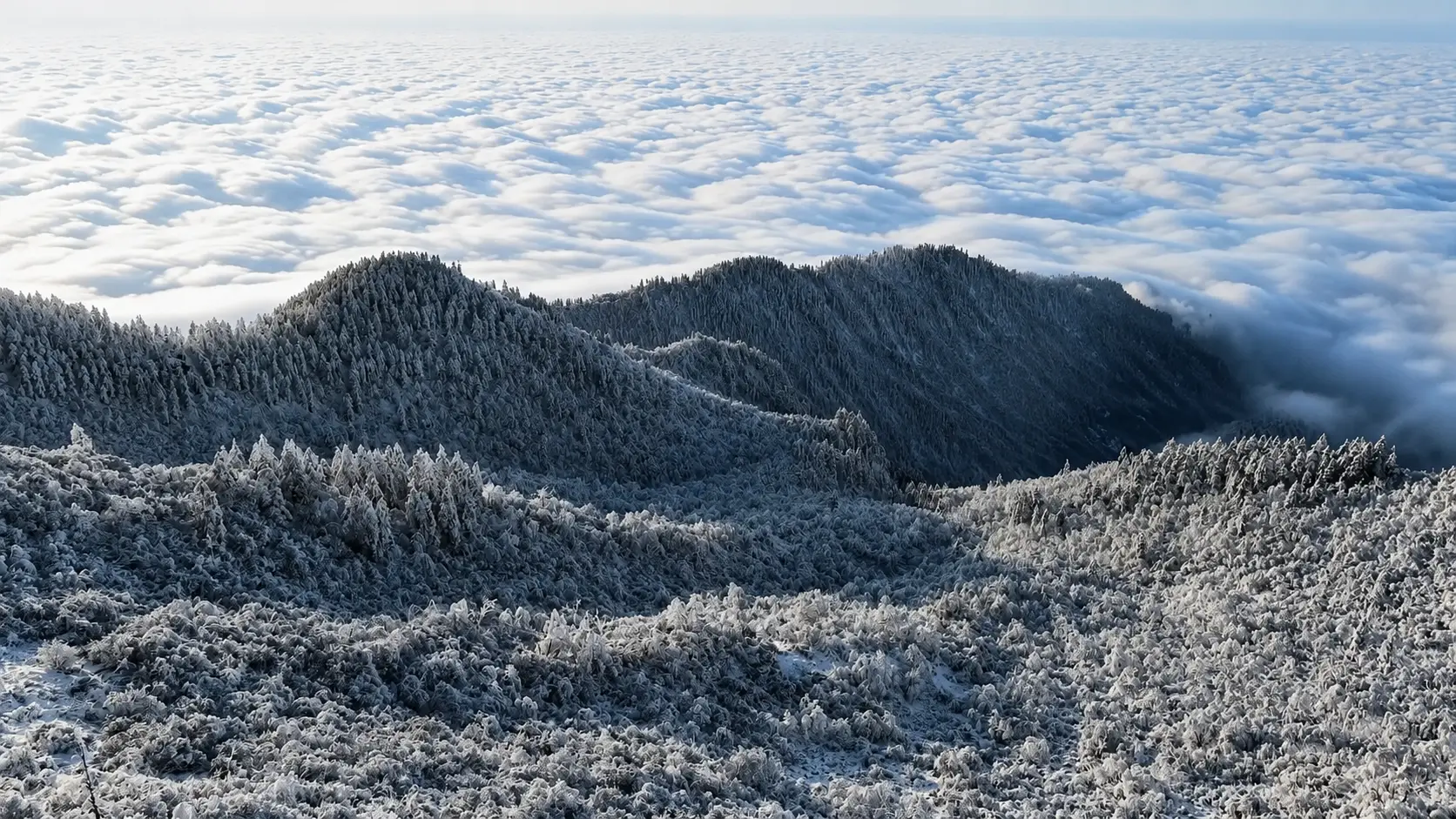
From the summit platform, on clear days, you can see Chengdu. Not the buildings themselves, but the plain, a patchwork of green and brown that stretches to a horizon lost in haze. Between the mountain and the city, the clouds gather in a pool that fills the valleys to their rims.
The locals call it the Sea of Clouds. It is not a metaphor. The mist moves like water, flowing around the lower peaks, eddying in the saddles between ridges. A wind from the west pushes a wave across the surface, and for a moment the crest breaks, revealing a village, a road, a patch of yellow rapeseed flowers far below. Then the cloud closes over it, and the village is gone.
Tourists stand at the railing and take photos. The serious ones arrive at four in the morning to secure a spot. They drink hot soy milk from paper cups and stamp their feet against the cold. By eight, the sea has burned off, replaced by a flat gray sky that promises rain by afternoon.
The Ski Slope Built on a Ridge
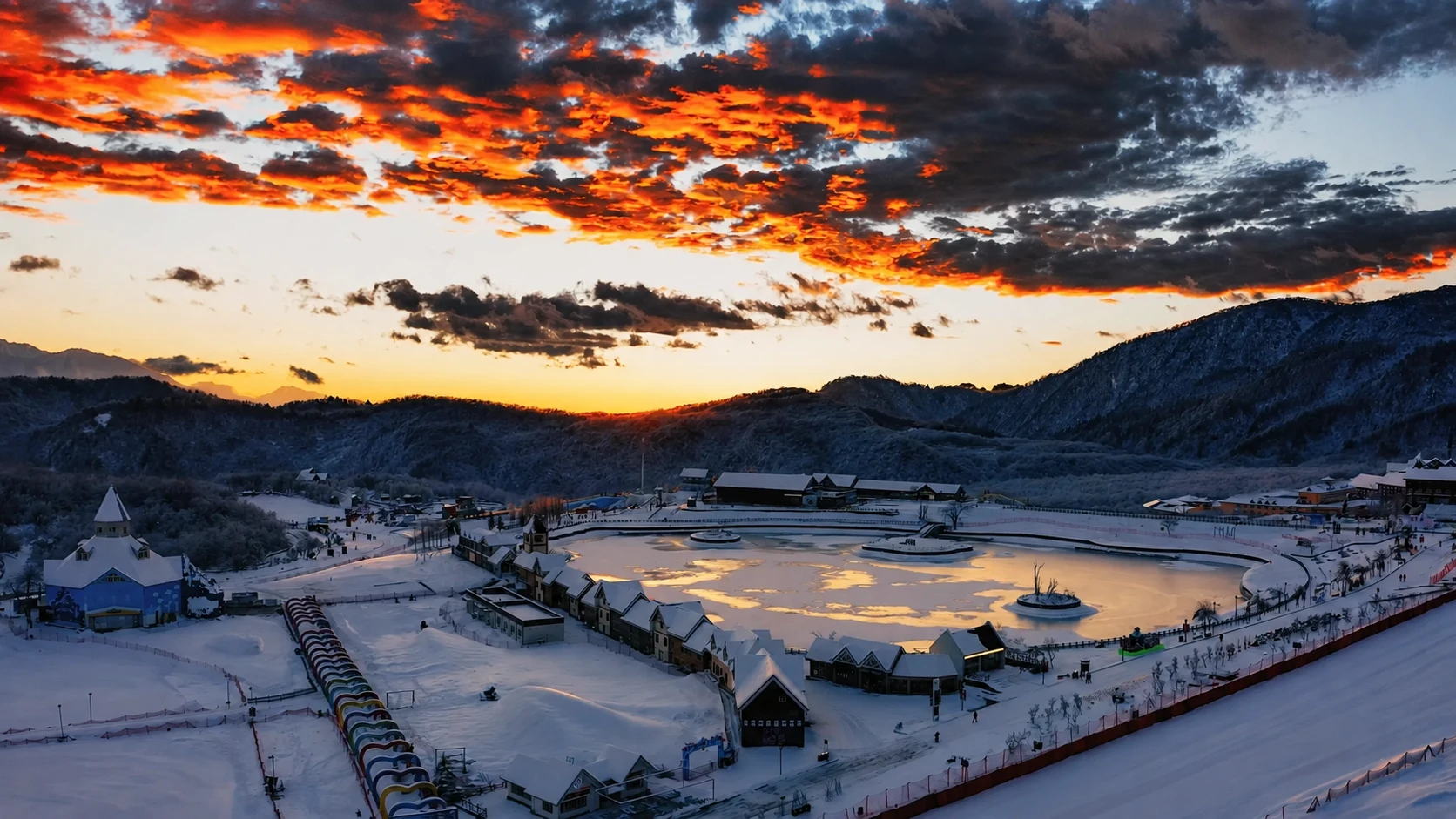
Xiling has the highest ski resort in southern China. The runs are not long by Alpine standards, two kilometers at most, but the vertical drop is severe and the snow is real. The resort makes snow when nature does not cooperate, shooting plumes of atomized water into the night air that freeze before they land, building a base that feels like packed sugar under the skis.
A ski instructor named Lao Wu stands at the top of the beginner slope every morning, shouting the same advice through a megaphone: "Bend your knees. Do not lean back. The mountain does not care about your fear." He has taught three thousand people to ski. He remembers the ones who cried, the ones who broke their wrists, and the one woman who stood at the top for an hour before removing her skis and walking down.
At noon, the cafeteria serves mapo tofu and rice, the same meal you would get in Chengdu, two hours and two climate zones below. The chopsticks are plastic. The bowls are foam. Outside, the snow guns have started again, building tomorrow's surface on top of today's grooves.
The Hot Spring at the Foot
The mountain has a second identity. After the snow, there is water.
At Huashuiwan, on the road back to Chengdu, geothermal springs bubble up from a fault line deep in the crust. The water smells of sulfur, a rotten-egg tang that clears after a minute and leaves only heat. Outdoor pools are built to look like natural rock formations, though the tiling is visible at the waterline.
Skiers arrive in the evening, their thighs trembling, their faces windburned red. They lower themselves into the water inch by inch, hissing as the heat meets cold skin. By the time they are submerged to their necks, the snow has started again, falling in flakes large enough to catch on the tongue. The water is forty degrees. The air is minus two. The boundary between them steams.
The Crust Reforms
Night falls fast at altitude. The last cable car descends at five, carrying workers and the few tourists who overstayed the light. The mountain empties. The snow guns fall silent. The wind picks up, scouring the ridges, packing the day's loose powder into tomorrow's crust.
The climber is long gone. His footprints, which stretched in a dotted line toward the summit, have been erased. The snow has no memory. It waits, level and white and patient, for the next boot, the next crack, the next exhaled breath of someone small against its vastness.
Tomorrow, the sun will clear the ridge again. The pink light will run down the slope. And somewhere on the crust, a boot will land, the crust will creak, and the mountain will speak its one-word language: now.