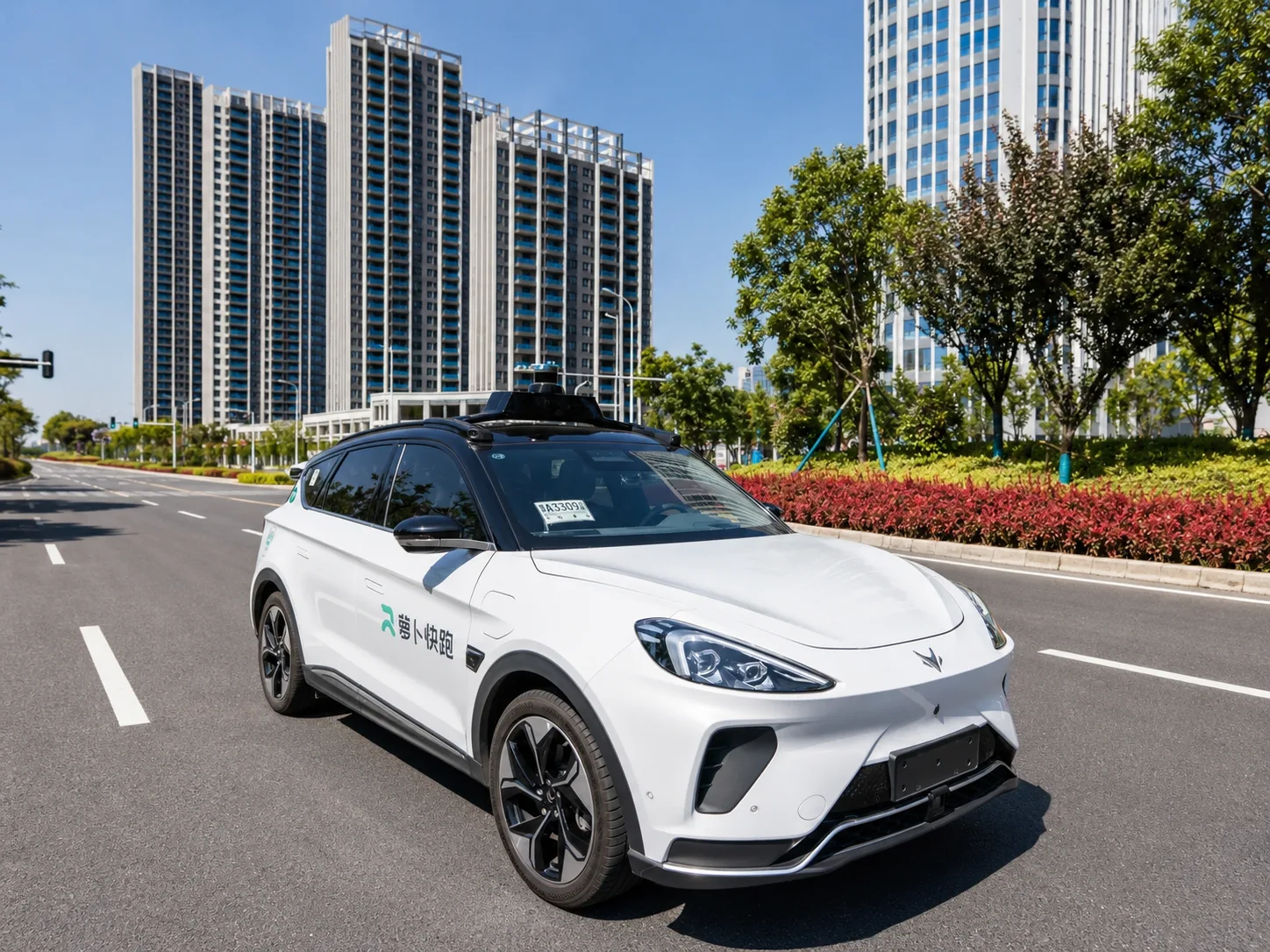
The car stops beside the kerb, but no one leans over to unlock the door.
Through the windscreen, the driver's seat is empty. No hands on the wheel. No face in the rear-view mirror. A screen on the dashboard shows a blue route line, waiting. Around the car, Guangzhou keeps moving - scooters threading through a junction, office towers mirrored in glass, pedestrians crossing under a traffic light that has just turned green.
The rear door unlocks itself with a soft click. You open it. You get in.
The car does not ask where you are going - it already knows. You told it fifteen minutes ago, on your phone, while standing at a bus stop near Canton Tower. Now it is here. And the only person inside it is you.
This is a Guangzhou driverless taxi. For a visitor, it might be the strangest ordinary journey in China.
A Ride That Begins on a Phone
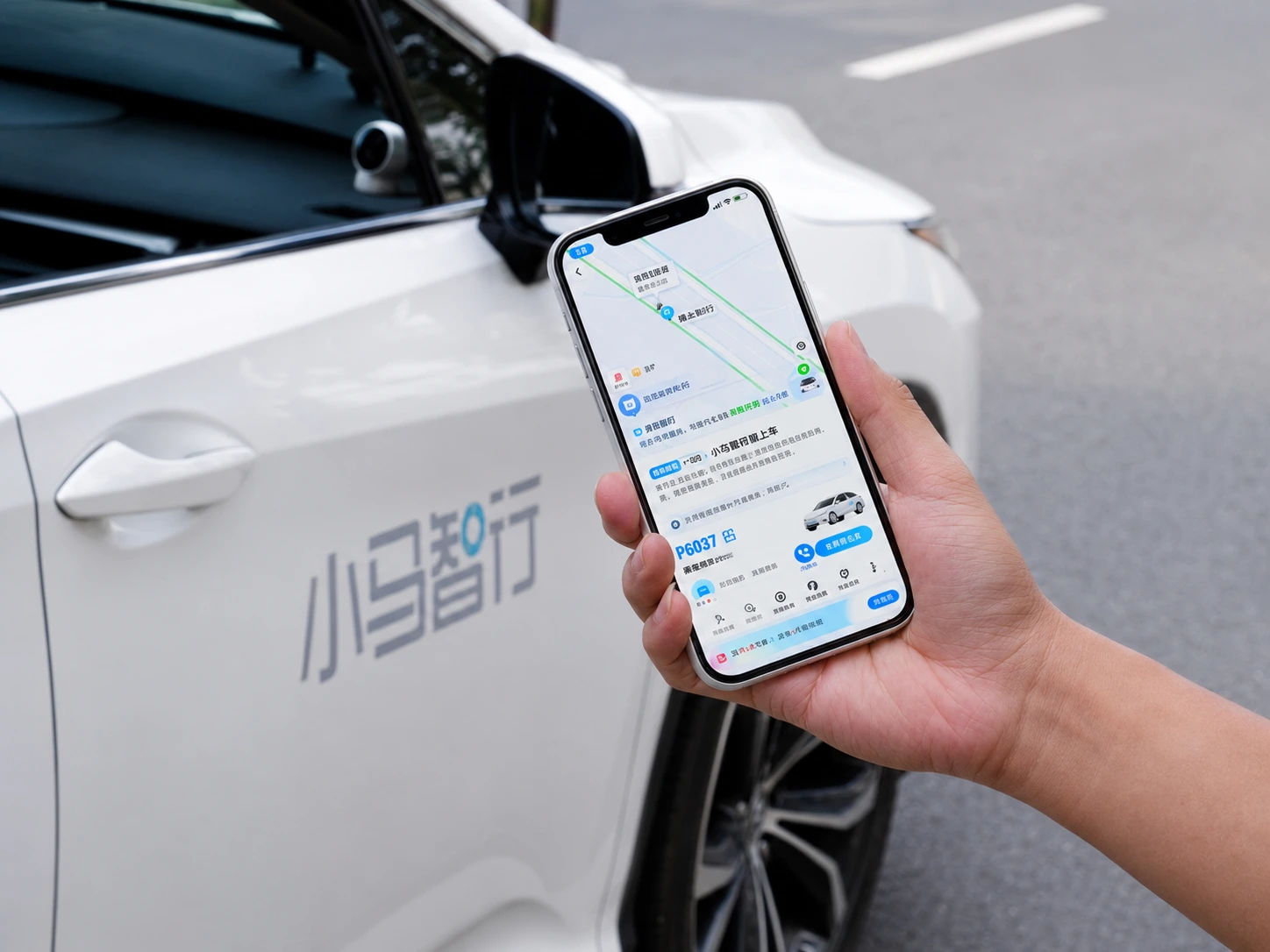
The first surprise is not the car. The first surprise is that the future begins the same way as ordering dinner or paying for tea in China - by opening a phone.
A robotaxi in Guangzhou does not get hailed from the roadside. You do not stand at a junction and wave your arm at an approaching car, because there is no driver to see you waving. The ride begins inside an app.
WeRide, one of Guangzhou's major robotaxi operators, offers booking through its WeRide Go app and mini-programme. Its cars also appear inside Tencent Mobility on WeChat: open Me, then Services, choose Mobility, and look for Autonomous Driving - WeRide when the option is available near your pickup point. Pony.ai operates separately through PonyPilot, so a route shown by one operator may not appear in the other.
The practical sequence is short, but each step matters: open the live service map, choose two points that the same operator supports, make sure your phone and payment account can complete the booking, and follow the pickup instructions shown on screen. Even if WeChat and mobile payments already work on your phone, the transport service may still ask for further verification. Check the whole booking flow before making the ride part of a timed itinerary.
Availability is not guaranteed. The number of vehicles on the road varies with location, demand, weather, and operating conditions. If the app shows no car or rejects one end of the journey, take a regular taxi and try another day. The future is here, but it is not yet everywhere.
Service details last verified on August 2, 2026. Operating areas, booking entrances, hours, and passenger verification requirements can change; the operator's live map takes priority over this guide.
Where Guangzhou Lets the Cars Drive Themselves
Guangzhou is dim sum, arcade streets, old trading houses, and the Pearl River at night. It is also, in certain parts of the city, a testing ground for a quieter kind of transport technology.
Huangpu District, east of the city centre, remains the clearest place to look for a fully driverless ride. WeRide announced round-the-clock, point-to-point commercial service across the district in September 2025, with bookings shown inside WeRide Go.
The map is no longer limited to one suburban test zone. WeRide has announced designated routes linking central landmarks with Guangzhou Baiyun International Airport and Guangzhou South Railway Station. Pony.ai has also announced paid routes between selected city-centre pickup points and those transport hubs. These are operator-specific services, not proof that any robotaxi can travel between any two points in Guangzhou.
That distinction matters. A press release can tell you that a route exists; only the current booking screen can tell you whether your hotel, terminal, departure time, and passenger account are supported. Treat the live map as the final check.
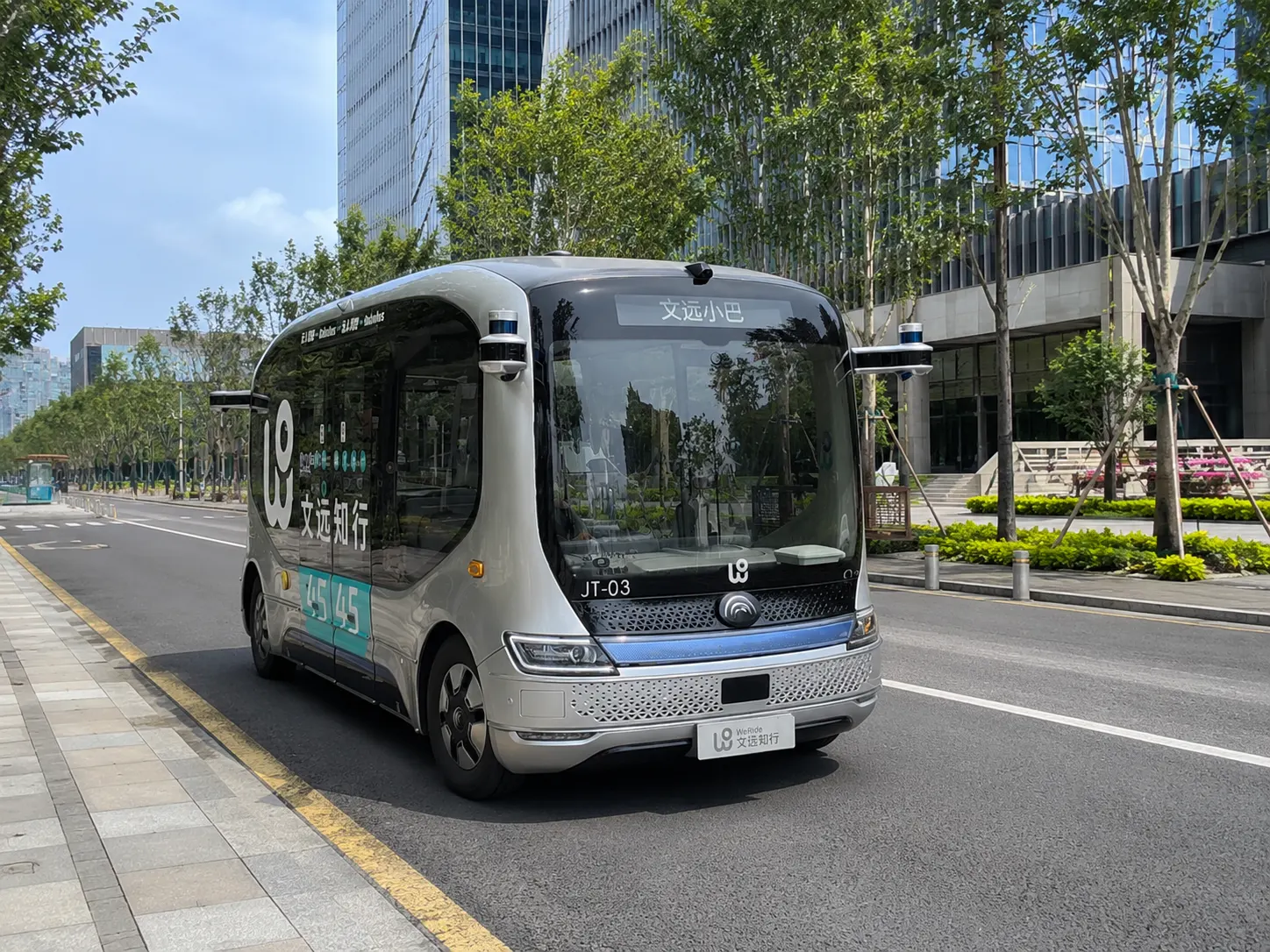
What It Feels Like When No One Is Driving
You fasten your seatbelt. The car waits a moment - checking the doors, running a system check, or simply pausing for the passenger to settle - and then pulls away from the kerb. The steering wheel turns by itself.
There is something in the first few seconds that is hard to describe to someone who has not sat in a driverless car. It is not fear, exactly. It is a kind of cognitive friction - your brain knows that a wheel should not turn without hands on it, and yet it is turning, and the car is moving, and the dashboard screen shows a neat rendering of the world outside: other vehicles as blue rectangles, pedestrians as small moving dots, the lane markings as a glowing ribbon stretching ahead.
At a junction, the car slows. A scooter cuts across its path, the way scooters do in every Chinese city, and the car waits - not jerking, not honking, just waiting, the way a very patient driving instructor would wait. The scooter disappears around a corner. The car resumes.
The ride is cautious. It does not speed. It does not take risks. A human taxi driver would have overtaken the bus two intersections ago; the robotaxi stays behind it, maintaining a gap that feels generous. That is by design. These vehicles are programmed to prioritise safety over speed, and the result is a journey that feels less like a taxi ride and more like being chauffeured by someone who is still on their provisional licence - careful, methodical, unhurried.
If you are in a rush, take a regular cab. If you want to experience what it feels like to be driven by a machine, this is the ride. The strangest moment is not the first turn. It is the moment about three minutes in when you stop noticing that no one is driving and start checking your phone, the way you would in any other taxi. That is when you realise how quickly the extraordinary becomes ordinary.
The Price of a Small Future
Robotaxi pricing varies by platform, distance, time of day, and any active promotions. Rides are often competitively priced, especially during introductory periods or off-peak hours, but a visitor should not expect a robotaxi to be dramatically cheaper than a standard ride-hailing car. The fare is only part of what you are paying for.
Payment typically goes through WeChat Pay or Alipay - the same digital wallets used for everything else in China. If you have already set up one of these as a foreign visitor, the payment step will be familiar. If you have not, this is probably not the first time you have tried and failed to pay for something in China on your first day. Sort out the wallet first. Then book the robot.
For an urgent trip - catching a train, making a dinner reservation, getting to the airport - a normal taxi or a ride-hailing car from a platform with a larger fleet remains the more flexible choice. A robotaxi works best when the destination is nearby, the timing is relaxed, and the goal is not just getting from A to B but experiencing something between A and B that most people have not yet experienced.
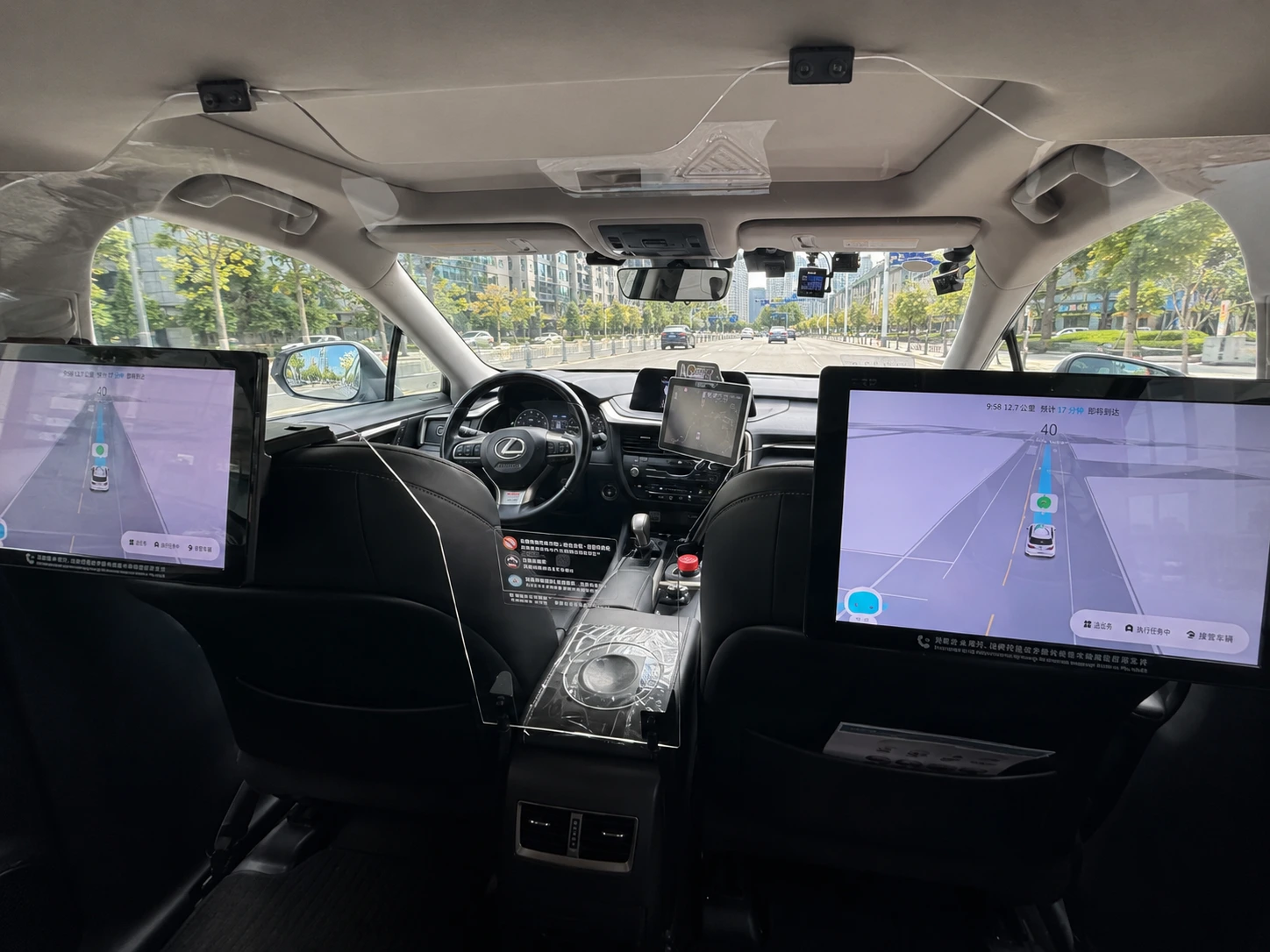
What This Ride Says About Guangzhou
Guangzhou has been a city of movement for a very long time. For centuries, it was the place where China met the outside world - merchants arriving by sea, goods moving through the Thirteen Factories along the Pearl River, silver and tea and silk crossing the waterfront in both directions. The city learned early that its identity was tied to what passed through it.
A driverless taxi is not a replacement for that history. It is a new layer on top of it. The same city that once sent porcelain to Europe on wooden junks now sends empty cars down Huangpu Avenue. The same curiosity about what comes next - what arrives, what departs, what changes - runs through both.
This does not mean Guangzhou is "the city of the future" or that robotaxis prove anything about China. Those are sentences written by people who have not sat in the back of one. What the ride actually proves is smaller and more interesting: that an ordinary person, a visitor with a phone and a destination, can summon a car without a driver to a kerb in southern China, get in, and go somewhere. That is not a political statement. It is a logistics one. And it is happening, quietly, every day, in the gaps between the scooters and the buses and the delivery riders.
A robotaxi is only the most visible face of the same shift. The quiet spread of robots into ordinary Chinese streets has its own logic -- and it is not the one the headlines assume.
Inside factory walls, the same wave looks different: industrial robots build air conditioners on lines that run almost without people.
At the end of the ride, the car pulls over beside another kerb - not the one you started from, but one that looks like it. The screen dims. The door unlocks with the same soft click.
You step out. The driver's seat is still empty. No one waves goodbye. No one wishes you a pleasant evening. The car waits a beat, then pulls away - already heading toward its next passenger, somewhere in the grid of Guangzhou, a blue route line glowing on a screen that no human is watching.
FAQ
Are there driverless taxis in Guangzhou?
Yes. Guangzhou is one of the Chinese cities where robotaxi services operate in selected areas. These rides are not citywide like normal taxis. They run inside defined service zones, and availability depends on the operator, local rules, time of day, vehicle supply, and the app you use.
For visitors, the most realistic way to think about a Guangzhou robotaxi is not "a replacement for every taxi ride," but "a memorable ride inside a supported area."
Can tourists ride a robotaxi in Guangzhou?
Yes, in some cases. Visitors may be able to ride a robotaxi if they are inside the service zone and can complete the app, phone verification, pickup, and payment steps.
The main challenge for tourists is not the car itself. It is access: you may need WeChat, a working phone number, a supported mini-program, mobile data, and a payment method that works in China. Before planning your day around a robotaxi, open the app and check whether rides are available at your actual pickup point.
How do I book a driverless taxi in Guangzhou?
One common way is through WeChat. WeRide has made robotaxi booking available through WeChat mini-program access, including the WeRide Go mini-program and Tencent Mobility-related access, depending on the current service setup.
In practice, the process usually looks like this:
1. Open WeChat. 2. Search for the supported robotaxi mini-program or mobility service. 3. Choose a pickup point and destination inside the service zone. 4. Confirm the ride if a vehicle is available. 5. Follow the app instructions for pickup, unlocking, and starting the ride.
The exact booking flow can change, so always follow the latest instructions inside the app.
Where do robotaxis operate in Guangzhou?
Robotaxis operate inside defined service zones, not across the entire city. Huangpu District is one of the best-known areas connected with Guangzhou robotaxi services. Some services may also appear in other supported zones, such as Nansha or routes connected with transport hubs, depending on current availability.
Do not assume a robotaxi can pick you up from any hotel, airport, train station, or tourist attraction. Check the live service map before you go.
Is a Guangzhou robotaxi completely driverless, and how is safety handled?
Some rides may have no driver in the driver's seat, while others may use safety staff or remote support under different operating rules. Robotaxis stay inside mapped service zones and are designed to drive cautiously under local supervision. Conservative braking, unusual stops, rerouting, or pickup limitations can still happen, so visitors should treat the ride as a supervised technology service rather than an unrestricted autonomous taxi.
Should I rely on a robotaxi for airport, train station, or hotel transfers?
No. A robotaxi is not the best choice for time-sensitive transfers, luggage-heavy trips, early-morning departures, or situations where you cannot risk a failed pickup.
Use a normal taxi or ride-hailing service for important transport. Try a robotaxi when you have extra time, are already inside a supported service zone, and want the experience itself to be part of the trip.