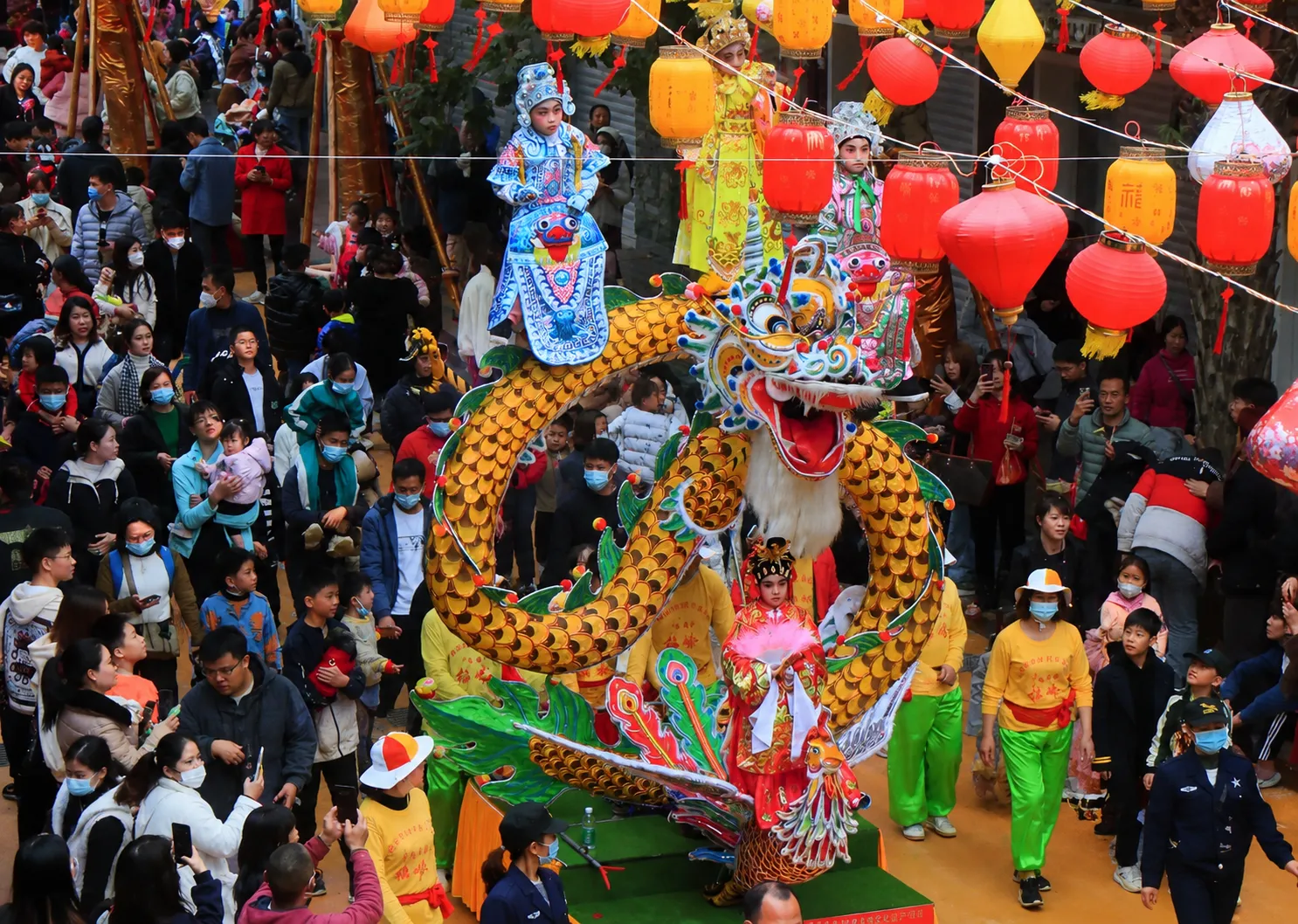
In the first lunar month, the air in Tongliang still carries the sulfur scent of firecrackers. As dusk settles, open ground on the edge of town fills with people. Elderly villagers sit on plastic stools. Children perch on fathers' shoulders. Young people raise phones whose screens illuminate faces bright with anticipation.
No one speaks. Everyone is waiting for a sound.
Then the drums begin.
Not a polite, measured rhythm, but thunder—the kind that seems to roll up from deep underground. The suona horn tears through the night, a primal wail. The crowd parts automatically, and in the darkness, two red lanterns ignite—the eyes of the dragon.
The Dragon Rose from the Water
The people of Tongliang have been dancing with dragons for more than a thousand years.
This land lies at the foot of Bayue Mountain, where the Fu and Qiong rivers converge. In ancient times, it was a wharf, a post station, a place for merchants traveling north and south to rest their feet. Where water is abundant, dragon stories multiply. Fishermen prayed for safe passage, boatmen prayed for favorable winds, farmers prayed for rain—and the dragon became the most intimate deity of them all.
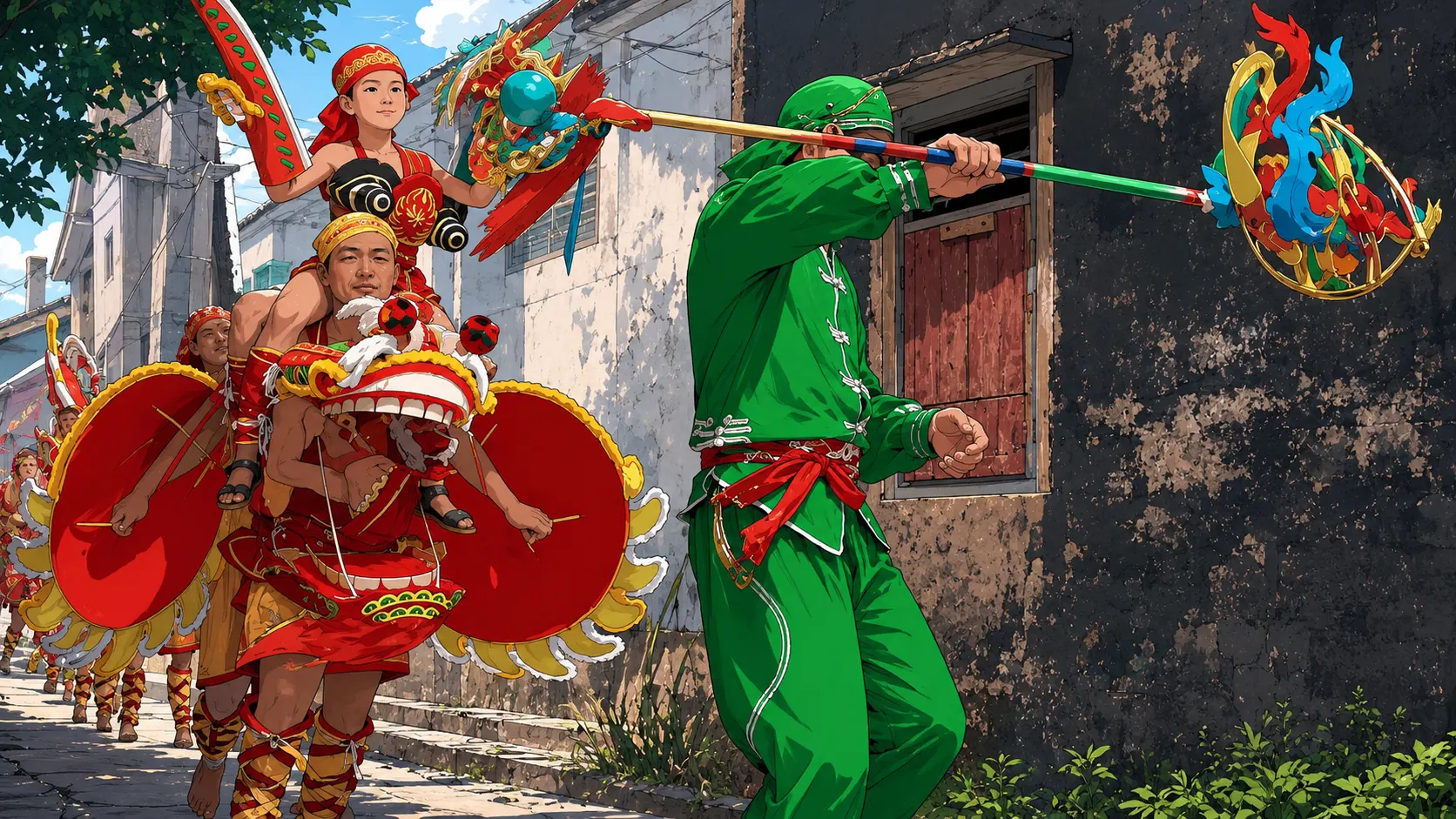
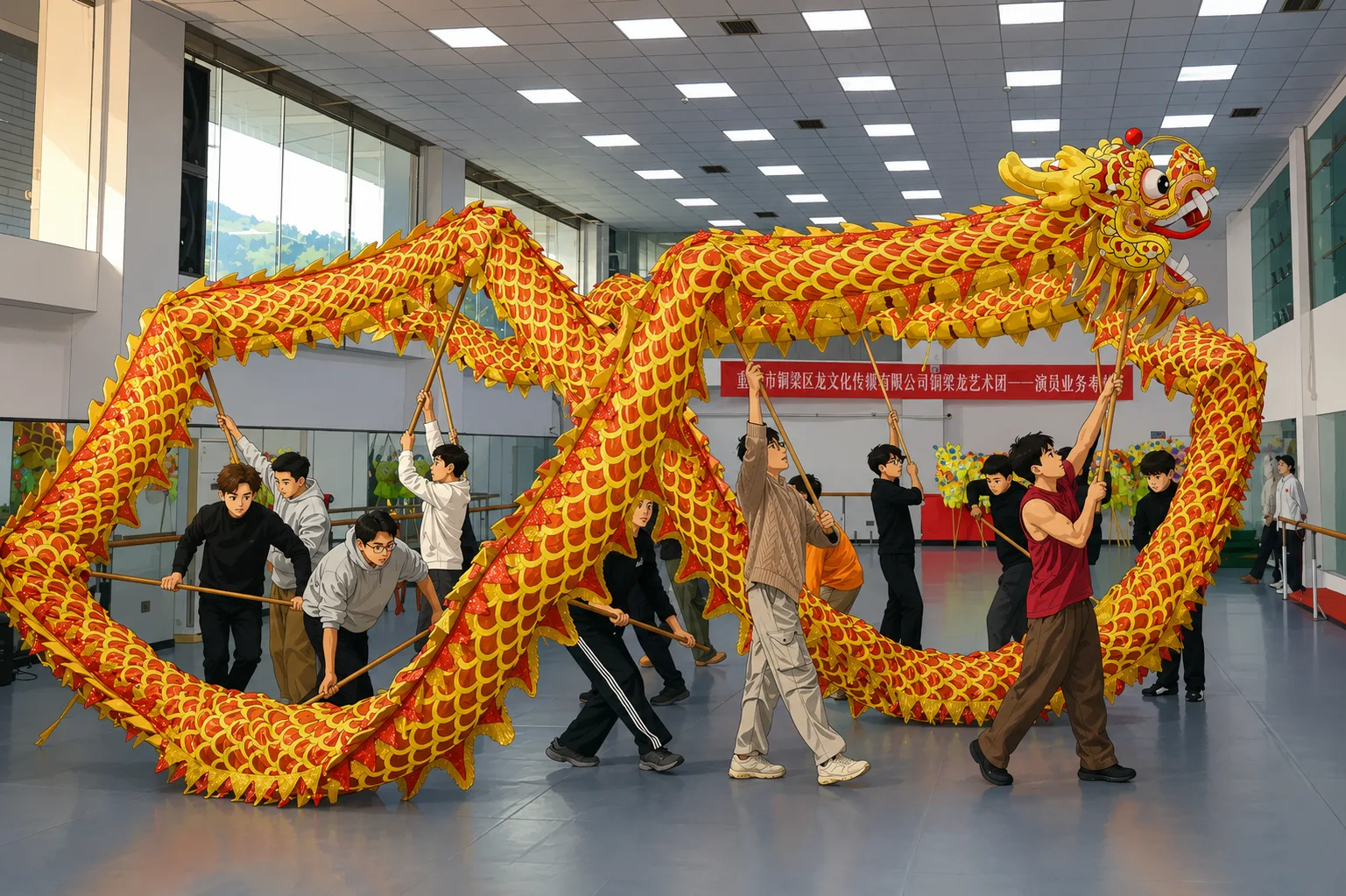
But the Tongliang dragon was never like the parade floats seen at other festivals. It was meant to be danced. A full-sized dragon measures anywhere from a dozen to over fifty meters, requiring twenty to thirty people moving in perfect coordination. The dragon head alone weighs seventy to eighty jin—roughly forty to fifty kilograms—and the man who wields it must be the strongest in the village. The dragon body is a series of cloth tubes strung together; the men inside must bend and run to keep the body aloft. Move out of sync, and the dragon collapses to the ground like a dead snake.
That is why the people of Tongliang say: dancing the dragon is not a performance. It is kung fu.
Whether the dragon lives or dies depends on the human waist. Lock your waist, and you kill the dragon.
The Moment Molten Iron Blooms
Tongliang dragon dance has many forms: straw dragon, bench dragon, lotus dragon. But the one that makes outsiders hold their breath is the fire dragon.
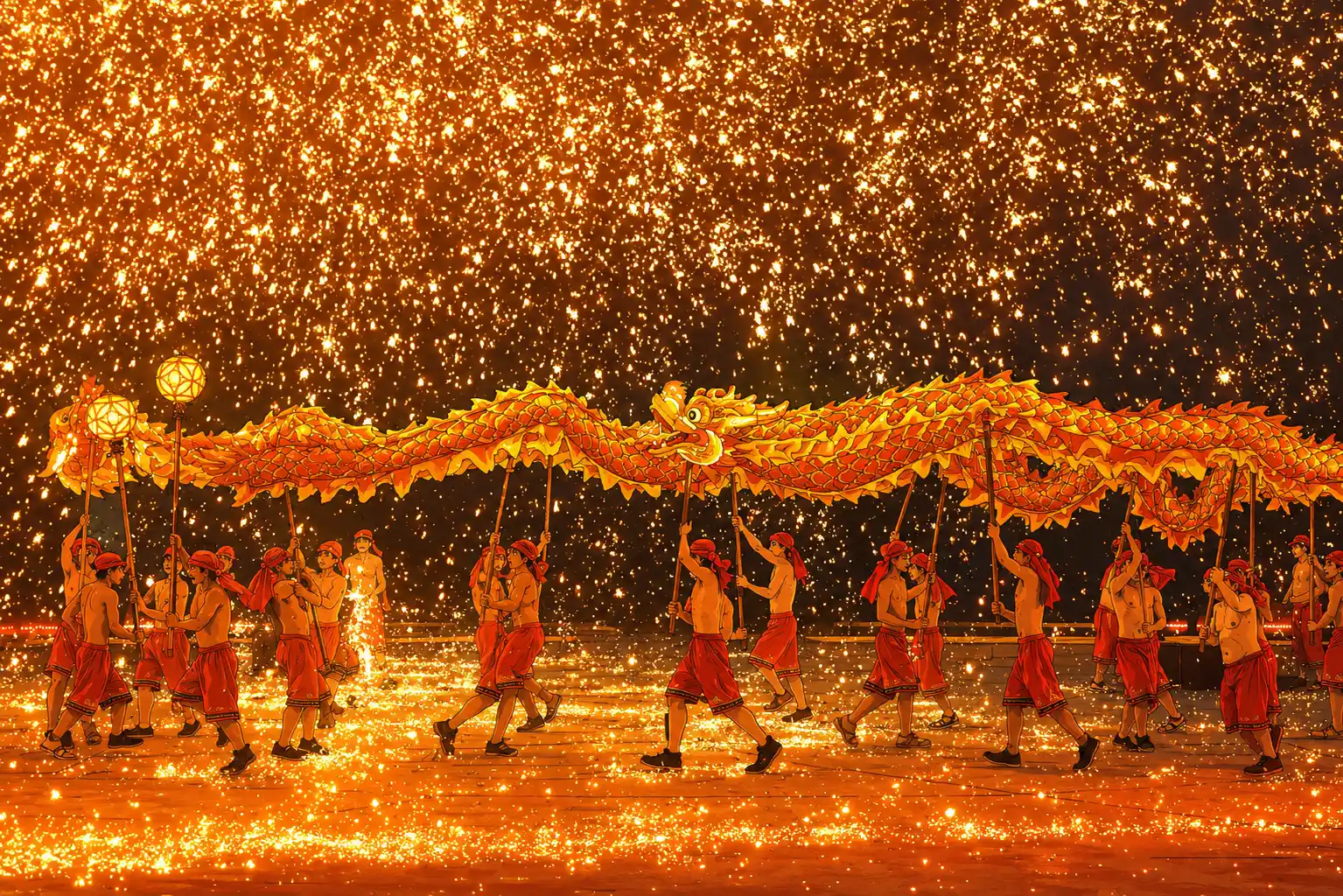
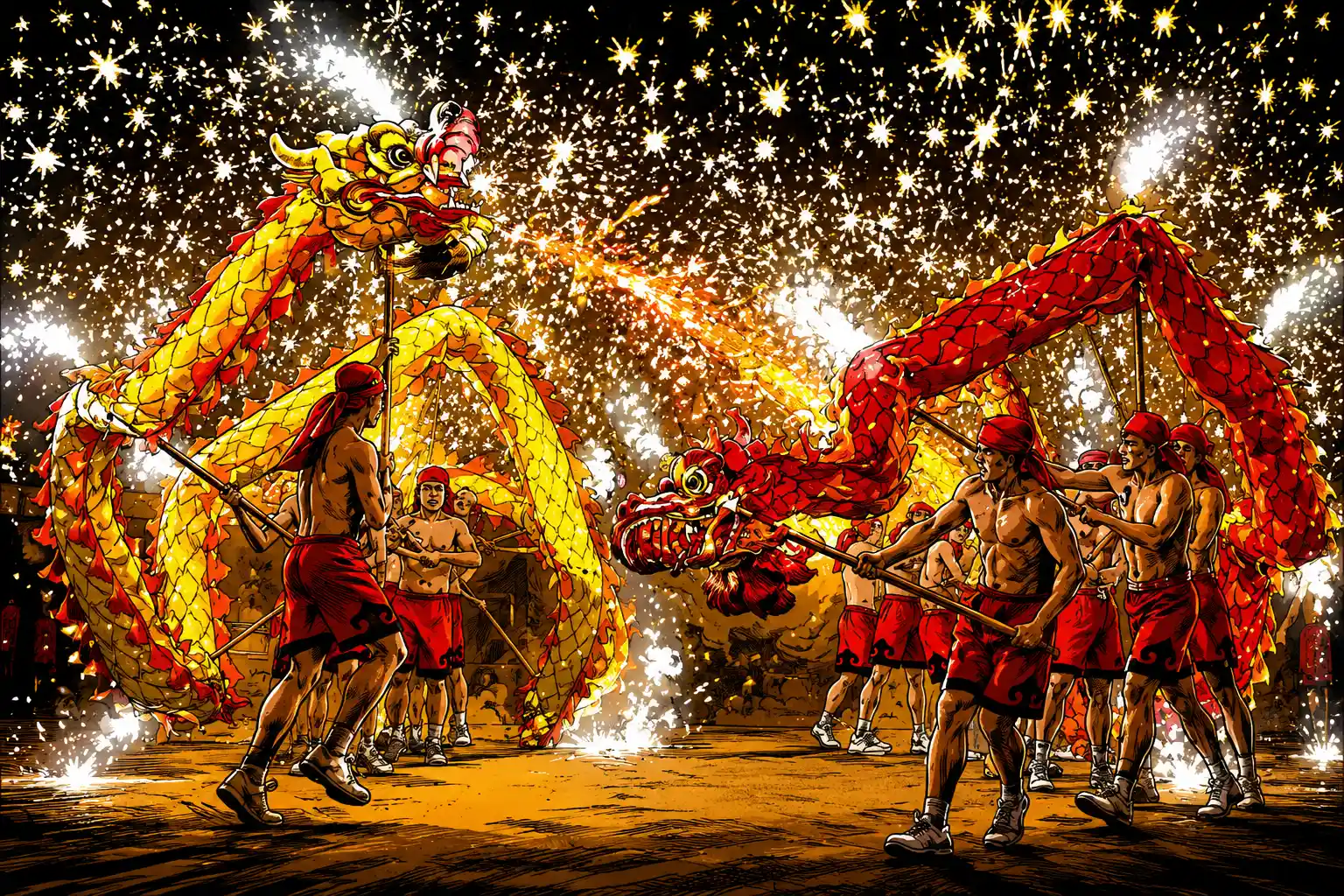
The secret lies in the dragon itself. The dancers go bare-chested, wearing only shorts, wet towels wrapped around their heads. The dragon body is no ordinary cloth; it is made of specially treated fire-resistant material, soaked in water until it is heavy and sagging.
The real magic happens on both sides of the grounds. Several strong men tend a furnace, heating chunks of raw iron to sixteen hundred degrees until they melt into glowing, incandescent liquid. One man scoops up a ladle of molten iron with a long-handled wooden spoon and hurls it skyward. Another man stands on a raised platform, holding a wooden plank, and strikes the falling metal with all his strength.
Bang.
The iron explodes instantly into a golden starfall, thousands of droplets still burning at temperatures hot enough to scar skin. In that very instant, the fire dragon charges into the shower of sparks. The dancers run, roll, and leap toward the falling embers, the dragon body weaving through the golden cascade. Sparks land on their bare backs, sizzling and smoking, sending up thin white trails.
In the stands, someone screams. Someone covers their mouth. Someone's eyes go red.
It is not from pain. It is from being struck by an ancient power.
One Man's Dragon, a Village's Dragon
Old Li is sixty-two this year. He has been dancing the dragon for forty-eight years. His back is a map of burn scars, each one marking the path of a fire dragon.
He joined the troupe at thirteen, starting at the lightest position: the tail. Back then there was no fire-resistant fabric; the dragon body was ordinary coarse cloth, soaked in water until it felt like dragging an ox. When molten iron hit bare skin, the pain was searing, but no one cried out. Cry out, and the dragon dies.
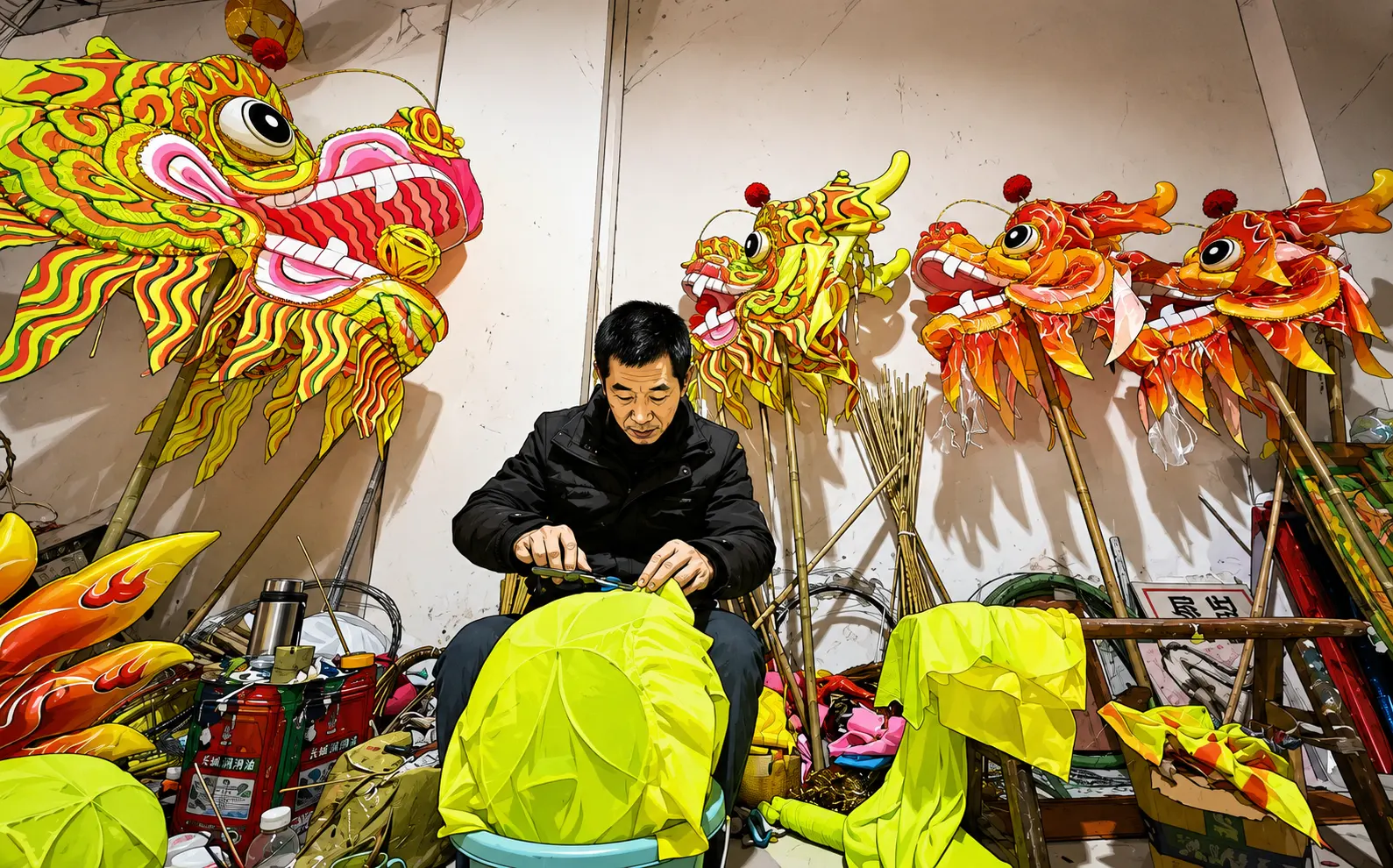
"The dragon has spirit," Old Li says, rubbing pork fat into the dragon head he built himself. The frame is woven from bamboo strips, the scales are colored paper, and the eyes are two electric bulbs wired to a battery. "Fear it, and it will not fly. Believe in it, and it soars."
Building the dragon is a craft in itself. Tongliang has dedicated "dragon-lantern artisans" who begin by cutting bamboo, splitting it into thin strips, weaving the frame, pasting the paper, and painting the colors. A single dragon takes half a month. The most demanding part is the head: it must look majestic but not be so heavy that the lead dancer cannot lift it. Each scale is pasted on by hand, the colors gradating from golden yellow to vermillion red. A few strands of colored silk are hung from the whiskers; when the wind catches them, the dragon seems to breathe.
Old Li's son, Little Li, is thirty-five this year. He works at a bank and comes home on weekends to dance. His back is beginning to collect scars of its own.
"When I was a kid, I thought my dad was stupid, hurting himself like this," Little Li says. "Now I understand. If we do not dance, the dragon dies."
The Many Faces of China Written on the Dragon
The Tongliang dragon dance wears more than one mask.
During Spring Festival, it is the "Giant Coiling Dragon"—a beast dozens of meters long that winds through the streets, visiting households one by one to offer New Year's greetings. When the dragon arrives at a door, the host sets off firecrackers in welcome. The troupe performs a sequence called "Dragon Leaving the Palace," "Dragon Rolling," and "Dragon Wagging Its Tail." The host hands over red envelopes and cartons of cigarettes, hoping for favorable weather in the coming year.
On the night of the Lantern Festival, the fire dragon takes over. Molten iron blazes across the sky in the wildest, most dangerous, and most breathtaking display of all. That performance is for the ancestors, for heaven and earth, and for every hardworking soul who has earned a spectacular release.
At the Dragon Boat Festival, there is the "Lotus Dragon," its body draped in pink lotus petals, dancing along the edge of a pond as lightly as a breeze. That is a different kind of romance—the gentle side of Tongliang's character, proof that softness and strength can coexist.
Foreign visitors often ask: why do Chinese people love dragons so much?
The people of Tongliang smile. They do not quote the *I Ching* or lecture on imperial symbolism. Instead, they lead you to the edge of the grounds and point to the resting dragon: "Look—the whiskers are woven from straw, the scales are pasted from colored paper, and inside the body are us country folk. When the dragon flies, it is dozens of us running, leaping, and shouting together. The dragon is not a god in the sky. The dragon is us."
How to See a Real Tongliang Dragon Dance
If you want to witness a Tongliang dragon dance, the best time is around the fifteenth day of the first lunar month. Performances are held at Dragon City Plaza in the county town and at the ancient town of Anju. But the most authentic experience is the "Fire Dragon Lantern Festival" in the rural villages—no tickets, no assigned seats, just stand on a field ridge and watch.
Before you go, wear old clothes. Sparks from the exploding molten iron drift far and wide; a single ember can burn a small hole through fabric. Do not stand downwind—the sulfur smoke is choking. Bring earplugs; the firecrackers are loud enough to make you question your sanity.
Most importantly, do not watch through your phone. When the moment comes, put the screen down. Listen to the drums, the suona, the sharp crack of molten iron bursting overhead, and the chorus of "Hao!" rising from the crowd in waves. That is the true soundtrack of the Tongliang dragon dance, impossible to capture on any recording device.
When the dance ends, the performers crouch at the edge of the grounds, drinking water in great gulps, smearing herbal balm on the burns across their backs. Children crowd in to touch the dragon scales. The old folks begin debating who will wield the dragon head next year. The night wind carries away the sulfur, and the stars emerge. Everything returns to quiet, as if the rain of fire were only a dream.
But you know it was not. Because the air still smells of iron, your eardrums are still ringing, and somewhere inside your chest, a dragon is still flying.