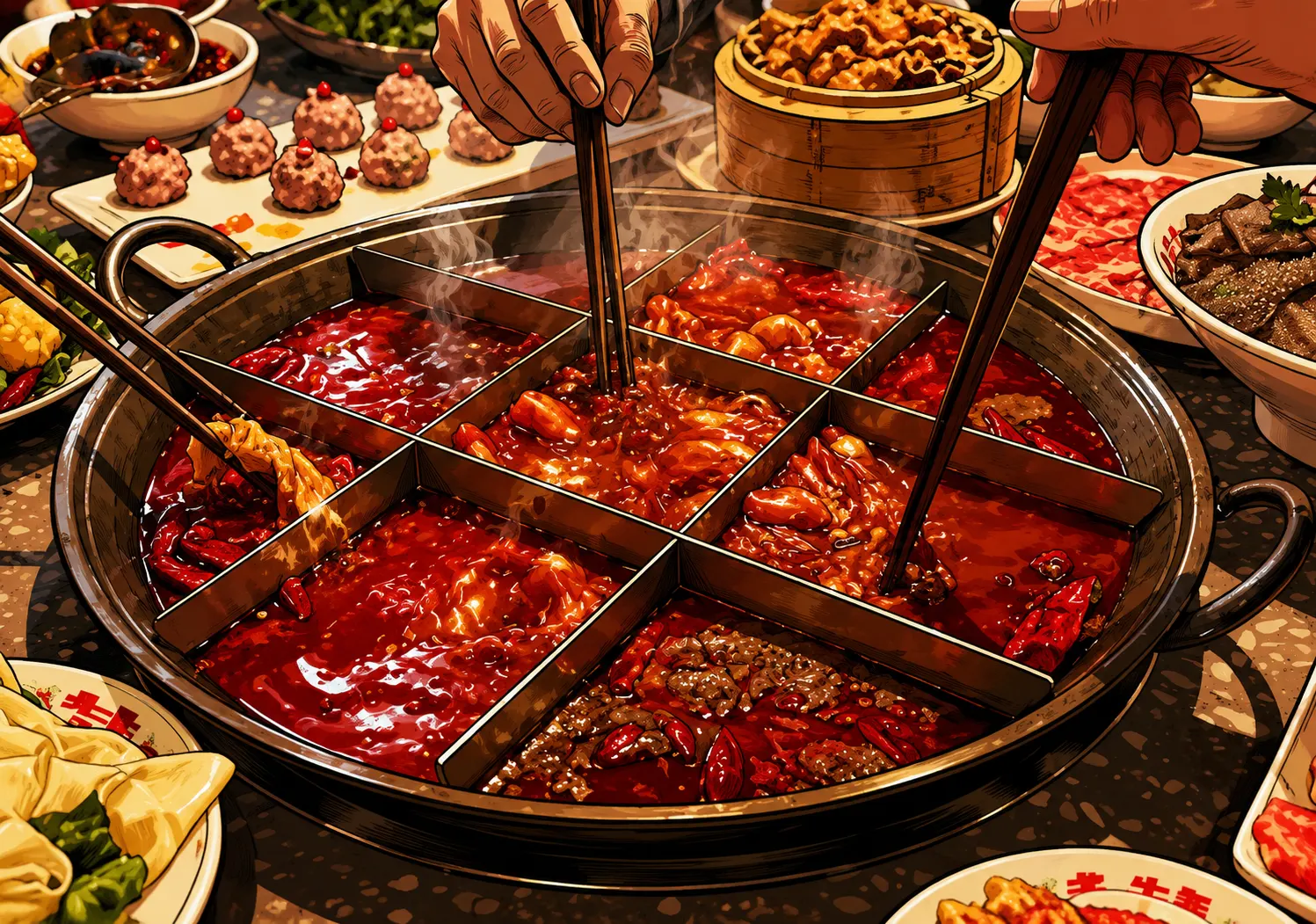
The first thing that hits you is the smell. Not gentle, not polite. It climbs up the stairwells of old apartment blocks, slips through cracks in wooden doors, and wraps itself around the fog that Chongqing wears like a coat. It is the smell of dried chilies toasting in hot oil, of Sichuan peppercorns waking up in a wok, of something primal and alive. Follow it. It will lead you somewhere worth going.
Somewhere in this city of thirty million, a round table is being set. A metal pot—split down the middle, half furious red and half mild gold—is placed in the center. Around it, plastic stools scrape against concrete floors. Beer bottles clink. Someone laughs too loud. And then the broth starts to tremble.
The river that made the fire
To understand Chongqing hotpot, you have to imagine the dockworkers a century ago. Men with rope-burned hands and backs bent from hauling goods off the Jialing and Yangtze rivers. They were poor, mostly. The wealthy ate the good cuts of meat. The workers got what was left: tripe, kidney, duck blood, the chewy ribbons of beef that no one else wanted.
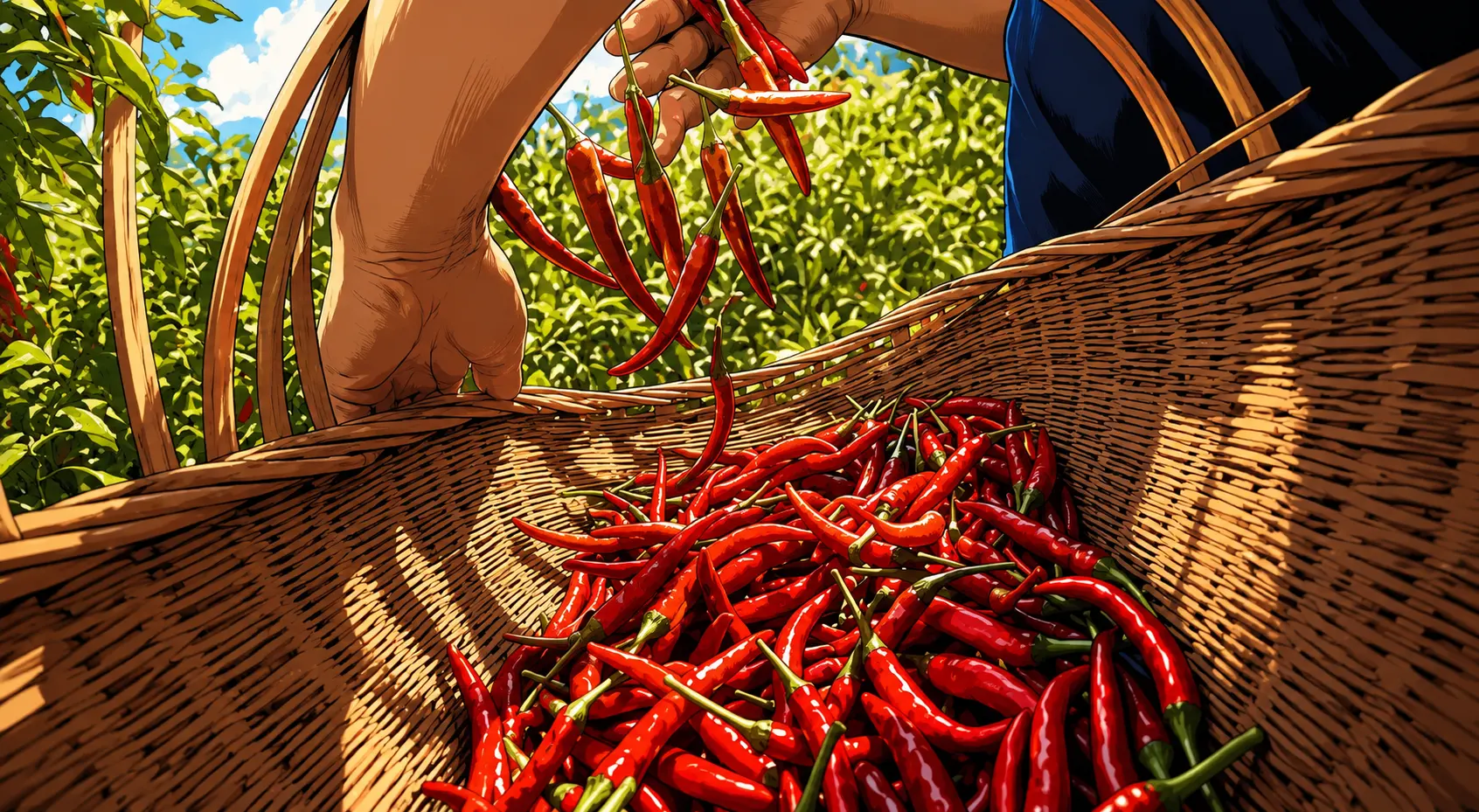
But these men were clever. They gathered around open fires on the riverbanks, threw their scraps into bubbling pots of water, and loaded them with the one thing this region had in abundance: chili. Not just heat, but the numbing buzz of huajiao, the Sichuan peppercorn that makes your lips hum like a tuning fork. The broth masked the toughness of the meat. The spice warmed them against the damp river wind. And the round pot meant everyone ate together, shoulder to shoulder, no one above anyone else.
That is the DNA of this dish. It was never about refinement. It was about survival, shared.
The alchemy in the pot
Walk into a serious hotpot restaurant in Chongqing today and the first question is not what you want. It is: how fierce?
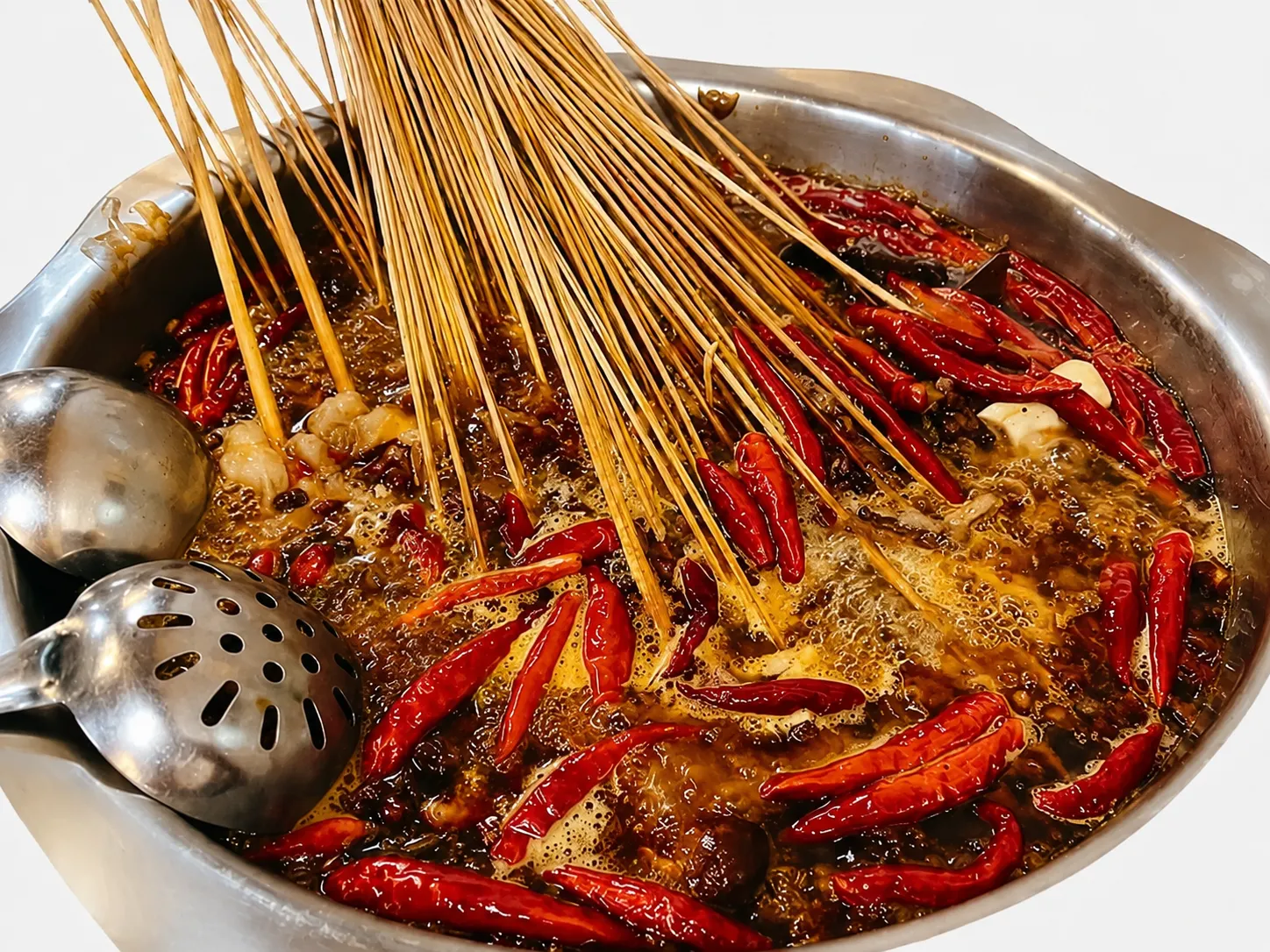
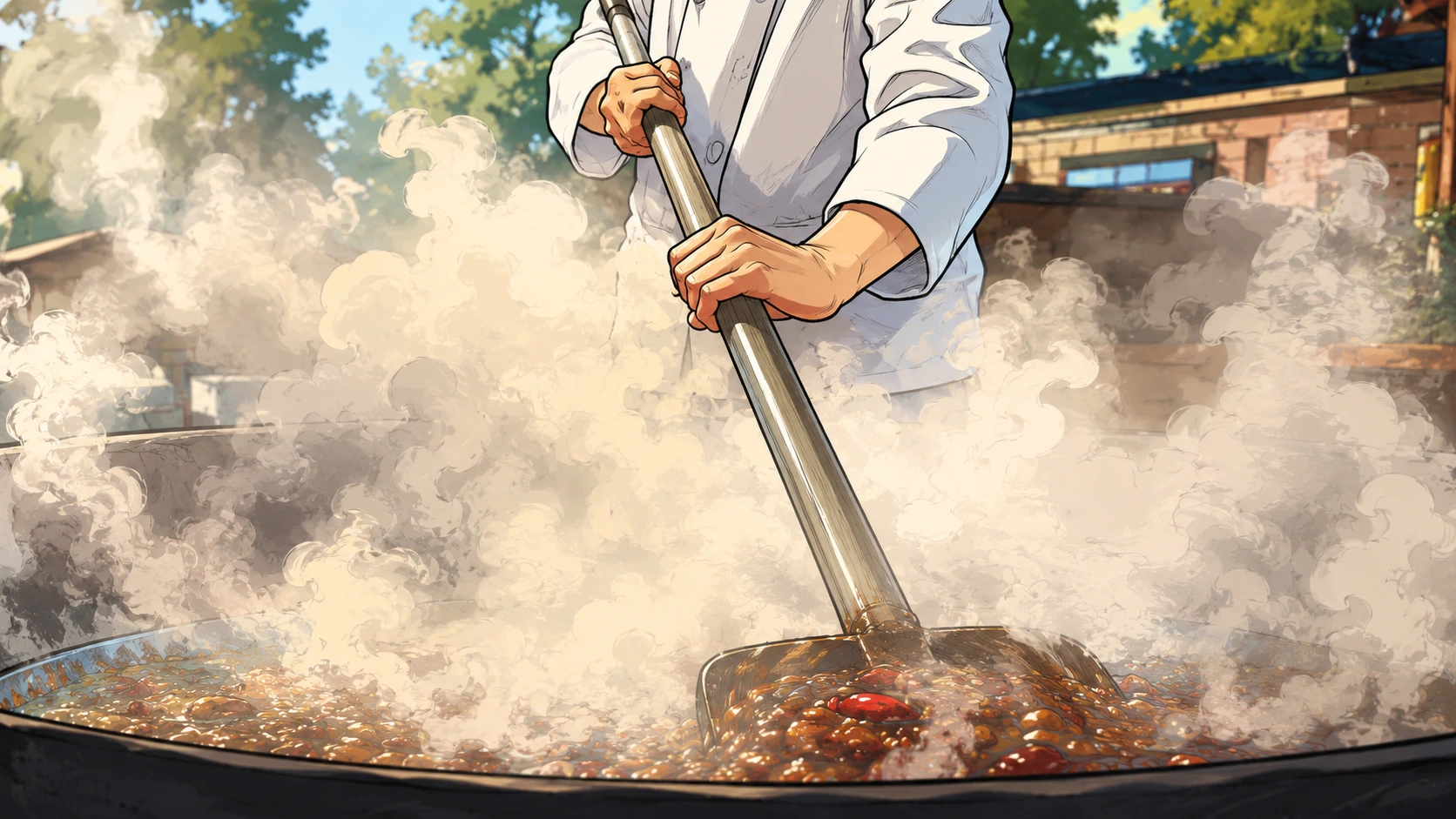
The broth is the soul. The red half—hong tang—is built in layers. First, beef tallow, mountains of it, slowly melted down. Then dried facing heaven chilies, so named because they grow pointing upward, small and furious. Then doubanjiang, the fermented broad bean paste that gives the broth its dark, savory depth. Ginger, garlic, star anise, cinnamon bark, cloves, fennel. And always, always, the huajiao.
The result is not simply spicy. It is a kind of controlled chaos. The heat builds slowly, like a conversation that starts polite and ends with everyone shouting. The numbing comes in waves, a tingling that spreads across your tongue and makes you reach for another bite before you have finished the first.
The mild half—qing tang—is for balance. Usually a clear chicken or pork bone broth, maybe with mushrooms, goji berries, a few dates. It is where you rest between rounds. The best eaters move back and forth, red to gold, fire to calm, like breathing.
What goes in, and when
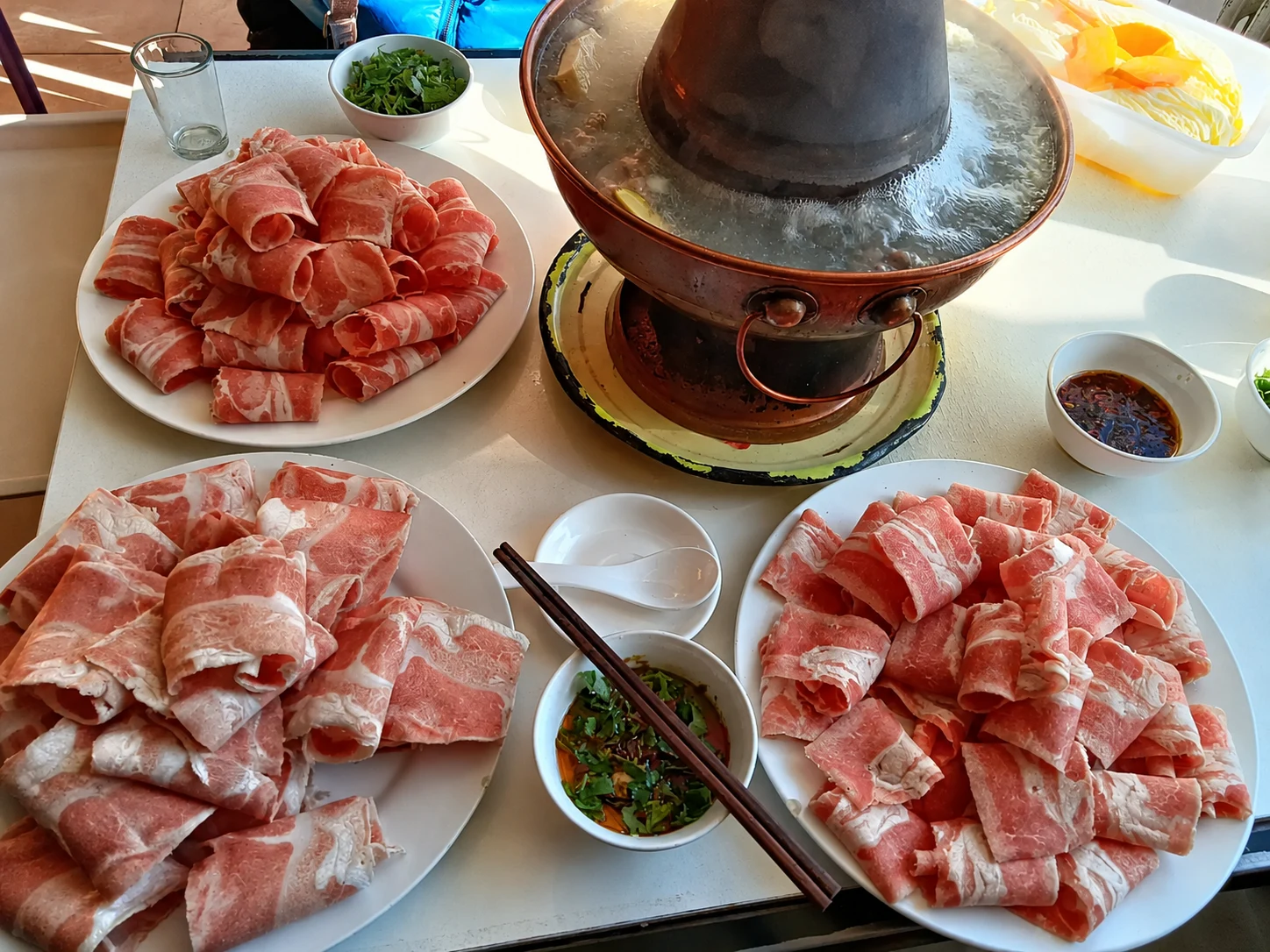
Here is where the theater begins. The waiter brings a tray of raw ingredients, arranged like a painter’s palette. Thin slices of beef, marbled with fat, that cook in ten seconds if you swish them in the red broth. Tripe, pale and ridged, that curls up the moment it touches the heat. Lotus root slices, crisp and starchy. Potato ribbons, translucent and quick. Tofu skin, spongy and eager to soak up oil.
Timing is everything. The locals know by instinct. Tripe gets eight seconds, no more, or it turns to rubber. Duck blood firms up like custard. Noodles go in last, when the broth is at its most concentrated, soaking up every hour of flavor that came before.
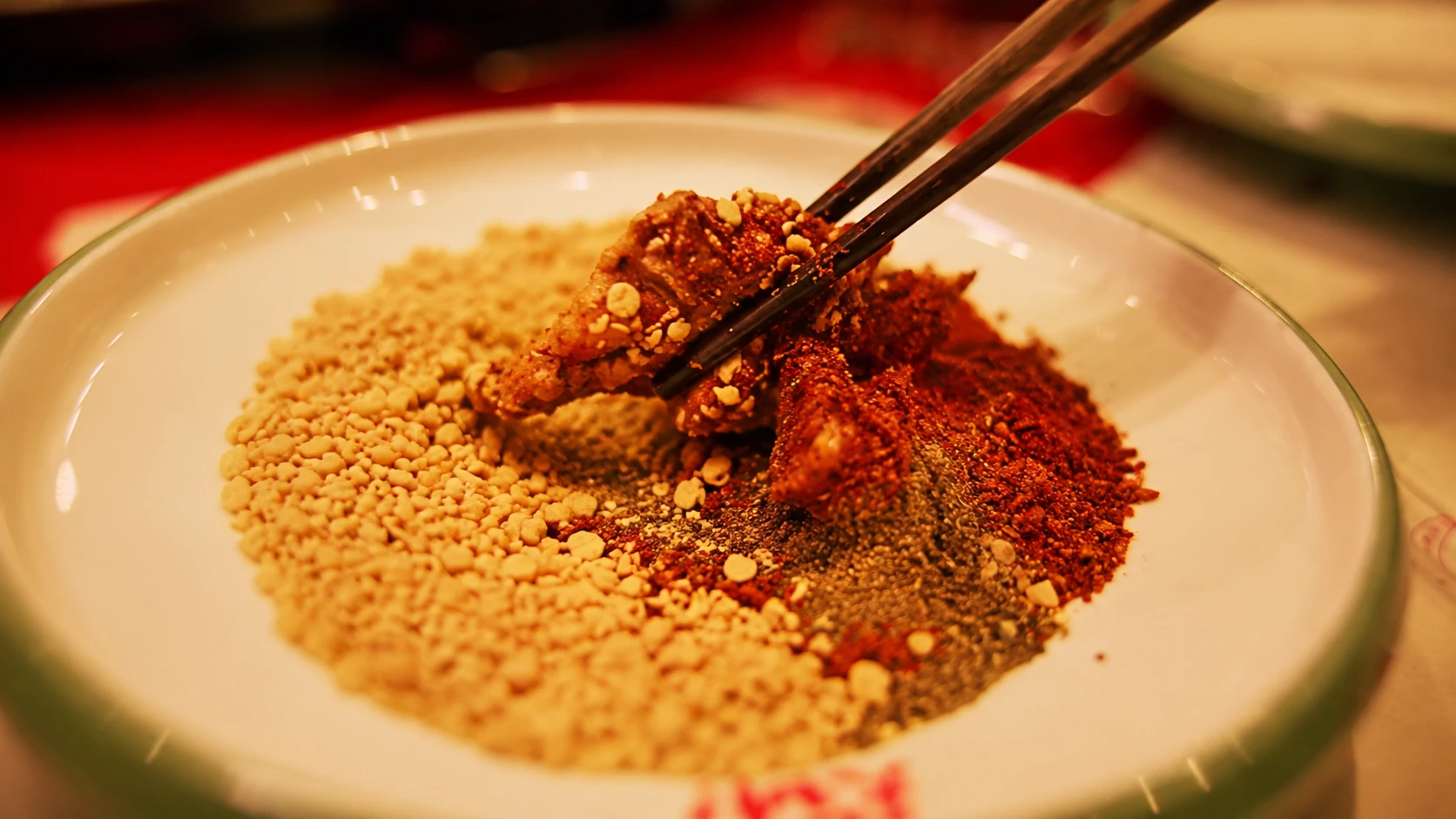
And then there is the dipping sauce. A small bowl, DIY. Start with sesame oil—this is crucial, not just for flavor but for protection, coating your stomach against the chili storm. Add minced garlic, a pinch of salt, maybe some cilantro, perhaps a splash of oyster sauce. Everyone’s bowl is different. It is a fingerprint.
You do not eat hotpot alone. The pot demands company. One person at a hotpot table is like one hand clapping.
The code of the table
There are rules, though no one writes them down. You do not throw everything in at once. You do not fish in the pot with your own chopsticks—there is a communal strainer for that. You never, ever drink the broth straight, unless you want to explain yourself to a doctor later.
But the real code is generosity. If you drop something in, you announce it. If someone’s favorite ingredient is ready, you scoop it for them before yourself. The pot belongs to everyone, so everyone watches it. Conversation slows when the broth bubbles too hard. It picks up again when the eating does.
In Chongqing, business deals are made over hotpot. Families argue and reconcile over hotpot. First dates happen here, two people sweating through their shirts, seeing who can handle the spice. There is nowhere to hide. Your face turns red, your nose runs, you gasp for air between bites. It is honest food. It reveals you.
Why it could only happen here
Chongqing is not a polite city. It is vertical, crowded, loud. The summer air hangs like wet wool. The winter fog seeps into your bones. People here speak fast, drive faster, and have no patience for pretense.
Hotpot fits this place like a glove. It is eaten standing up sometimes, on plastic stools that wobble, under fluorescent lights that buzz. The best places look like garages. The menu is often a checklist on a scrap of paper. You do not come for ambiance. You come because your body demands it.
And there is something deeper. This city was built by migrants, by river workers, by refugees during the war. It has always been a place people landed, not a place people planned to be. Hotpot, with its communal pot and its cheap, humble ingredients, is the perfect food for a city of survivors. No one asks where you came from. Just pass the beef.
How to eat it like you belong
If you find yourself at a Chongqing hotpot table for the first time, here is what you need to know.
Do not order everything at once. Start with beef, tripe, and a few vegetables. See how the broth treats you. The spice builds. What tastes fine in minute five may feel like a dare in minute thirty.
Drink something cold, but not water. Water spreads the oil. Beer, soy milk, or the sweet fermented rice drink called mijiu will actually cool you down.
Eat the noodles last. They are the final act, the sponge that soaks up the story of the meal.
And if your nose runs, your eyes water, and you find yourself laughing between gasps—good. That is the exact moment you blend into the city.
The fire keeps burning
Long after midnight, when the streets of Chongqing finally quiet, the hotpot restaurants are still glowing. The last tables are full of night-shift workers, of taxi drivers winding down, of friends who have nowhere else to be. The broth has reduced, darkened, intensified. The conversation has slowed into something comfortable.
This is the last secret of Chongqing hotpot. It is not about the recipe. It is about the sitting. The staying. The fire in the middle of the table that keeps everyone warm, keeps everyone talking, keeps everyone equal.
In a city that never stops moving, the hotpot pot is one of the few places where time slows down. Where a dockworker from a hundred years ago and a programmer from today could sit side by side, dip the same ingredient, feel the same buzz on their tongues.
The fire does not care who you are. It just asks that you show up, bring your appetite, and do not eat alone.