Why Are Robots Suddenly Everywhere in China?
Introduction
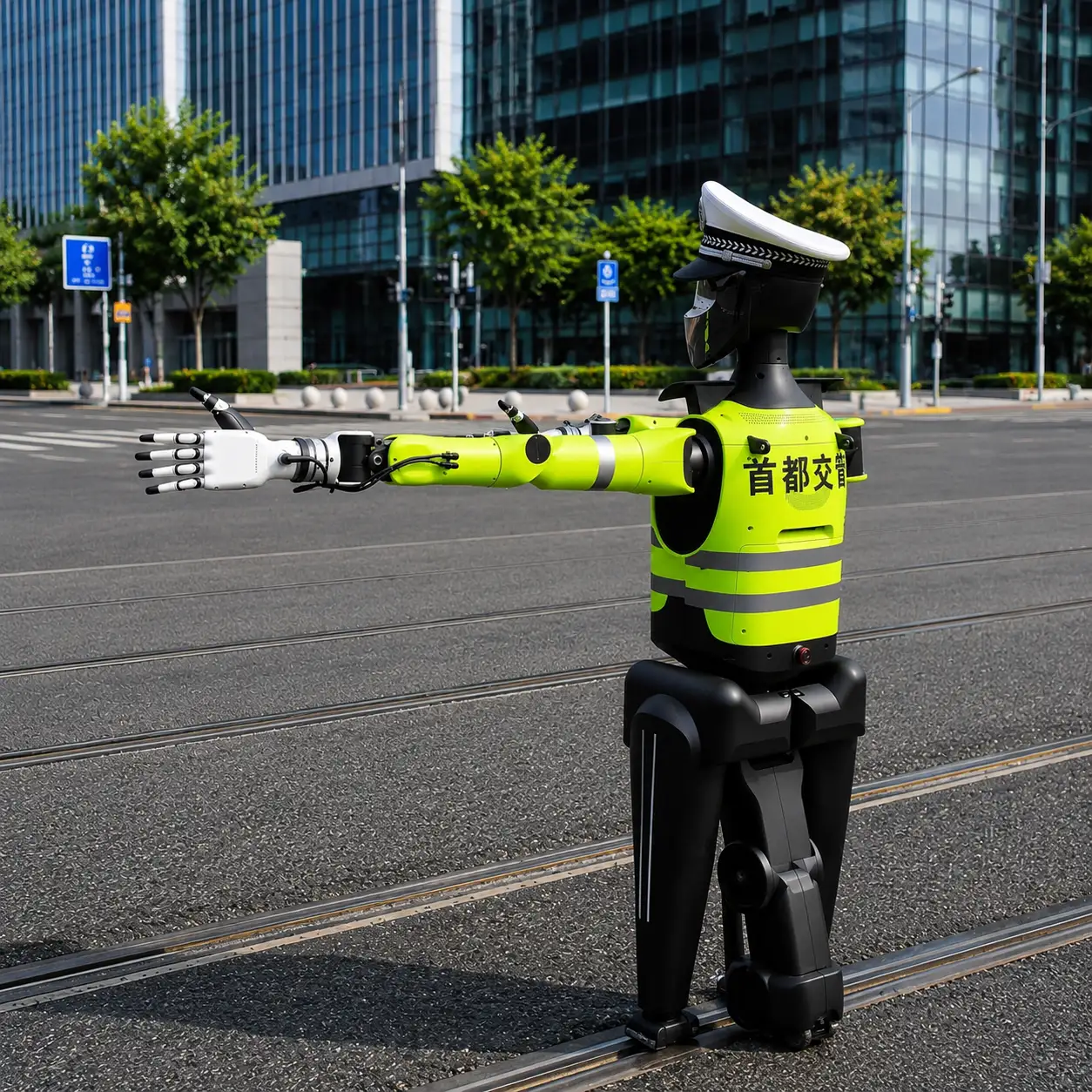
Robots in China are not suddenly replacing people everywhere. They are showing up in very visible places: hotel corridors, restaurant aisles, subway stations, and some traffic crossings. This episode explains 机器人, the Mandarin word for robot, and why many of these machines are becoming part of ordinary scenes instead of just tech news.
TRANSCRIPT
PandaWu: Hello, this is 5 Minute Chinese from On The GreatWall. I'm PandaWu.
Emma: And I'm Emma.
PandaWu: Imagine this. You are in a hotel in Shanghai. You call the front desk and ask for a toothbrush. A few minutes later, there is a small sound outside your door.
Emma: Let me guess. Not a person.
PandaWu: Right. You open the door, and a little robot is waiting there with your toothbrush.
Emma: I think I would laugh first. Then I would probably take a photo.
PandaWu: Many people do. And that is one reason robots in China feel suddenly everywhere. They are not hidden inside factories anymore. They are moving through places where ordinary people can see them.
Emma: So when people ask, why are robots suddenly everywhere in China, what is the simple answer?
PandaWu: They are not everywhere. But they are becoming much more visible.
Emma: That feels like an important difference.
PandaWu: It is. A robot in a factory may do serious work all day, but most visitors never see it. A robot in a hotel lobby, a restaurant, or a subway station becomes a small public event. People stop. They smile. They film it. Then it travels online.
Emma: So part of the trend is real robots, and part of it is how easy they are to share.
PandaWu: Exactly. Let me give you one small scene. You are in a restaurant. A round delivery robot rolls past your table. It has bowls of noodles on its shelves. It does not look very human. It does not need to. It just needs to move safely from the kitchen to the table.
Emma: That sounds less like science fiction and more like a tray with wheels.
PandaWu: That is a very good description. A lot of daily-life robots are not trying to be human. They are designed for one simple job: carry food, bring towels, clean a floor, guide people, or help with a repeated task.
Emma: Then why do we also see humanoid robots in the news? The ones with arms and legs.
PandaWu: Because they are more dramatic. A robot that looks a little like a person naturally gets attention. In some Chinese cities, humanoid robots have been tested as traffic assistants or public guides. They stand near human staff and give simple reminders.
Emma: So they are not taking over the street.
PandaWu: No. It is usually more like a trial, a demonstration, or a helper role. And this brings us to today’s Chinese word.
PandaWu: 机器人
Emma: 机器人
PandaWu: 机器 means machine. 人 means person. Together, it means robot.
Emma: Machine person. That is easy to remember.
PandaWu: It is. But the interesting thing is that 机器人 does not always mean a walking, talking machine. It can mean a small delivery bot, a cleaning robot, a factory robot, or a humanoid robot on a stage.
Emma: So in Chinese, the word is broad.
PandaWu: Yes. If a hotel clerk says, the robot will bring it to your room, they may be talking about a waist-high delivery machine. If a child sees a dancing humanoid on TV, that is also a 机器人.
Emma: I can see how visitors might misunderstand the word, then. They hear robot and imagine something almost human.
PandaWu: That happens. But in daily life, many robots are more practical than magical. They are useful because China has busy cities, big buildings, lots of delivery needs, and many companies trying to turn robot demos into real services.
Emma: And maybe people are more willing to try them because they already use so much phone-based technology.
PandaWu: Yes, that helps. In many Chinese cities, people are used to scanning codes, paying by phone, ordering food by app, and using smart lockers. So when a robot arrives with a package, it can feel surprising, but not impossible.
Emma: Still, I imagine not everyone loves it.
PandaWu: Of course. Some people think they are cute. Some people find them slow. Some people worry about jobs. Some people just want the robot to get out of the elevator.
Emma: That sounds very human.
PandaWu: It is. And that is the point. The most interesting part is not that robots are perfect. They are not. They get stuck. They need charging. They often need people nearby. But they are now visible enough that people are learning how to live around them.
Emma: So the answer is not, China has become a robot country.
PandaWu: No. A better answer is this. In parts of China, robots have moved from factories and tech shows into everyday public spaces. They are helpers, experiments, and sometimes entertainment. And the useful word to remember is 机器人.
Emma: Robot. Or machine person.
PandaWu: Exactly. 机器人. When you hear that word in China, do not imagine only a metal person from a movie. It might just be a small machine bringing someone noodles.
Emma: Which, honestly, is still pretty interesting.
PandaWu: Once again, our five minutes are up, but if you'd like to hear more authentic stories about Chinese food, history and culture, you can head to our topic page on our website, onthegreatwall.com. See you again soon. But for now, it's goodbye.
Mini Quiz
Question: What is the biggest misunderstanding about robots in everyday Chinese life?
A. Robots have replaced most service workers in Chinese cities.
B. Many robots are visible helpers or experiments in specific public settings, not replacements for all human workers.
Answer: B. Many robots handle simple, repeated tasks or appear in trial settings. They are more often helpers, demonstrations, or service tools than full replacements for people.
Useful Examples
- Example机器人 PinyinJī qì rén MeaningRobot.
- Example机器人送餐 PinyinJī qì rén sòng cān MeaningRobot food delivery.
- Example机器人交警 PinyinJī qì rén jiāo jǐng MeaningRobot traffic police.
More Podcast Episodes
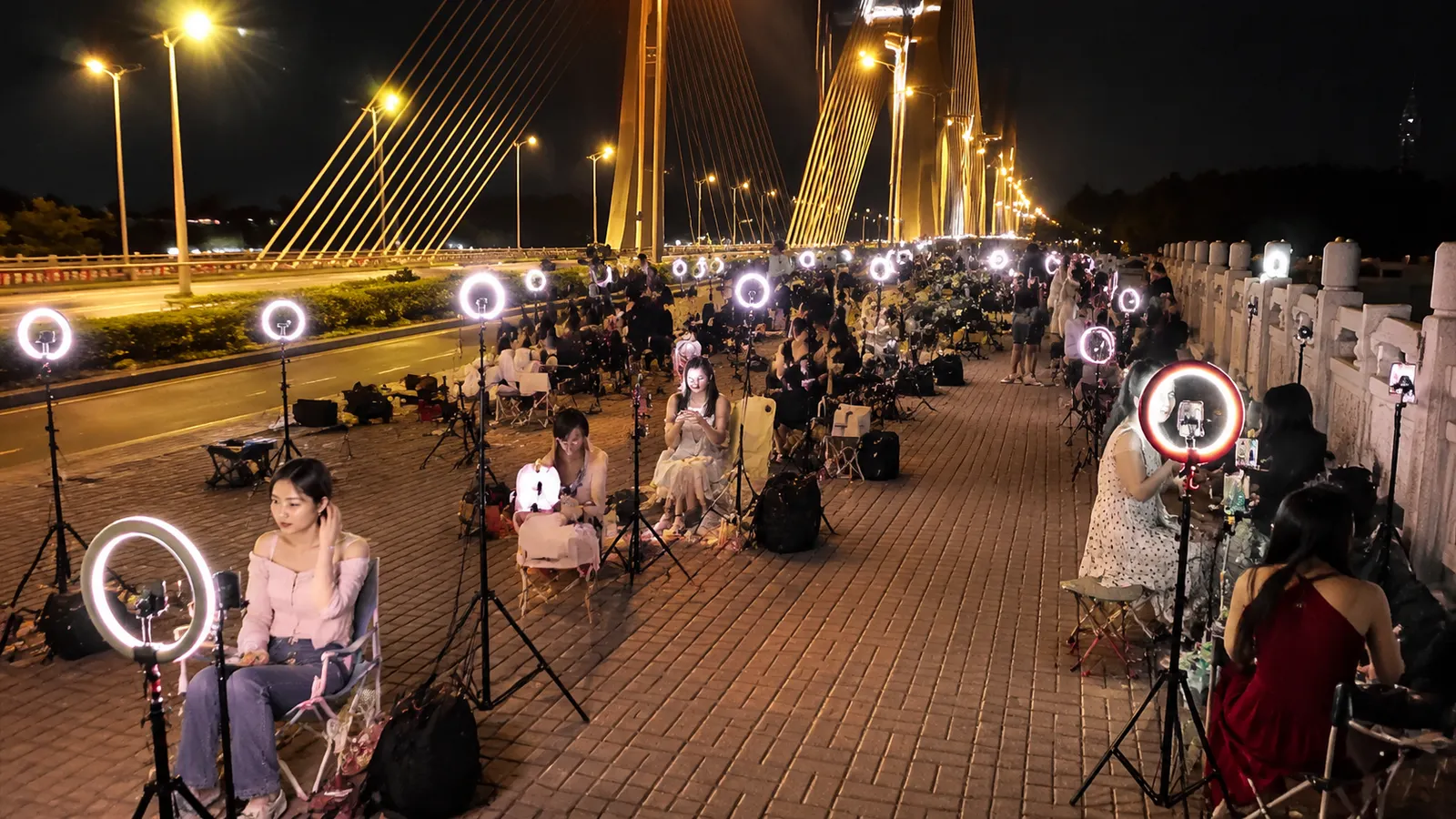
Why Do Chinese Streamers Go Live in Wealthy Areas?
27 Jul 2026
Emma finds a glowing row of roadside streamers and learns why wealthy neighborhoods, cold nights and virtual gifts are all part of the attention game.

Why Do Chinese Malls Feel Like Indoor Cities?
25 Jul 2026
Emma entered Guangzhou's Wanda Plaza for one HEYTEA. Seven hours later, she had new nails, an IMAX ticket and two unusual bags of chips.

Which Chinese City Should Food Lovers Visit First?
21 Jul 2026
PandaWu spent more than a decade in Guangzhou. Here is why he recommends its dim sum, roast meats, desserts, and late-night food.