The butcher arrives before dawn, his knife wrapped in burlap, his boots leaving deep prints in the fresh snow that fell overnight. The pig was raised in a pen behind the house, fed on kitchen scraps and cornmeal for eighteen months. Now it hangs from a wooden frame in the courtyard, steam rising from its body into air so cold the droplets freeze into a fine mist that sparkles in the morning light. The family has been preparing for this day since the first frost. In Northeast China, the annual pig slaughter is not merely a meal. It is the event that determines whether a family eats well for the entire winter.
The Cold as a Kitchen
The timing is precise. The temperature must be cold enough to freeze meat solid, but not so bitter that the men working outside lose feeling in their hands. By late November, the village enters a narrow window of about six weeks when the weather is ideal. If they wait too long, the snow becomes too deep to transport the meat. If they act too early, the carcass might spoil before the deep freeze sets in.
The butcher works with three assistants. One holds a basin to catch the blood, which will be mixed with chopped onions and buckwheat groats to make blood sausage. Another sharpens knives on a wet stone, producing a rhythmic scraping sound that carries across the courtyard. The third man, the host, pours small cups of baijiu for everyone involved. The liquor is not a celebration. It is practical. At ten degrees below zero, alcohol keeps the blood moving and the fingers nimble.
The White Gold
The most important product of the slaughter is not the pork itself. It is the sauerkraut. Months earlier, the family harvested napa cabbage from their garden, layered it with coarse salt in a massive ceramic urn, and pressed it down with a heavy stone. The fermentation produced a brine so sour it makes the jaw ache, and a cabbage so soft it falls apart in your fingers. This pickled cabbage, called suancai, is the foundation of the feast.
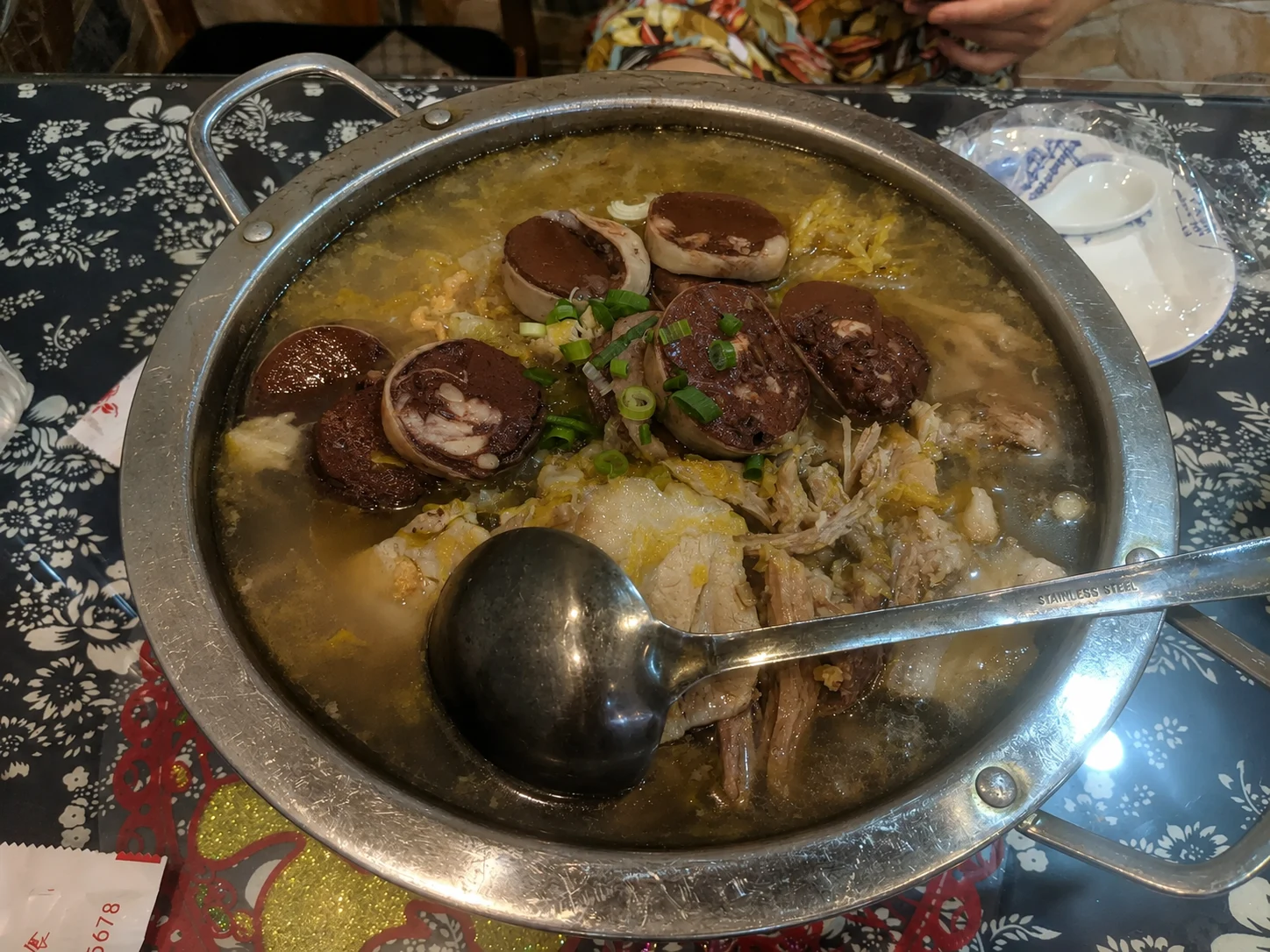
A proper Harbin pig slaughter meal begins with the host lifting the lid from a pot that has been simmering since the previous night. Inside, layers of suancai alternate with slabs of pork belly, pork blood sausage, and fatty pork shoulder. The fat from the meat rises to the surface and forms a golden layer that the cook skims off with a ladle and saves for later frying. The broth beneath is opaque, milky white, and so rich with collagen that it coats the lips like lip balm.
The First Bowl
The grandmother ladles the first bowl herself, always for the eldest guest. The etiquette is specific. You must drink the broth first, while it is still scalding hot, letting the sourness of the cabbage and the richness of the pork fat fill your mouth together. Then you pick up a piece of pork belly with your chopsticks. The skin should be soft enough to pierce with a gentle squeeze, and the fat layer should quiver like jelly. The meat beneath has absorbed the sour brine of the cabbage, creating a flavor that is simultaneously heavy and bright, fatty and sharp.
The blood sausage is sliced into thick coins and added to the pot in the final hour of cooking. The exterior turns dark brown and slightly chewy. The interior remains soft, almost custard-like, with the earthiness of buckwheat and the metallic tang of fresh blood. Children fight over the slices that have burst open during simmering, because those pieces have absorbed the most broth.
The Table That Never Ends
The meal continues for hours, not because the food is fancy, but because there is so much of it. Every part of the pig appears on the table in some form: the ears sliced thin and dressed with chili oil, the trotters braised until the skin can be sucked off the bone, the intestines stir-fried with scallions and Sichuan peppercorn, the liver blanched and served with a dish of raw garlic paste.
Relatives arrive throughout the day, bringing bottles of liquor and bags of frozen persimmons. The men sit on the heated kang, a raised brick platform built over the cooking fire, their legs tucked beneath them, drinking and telling stories about last year's slaughter, about the time the pig escaped, about the neighbor who tried to make blood sausage without enough onions and ended up with a pan of gray rubber. The women replenish the pot from a clay urn in the corner where the remaining sauerkraut waits in its brine.
Leftovers Are the Point
By evening, the guests have gone home with parcels of meat wrapped in newspaper. The host family is left with a pot that is still half full. This is intentional. The best version of sha zhucai is never eaten on the first day. The pot is left on the stove, cooling slowly through the night. In the morning, the fat has congealed into a solid white cap. The cook reheats the pot slowly, stirring as the fat melts back into the liquid. The cabbage has disintegrated further, thickening the broth into a sauce. The flavors, having spent twelve hours marrying in the dark, are deeper, more unified, more complete.
The family will eat from this pot for three days. By the third day, the broth will be almost gone, and the remaining cabbage and meat will be spread over steamed rice. Nothing is wasted. The pig has given everything. The cold has preserved it. The pot has transformed it. And the family will carry the warmth of this meal through the deepest part of the winter.
The ingredients and occasion are different, but the table follows the same winter logic as Northeast iron pot stew: retained heat, a shared vessel, and enough time for nobody to hurry back into the snow.