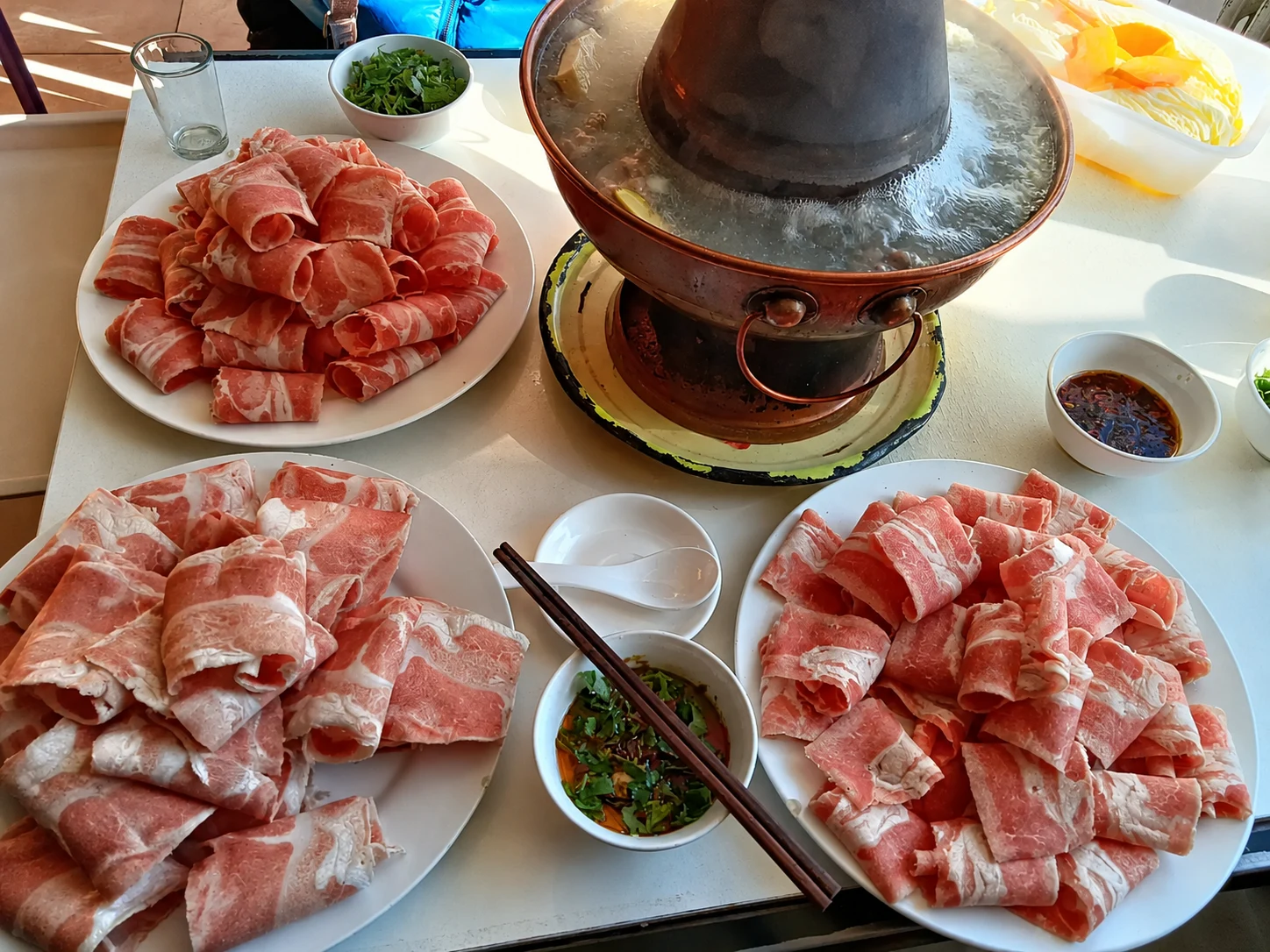
The coldest seat in Beijing is the one farthest from the copper pot.
On a winter evening, the door of a mutton restaurant opens and closes without rest. Each time it opens, a blade of dry wind comes in from the street. Coats stay on shoulders. Hands hide inside sleeves. Then the waiter carries the pot to the table, and the room begins to change.
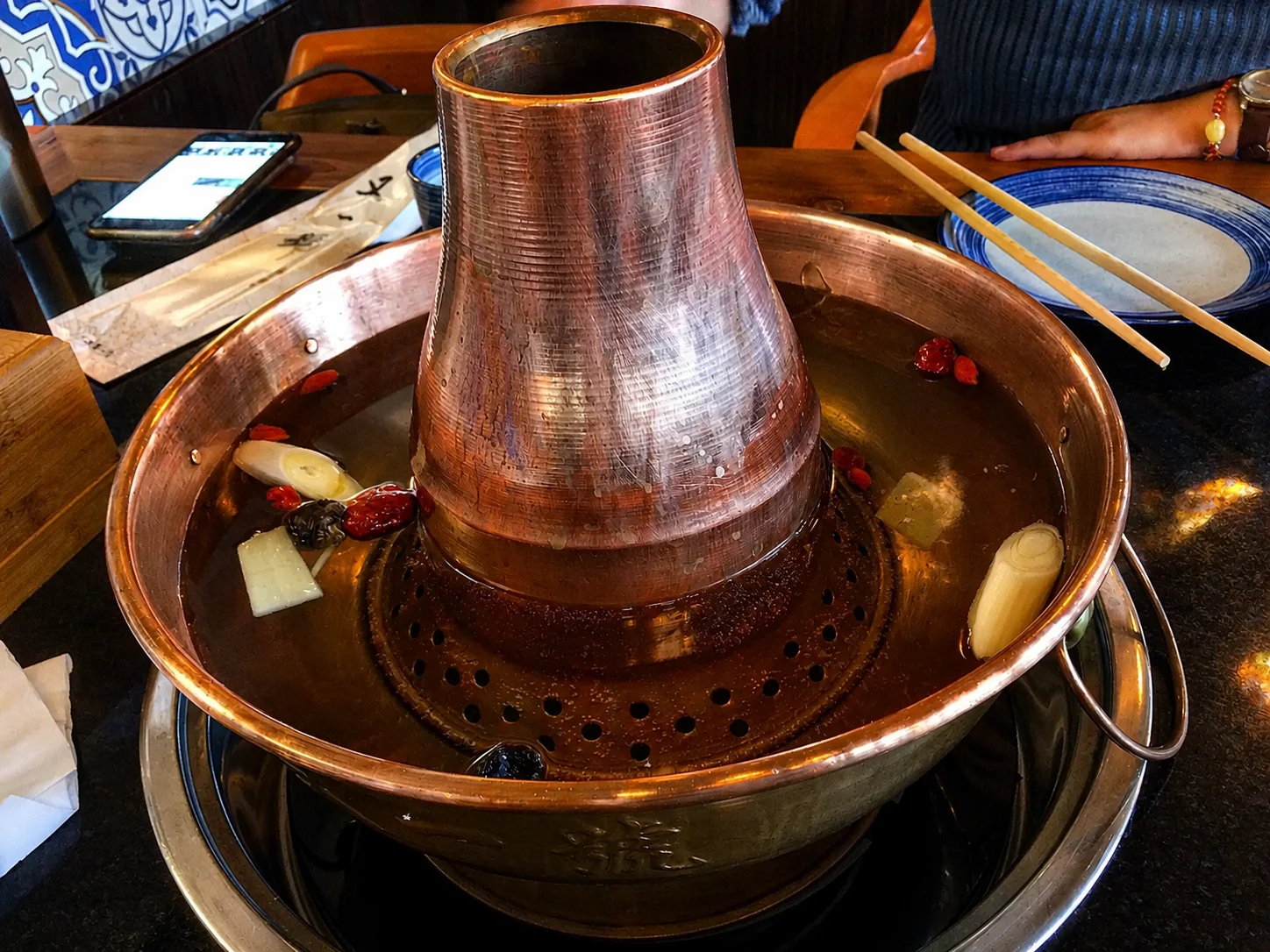
The pot is all belly and chimney. Charcoal glows in the middle shaft, dark red at first, then brighter as air rises through the neck. Around it, clear water trembles with scallion and ginger. Before any lamb appears, the pot has already done its first work. It has made strangers lean closer.
The Room Warms Before the Broth Boils
Beijing copper-pot mutton is often explained as a dish. It is better understood as a small climate.
The old pot was shaped for winter. The charcoal burns in the center, the broth circles around it, and the chimney pulls the fire upward. Nothing looks dramatic. No red oil, no thick soup, no showy spice. Just a pale broth, a metal body, and steam slowly gathering on the window glass.
Outside, the hutong wind scrapes against brick walls. Inside, people sit in a ring around the fire. The table becomes a stove. The stove becomes the reason to stay.
The broth stays clean for a reason. It is not trying to become a stew. It lets the lamb pass through quickly, like a line of ink touching water and vanishing before it spreads.
The Lamb Has Only a Few Seconds
The meat arrives in thin folds, pale red and white, laid flat as if it were paper. In the old Beijing standard, a good slice could be thin enough for the pattern of a porcelain plate to show through. That is not decoration. It is timing made visible.
The cutter has already decided which parts of the animal belong here. The slice must be tender enough to cook in a breath, but not so soft that it disappears. It must carry a trace of fat, because clear broth gives no cover. There is no heavy sauce in the pot to rescue bad meat.
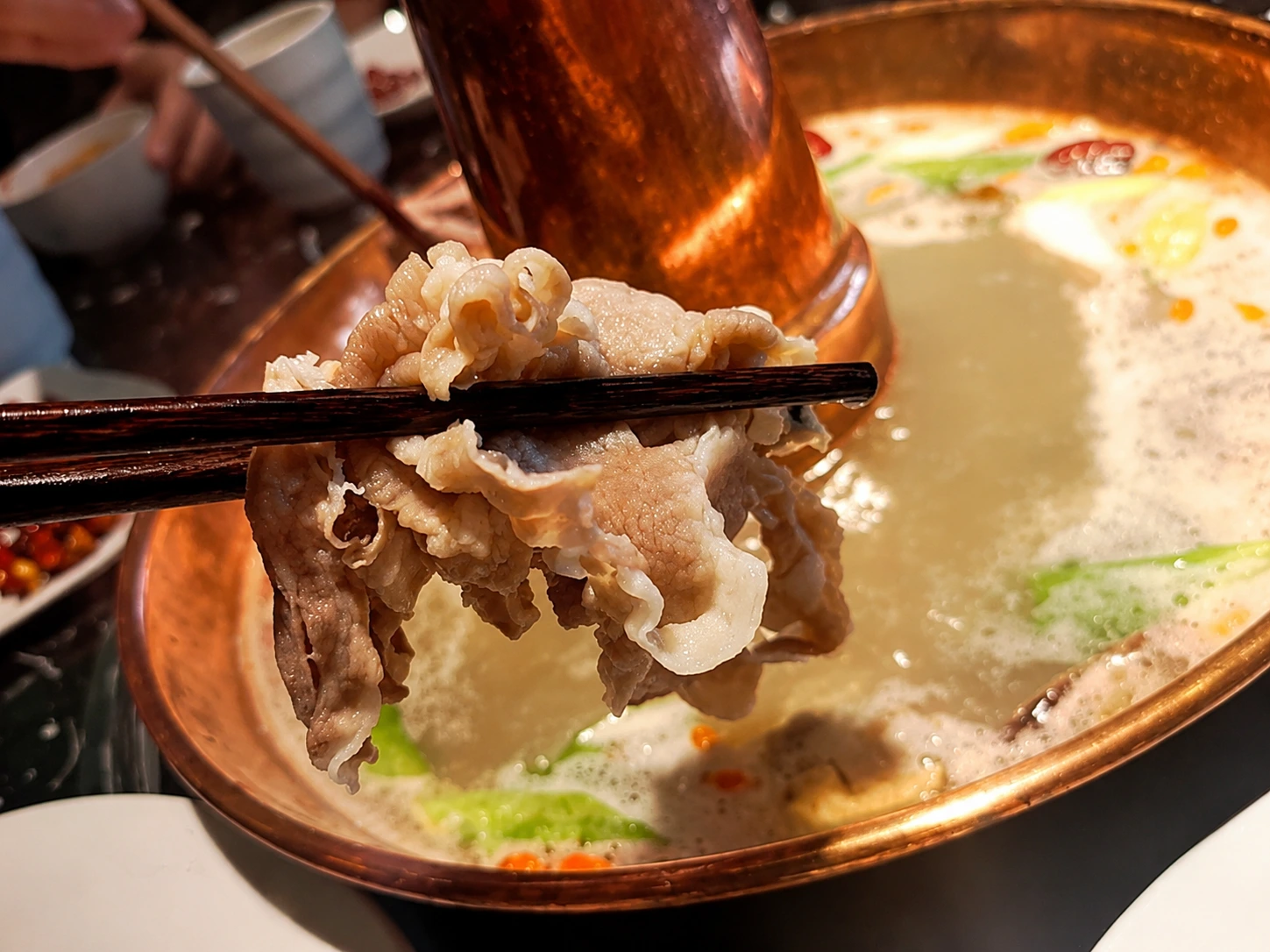
A pair of chopsticks lifts one slice. The hand lowers it into the rolling water. The lamb loosens, curls, and pales almost at once.
Count too little, and the center stays raw. Count too long, and the slice loses its sweetness. The old diners do not look at a clock. They watch the edge of the meat change color. They feel the chopsticks soften.
Then the lamb leaves the pot and falls into sesame sauce.
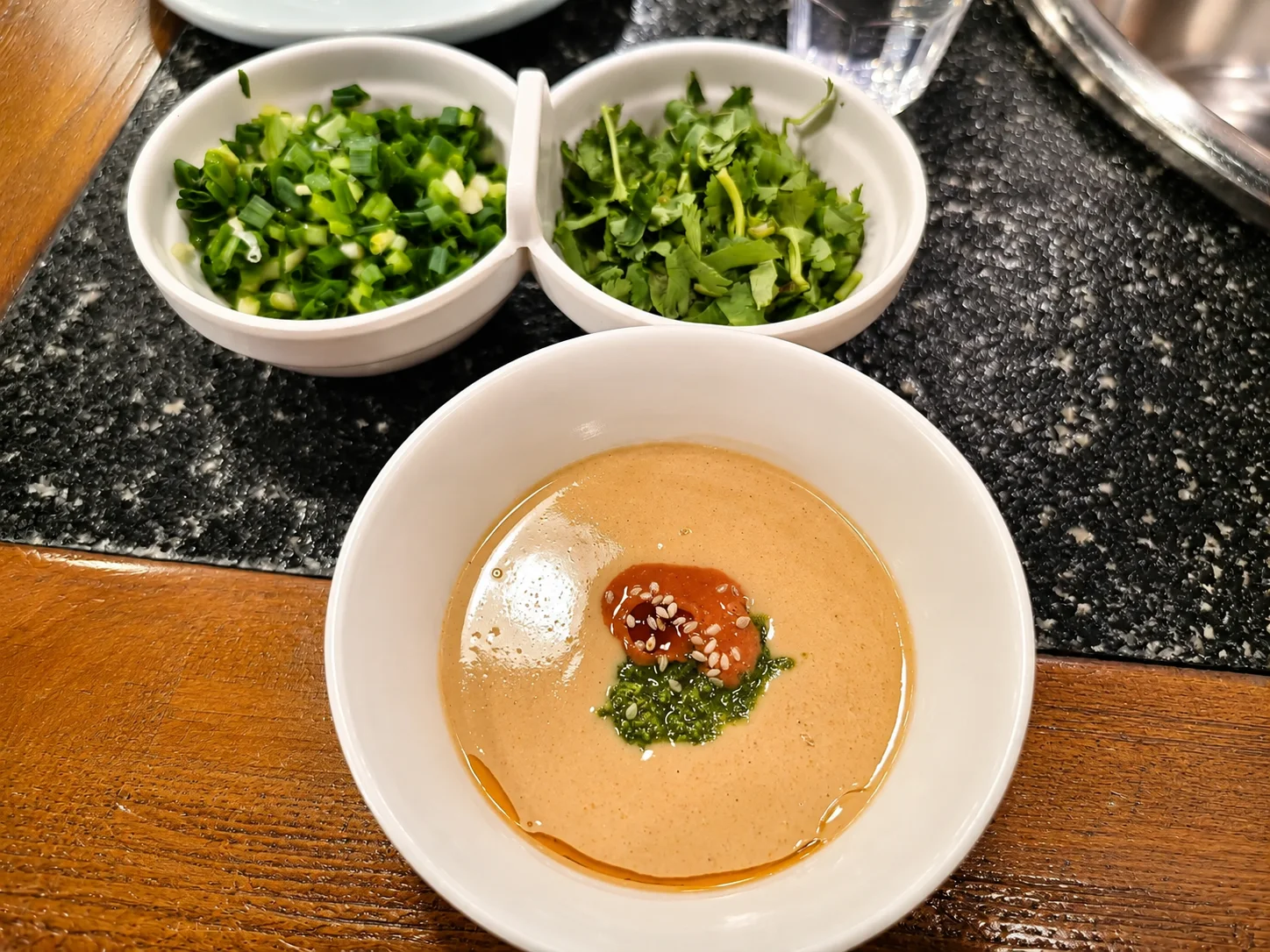
The sauce is thick, brown, and fragrant: sesame paste, fermented tofu, chive-flower paste, soy, sometimes a little shrimp oil or wine. It carries salt, funk, grassiness, and warmth. But even the sauce must know its place. It coats the meat; it does not bury it.
The first bite is not loud. It is warm lamb, sesame, a faint mineral breath from the pot, and the relief of eating something hot while the city outside stays hard and cold.
The Garlic That Waited All Summer
Beside the sauce sits sugar garlic.
It looks small enough to ignore. A white bulb, glossy from brine, sweet and sharp at the same time. But this is the slowest thing on the table.
The lamb cooks in seconds. Sugar garlic takes months. The cloves are selected, peeled, salted, washed, drained, sealed, rolled in jars, aired, and left until the raw violence of garlic turns round and crisp. By the time it meets the copper pot, it has already passed through a season.
This is the real rhythm of the meal: fire and patience in the same mouth.
Take a bite of lamb, and fat gathers on the tongue. Take a bite of sugar garlic, and the mouth opens again. The sweetness cuts through sesame. The sourness wakes the broth. The crunch breaks the softness of meat.
The pot teaches speed. The sugar garlic teaches waiting.
The Last Heat at the Table
As the meal goes on, the table grows quiet in a particular way. People talk less when the broth is right. Chopsticks move, steam rises, coats slip from shoulders. Cabbage, tofu, and glass noodles enter later, after the lamb has given the broth a trace of itself.
The copper darkens as the charcoal works. The window fog thickens. The sauce bowls are streaked at the rim. Sugar garlic skins collect in a small dish.
By the end, the pot is no longer just a utensil. It has become the center of the room. It has gathered the cold from people's hands, the smell of wool coats, the hunger of the evening, and the small satisfaction of one more slice cooked at exactly the right moment.
When the last lamb leaves the broth, someone usually keeps the pot boiling a little longer. No one says why. The fire is there, and winter is still outside.
In Beijing, copper-pot mutton does not need drama. It needs a cold night, a table willing to gather close, and a piece of lamb that knows it has only a few seconds to become perfect.