The Clatter of a Hundred Sticks
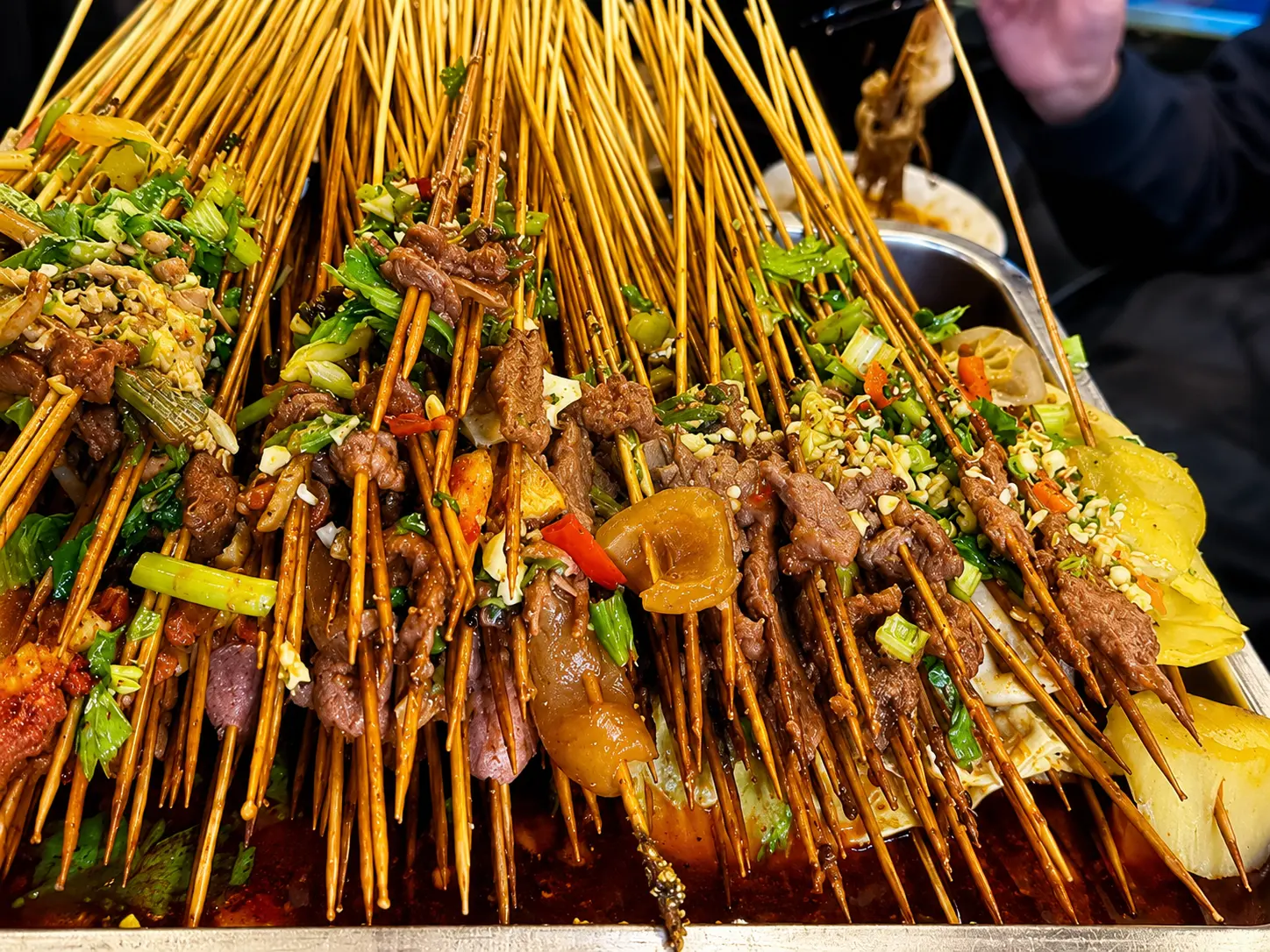
The basket hits the metal counter with a sound like dice in a cup. The cook, a woman in a blue apron stained red at the belly, sorts through the skewers without looking. She knows them by touch. The rough wood means beef. The smooth means kidney. The doubled skewer, two sticks bound with a rubber band, means pig's blood, coagulated into jiggling cubes that wobble when the basket moves.
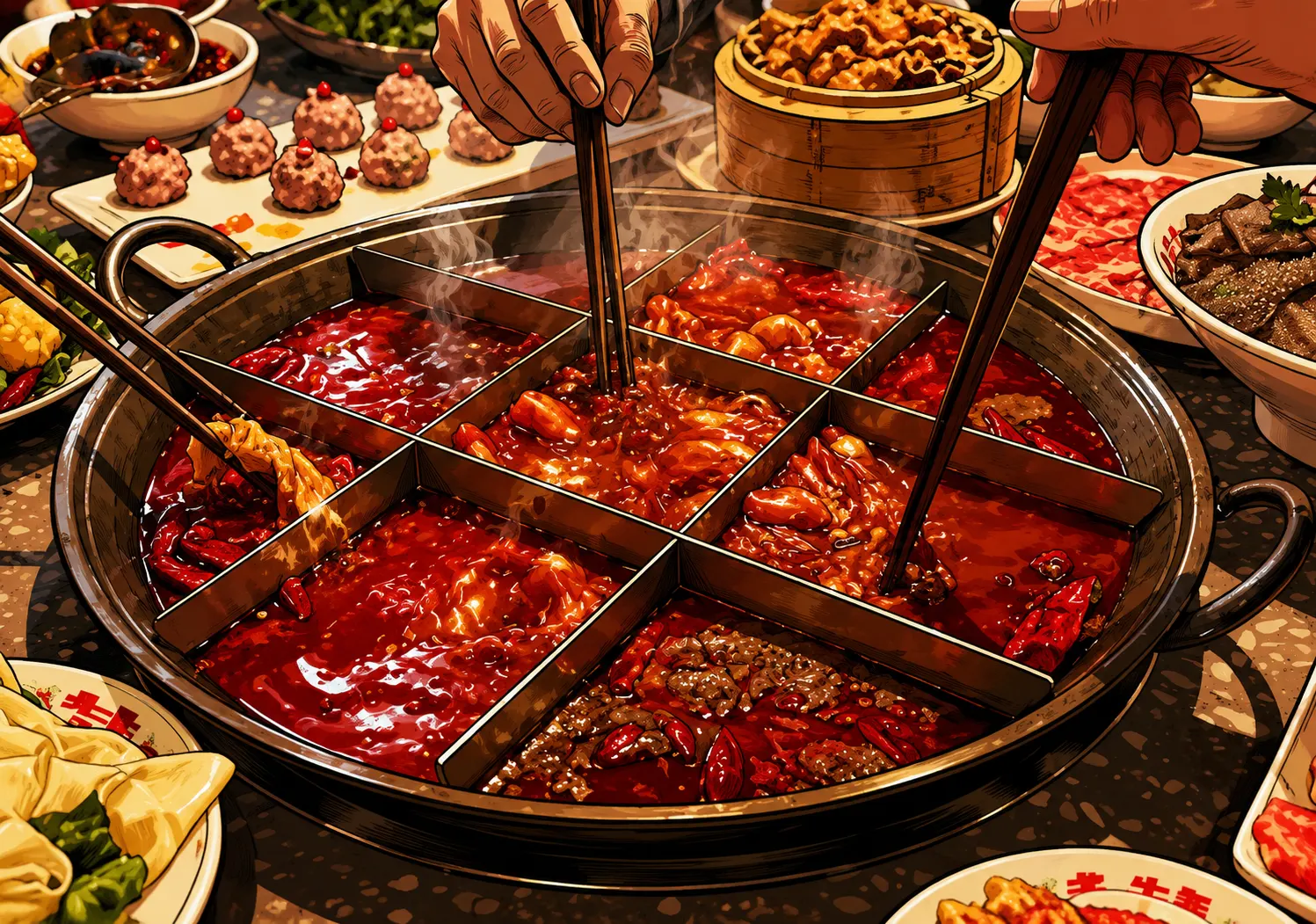
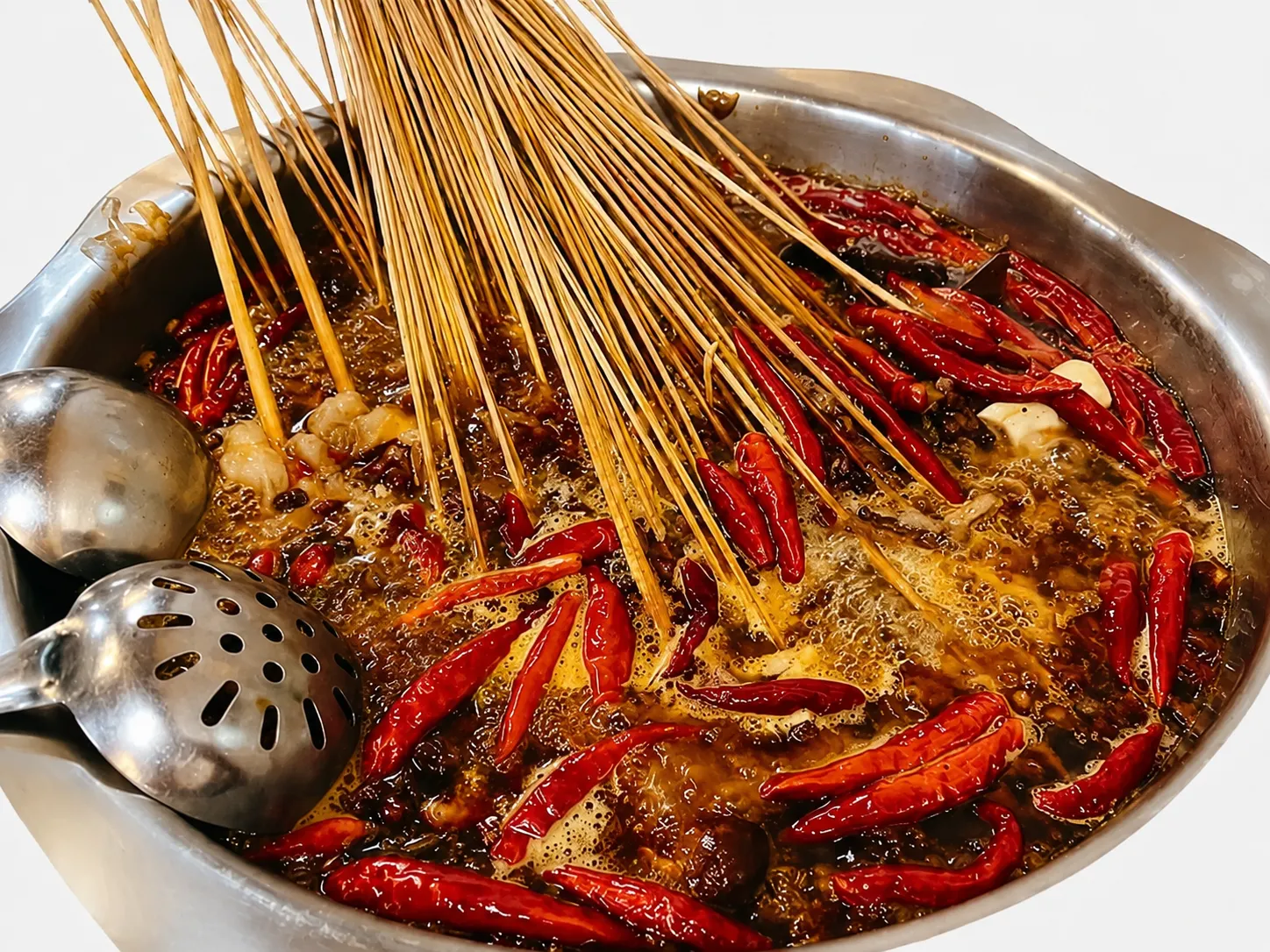
She lifts them in a bundle and drops them into the pot. The broth is already at a rolling boil, a violent red surface flecked with whole Sichuan peppercorns that look like tiny dried flowers and whole dried chilies that look like dead moths. The sound is immediate: a hiss, then a clatter as the skewers strike the bottom, then a deeper bubbling as the cold meat lowers the temperature for exactly four seconds before the gas roars back.
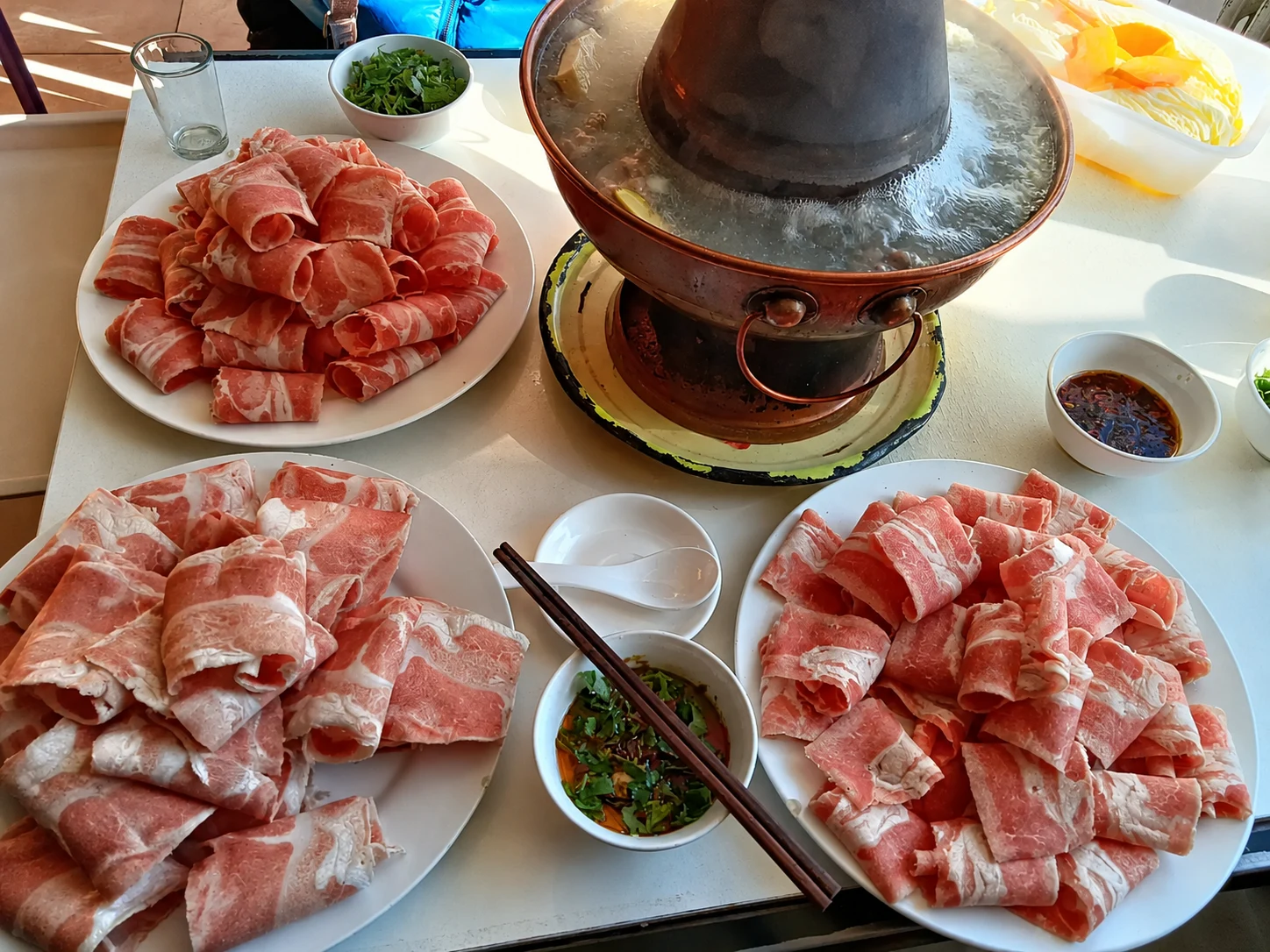
This is chuan chuan xiang. Not hotpot. Hotpot uses chopsticks and thin slices of meat that cook in seconds. Chuan chuan uses bamboo sticks, and the food stays in the pot until you are ready, bobbing in the spice like apples in a barrel.
The Refrigerator That Is a Garden
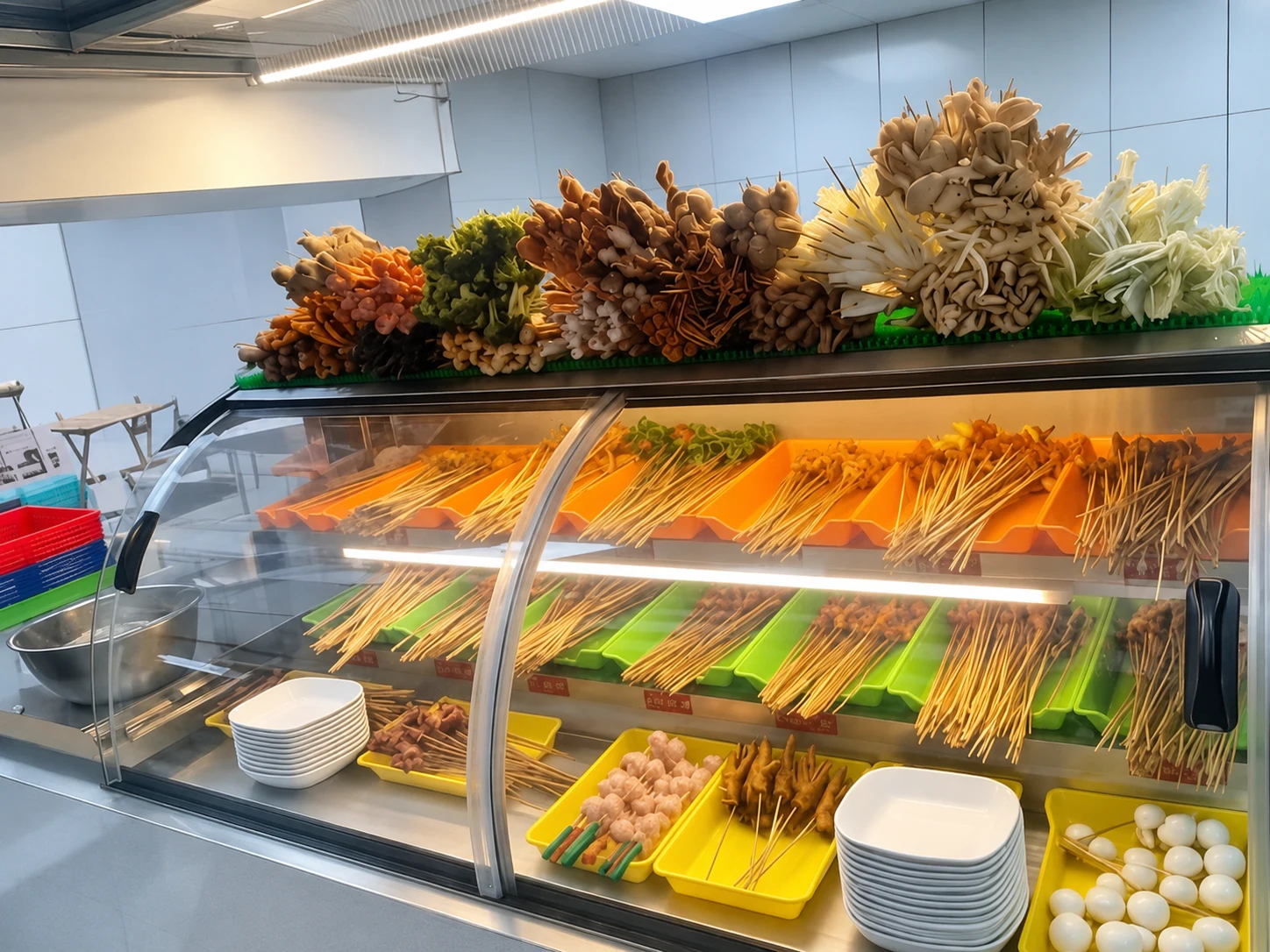
Before the pot, there is the wall. Every chuan chuan restaurant has one: a long glass refrigerator lined with metal trays, each tray crowded with skewers stuck upright in foam blocks. The colors are too bright to be real. Purple eggplant. White lotus root, its holes visible in cross-section like a stack of buttons. Green Chinese long beans, coiled into loops. Pink shrimp, gray quail eggs, brown tofu skin rolled tight as cigars.
You take a basket. You choose. A local might fill half the basket with beef wrapped around pickled chilies, a specialty that guarantees a sneezing fit. A cautious tourist might stick to potato slices and sausage. The price is per stick, counted at the end by weight. A full meal costs less than a taxi ride across the city.
The cook watches you choose. She does not write anything down. She will remember your face, your basket, and which pot is yours. There might be twenty pots bubbling in her restaurant, each one shared by strangers who do not speak but who reach into the same broth.
The Oil That Stains Everything
The broth is not water. It is beef tallow, rendered and clarified, then loaded with doubanjiang, the fermented fava bean paste that gives Sichuan cuisine its base note of umami and salt. Into this goes a pound of dried chilies, a cup of Sichuan peppercorns, star anise, cinnamon bark, and a handful of unknown roots that the cook buys from a man who carries them in a sack on the back of his motorcycle.
Your first bite will numb you. The peppercorns contain hydroxy-alpha-sanshool, a molecule that vibrates the touch receptors in your tongue at fifty cycles per second. Your mouth feels like it has touched a live wire wrapped in velvet. The chili capsaicin burns on top of the buzz. The combination is not pain. It is frequency.
You will drip. The broth clings to everything. It stains the table, your shirt, the corners of your mouth. Wet wipes are provided in packs of twenty. They are not enough.
The Wait That Cooks the Food
Chuan chuan demands patience. A potato slice needs five minutes to soften without dissolving. A quail egg needs eight. The beef, wrapped around that evil pickled chili, needs only ninety seconds, and if you leave it too long it becomes gray and tough.
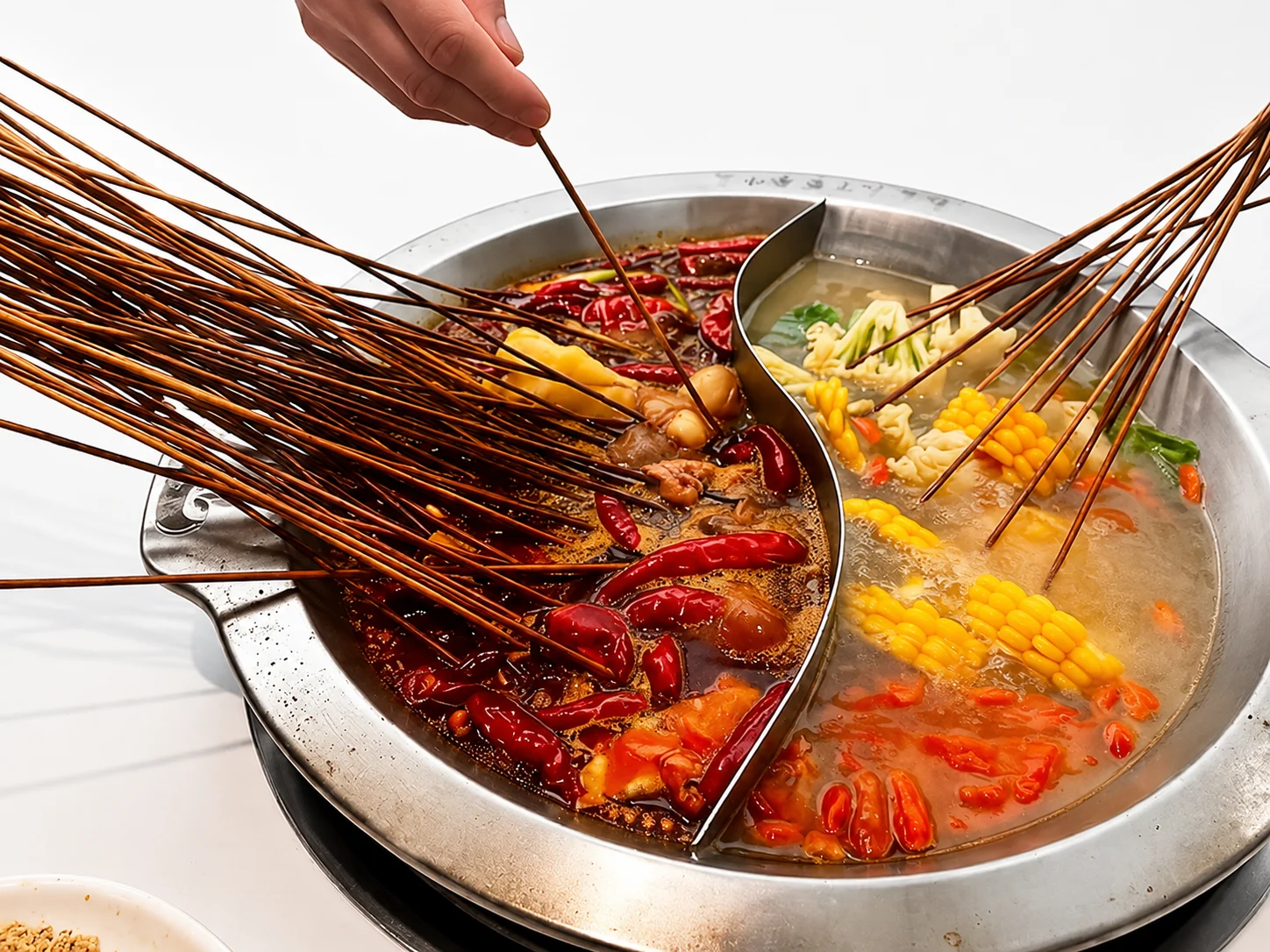
You learn to fish. The cook gives you a long-handled strainer, a wire mesh ladle barely wider than your fist. You probe the pot, stirring the skewers to keep them from sticking to the bottom, where the temperature is highest and the spices have settled into a sludge that will scorch anything left still for too long.
Your neighbors at the table do the same. You might share a pot with a taxi driver, a college student, and a grandmother who has been eating here since before the cook was born. No one introduces themselves. The broth is the introduction. The shared sweat on your foreheads is the conversation.
The Final Stick and the Bill
You stop when the basket is empty or when your lips feel like they have been stung by bees. The cook lifts your pile of used skewers, shakes off the excess oil, and drops them onto a scale. The number appears in red digital letters. You pay in cash or by phone. There is no tipping. The cook does not thank you. She has already turned to the next basket.
Outside, the alley is cooler. Your shirt sticks to your back. The smell of the pot follows you for blocks, embedded in your hair, your sleeves, the pores of your skin. You pass a convenience store and buy a bottle of iced soybean milk, the traditional antidote. It helps for thirty seconds. Then the buzz returns, a low hum in your gums that will last until morning.
The Pot Never Stops
Back at the restaurant, the cook adds more tallow to the pot. She scoops out the spent chilies, their color now brown and tired, and replaces them with a fresh handful, bright as lipstick. The gas flame clicks. The broth returns to its rolling boil.
A new customer arrives, a young man in office clothes, his tie loosened. He takes a basket and stands before the refrigerator, staring at the colors. The cook does not look up. She knows he will choose too many meat skewers, not enough vegetables, and he will regret it tomorrow. She also knows he will return.
The skewers hit the pot. The hiss. The clatter. The city of Chengdu eats again, one stick at a time, in the red light of a pot that never cools.