At noon in Xi'an, the lunch rush begins with a small metal sound.
The shopkeeper hooks a Bingfeng bottle under the opener fixed to the counter. One hard push. The cap jumps, hits the metal tray, and spins once before it lies flat. Around the room, no one turns to look. They have heard this sound since childhood.
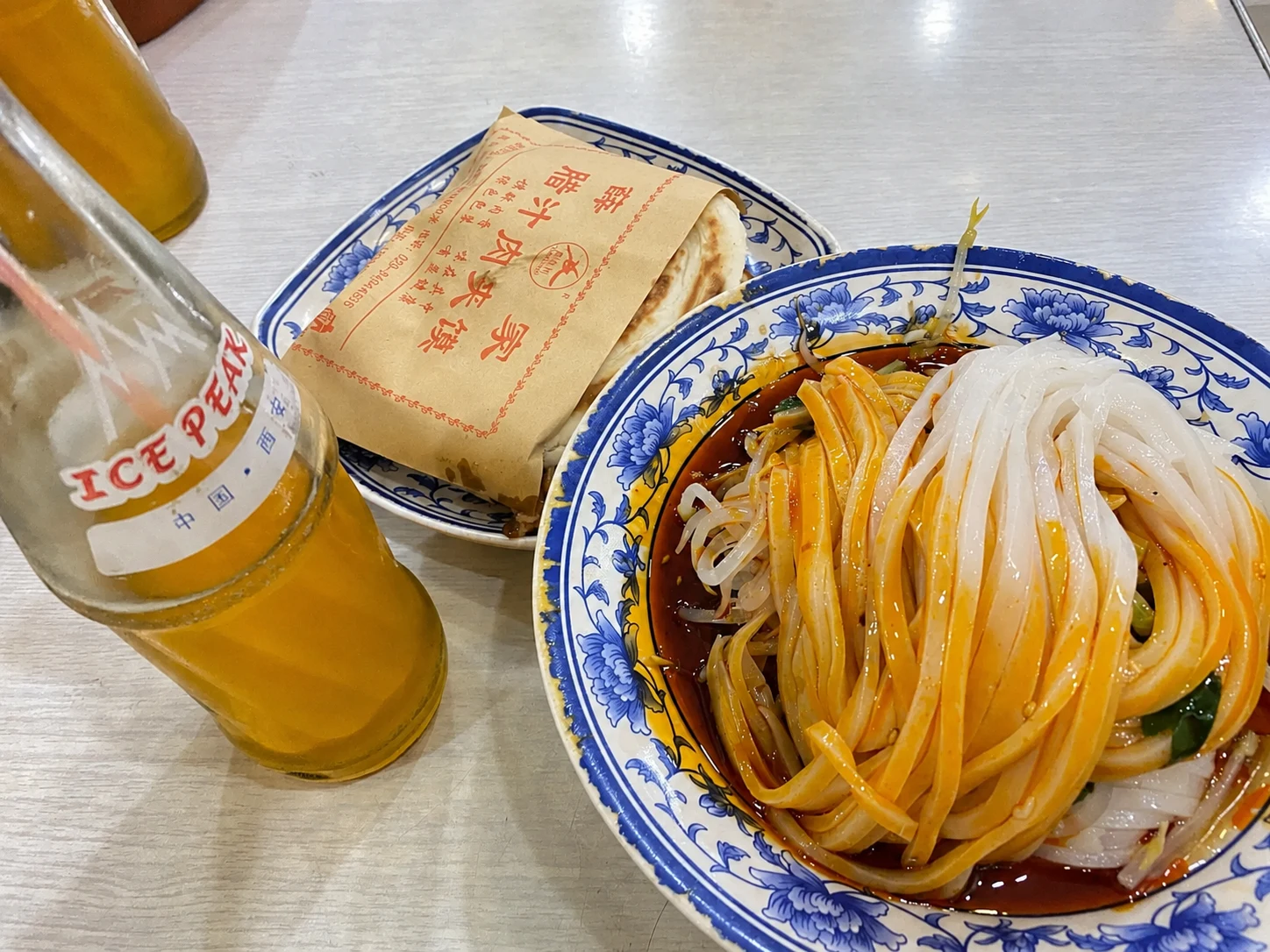
On the chopping board, pork waits in dark brine. On the side table, liangpi glows under chili oil. In the griddle, baiji mo flatbreads hold their heat. This is the Sanqin combo: roujiamo, liangpi, and Bingfeng. Three things, one Xi'an noon.
The Bread Is Cut Before It Cools
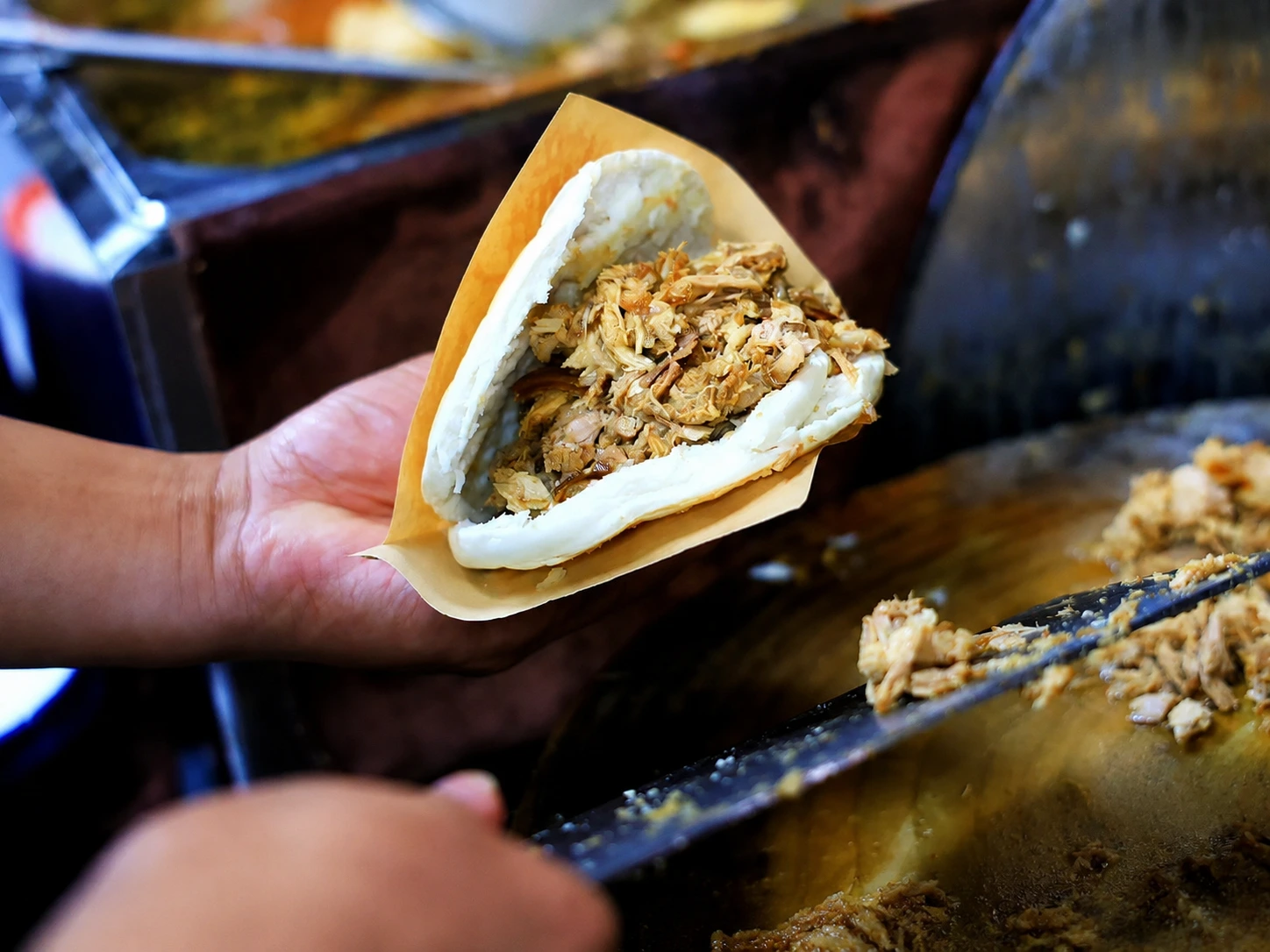
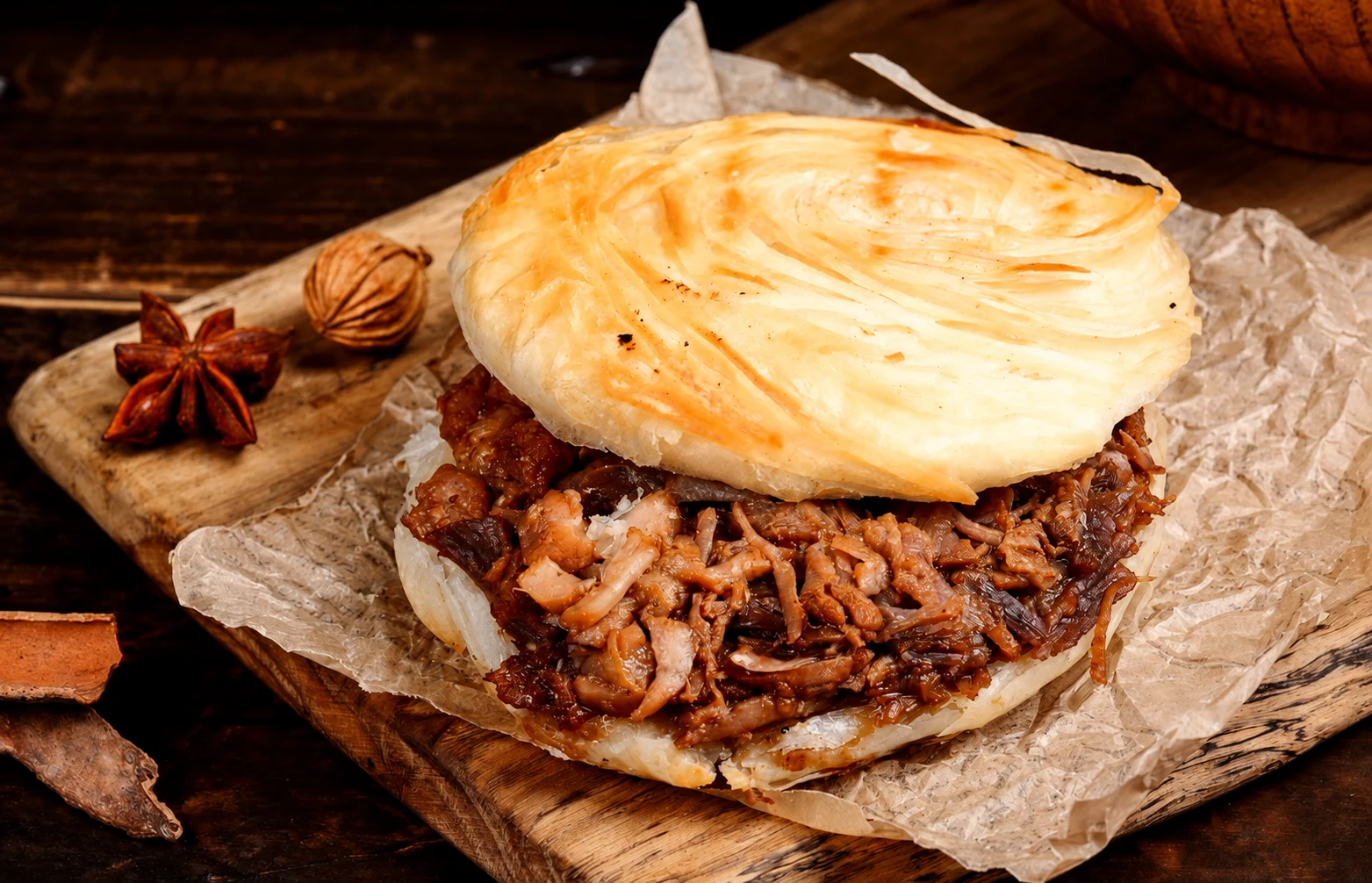
The vendor lifts a baiji mo from the griddle. It is pale, round, and firm, with little brown freckles on the surface. The outside is dry enough to crackle under the knife. The inside is layered and warm, still smelling faintly of wheat.
He does not open it all the way. A good roujiamo needs a hinge. The bread must hold the meat, catch the broth, and survive the walk back to the table.
The pork comes from a pot that looks older than the morning. Lazhi rou is not hurried meat. It has surrendered slowly to brine, spice, soy, and fat. The vendor pulls out a piece, lays it on the board, and works with two cleavers. Lean meat gives chew. Fat gives gloss. The chopping has a rhythm: heavy, light, scrape, gather.
Then comes the spoonful that decides the sandwich.
The vendor dips into the brine and lets a little dark juice fall over the chopped meat. Not too much. Enough to wake it. Enough that the bottom of the bread will become the best part later.
The roujiamo is wrapped in paper and passed across the counter. It is too hot to grip comfortably. The paper darkens where the broth finds a path.
Cold Skin, Hot Noon
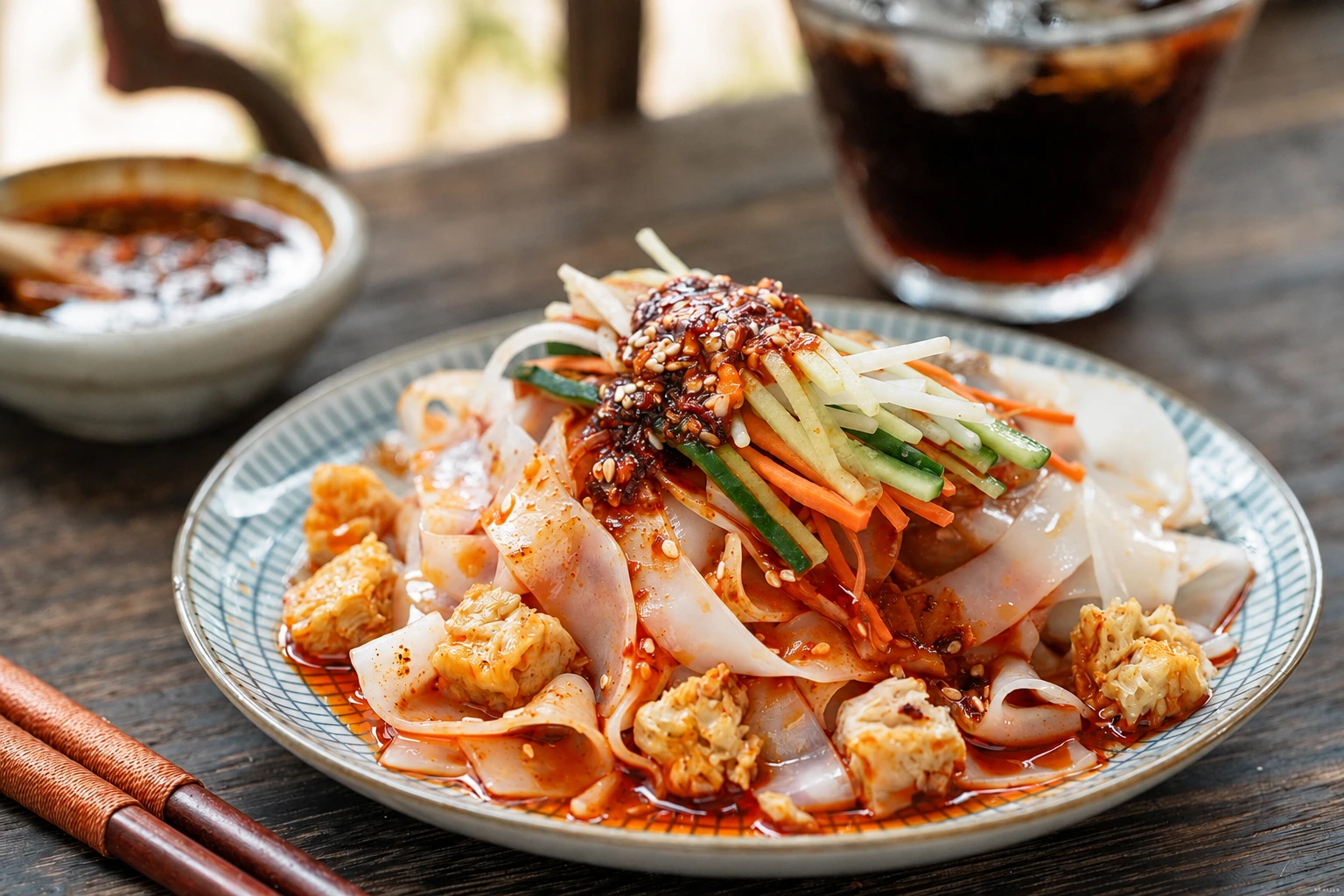
The liangpi is mixed only after the order is called.
Wide ribbons of cold starch noodle slide into a metal bowl. Cucumber. Gluten pieces. Garlic water. Vinegar. Sesame paste. Chili oil. The vendor turns the bowl with one hand and folds everything with the other. The noodles change color in seconds, from pale to red-gold, from plain to awake.
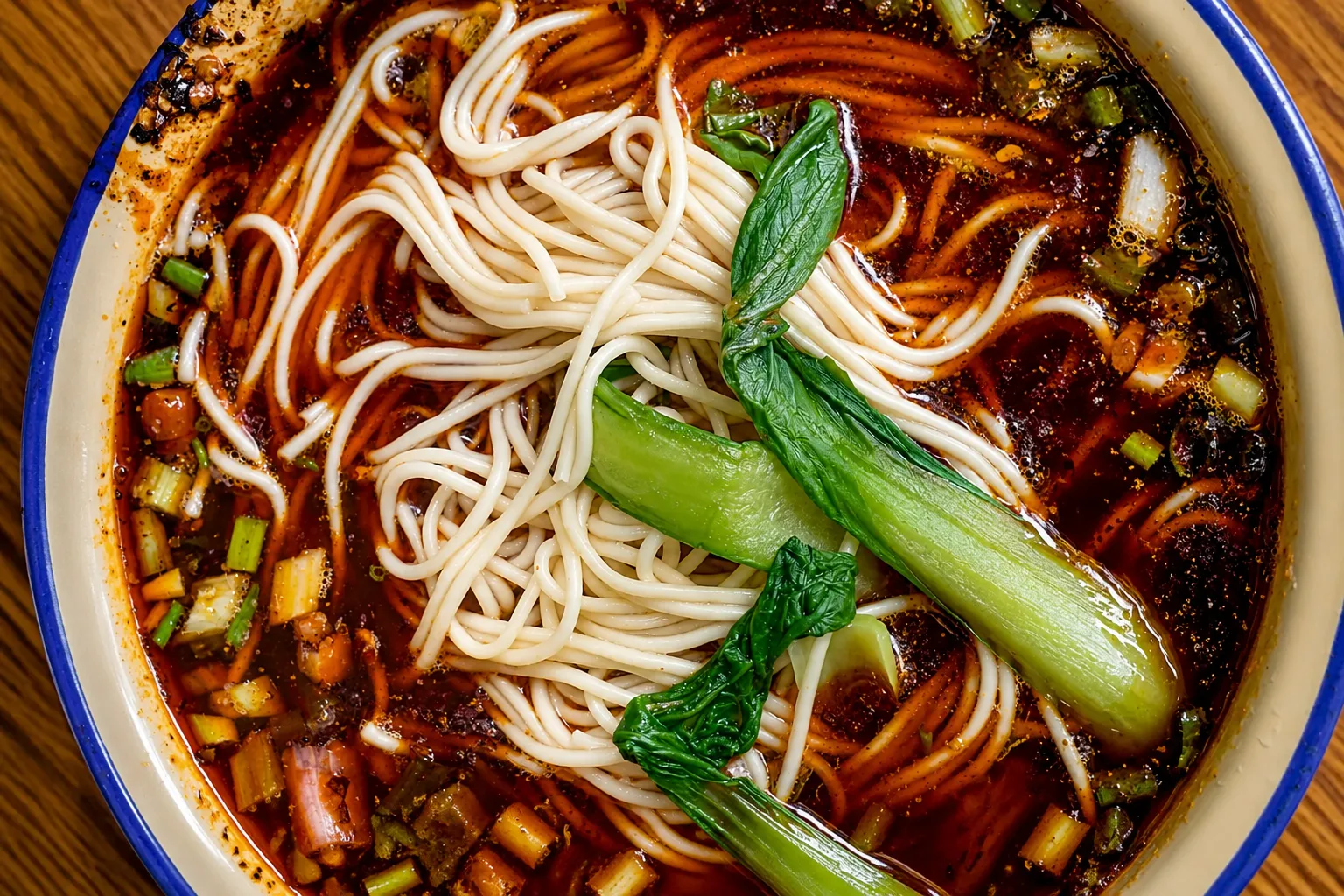
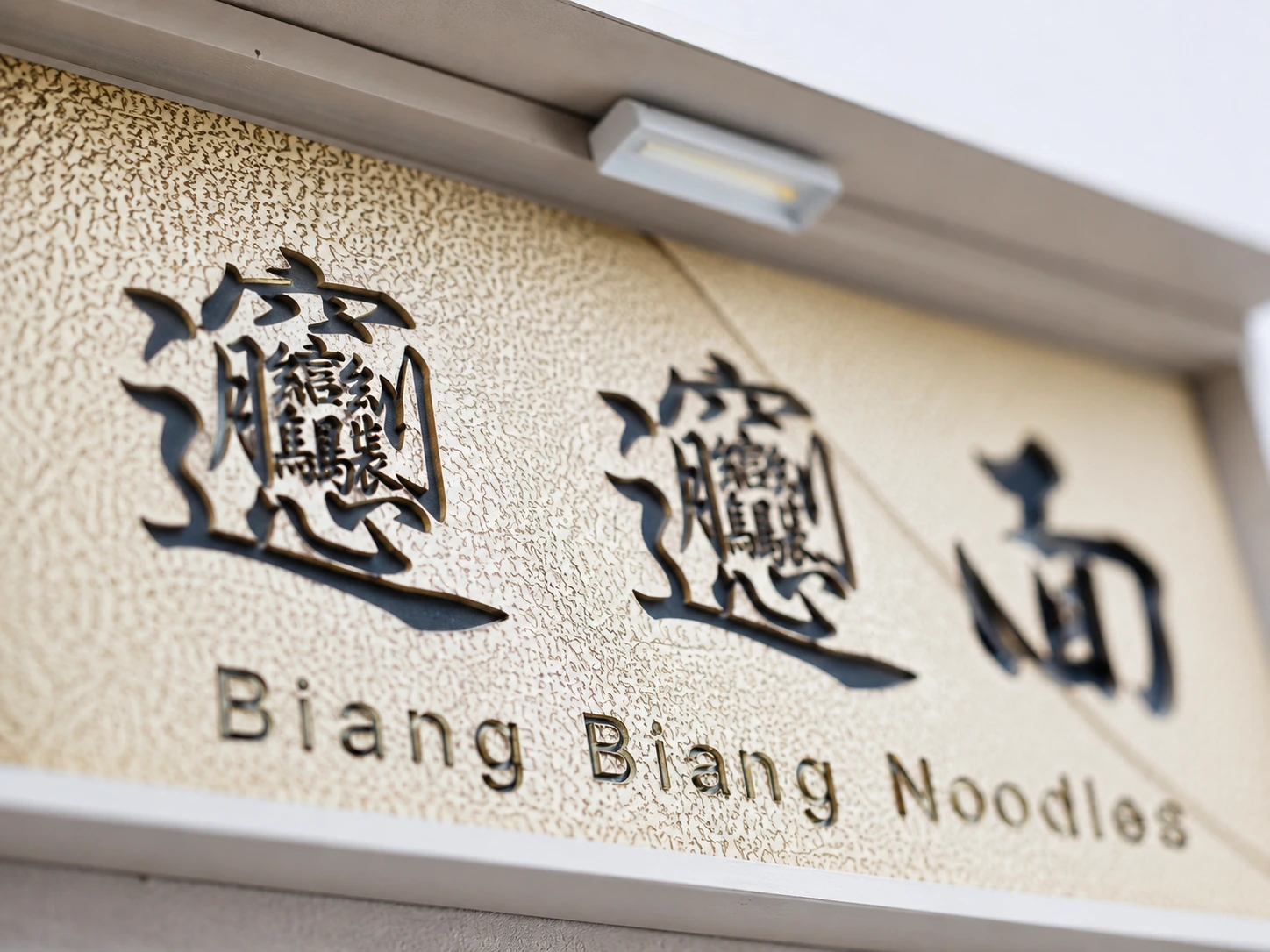
Liangpi cools where Xi'an's biangbiang noodles arrive hot and belt-wide, but both begin with the city's habit of asking wheat to carry an entire meal.
Xi'an can be dry and bright at noon. The city wall stores heat. Bus stops shimmer. Office workers and students come in hungry, impatient, already half-thinking about the afternoon. Liangpi cools the mouth without making the meal gentle. Vinegar cuts. Garlic rises. Chili oil leaves a slow glow.
The combo works because the roujiamo is hot, fatty, and close-fisted, while liangpi is cold, sour, and slippery. One makes you lean in. The other lets you breathe.
The Bottle That Closes the Circle
Bingfeng is not there to be elegant. It is orange, sweet, fizzy, and direct. Born in Xi'an in the 1950s, it stayed close enough to the city that the glass bottle became part of local muscle memory.
The first sip usually comes too soon, while the mouth is still full of garlic and chili. The bubbles push upward. The sweetness cuts through the fat. The cold glass sweats in the hand.
For many locals, this is not nostalgia arranged for visitors. It is simply how the meal ends correctly. The empty bottle goes back into the crate by the door. Another bottle opens. Another cap spins.
The Sanqin combo is not three famous snacks placed together. It is one solution to noon: hot, cold, sour, sweet, fast.
The Last Bite Knows Everything
The final bite of roujiamo is always heavier than the first. The lower half of the bread has been drinking quietly. It holds meat juice, fat, and wheat in one warm pocket. If you eat too fast, you miss it.
The liangpi bowl is nearly empty, but the bottom still holds red oil, vinegar, sesame paste, and a few broken pieces of gluten. The Bingfeng bottle has one orange finger left. A local often saves that last sip until the food is gone.
Then the bottle tips. The bubbles rise. The mouth resets.
Outside, Xi'an keeps moving: buses at the curb, delivery scooters, old men in the shade, students crossing the street with backpacks. Inside, a paper wrapper is folded, a bowl is cleared, and the empty Bingfeng bottle returns to the crate.
Some meals ask to be remembered because they are rare. This one asks because it happens every day.