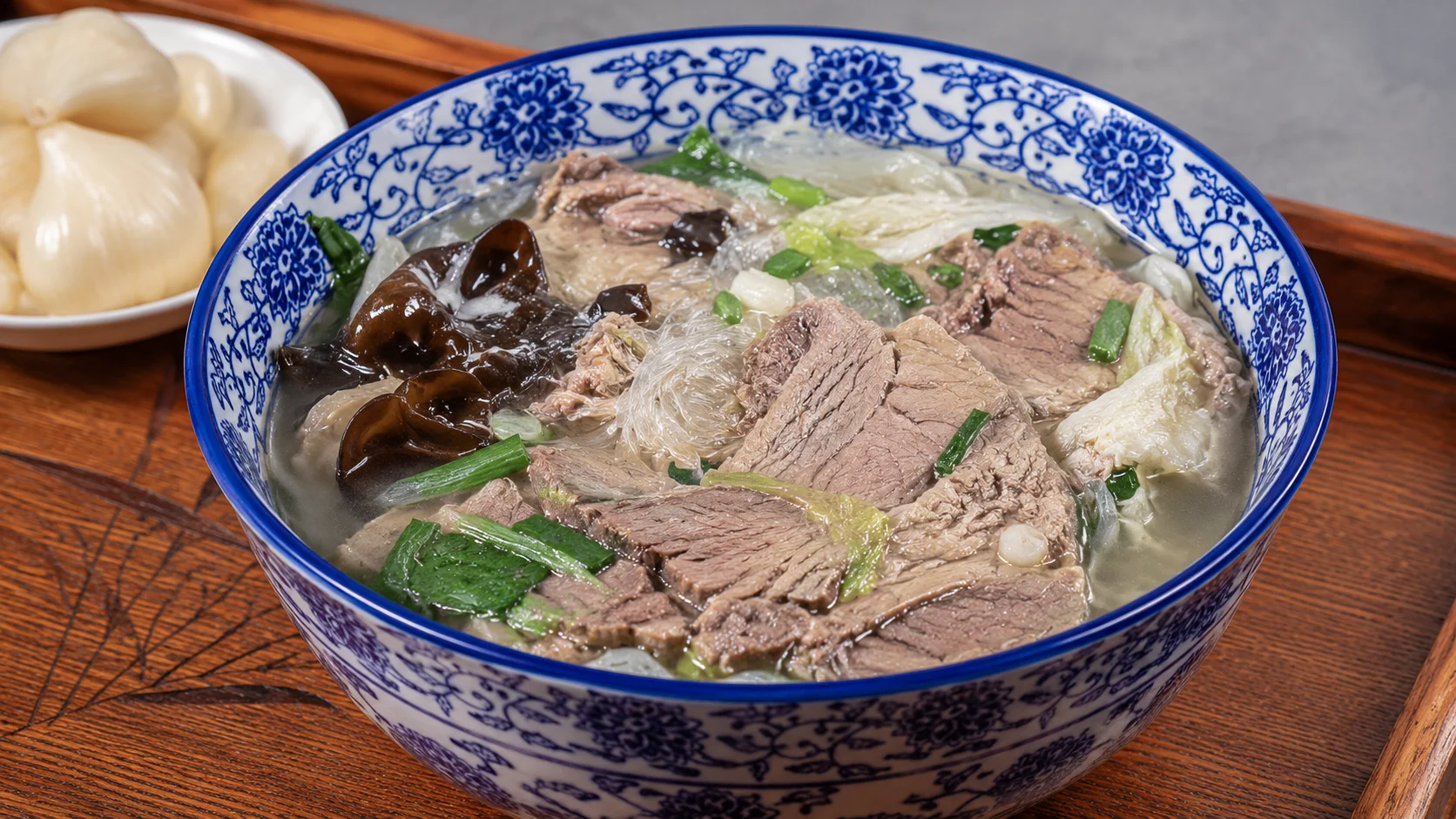
In Xi'an, some meals are not ready when they reach the table.
At a lamb shop in the morning, the server sets down a bowl and two hard rounds of tuotuomo bread. The bread is pale, dense, and stubborn. No soup yet. No lamb yet. Just wheat and time.
The diner lowers his head and begins to break it.
The Meal Starts in the Hands
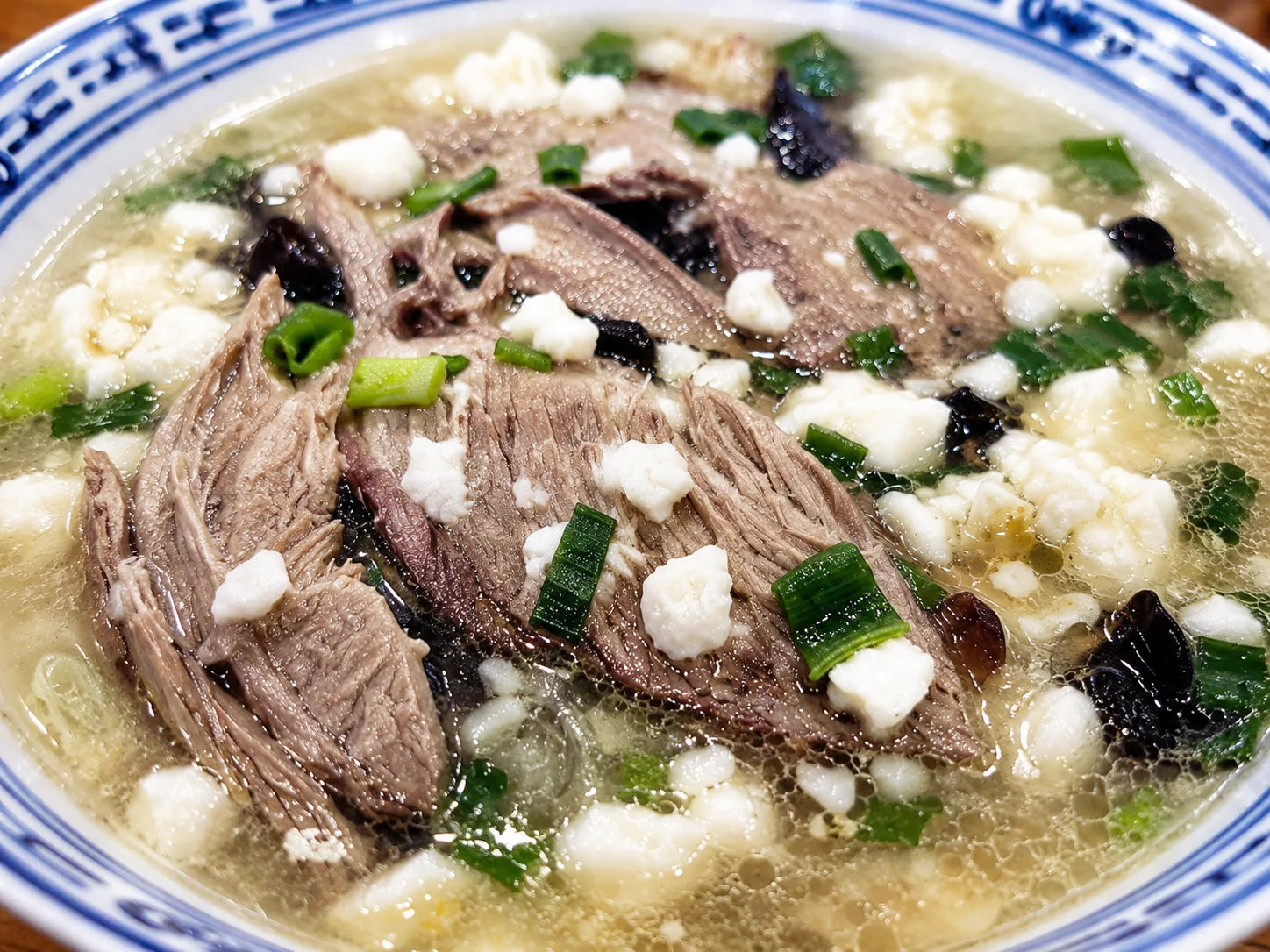
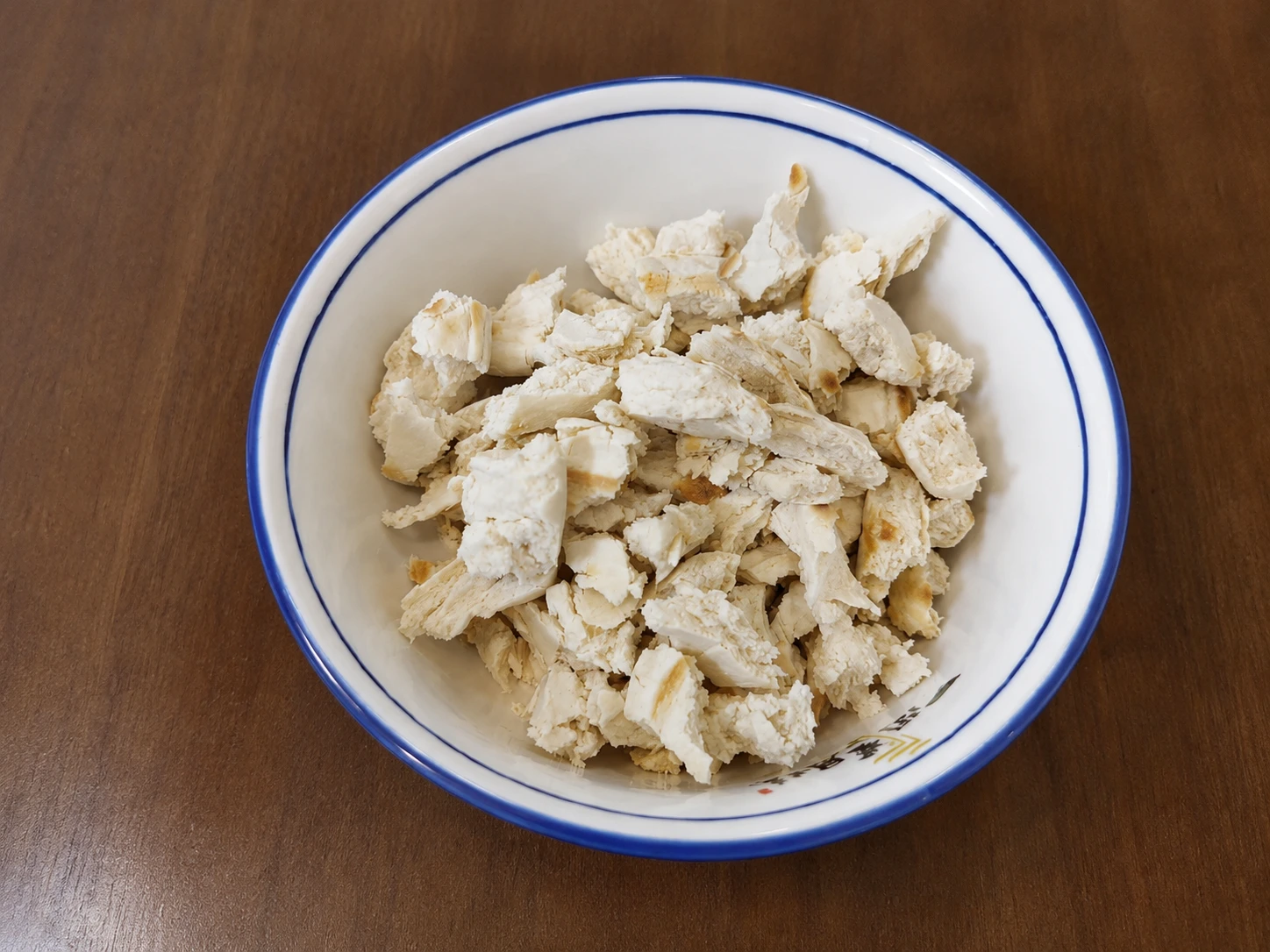
The old rule says the bread should be torn small, close to the size of soybeans. That sounds simple until you try it. The bread resists. The fingers press, split, pinch, and drop each piece into the bowl. Large pieces are easy. Small pieces require patience.
Around the room, people talk while their hands keep working. Bread cracks softly. Bowls wait. A practiced diner creates a field of even crumbs. A hurried diner leaves rough chunks that will later betray him in the soup.
This is the rare restaurant meal where the customer writes part of the recipe.
The kitchen can control the broth. It can slice the lamb and time the boil. But the bread has already been shaped by the hands at the table.
The Bowl Goes Away
When the bread is ready, the bowl leaves the table.
That is the strange intimacy of yangrou paomo. You give the kitchen something you have touched piece by piece. The cook receives your patience, or your impatience, and turns it into a bowl.
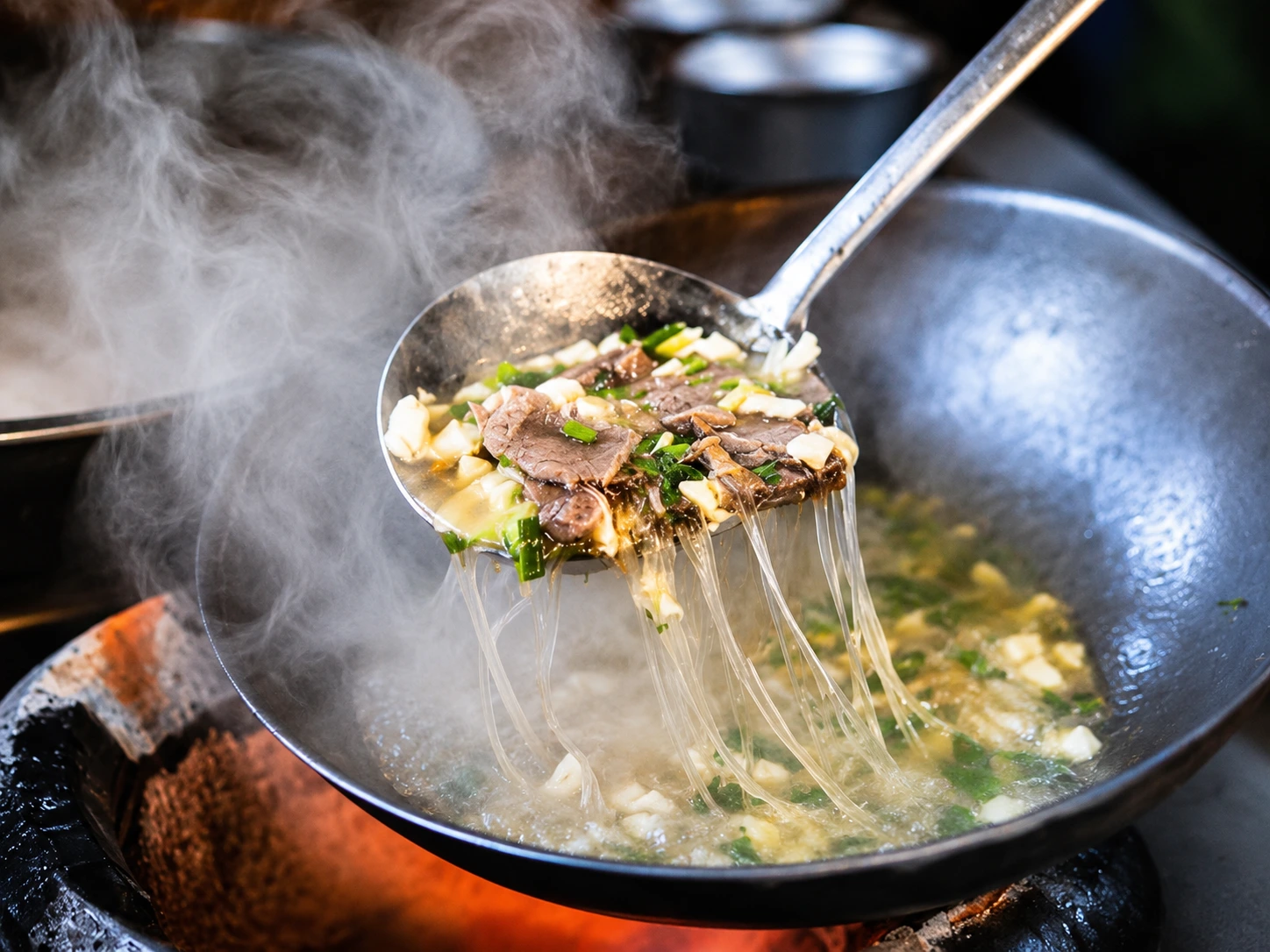
In the kitchen, lamb stock comes to a boil. The torn bread is added with sliced lamb and often glass noodles. The bread does not simply float. It drinks. Small pieces soften deeply and thicken the bowl. Larger pieces keep a firm center. Every decision made by the fingers returns in texture.
When the bowl comes back, it is no longer just soup with bread.
It is pale, fragrant, and heavy. Lamb fat shimmers on top. Cilantro gives a green lift. Glass noodles slip between the bread. Sugar garlic waits beside it, crisp and sweet-sour, ready to cut through the richness.
The first spoonful is gentle. Then the wheat begins to speak. The broth has entered it. The bread has become part of the soup without disappearing.
In paomo, the diner does not wait for the cook. The cook waits for the diner.
A Bowl That Reveals Temperament
Old diners notice the bread before they taste the soup.
Tiny, even pieces suggest someone who came to eat properly, not merely fill the stomach. Big pieces mean the center will stay chewy. Some people like that. Others want the bread to absorb everything until the bowl feels almost creamy.
There are names for different levels of broth: dry styles, one-mouthful soup, water surrounding the city. But the names matter less than the feeling. Paomo can be dense and serious, or looser and easier. It can sit in the body like a winter coat.
The shop grows steamy. The door opens. Morning traffic begins outside. Inside, people bend over their bowls, and the room smells of lamb, wheat, garlic, and broth that has been simmering longer than anyone has been awake.
The Clearer Morning
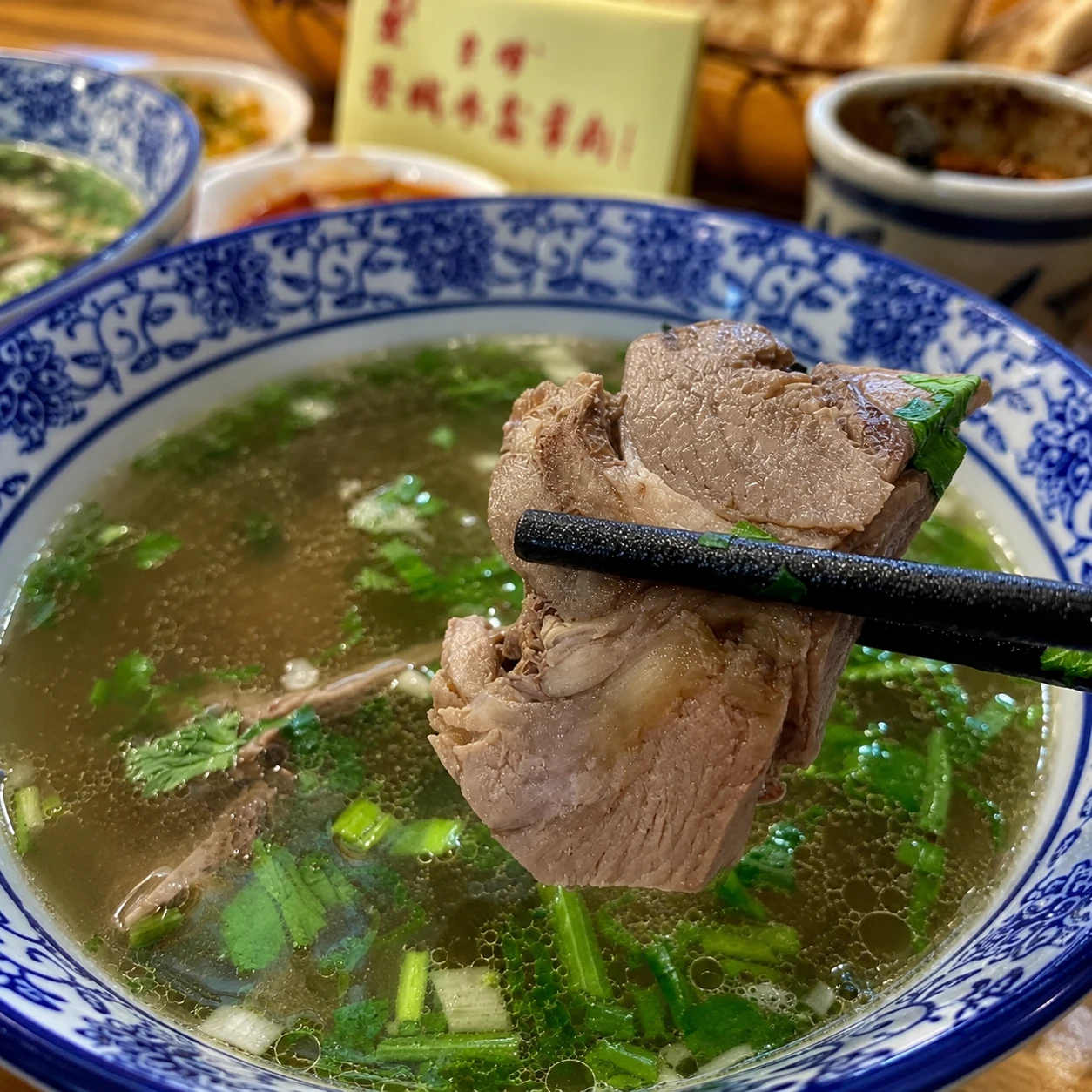
Shuipen yangrou belongs nearby, like a relative with a different temperament.
It is clearer, quicker, more open. Lamb and broth come forward without asking the diner to break bread into the bowl. The bread may be eaten alongside or split and filled. The soup stays cleaner on the tongue. It is the kind of breakfast that warms without weighing down the whole morning.
Paomo is inward. It pulls the hands, the kitchen, and the bowl into one slow act. Shuipen is outward. It gives you broth, lamb, and bread in a cleaner line.
Together, they show how Xi'an thinks about wheat and lamb. Wheat is not a side dish. It is a tool, a sponge, a measure of patience, sometimes even a test of character.
The Last Pieces
At the end of paomo, the spoon grows slower. The bottom of the bowl holds the softest bread, the deepest broth, the small pieces that took the longest to tear. A half head of sugar garlic sits on the side plate, its bite still sharp enough to wake the mouth.
Outside, the old city is fully moving now. Buses circle the wall. Shops lift shutters. The morning has passed from blue to bright.
Inside, a new diner receives two hard rounds of bread and an empty bowl.
The kitchen waits.