On January 4, 1981, the Yangtze River stopped.
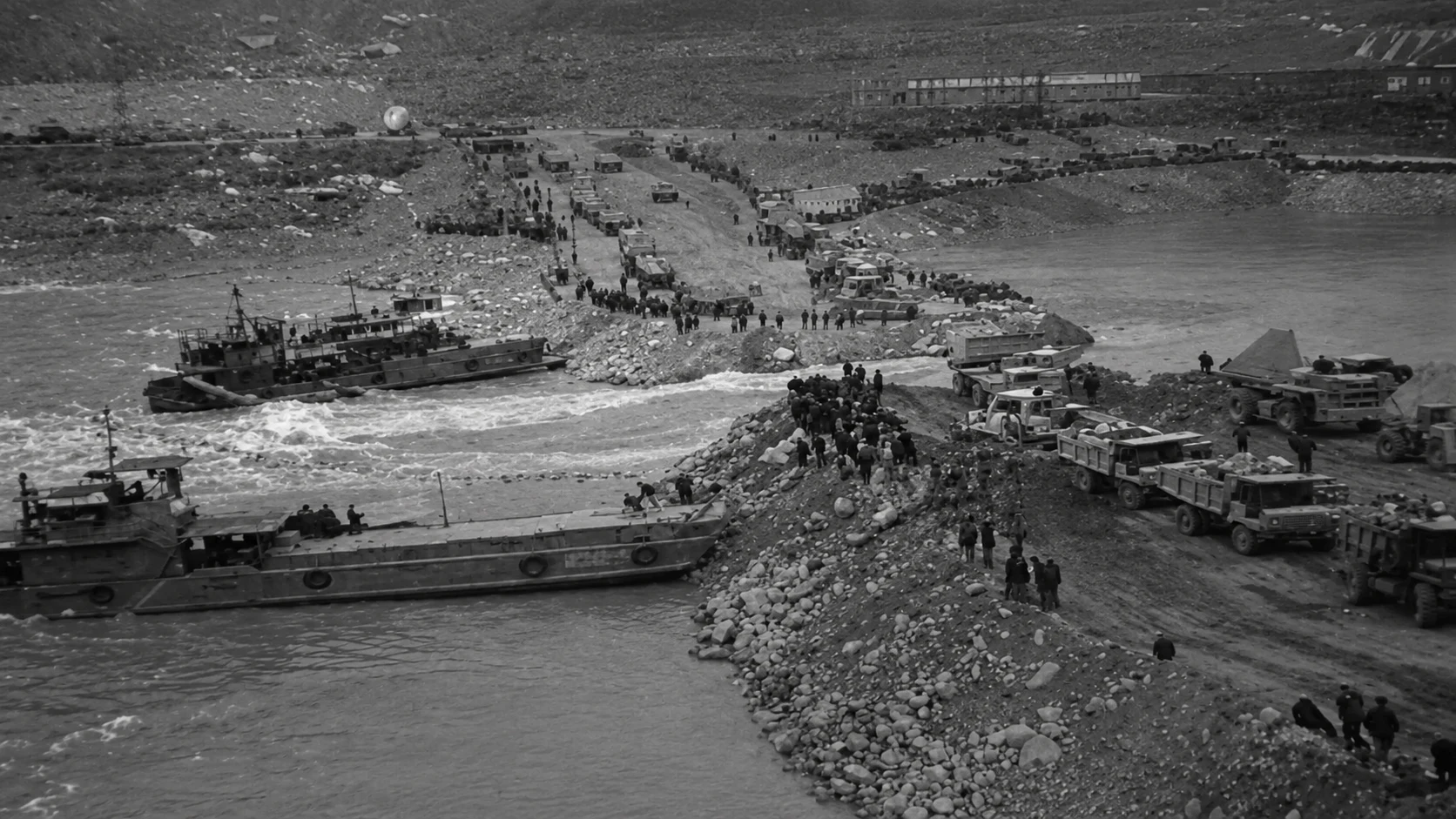
Not gradually. Not symbolically. The gap in the coffer dam across the main channel had narrowed to twenty meters —the width of a two-lane road —and the river, which drains one-fifth of China and carries more water than any river on earth except the Amazon, was funneling its entire winter flow through that opening. The water tore through at seven meters per second, fast enough to knock a grown man off his feet and carry him half a kilometer before he could surface.
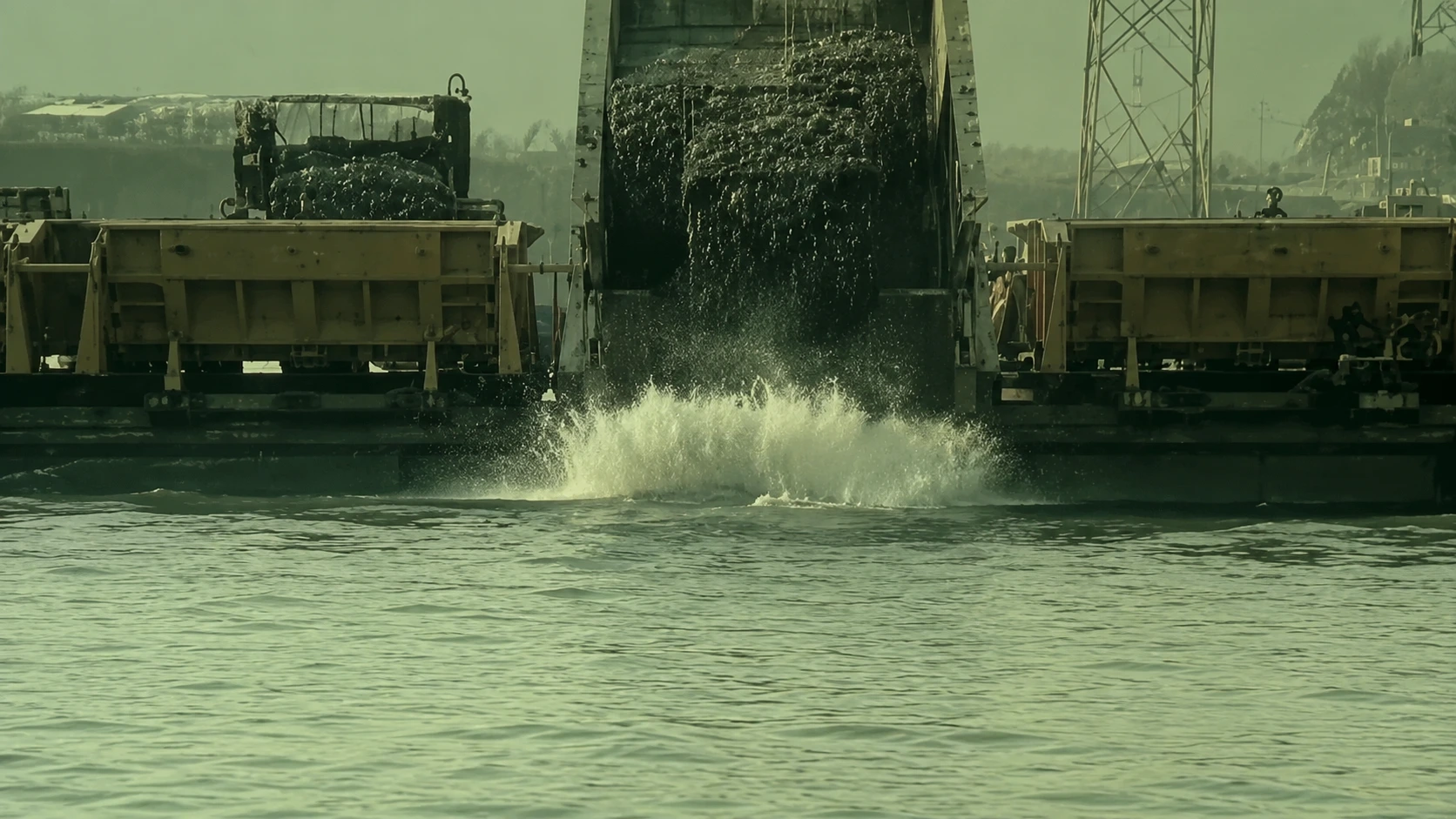
Workers on both banks had been throwing stone into the gap for hours. Nothing held. A twenty-five-ton concrete tetrahedron —a pyramid of solid cement the size of a small truck —was dropped into the torrent. The river flipped it over and swept it downstream without slowing down.
Someone had the idea of wiring four of them together. A cluster the weight of ten elephants. Two of these clusters, four hundred tons of concrete and steel cable, were pushed into the gap from both banks at once. The water roared, surged —and stopped.
The sound that followed was not cheering. It was silence. Ten thousand workers standing on the banks of the Yangtze, listening to the absence of a noise that had been there since before human beings had a word for river.
A man took off his hard hat. He did not put it back on for a long time.
A Poem Written After a Swim
Twenty-five years before that silence, in June 1956, Mao Zedong swam across the Yangtze at Wuhan. Afterward, he wrote a poem. Its most famous lines imagined the river's future:
Walls of stone will stand upstream to the west<br> To hold back Wushan's clouds and rain<br> Till a smooth lake rises in the narrow gorges.
The poem planted an idea in the national imagination: the Yangtze, wildest and most dangerous of Chinese rivers, could be tamed. But between a poem written after a swim and a dam that could actually hold the river, there was a gap no political will could close on its own. Someone had to prove it was possible. Someone had to build a dam that was not the dream —only the dress rehearsal.
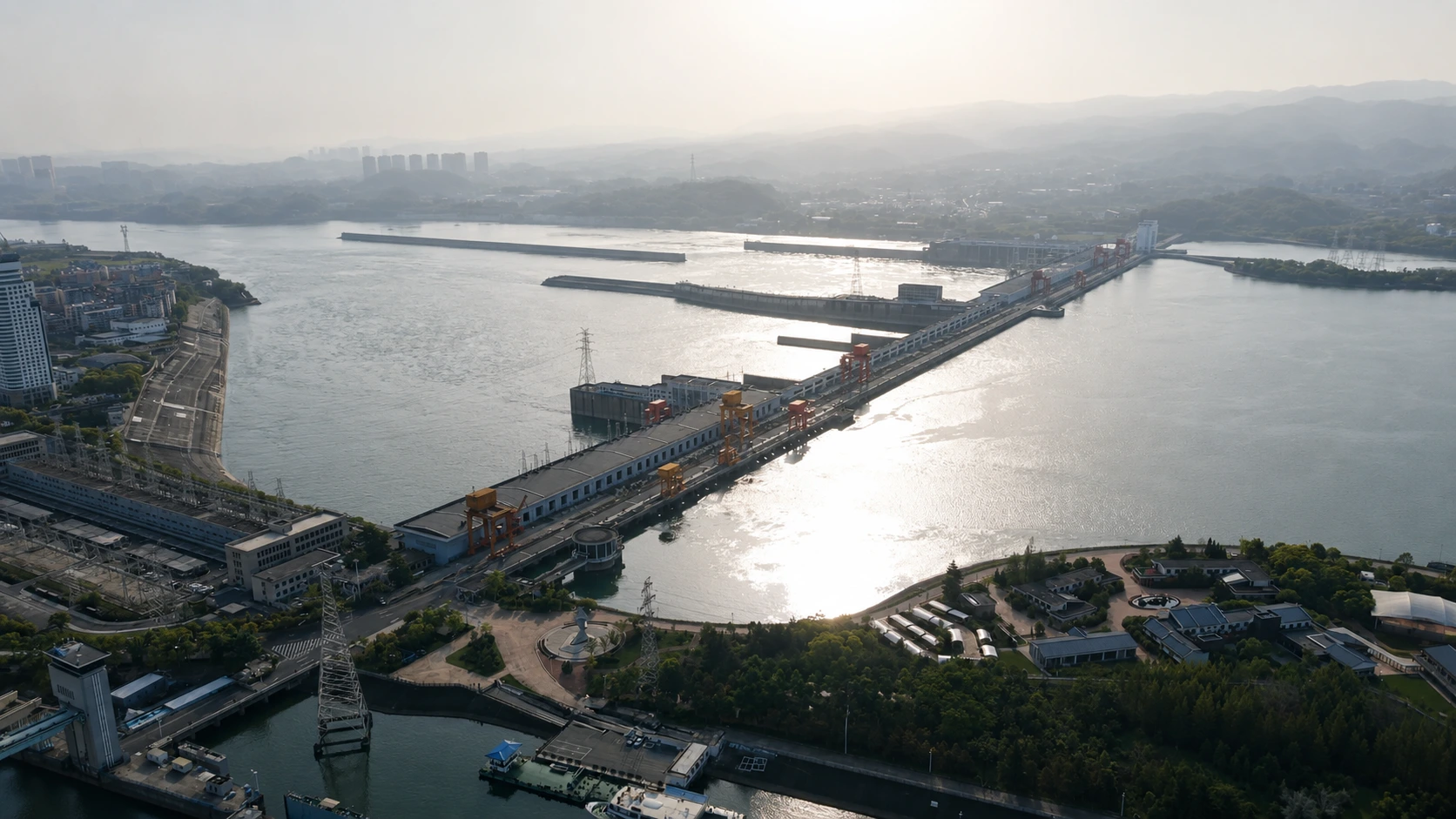
On December 26, 1970, Mao wrote a short approval on the document that authorized construction: "I approve the building of this dam." Four days later, eighty thousand soldiers and workers gathered in the winter cold to break ground. The project was named after the place: Gezhouba, an island in the middle of the Yangtze at Yichang.
The dam would be the People's Republic's first across a major river. No one involved had ever attempted anything on this scale. The Soviet engineers who might have advised them had withdrawn years earlier, taking their blueprints. What remained was a workforce armed with shovels, bamboo carrying poles, and a belief that if enough people pulled hard enough at the same time, even a river could be moved.
The project nearly collapsed. In December 1972, construction was halted. The designs were incomplete. The geology was worse than expected. The dam sat silent for two years while engineers recalculated. When work resumed in October 1974, the question was not whether the dam could generate power —it was whether it could be finished at all.
The Gate That Breathes
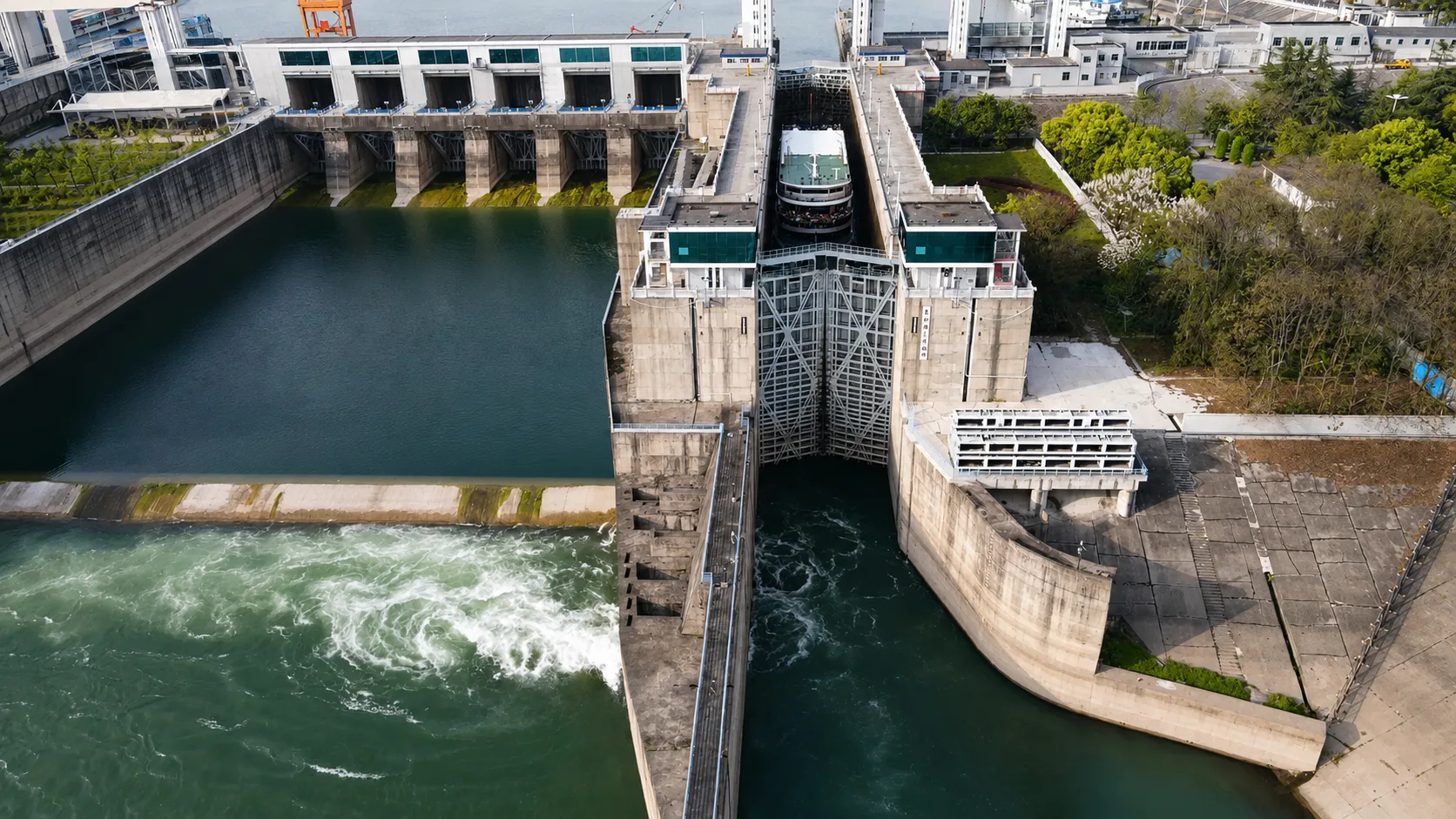
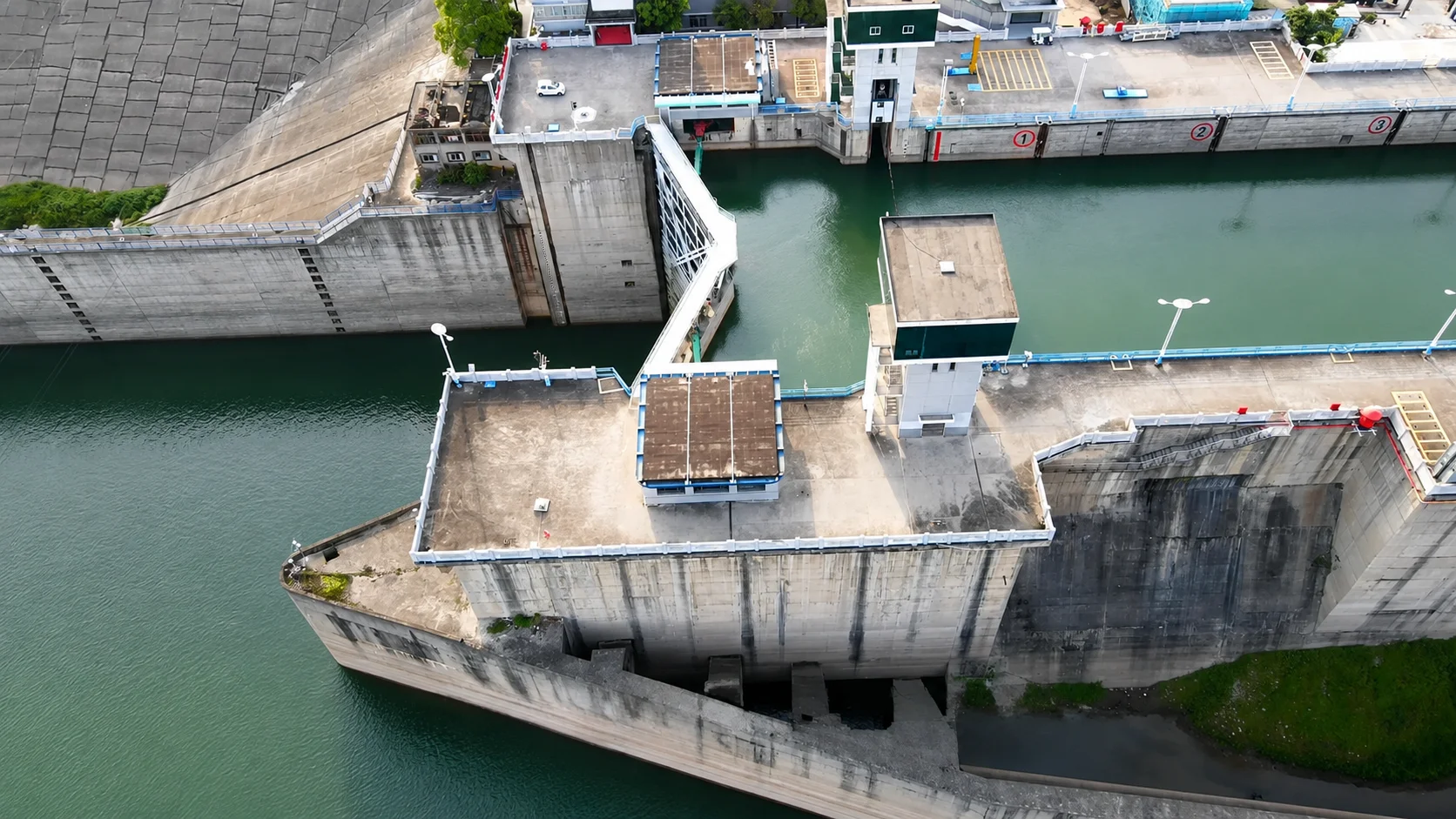
Today the dam is not silent. Its most visible organ is not the turbines but the ship locks.
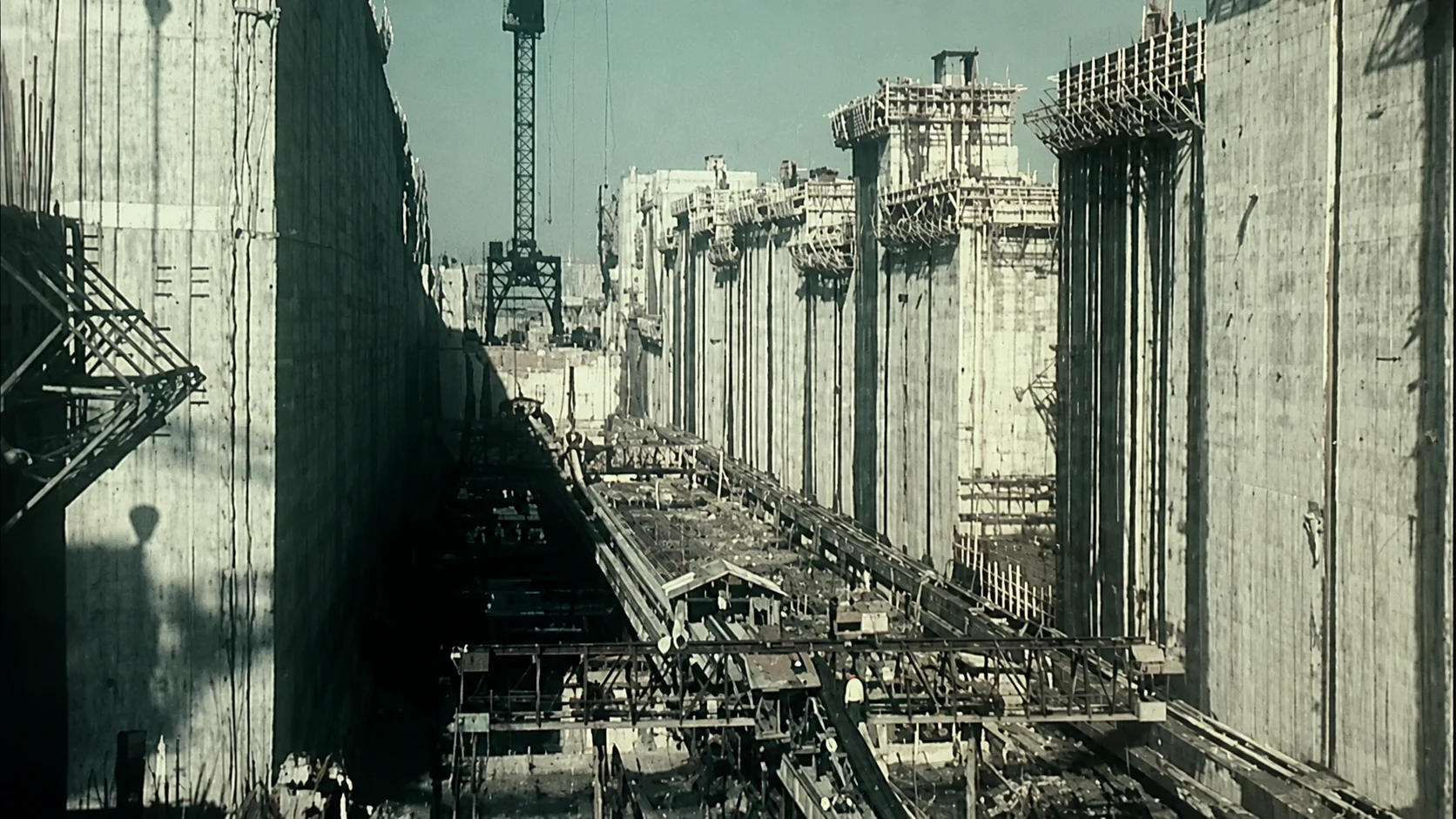
Three locks cut through the wall of concrete: two large chambers for cargo fleets of up to sixteen thousand tons, and a smaller one for passenger vessels. The lock gates are the height of a ten-story building, each leaf weighing six hundred tons. They do not slide. They swing —enormous steel doors hinged at the concrete edge, opening and closing like the covers of a book too heavy for any person to lift.
A Chongqing freighter enters Lock No. 2 at dawn. The downstream gates close behind it. Water floods into the chamber from below —not slowly. The surface rises fast enough to watch, the waterline crawling up the concrete walls, the ship's deck climbing past mineral stains laid down by decades of other ships that have waited in this exact spot. Fifteen minutes. The upstream gates open. The freighter sounds its horn and slides out onto the upper river.
That cycle repeats dozens of times every day, three hundred and twenty days a year. In 1982, the first full year of operation, just under four million tons of cargo passed through these locks. By the 1990s, the number had crossed fifty million. The Gezhouba ship locks do not simply let boats through. They are the gate that turned Yichang from a river town into a port city.
A retired captain named Zhou —one of thousands who have piloted through the Gezhouba locks —once described the experience to a visitor: "Going upstream, you enter the lock and the water lifts you. You feel the whole ship rise, all several thousand tons of it, as gently as a cup filling from the bottom. When the upper gate opens, the river looks different. Calmer. Wider. Like you entered one river and came out another."
The City That Learned to Live Beside a Wall
Before the dam, the stretch of the Yangtze that ran past Yichang was known as the Xiling Gorge —the easternmost and most treacherous of the Three Gorges. Its rapids had names: the Ghost Gate Shoal, the Boiling Water Rapid. Boats capsized. Cargo was lost. Generations of Yichang boatmen navigated by instinct and prayer.
The dam erased those rapids. It also erased parts of Yichang itself. When the reservoir filled, old neighborhoods along the riverbank were submerged —stone-paved lanes, riverside teahouses, the docks where fishermen had mended their nets for centuries. Some older residents can still tell you the exact location of their childhood homes in terms of water depth: "From the Binjiang Park seawall, one hundred twenty paces downstream. Eighteen meters deep. That was our main hall."
What the city lost in streets it gained in identity. Yichang redefined itself as China's "hydropower capital." The crest of the dam became a public space —a promenade where couples walk at sunset, where grandparents bring folding stools and sit facing the white turbulence of the tailrace, where teenagers take selfies against the backdrop of the river. The dam is their skyline.
On summer evenings, a vendor who has sold liangxia —a local iced rice jelly drink —near the viewing platform for thirty years watches the spillway. "When the turbines run, the river at the tailrace is cold," he says. "When they stop for maintenance, the water warms up. My sales go down when the water is warm. I can tell you the dam's output better than the control room. They look at their screens. I look at how many cups I sell."
The dam divided the river. It also divided the lives of those who live beside it into before and after. For the generation that built it —men and women now in their seventies and eighties who carried stone in bamboo baskets and slept in unheated barracks —the dam is pride made physical. For their children, who grew up in the permanent low-frequency hum of the turbines, the dam is not remarkable. It is background noise. Some discovered, after moving away for university, that they could not sleep in silence. They missed a sound they had never chosen to hear. For the youngest generation, born after 2000, the dam is scenery —a landmark for graduation photos, a place to film a short video, a fact of geography no more contested than the mountain behind it.
Generations of Yichang residents view the dam through three different lenses. The oldest speak of sweat and sacrifice. The middle-aged speak of a familiar sound they only noticed after it was gone. The youngest do not speak of it at all. They just stand on it, phones raised, finding the angle.
What the River Taught the Dam
Gezhouba was never meant to be the final word on the Yangtze. It was the rough draft.
The mistakes made here became the red-ink corrections on the blueprints of Three Gorges. The sediment calculations were wrong —within years, silt was piling up faster than predicted, and the flushing gates had to be redesigned. The fish passage, built to allow the Chinese sturgeon to migrate upstream, failed almost completely. The sturgeon, a species that had been swimming up the Yangtze to spawn since before the dinosaurs, found its route blocked. A population that once numbered in the tens of thousands collapsed to fewer than a hundred breeding adults within forty years. Biologists now collect sturgeon eggs below the dam and incubate them in tanks. It is not migration. It is a life-support machine.
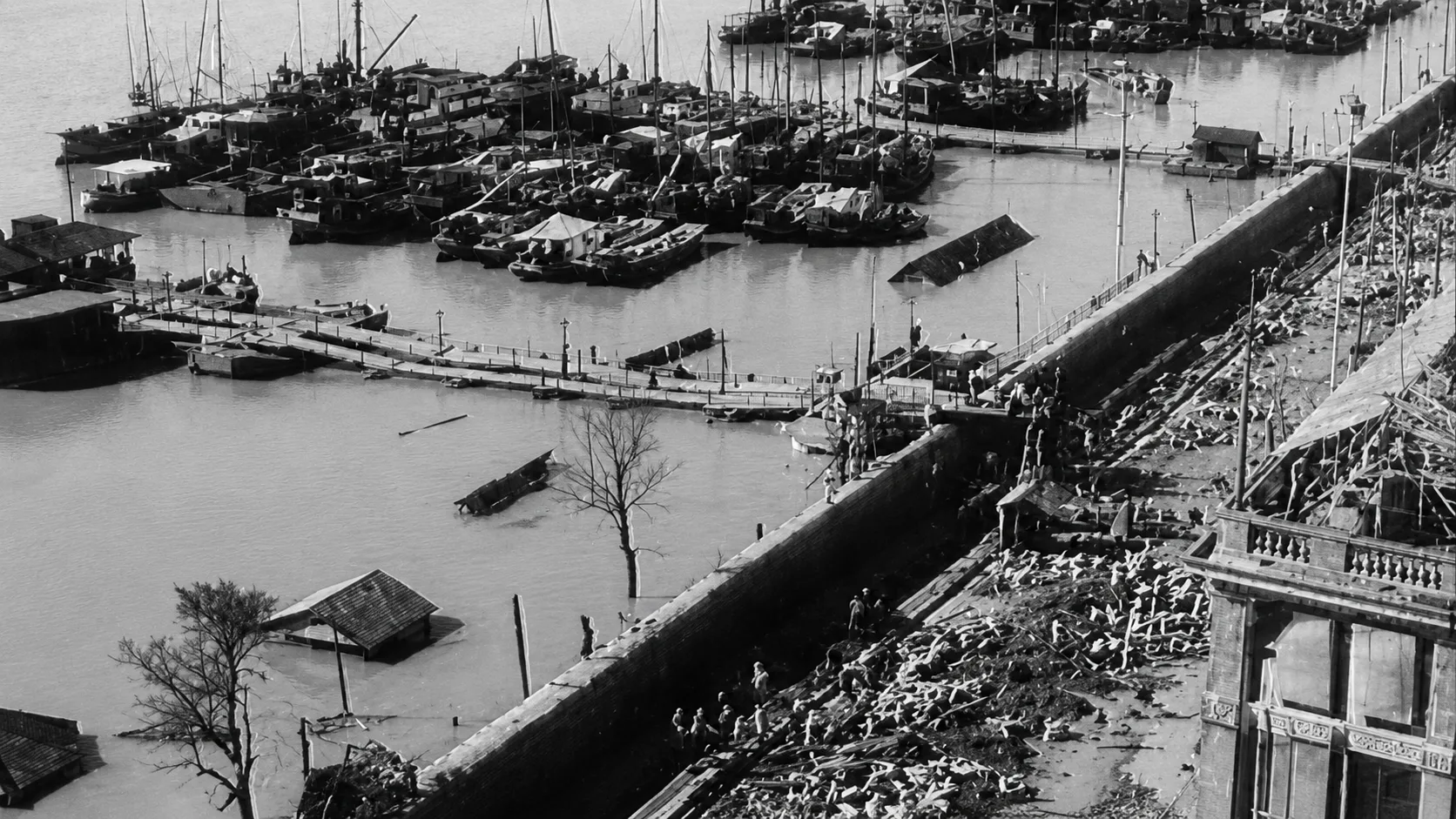
In the summer of 1981, just six months after the river was closed, the Yangtze sent a test it had not announced in advance. A flood with a peak flow of seventy-two thousand cubic meters per second —the kind of flood that appears once a century —tore down the valley and slammed into the new dam. Twenty-seven floodgates opened. The dam held. The city below it stayed dry. An old engineer who had worked on the closure that January stood on the bank and watched the gates do their work. Someone asked him what he was feeling. He did not answer. He was counting the water.
When the first turbine at Three Gorges spun to life in 2003, a small group of Gezhouba engineers gathered to watch the broadcast. One of them, a man who had been a junior surveyor on the closure team, said quietly: "Good thing they got to watch us first."
The River Remembers How to Flow
Forty-five years after the Yangtze stopped, it still flows.
It flows through twenty-one turbines, past the viewing platform where the liangxia vendor tallies his cups, past the lock gates swinging open and shut, past the concrete fish ladder that never quite worked, past the old neighborhoods that are now riverbed. The water that closed around four hundred tons of wired concrete on a January morning in 1981 has traveled around the planet many times since then, lifted into clouds, dropped onto mountains, funneled back through this same channel. The dam does not own the river. The dam is just the newest condition the river has learned to accept.
On Binjiang Park, an old man sits on a folding stool facing the tailrace. White hair. Loose shirt. He comes here most evenings when the weather is good. He does not tell anyone he was there in January 1981. He does not talk about the silence after the gap closed. But he has been sitting in roughly the same spot for forty years, and if you ask the liangxia vendor who he is, the vendor will shrug and say: "He's just one of the ones who built it. There are fewer of them every year."
The man watches the white water churn at the turbine outlets. The river does not explain what it meant to be wild. It does not need to. The river that was blocked is the same river that was set free, just downstream, rushing toward Shanghai, toward the sea, carrying the faint hum of a hydropower station in every cubic meter of cold winter water.