You drive north from Chongqing along the national highway, past Beibei, past Hechuan. The mountains grow deeper, the roads narrower. Suddenly the navigation loses signal, and your phone screen turns a blank gray. Just when you think you have taken a wrong turn, a rusted iron sign flashes by the roadside—no place name, just a number: 202.
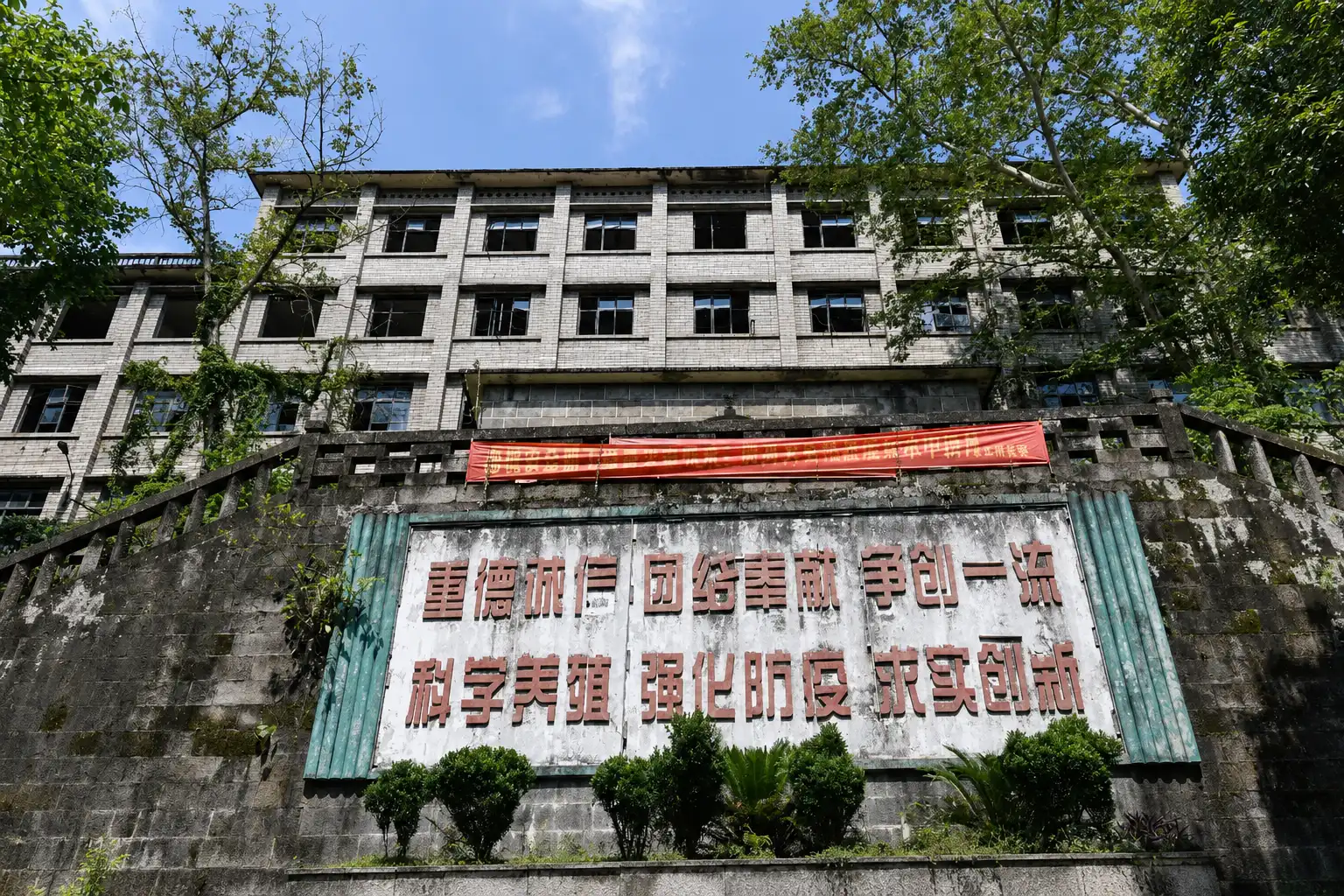
Further ahead, a valley suddenly opens up to reveal rows of red-brick buildings. Neat apartment blocks, four stories, six stories, seeming to have grown out of the ground, wrapped in green mountains, so quiet it feels unreal. No cooking smoke, no barking dogs, only a few old paulownia trees grown tall, their leaves falling onto the empty basketball court, piled thick.
This is the site of a Third Front factory. Once, tens of thousands of people lived here—schools, hospitals, cinemas, markets, a complete cycle of life from birth to death. But on maps, it did not exist.
At the Command, People Entered the Deep Mountains
In 1964, China made a decision: to move important factories, research institutes, and infrastructure from the coast and the Northeast to the deep inland mountains.
The reasons were not complicated. The international situation was tense—the Americans were fighting in Vietnam, the Soviets had massed troops on the northern border. If war broke out, coastal industry would be a sitting target. So a "strategic rear" had to be built: backed by mountains, dispersed, hidden. The project was code-named "Third Front."
Chongqing became the biggest beneficiary, and the biggest bearer.
Mountains were Chongqing's weakness, and its advantage. Factories tucked into mountain valleys were invisible even to satellites. So from 1964 to 1980, several million people from across the country poured into Chongqing's deep mountains. They came from Shanghai, Beijing, Shenyang, Wuhan, Harbin—China's most industrialized cities. Among them were engineers, technicians, college students, veterans, and young people just graduated, carrying a bedroll, riding green-skinned trains, then switching to trucks, then tractors, then walking for miles of mountain road to reach a valley whose name they were forbidden to utter.
When they came, they only knew they were going to Chongqing. When they reached Chongqing, they learned they had to enter the deep mountains. When they entered the deep mountains, they realized they could not even write an address on their letters.
Their mailbox was a number. Their factory name was a code. Their existence was a state secret.
A Complete Life in a Mountain Valley
Life in a Third Front factory was a strange hybrid—the most advanced industrial technology and the most primitive natural environment, forcibly stuffed into the same valley.
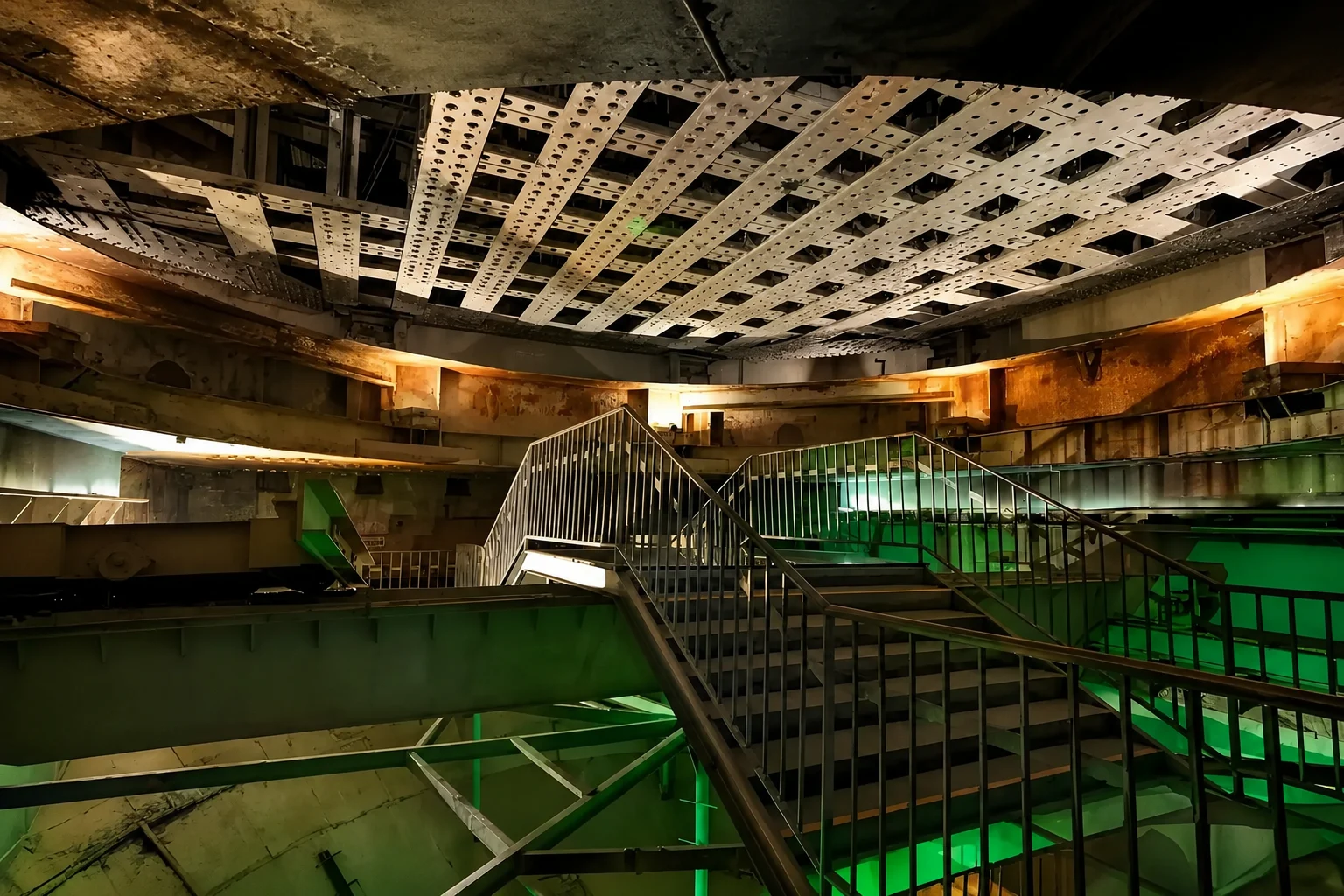
The factories were modern. Machine tools moved from the Northeast, precision instruments shipped from Shanghai, production lines imported from the Soviet Union were installed in blasted-out caves or deep underground workshops. Workers in blue coveralls and safety helmets operated the most cutting-edge machines in China at the time. They built aircraft engines, tank parts, submarine instruments, missile components—every piece related to national security.
But outside the factory gates was another world.
The dormitories were red-brick buildings, drafty in winter and leaky in summer. There was no heating; Chongqing's mountain winters are damp and bone-chilling, and workers huddled around coal balls for warmth, white frost forming on the walls. There was no running water; mountain pipes supplied water, and when they froze in winter, the whole factory lost water, and everyone carried basins to the river to break ice. There were no markets; they cleared land and farmed themselves, growing cabbage, radishes, potatoes, raising pigs and chickens. There were no cinemas; the factory built its own, showing *Tunnel Warfare* and *Mine Warfare*, the same films over and over, until everyone had the lines memorized.
The hardest part was homesickness. Shanghainese could not get used to Chongqing's spice; Northeasterners could not bear Chongqing's dampness. Letters could not include a specific address, only "Chongqing, Mailbox XX." When elderly parents fell ill, they could not go back; when children were born, their household registration was locked in the mountain valley, making them people without a true ancestral home—no "native place" to claim on official forms.
But humans are resilient. Shanghai aunties learned to pickle Sichuan mustard greens; Northeastern uncles learned to tolerate the numbing tingle of Sichuan pepper. Local Chongqing farmers and these migrant workers lived side by side, borrowing scallions and garlic, helping each other look after children. Gradually, a strange new dialect emerged in the valleys—a mix of Shanghai dialect, Northeastern dialect, and Chongqing dialect, the children speaking a "factory Mandarin" that no one else could understand.
A Number, a Generation
Old Zhou is eighty now, living in a residential compound in Chongqing's main urban area. His pension card reads "Chongqing XX Machinery Plant"—the name changed after the reform and opening-up. Before that, the factory was called "Plant 202," officially known as the "Chongqing Radio Special Equipment Factory," but in reality, it produced core components for military radar.
Old Zhou graduated from Harbin Institute of Technology in 1966 and was assigned to Plant 202. Three days and three nights on the train, another day on a truck, then two hours walking mountain roads. When he arrived, it was already dark. He remembers the first thing he saw was a row of red-brick buildings, a kerosene lamp hanging under the eaves, and a few people standing in the lamplight. One of them said, "Another college student."
He stayed in that valley for twenty-three years. Married, had children, earned promotions, became a workshop director. In 1989, the factory began its "military-to-civilian" transition, producing washing machines and electric fans for the newly opened consumer market. In 1995, the factory was relocated entirely to Chongqing's urban area, and the red-brick houses in the valley gradually emptied. In 2005, the last family moved away, and Plant 202 became a ruin.
Old Zhou went back once. Driving along the old mountain road, the path was already overgrown with weeds. The window glass of the red-brick buildings was all shattered, and The walls were spray-painted with the character "chai" (demolish), the bureaucratic kiss of death for old buildings. He found the building where he had lived, the middle unit on the third floor, with faded Spring Festival couplets—red paper banners wishing prosperity and luck—still pasted on the door frame. He stood at the doorway, smoked a cigarette, and did not go in.
"There was nothing left inside," he said. "But when I close my eyes, I can still hear someone calling from downstairs: Old Zhou, come play chess!"
Our generation gave our names to numbers, and our youth to the mountains. No regrets. It's just that sometimes, when you want to find someone to talk to about it, you realize no one understands anymore.
From Secret to Ruin
How many Third Front factories were there in Chongqing? No one can say for sure. Large ones had tens of thousands of people; small ones had a few hundred. Scattered across Fuling, Wansheng, Nanchuan, Jiangjin, Hechuan... dozens of mountain valleys, like scattered seeds. Some sprouted; some rotted in the soil.
After the reform and opening-up, many Third Front factories began a difficult transformation. Military orders decreased, and they had to fend for themselves. Some factories succeeded, transitioning to produce automobiles, motorcycles, and home appliances, becoming the well-known enterprises of today. Some factories failed, going bankrupt and dissolving, workers laid off, the red-brick houses in the valleys abandoned, becoming destinations for explorers and photography enthusiasts.
The most tragic were the "small Third Front" factories—small in scale, weak in technology, remote in location. Unable to transform, unable to relocate, their ruins now lie scattered in Chongqing's deep mountains like red skeletons. The slogans on the walls remain: "Dig deep tunnels, store ample grain, never seek hegemony" and "Good people and good horses go to the Third Front." On the cafeteria blackboard, the last issue still shows the 1992 production targets.
Occasionally, elderly people go back to visit. They bring their grandchildren, point at a building, and say, "This is where your father was born." The grandchild asks, "Why is there no one here anymore?" The old person has no answer.
The Legacy in the Valleys
What did the Third Front Construction leave Chongqing?
First, an industrial foundation. Today's Chongqing can build cars, laptops, and high-end equipment, with roots reaching back to the Third Front era. The technicians, engineers, and managers trained in those valleys became the backbone of Chongqing's industry after reform and opening-up. That state-directed migration followed a different path from the village workshop that eventually became Midea's smart factory in Foshan. Together, they show two routes into modern industrial power: national relocation to the interior and local enterprise growing into automated production.
Second, a city character. Millions of migrants poured into Chongqing, bringing accents, habits, and tastes from all over the country. Chongqing's inclusiveness, straightforwardness, and lack of xenophobia today owe much to this history. A dock city was already a mix; add Third Front migrants, and the mix became even richer, creating a unique jianghu spirit.
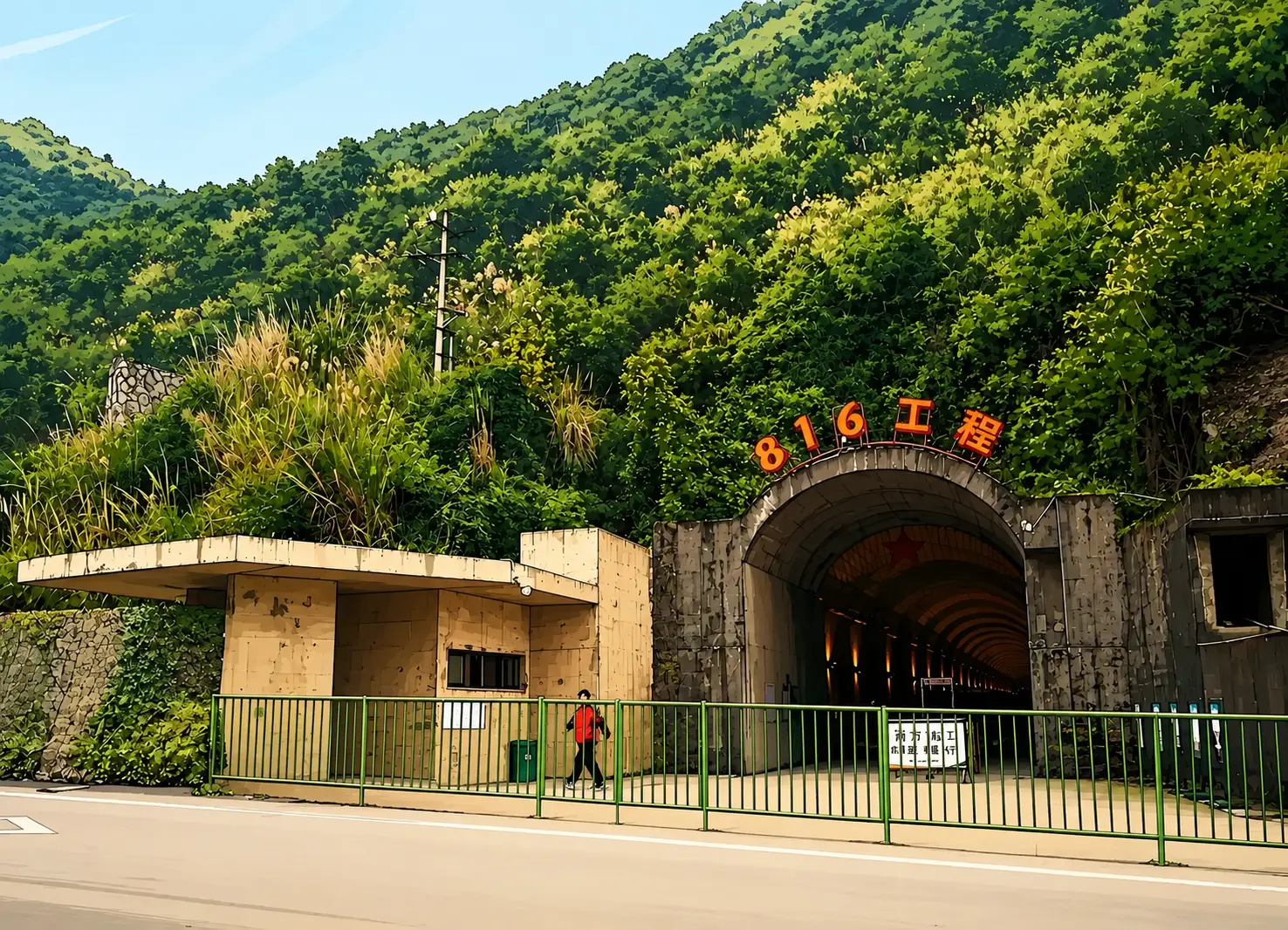
But the deepest legacy is those silent ruins. They remind the city: you were once the nation's last line of defense, representing an era of fear and hope. The ivy climbing the red-brick walls, the rusted machine tools, the mailboxes with numbers instead of names—they are a code written in youth and sweat by a nation during extraordinary times.
How to Seek Out a Piece of Third Front Memory
If you want to visit Third Front ruins in Chongqing, there are several places to go.
Tianfu Town in Beibei was once a concentration of Third Front coal mines. Now the mines are closed, but large areas of red-brick housing remain. Some have been converted into guesthouses where you can spend a night and experience a "Shanghai alley in a mountain valley."
Shanwangping in Nanchuan has a stretch of abandoned military factory ruins, slowly being swallowed by forest. Go in autumn, when red leaves cover the red bricks, and the beauty is heartbreaking. But be careful—some buildings are already dilapidated; do not approach.
Donglin Coal Mine in Wansheng was an important energy base during the Third Front era. The mining area still retains the auditorium, school, and hospital from that time, like a city frozen in time. Local elderly people are happy to tell you stories from the past; bring two packs of cigarettes, and you can chat for an afternoon.
The most convenient option is the Chongqing Industrial Museum in the main urban area, rebuilt on the former site of Chongqing Steel. It contains a large number of Third Front artifacts: machine tools, work clothes, certificates, diaries, and black-and-white photographs. After visiting, you will have a deeper understanding of this city.
When you go, bring a heart of reverence. No one lives in those valleys anymore, but the wind remains, the trees remain, and the faded slogans on the red-brick walls remain. They do not speak, but if you stand long enough among the ruins, you will hear a sound—not an echo, but the breathing of a generation, collected by the mountains for decades, occasionally leaking out.
The Third Front Construction ended, the factories moved away, the people grew old. But the mountains of Chongqing remember. Every red-brick ruin in every mountain valley is a grave without a tombstone, burying a generation's numbers, secrets, and youth.
You do not need to understand it. You only need to know that there was once a group of people who lived here.