Was China's Headless Robot MMA Fight Really Autonomous?
Introduction
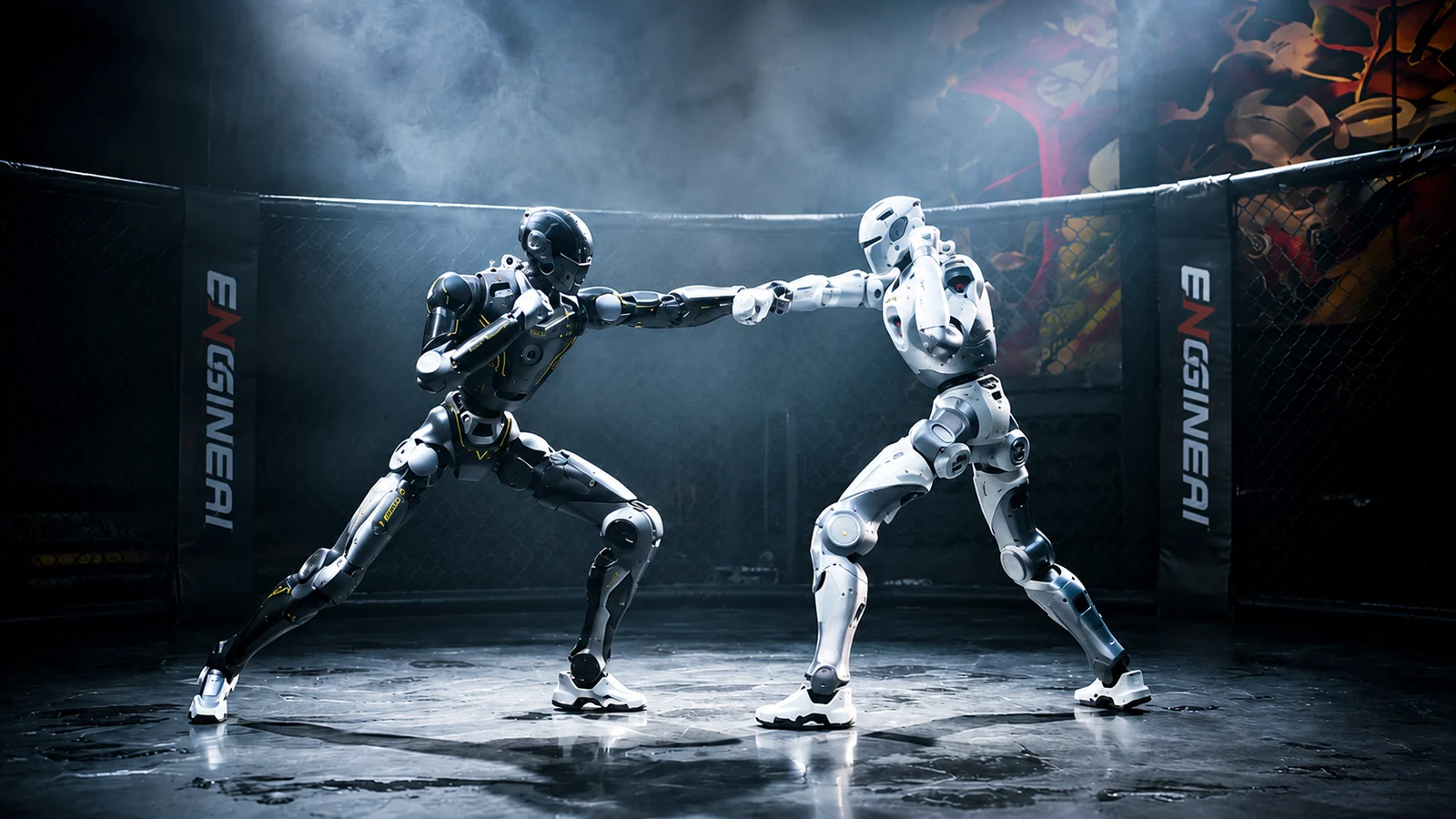
China's viral URKL robot MMA fight was not two people trading blows through remote controls. During the core exchanges, onboard AI perceived the opponent, chose attacks, and executed them autonomously. The results were powerful, clumsy, and unexpectedly funny. The Mandarin phrase 真功夫 helps us separate the flashy kicks from the abilities that really survived the fight.
TRANSCRIPT
PandaWu: Hello, this is 5 Minute Chinese from On The GreatWall. I'm PandaWu.
Emma: And I'm Emma.
Emma: PandaWu, I just watched a white humanoid robot kick the head off a black one in Shenzhen. The black one kept fighting. Please tell me there wasn't someone backstage mashing buttons.
PandaWu: No hidden gamer. During the core fight, the robots used autonomous AI to find each other, choose attacks, and carry them out.
Emma: The AI chose all those spinning kicks?
PandaWu: Every glorious one. On July sixteenth, two EngineAI T800 robots, White Eagle and Matador, met in a cage at the URKL opening event. They punched, danced, fell over, sprang back up, and sometimes attacked a patch of floor that had done nothing to deserve it.
Emma: So the awkward bits were autonomous too. I respect the honesty.
PandaWu: They were. Reporting from the event says the fight ran on the robots' autonomous algorithms. Human teams built the software and prepared the machines, and the rules allowed pauses for tactics or repairs. But during the exchanges, the AI was doing the looking, deciding, and moving.
Emma: That makes the missed punches much more interesting. It wasn't bad joystick work. The robot genuinely thought, yes, this is the moment to kick the empty air.
PandaWu: Targeting is hard when both fighters keep moving. The robot has to spot its opponent, turn a seventy-five-kilogram body, judge the distance, pick a move, and stay upright while twenty-nine joints negotiate with gravity.
Emma: Negotiate?
PandaWu: Gravity was not offering generous terms.
Emma: Fair. But the robots got off the floor ridiculously fast. One second they were flat on their backs, then suddenly they were standing again.
PandaWu: That may be the most impressive part. Kicking looks dramatic. Getting up means the robot must work out how it has fallen, place its limbs, push up without breaking a joint, and recover its balance. It can also bend in ways that would send a human straight to the emergency room.
Emma: That explains the very strange folding-chair technique.
PandaWu: Effective, if not elegant. EngineAI's founder said the robots still need better target accuracy. One of them occasionally locked onto the referee. That is funny in a cage and much less funny anywhere else.
Emma: I would like the next software update to include, "Please ignore the referee."
PandaWu: Sensible patch note.
Emma: Now explain the head. Matador lost it and carried on punching. Was the head decorative?
PandaWu: Not decorative. Reports from the Shenzhen fight say the head contained sensing equipment. But the main control and power systems were in the torso. So when the head came off, Matador lost important perception, not its entire nervous system.
Emma: A headless robot throwing punches is not a sentence I expected to hear this week.
PandaWu: Nor is it a reassuring product demo. But it tells engineers what survives a violent failure. China already has robots moving into public life, including robot volunteers at Shanghai's WAIC. A service robot should never need cage-fighting skills, but balance, perception, and recovery matter outside the ring too.
Emma: URKL gives every team the same T800, right? So nobody can solve the problem by buying a larger robot and sitting on the opponent.
PandaWu: Right. Same body, different software, strategy, and protection. Think of a racing series with standard cars, except the cars can roundhouse-kick each other.
Emma: Motor racing has been missing that.
PandaWu: You know, if a human fighter could throw high kicks and spinning kicks that cleanly, in Chinese we might say they have 真功夫.
Emma: That sounds like a phrase these robots had to earn. What exactly does it mean?
PandaWu: 真功夫
Emma: 真功夫
PandaWu: It literally sounds like real kung fu, but it also means genuine skill. In a human art such as Wing Chun, polished movement only matters if technique still works under pressure. Something may look brilliant in a demonstration. 真功夫 is what still works after another seventy-five-kilogram machine kicks you in the face.
Emma: Getting hit, falling down, losing your cameras, and still finishing the match. That is a fairly serious test.
PandaWu: Exactly. The flying kick got the replay. Finding an opponent, getting back up, and continuing after damage showed the 真功夫.
Emma: And the missed punches showed there is still plenty of work to do.
PandaWu: And that is what makes this early version fun. The robots can make their own fight decisions, survive spectacular damage, and still occasionally lose an argument with an empty corner.
Emma: Once again, our five minutes are up, but if you'd like to hear more authentic stories about Chinese food, history and culture, you can head to our topic page on our website, onthegreatwall.com. See you again soon. But for now, it's goodbye.
Mini Quiz
Question: Who chose and executed the attacks during the core exchanges in the URKL opening fight?
A. Human operators controlling every move with remote controls.
B. The robots' autonomous AI systems.
Answer: B. Human teams prepared the machines and software, but autonomous AI handled perception, attack decisions, and movement during the core fight.
Useful Examples
- Example真功夫 PinyinZhēn gōngfu MeaningReal skill; genuine ability.
- Example这才是真功夫。 PinyinZhè cái shì zhēn gōngfu. MeaningNow that is real skill.
- Example他有真功夫。 PinyinTā yǒu zhēn gōngfu. MeaningHe has genuine skill.
More Podcast Episodes
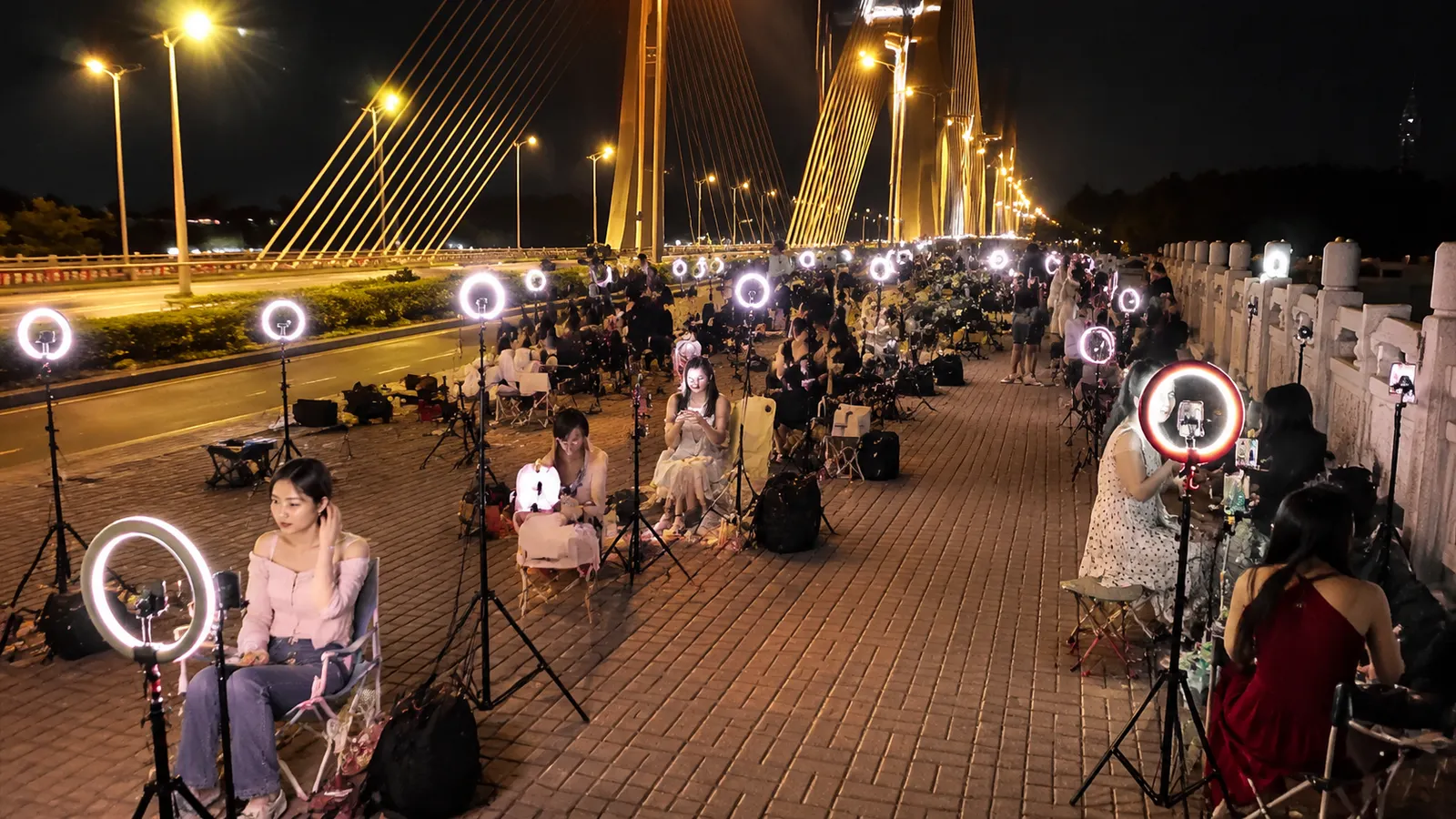
Why Do Chinese Streamers Go Live in Wealthy Areas?
27 Jul 2026
Emma finds a glowing row of roadside streamers and learns why wealthy neighborhoods, cold nights and virtual gifts are all part of the attention game.
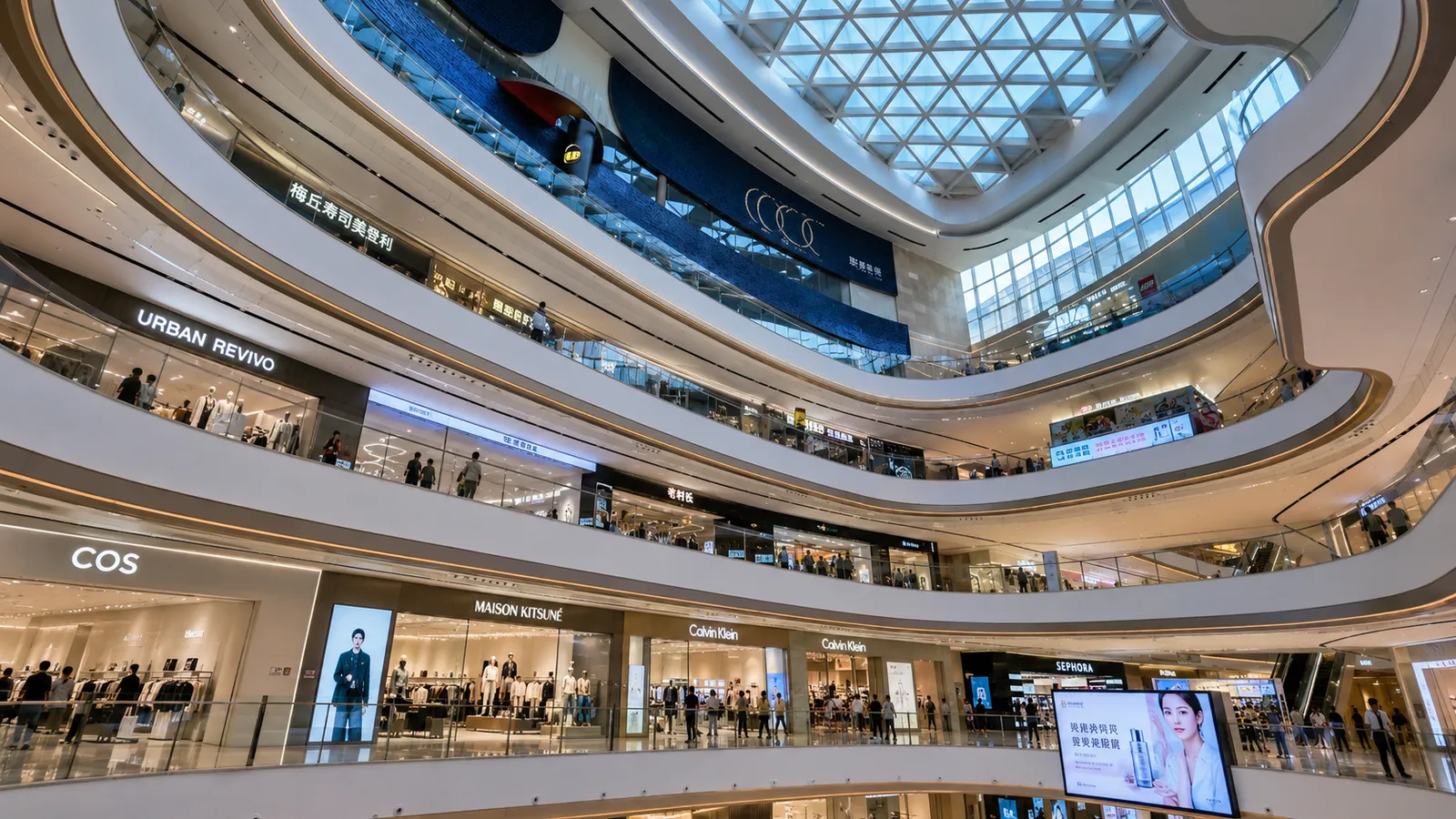
Why Do Chinese Malls Feel Like Indoor Cities?
25 Jul 2026
Emma entered Guangzhou's Wanda Plaza for one HEYTEA. Seven hours later, she had new nails, an IMAX ticket and two unusual bags of chips.
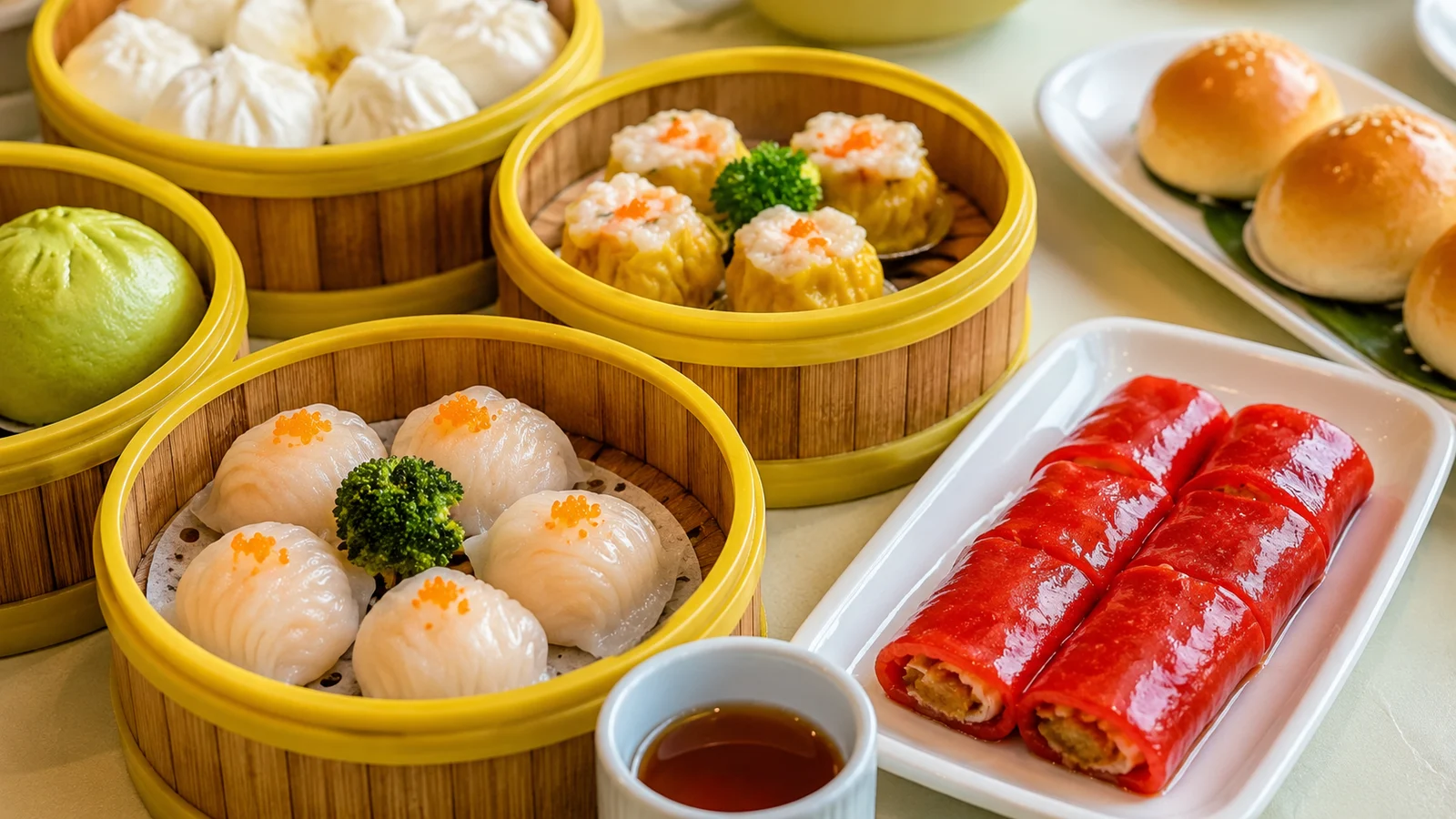
Which Chinese City Should Food Lovers Visit First?
21 Jul 2026
PandaWu spent more than a decade in Guangzhou. Here is why he recommends its dim sum, roast meats, desserts, and late-night food.