In an old Beijing courtyard house, the first thing you meet is not the family.
It is a wall.
The door opens from the hutong. You step in, expecting a courtyard, a tree, maybe the main room facing south. Instead, the view stops almost at once. A brick screen wall stands before you, close enough to make the body turn.
The house has already begun to teach you.
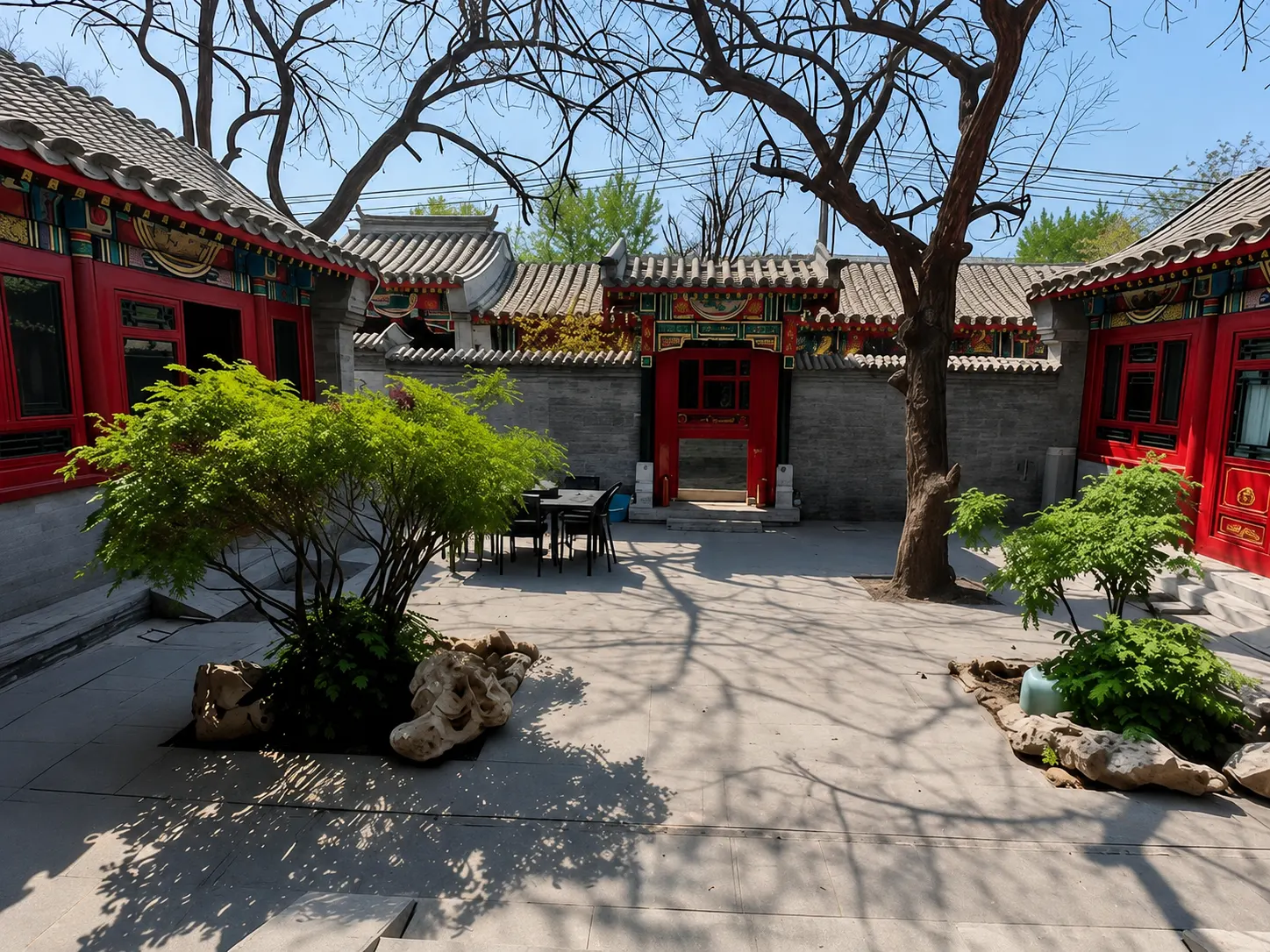
A Home That Refuses a Straight Line
The screen wall, or yingbi, is often explained as privacy, decoration, or geomantic habit. It is all of those things. But before it is an idea, it is an experience.
You cannot see directly into the home from the street. The noise of the hutong enters, but the eyes are blocked. A delivery man, a guest, a neighbor, a child returning from school: everyone must make the same small turn.
That turn is the beginning of siheyuan life.
The courtyard does not reveal itself like a modern lobby. It unfolds. Door, wall, side step, second glance. The body slows down before the mind understands why.
The Courtyard Appears
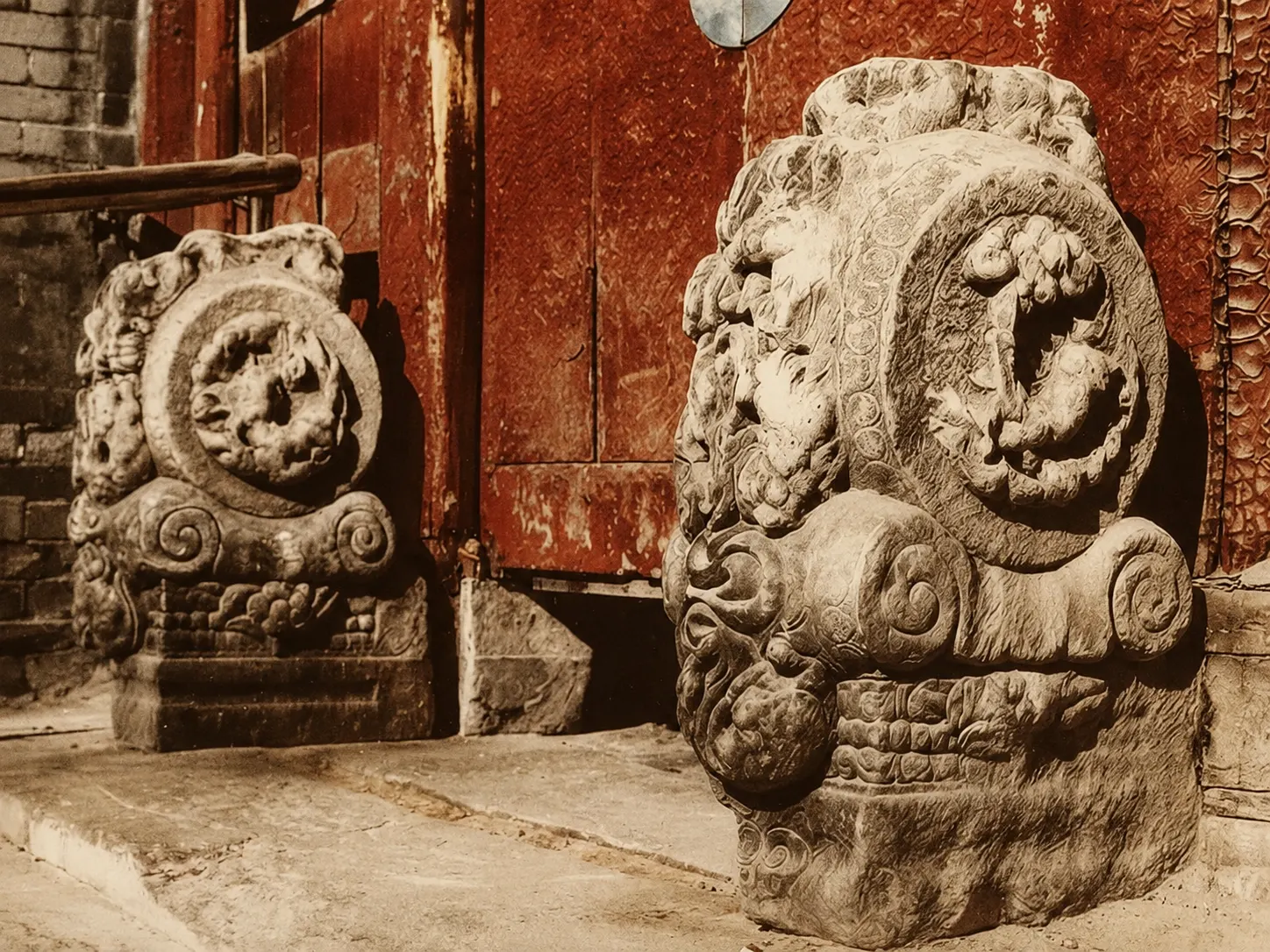
Once you pass the screen wall, the sky opens.
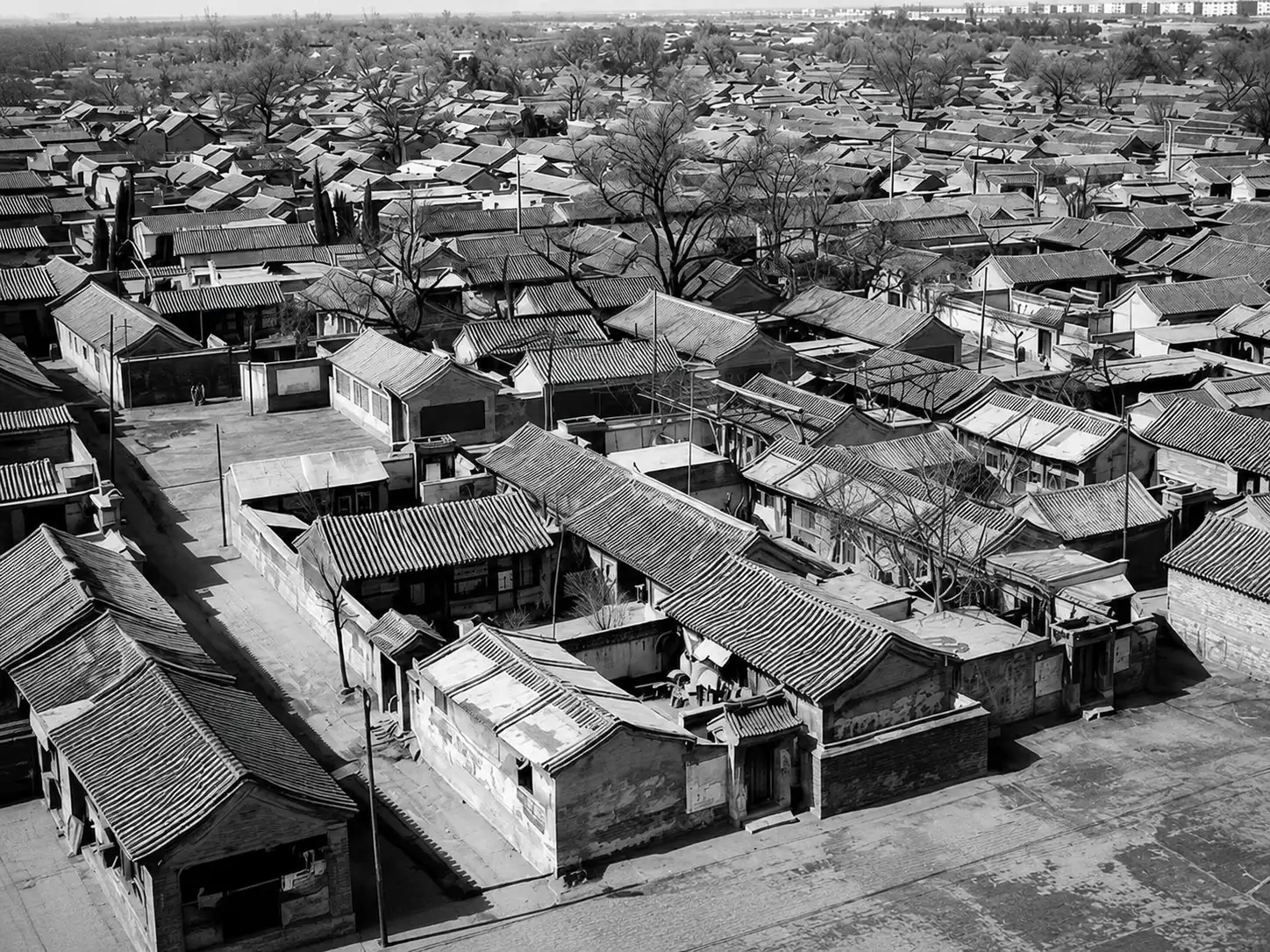
The yard is not large, but after the narrow hutong and the blocked entrance, it feels sudden. Grey brick, tiled roofs, wooden doors, a tree if the family is lucky, stone paving worn by years of feet and basin water.
The north house faces south and catches the best light. This is the zhengfang, the main room, traditionally for the senior generation or head of the household. The east and west rooms hold the rest of the family. The south row, the daozuo rooms, faces north. It receives less sun and more cold.
Here, the romance of the courtyard meets its harder truth.
People lived around the same open sky, but they did not live equally within it. Sunlight marked rank. Warmth marked rank. The best room faced the sun. The poorer room watched the sun fall on someone else's door.
In a siheyuan, family order is spoken at the table and written by light.
The Second Boundary
In larger homes, a hanging-flower gate, or chuihua men, divided outer space from inner life. It was beautiful, with carved and painted details, but beauty was not its only work. It decided who could enter deeply and who had to remain near the front.
The gate made privacy architectural. It shaped voices. A visitor near the entrance spoke differently from someone invited through the inner threshold. Women, elders, guests, servants, children, relatives: the house arranged them before any conversation began.
A siheyuan can feel gentle and strict at the same time. The courtyard holds shade, trees, family meals, and summer evenings. It also holds rules.
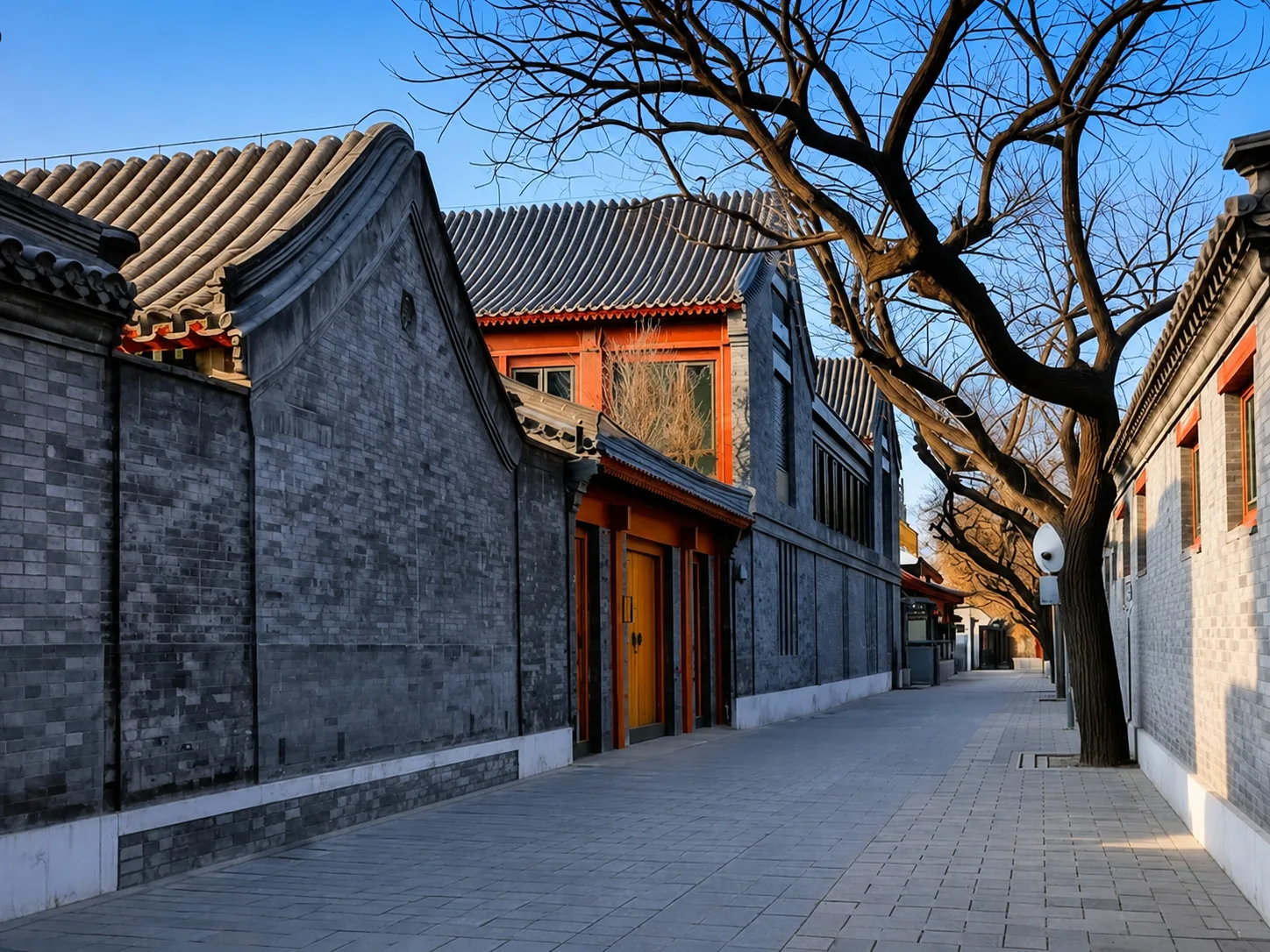
A Day Measured by the Yard
Morning enters the courtyard from above. Someone splashes water on the paving stones. A bicycle leans against a wall. Coal once arrived in sacks. Bedding is brought out to sun. In summer, people move chairs into shade. In winter, the low sun reaches toward the north rooms and leaves the south row cold early.
The open yard makes the seasons domestic. Wind, light, dust, rain, and snow all pass through the family center.
Sounds carry easily. A cough behind one door, a basin set down too hard, neighbors speaking across a wall, a child being called in from the lane. Privacy exists, but it is never complete. Living in a courtyard means knowing how much to hear and when to pretend not to.
Leaving the House
When you leave, the screen wall appears again.
Only now it feels different. On the way in, it hid the home. On the way out, it gathers what you have understood: the turn, the light, the warm north room, the cold south rooms, the courtyard sky, the careful distance between street and family.
The hutong returns with its bicycles, voices, and brick dust. Behind you, the door closes. From outside, the house gives almost nothing away.
That is the power of the siheyuan. It is a beautiful old form, and a home that controls revelation. It lets you enter by degrees, and makes every step a lesson in how Beijing once organized everyday life.
The first wall was never empty. It was the house saying: learn how to come in.