At six in the evening, the Yangtze River in Wanzhou starts to come alive. Not the kind of lively you find at tourist attractions, but the locals' own kind of lively. Along the riverbank steps, rows of plastic tables and chairs are set out, like some seasonal plant that sprouts as soon as the sun goes down.
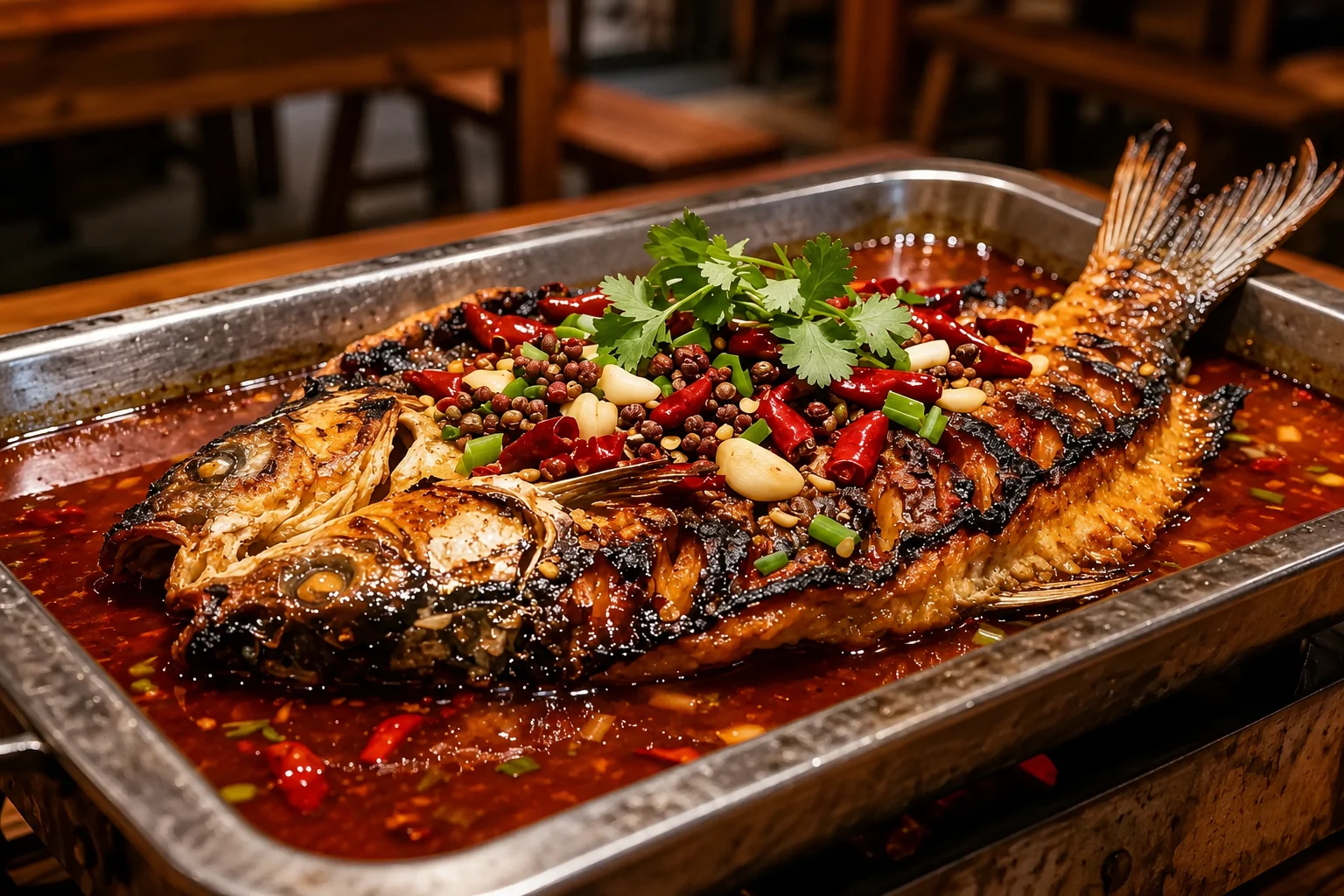
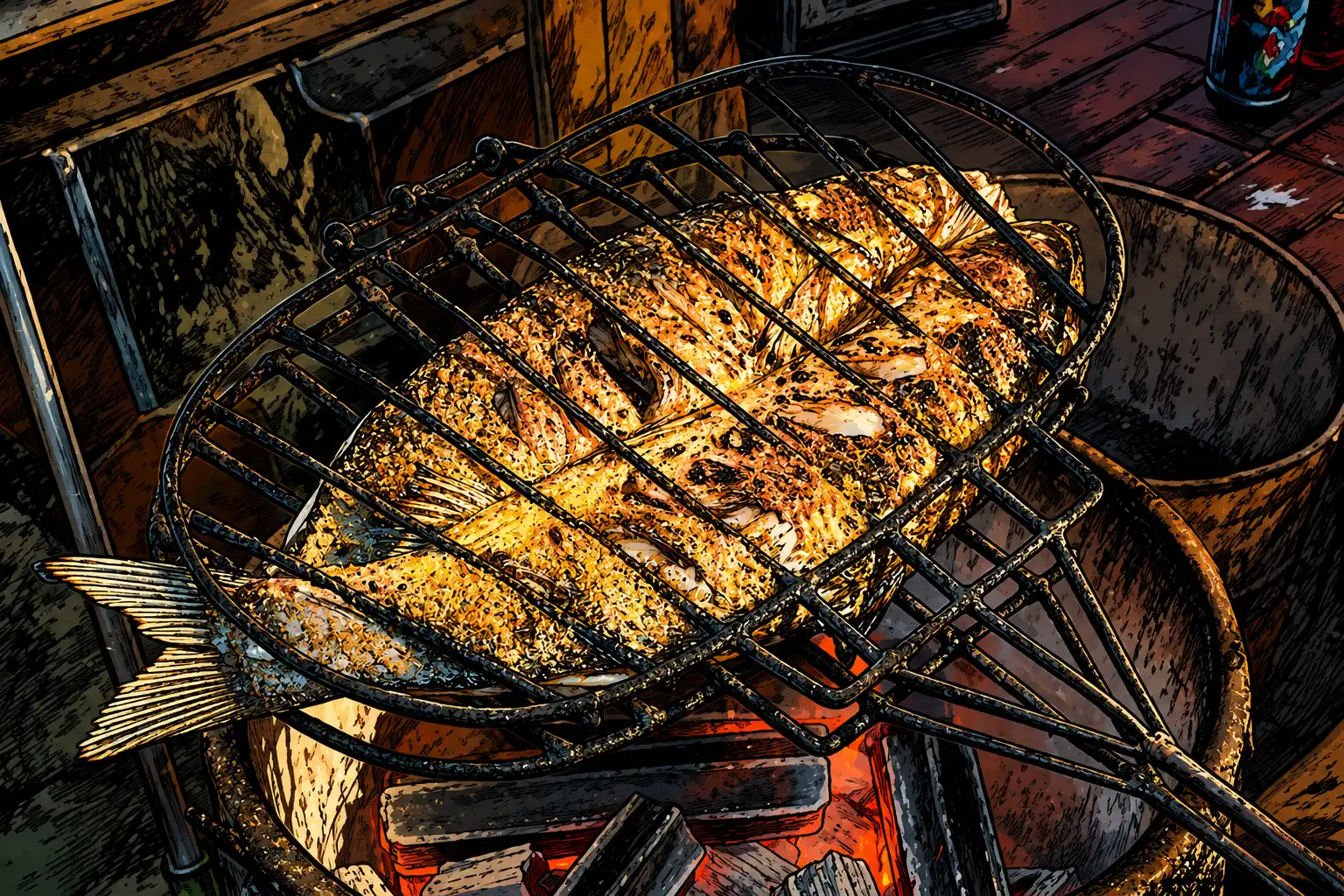
In the center of every table sits a rectangular iron grill pan. Below the pan, charcoal burns red-hot. Above the pan, a fish lies flat, its skin already curling slightly at the edges, revealing a golden-brown char. Broth bubbles and gurgles in the pan—red oil, Sichuan pepper, dried chilies, minced garlic, onions—forced by the charcoal into a complex aroma so thick it cannot dissolve, drifting far down the river breeze.
This is Wanzhou grilled fish. Not the neat, oven-baked kind, but charcoal-grilled, smoky, jianghu-style grilled fish.
The Fish Comes from the River
Wanzhou sits on the Yangtze River, formerly known as Wan County. It is the gateway to the Three Gorges, where the Yangtze and the Zhuxi River meet. The water flows slowly here, the silt is rich, and the fish grow tender and sweet with a faint natural sweetness.
In earlier times, Wanzhou people were particular about "freshness" when it came to fish. Early in the morning, fishermen would bring their boats to shore, the fish in their baskets still leaping. Riverside eateries would immediately set up their woks—steamed, braised, boiled, each with its own following. But Wanzhou people have a restless streak in their bones—steamed is too bland, braised is too common, boiled lacks something. So someone thought: what if we grill the fish first, then cook it like hot pot?
That idea gave birth to Wanzhou grilled fish.
Wanzhou people like to have it both ways. They want the charred aroma from grilling, and the deep flavor from simmering. One fish, two lives.
The earliest Wanzhou grilled fish appeared at riverside food stalls in the 1990s. Fish brought back by fishermen were gutted, split in half, flattened on wire mesh, and placed directly over charcoal. No complex marination—just a layer of salt and a handful of chili powder. During grilling, the fat under the fish skin was forced out by the charcoal, dripping onto the coals and sending up a puff of charred, aromatic smoke. Grilled to about seventy or eighty percent done, the wire mesh and fish were lifted off together and laid into an iron pan filled with broth, continuing to simmer over charcoal. The broth was freshly cooked—doubanjiang (fermented fava-bean chili paste from Pixian), dried chilies, Sichuan pepper, ginger, garlic, onions, celery, brought to a boil with stock and poured over the fish. Under the pan, the charcoal kept burning; the broth grew thicker and more flavorful.
Guests ate and chatted; the fish grew more fragrant as it cooked. Toward the end, when the broth had reduced, they would call the boss to add a portion of potato slices, a portion of tofu skin, a portion of konjac, dumping them into the pan to cook in the remaining red-oil broth. Finally, they would scrape up the broth and vegetables together with their rice and polish it all off.
The Metamorphosis of a Fish
The choice of fish in Wanzhou grilled fish matters.
The most traditional is grass carp. Grass carp has thick flesh and many bones, but it is cheap and holds up well to both grilling and simmering. When grilled, the skin tightens and forms a crispy, charred shell, while the meat inside stays tender. When simmered, the flesh absorbs the broth, so every bite is flavorful. But the many bones mean you have to eat carefully, and that is part of the pleasure of Wanzhou grilled fish—you cannot rush. You pick slowly, chew slowly, like a kind of patient practice.
Later, as living standards improved, more types of fish became available. Qianyu (channel catfish, a scaleless freshwater fish with a flat head), jiangtuan (longsnout catfish, prized for its gelatinous skin), sea bass, mandarin fish, even turbot were invited into the grill pan. Qianyu has no small bones and tender meat, making it the first choice for those afraid of bones. Jiangtuan has even finer flesh and richer fat, grilling up with crispy skin and silky meat, but it is more expensive. Sea bass suits those who cannot eat too much spice, as its sweet flesh is not overwhelmed by the seasonings.
But old Wanzhou locals still prefer grass carp. They say eating grilled fish without spitting bones is like eating hot pot without sweating—it lacks soul.
What the fish is does not matter; what matters is how you treat it. Wanzhou people treat fish like old friends—not particular about origins, only about the bond.
The Skill of Grilling Lies in the Fire, Not the Hands
The core of Wanzhou grilled fish is that one word: "grill."
Not electric grill, not gas grill—it must be charcoal. Lychee charcoal is best: steady heat, little smoke, and a faint fruity wood aroma. The charcoal must burn until it is white all over, with no open flame, only heat. At this point, the split fish is laid on the wire mesh, about twenty centimeters above the charcoal. This height is measured by the master's eye—too high, and the fish will not cook through; too low, and the skin will char while the meat remains raw.
During grilling, the fish must be turned constantly. Not mechanically, but by feel. The skin begins to tighten, the color changing from gray-white to pale yellow to golden. At this point, a layer of oil is brushed on—a mix of rapeseed oil and lard, fragrant but not greasy. After brushing, continue grilling until the edges of the skin curl up and brown spots appear. At this moment, the inside of the fish is just cooked through, the meat still holding its moisture, not dry.
The hardest part to master is the heat. Too fierce, and the skin chars while the meat is still raw; too weak, and after half a day of grilling the skin is soft and lacks that charred aroma. A good fish griller relies on experience—watching the color of the charcoal, listening to the sizzling sound of the skin, smelling the scent of fat caramelizing in the air. When these three are right, the fish is right.
The grilled fish must be laid into the broth immediately. One second too early, and the fish has not yet locked in its flavor; one second too late, and the charred aroma dissipates. This timing is also a skill.
The Broth Is Another River
If grilling is the bone of Wanzhou grilled fish, the broth is its soul.
Wanzhou grilled fish broth is similar to hot pot base in some ways, but not quite the same. Hot pot base pursues heaviness; grilled fish broth pursues "penetration"—it must seep into every fiber of the fish meat.
Making the broth starts with doubanjiang. Authentic Pixian doubanjiang—fermented for years in earthen crocks under the Sichuan sun—is finely chopped and slowly fried in oil until the red oil separates and the bean aroma emerges. Then dried chili segments, Sichuan peppercorns, minced ginger, and minced garlic are added, slowly stir-fried over low heat until fragrant. At this point, the entire kitchen is choking; the masters are long used to it, neither sneezing nor tearing up, as if by professional instinct.
Then stock is added. The stock is simmered from bones and chicken frames, clear and fresh. When the stock pours into the wok and merges with the doubanjiang, the broth color shifts from dark red to bright red. Then season: salt, sugar, vinegar, cooking wine, light soy sauce, oyster sauce. Sugar cannot be too much, only to enhance freshness; vinegar cannot be too little, to cut greasiness and stimulate the appetite. Finally, a handful of celery segments, onion chunks, and potato slices are added, giving the broth substance and chew.
The broth boils and is poured over the fish in the grill pan. The charcoal continues to burn below, and the broth slowly thickens over the fish. In the first five minutes, the fish still has the texture of grilled fish—crispy skin, tender meat. After ten minutes, the fish meat begins to absorb the broth, the flavor growing heavier. After twenty minutes, the fish has completely transformed into something else—not grilled, not boiled, but "stewed," where charred aroma and mala spice have reached a reconciliation through time.
A Wanzhou Night Begins with a Fish
Wanzhou grilled fish is usually eaten at night.
Not because the shops are closed during the day, but because grilled fish belongs to the night. Eating it during the day is too formal, too solemn. Eating it at night is relaxed, is wholehearted. A few friends, a few bottles of beer, one fish, eating from seven or eight o'clock until eleven or twelve, the fish finished but the broth still there, adding vegetables, adding rice, adding wine, talking until the mood is high, then ordering another fish.
The riverside grilled fish stalls are the living rooms of Wanzhou people. In summer, the river breeze is cool, the heat of the charcoal and the coolness of the river water mixing into a strange comfort. In winter, the river wind cuts to the bone, but the charcoal in the grill pan burns so hot that faces flush, jackets come off, and sleeves are rolled up to eat until foreheads sweat.
The bosses are usually husband-and-wife teams. The man grills the fish; the woman helps out, serving dishes, keeping accounts, greeting guests. Their children grow up by the grilled fish stalls, doing homework amid the smells of chili and charcoal. Sometimes, when guests have had too much to drink and pull the boss into conversation, the boss flips the fish with one hand and responds with the other, never stopping his work. This scene has repeated itself in Wanzhou for decades.
Wanzhou's grilled fish stalls have no menus. How many kinds of fish, how many flavors—all are in the boss's head. Regulars arrive and do not need to order; the boss knows what they want.
Grilled Fish That Left Home, Homesickness That Changed Flavor
Wanzhou grilled fish's reputation has long spread beyond Chongqing. You will find shops with "Wanzhou Grilled Fish" signs in Beijing, Shanghai, Guangzhou, and in cities around the world. But Wanzhou locals say those flavors are all wrong.
Where is the problem? First, the fish. Grilled fish shops elsewhere use farmed frozen fish, not fresh fish from the Yangtze. The flesh is loose and lacks that natural sweetness. Second, the charcoal. Many shops, for convenience, use electric ovens or gas grills—temperature controllable, clean and hygienic, but missing the charred aroma of charcoal. Finally, the broth. Chefs elsewhere learn the recipe, not the heat. The doubanjiang is not fried enough, the stock is not simmered long enough, and in the end they rely on MSG and chili extract to make up the flavor. It is spicy, yes, but not fragrant enough; after eating, you are thirsty and your stomach burns.
But Wanzhou people do not mind. They say grilled fish, like hot pot, loses its flavor when it leaves Chongqing's soil and water. You can copy the technique, but you cannot copy the river breeze, the charcoal smoke, or the feeling of sitting on a plastic stool in a bare-chested, beer-drinking mood.
Real Wanzhou grilled fish is not in a restaurant; it is by the riverside. Not during the day; at night. Not on a refined plate; in an iron pan embedded with charcoal.
How to Eat Grilled Fish Like a Wanzhou Local
Going to Wanzhou for grilled fish does not require much homework. Just remember a few tricks.
Find a stall by heading toward the river. On Wanzhou's Binjiang Road, as soon as the sun sets, plastic tables and chairs seem to sprout from the ground. You do not need to look at how bright the sign is—look at the charcoal. If the fire burns red and the smoke is thin, the master's skill is not bad. Busy stalls turn over fish quickly, so the fish is fresh.
When ordering fish, grass carp is the baseline. It has many bones, but the flesh is firm and holds up to grilling and simmering—an old favorite of Wanzhou people. If you are truly afraid of bones, qianyu is fine, but remember to add a line to the boss: "I still want the flavor of grass carp." The boss will smile at the corner of his eyes, knowing you are someone who understands.
Do not hesitate on flavor: mala. Wanzhou grilled fish comes in fragrant-spicy, pickled-chili, garlic, and fermented-black-bean, but connoisseurs only recognize mala—the classic marriage of numbing Sichuan peppercorn and fiery dried chili. Not for showing off, but only mala can draw out the charred aroma of grilled fish, layer by layer, drilling into your nose. Cannot eat spicy? Ask the boss for "less chili," but do not expect it completely mild—that is not grilled fish; that is boiled fish.
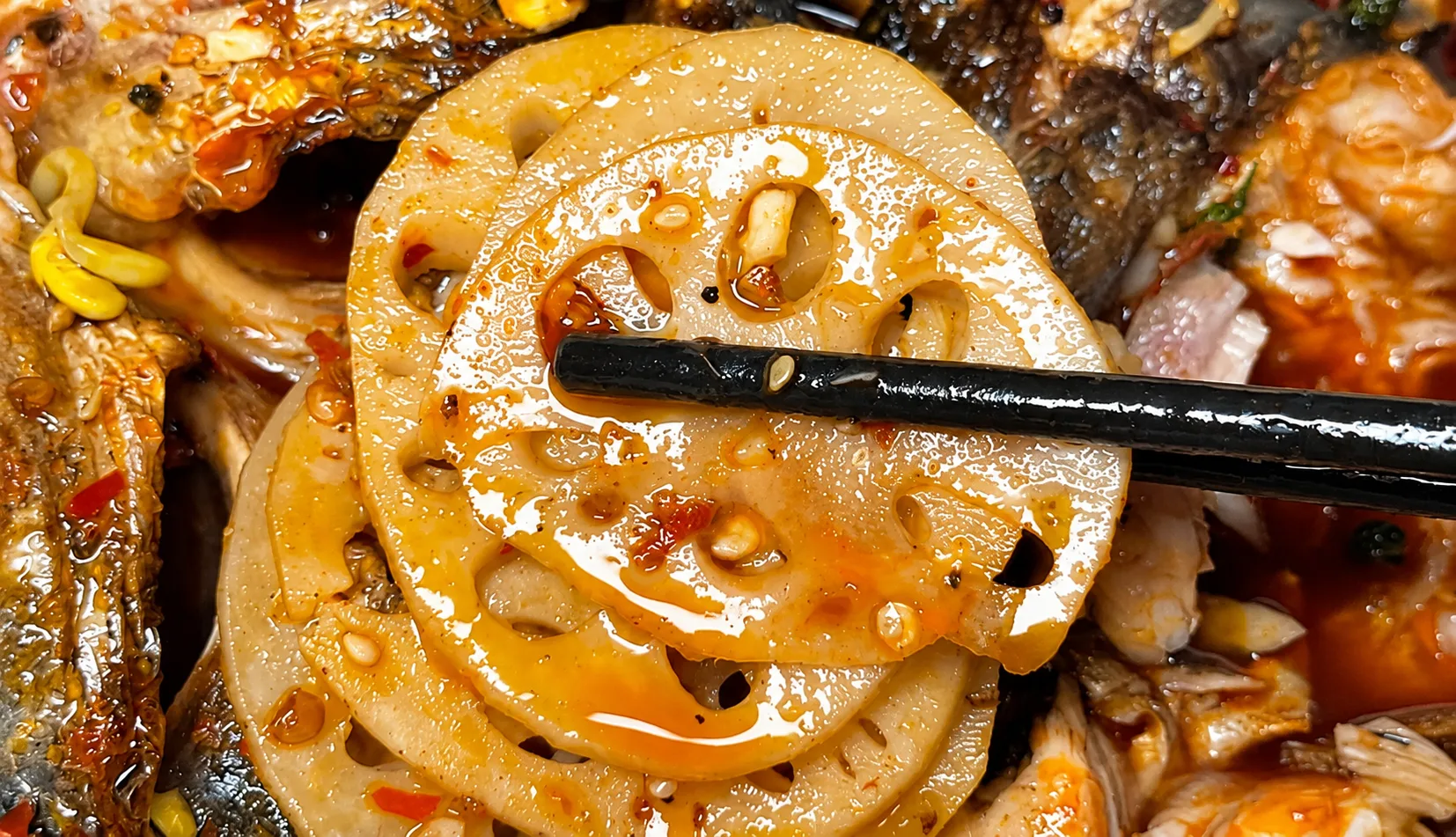
Halfway through eating, call the boss to add vegetables. Potatoes, tofu skin, konjac, lotus root slices, lettuce stems—dumped into the pan and cooked in the remaining red-oil broth. At this point, the side dishes are more flavorful than the fish, and chopsticks cannot stop.
Do not rush. Grilled fish is not fast food; after ordering, wait at least twenty minutes. During these twenty minutes, the charcoal and the fish need to be alone; no one can interfere. Order a few bottles of beer, crack a plate of sunflower seeds or watermelon seeds, chat with friends, and wait for that charred aroma to drift over—more reliable than any alarm clock.
Toward the end, when the broth has thickened and chopsticks cannot pick things up cleanly, put down the chopsticks and use your hands. Tear off a piece of crispy grilled fish skin, dip it in the broth, and send it to your mouth. Hot, spicy, fragrant, fresh, charred—five sensations explode at once. Forehead sweating, mouth hissing with the heat, hands still cannot stop. This is the true taste of Wanzhou grilled fish.
Wanzhou grilled fish is about eating fish, and it is also about time. It cannot be rushed, cannot be hurried, like the waters of the Yangtze, flowing slowly, slowly soaking in flavor.
So when you sit by the river in Wanzhou, watching the lights on the opposite bank, smelling the charcoal smoke, waiting for that fish to go from raw to cooked, from mild to rich, you will understand: Wanzhou people are not grilling fish; they are grilling life. The kind of life where you wait slowly, eat slowly, and chat slowly. In this era where everything must be fast, this slowness itself is a kind of luxury.