The first bite of biangbiang noodles is heard before it is tasted.
On the flour-dusted board, a cook lifts a strip of rested dough with both hands. The dough hangs between his fingers, glossy with oil, reluctant at first. He stretches it, lifts it higher, and strikes it against the board.
Biang.
The sound is low and elastic. No one in the shop looks up. This is not a performance for tourists. It is the normal sound of lunch being made.
Wheat That Needs to Rest
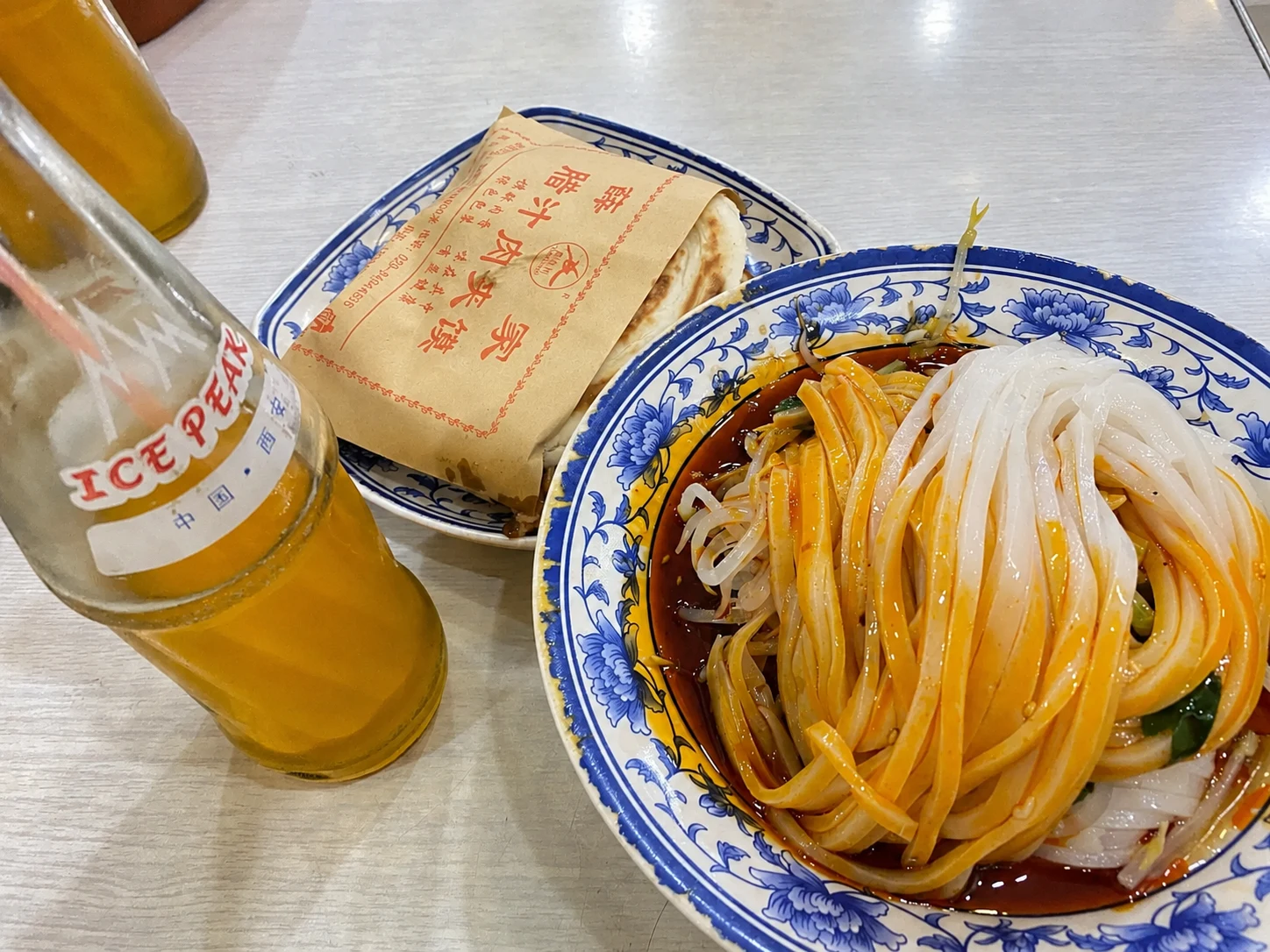
Shaanxi is wheat country. Here, flour is not a neutral ingredient. It is breakfast, lunch, road food, festival food, worker's food. It becomes steamed buns, torn noodles, belt noodles, dumpling wrappers, flatbreads, and bowls that can carry a day's labor. The same wheat culture puts roujiamo and liangpi together in Xi'an's three-piece lunch, changing texture and temperature without changing the city's appetite.
Biangbiang noodles begin with dough that has been given time. It is kneaded, oiled, covered, and left alone until the gluten relaxes. A rushed dough tears. A rested dough stretches.
The cook presses one piece flat. His hands know where the dough is willing and where it will resist. He pulls, slaps, pulls again. Each strike lengthens the strip. The board answers every time.
Biang.
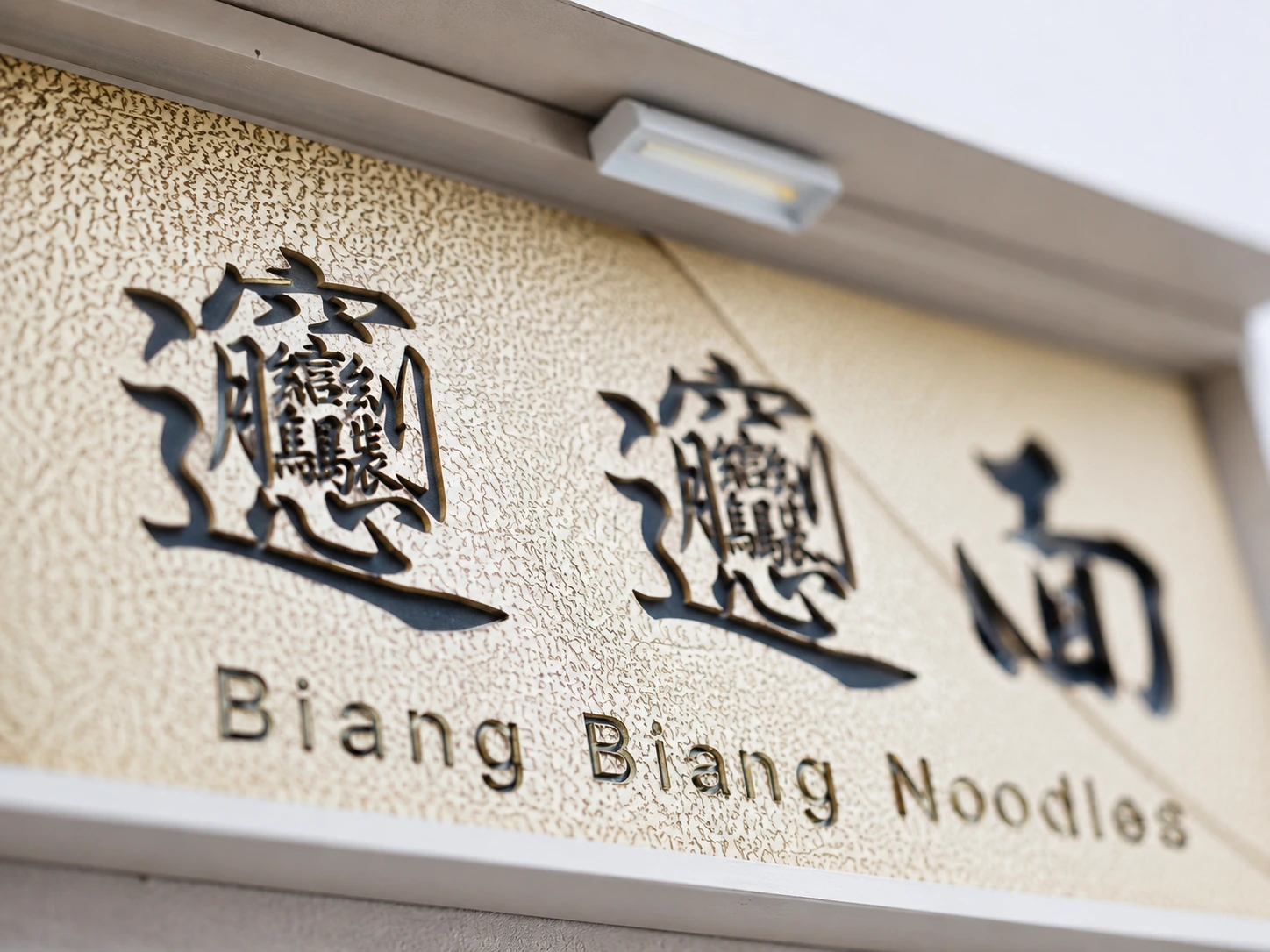
Later, people made the sound into a character so complicated that many menus printed it like a small picture. That is an amusing story, but the character is only the shadow. The real word is still the sound.
A Belt in the Pot
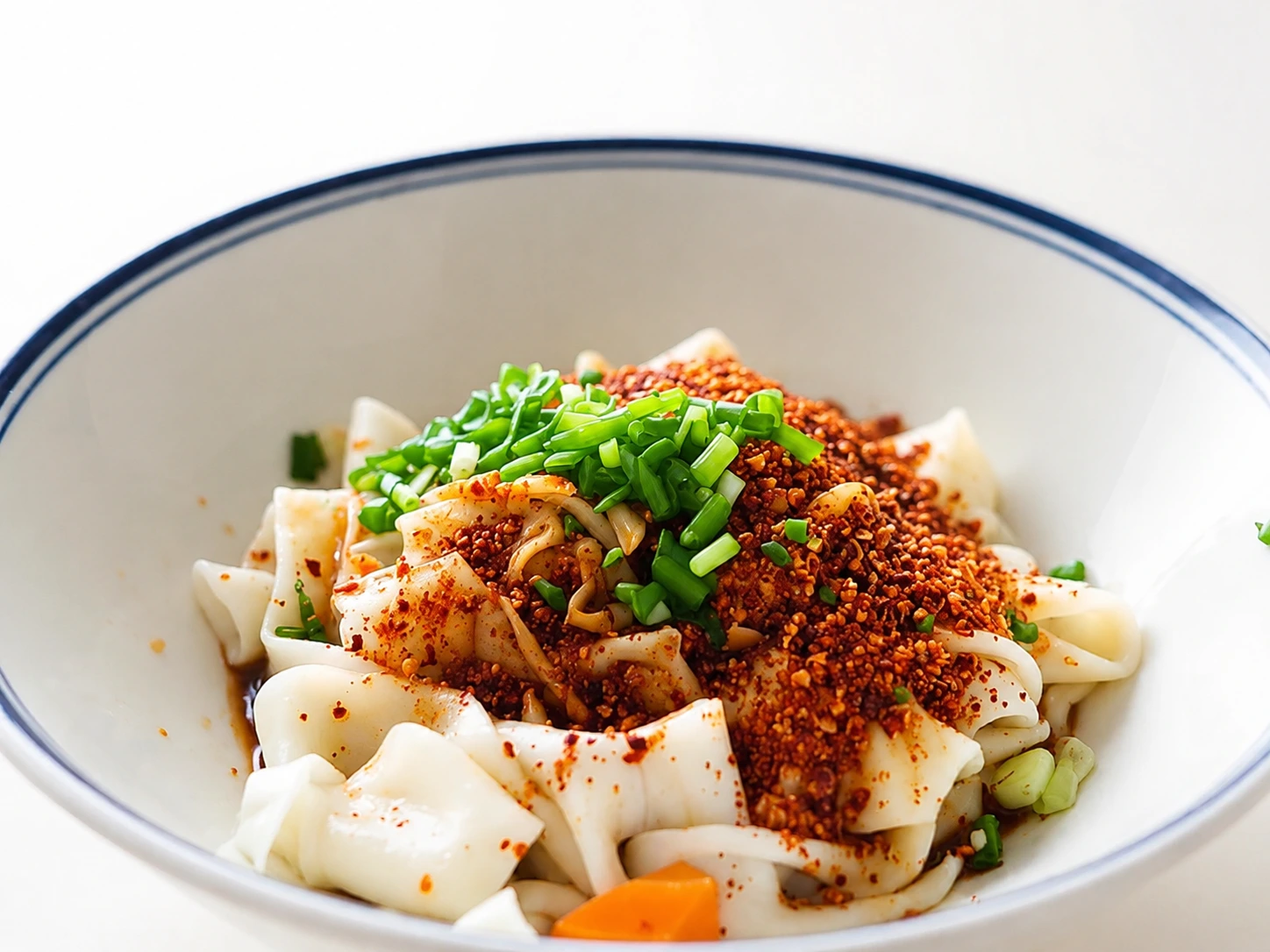
By the time the noodle reaches the boiling water, it is no longer a strand. It is a belt: wide, uneven at the edges, strong enough to fold over itself. It enters the pot in loose waves. The water rolls around it. The noodle thickens, softens, and keeps a slight fight in its center.
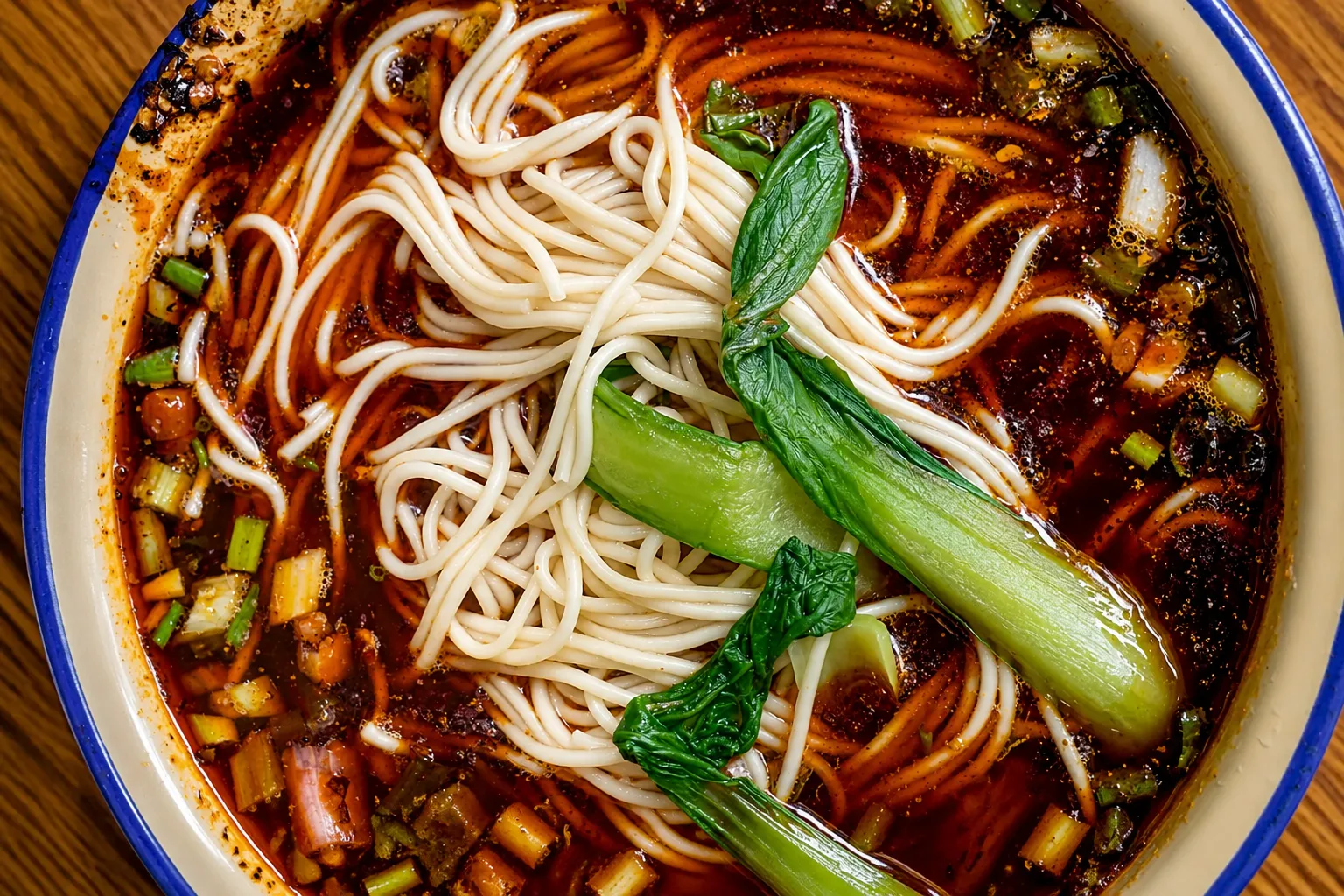
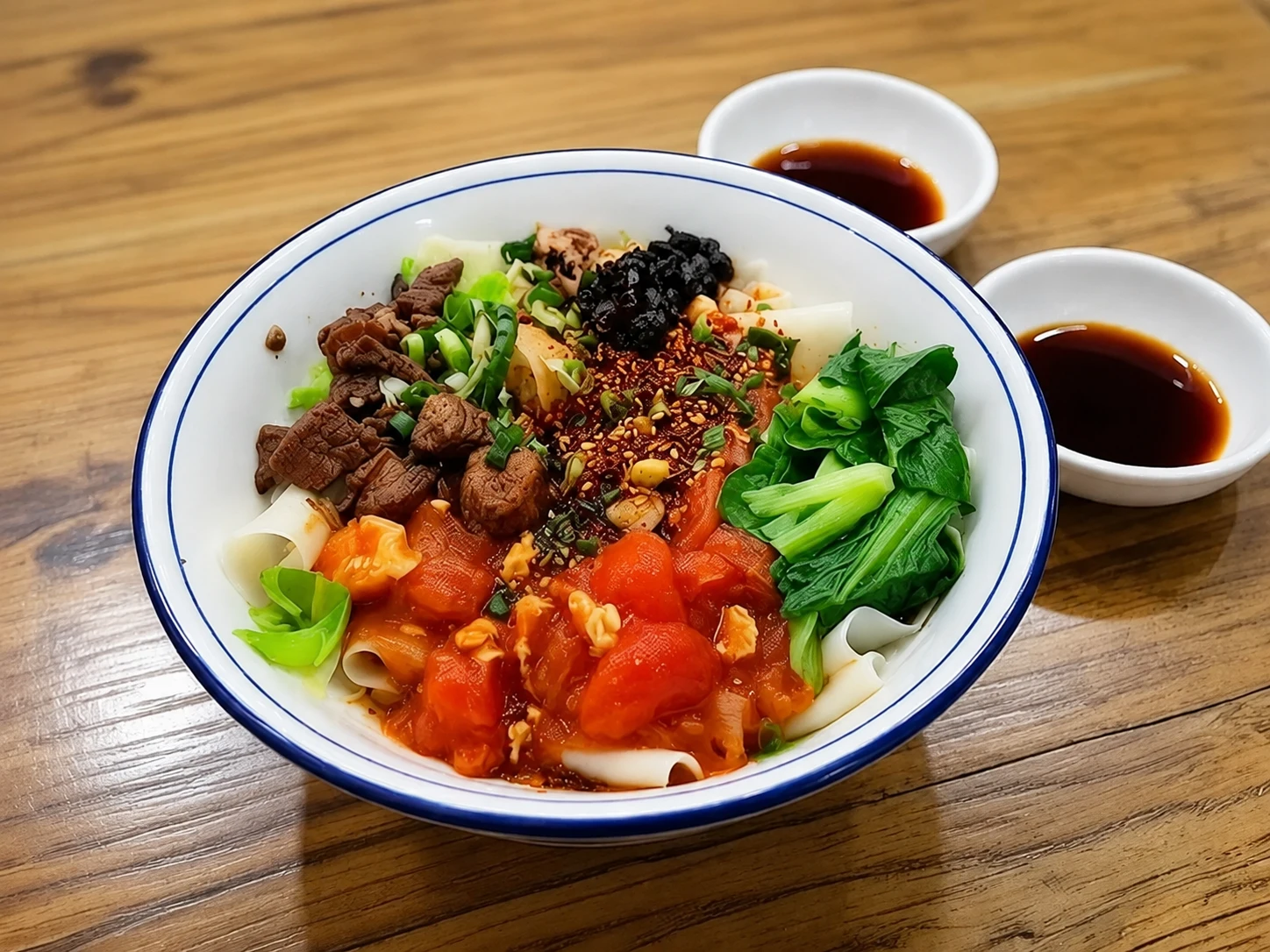
The bowl is prepared before the noodle arrives. Scallions. Garlic. Ground chili. Sometimes leafy greens, sometimes a spoonful of minced meat or tomato and egg. Vinegar waits nearby. The ingredients look plain until heat enters.
The cooked noodle lands on top, heavy and pale. It does not sit neatly. It folds like cloth.
Then the cook lifts a ladle of hot oil.
The Moment the Bowl Wakes Up
The oil is poured over chili, garlic, and scallion.
For one second, the bowl becomes louder than the shop. The chili darkens. Garlic sweetens. Scallion sharpens. Steam jumps up with the smell of roasted pepper and wheat. This is youpo, the oil-splash that turns a bowl of noodles into something alive.
The sound is different from the slap of dough. The first biang belongs to the board. This hiss belongs to the bowl.
The diner must mix before eating. Chopsticks go down to the bottom and lift. The wide noodle folds over itself, dragging chili oil and vinegar along its surface. Red streaks become red shine. Garlic hides in the folds. The noodle grows heavier with every turn.
The first mouthful is not polite. It is chewy, hot, oily, sour, and fragrant. The noodle pulls back against the teeth before giving way. The chili oil clings. Vinegar cuts through. Garlic stays in the nose after the bite is gone.
Biangbiang noodles do not ask to be admired. They ask to be lifted with both chopsticks and eaten before the oil cools.
The Board Keeps Talking
Xi'an has many noodles, each with its own thickness, broth, knife mark, and temper. But biangbiang is the one that announces itself by striking the table. It turns lunch into a rhythm: rest, pull, slap, boil, splash, mix.
When the bowl is nearly empty, the last pieces are the best test. If the noodle was made well, the final fold still has strength. If the oil was hot enough, the chili still smells roasted rather than raw. If the vinegar was right, the heaviness does not tire the mouth.
The diner leaves a red shine at the bottom of the bowl.
Behind the counter, another strip of dough is lifted. The cook stretches it between his hands. For a moment it hangs silently in the air.
Then the board speaks again.