The Gurgle Before Dawn
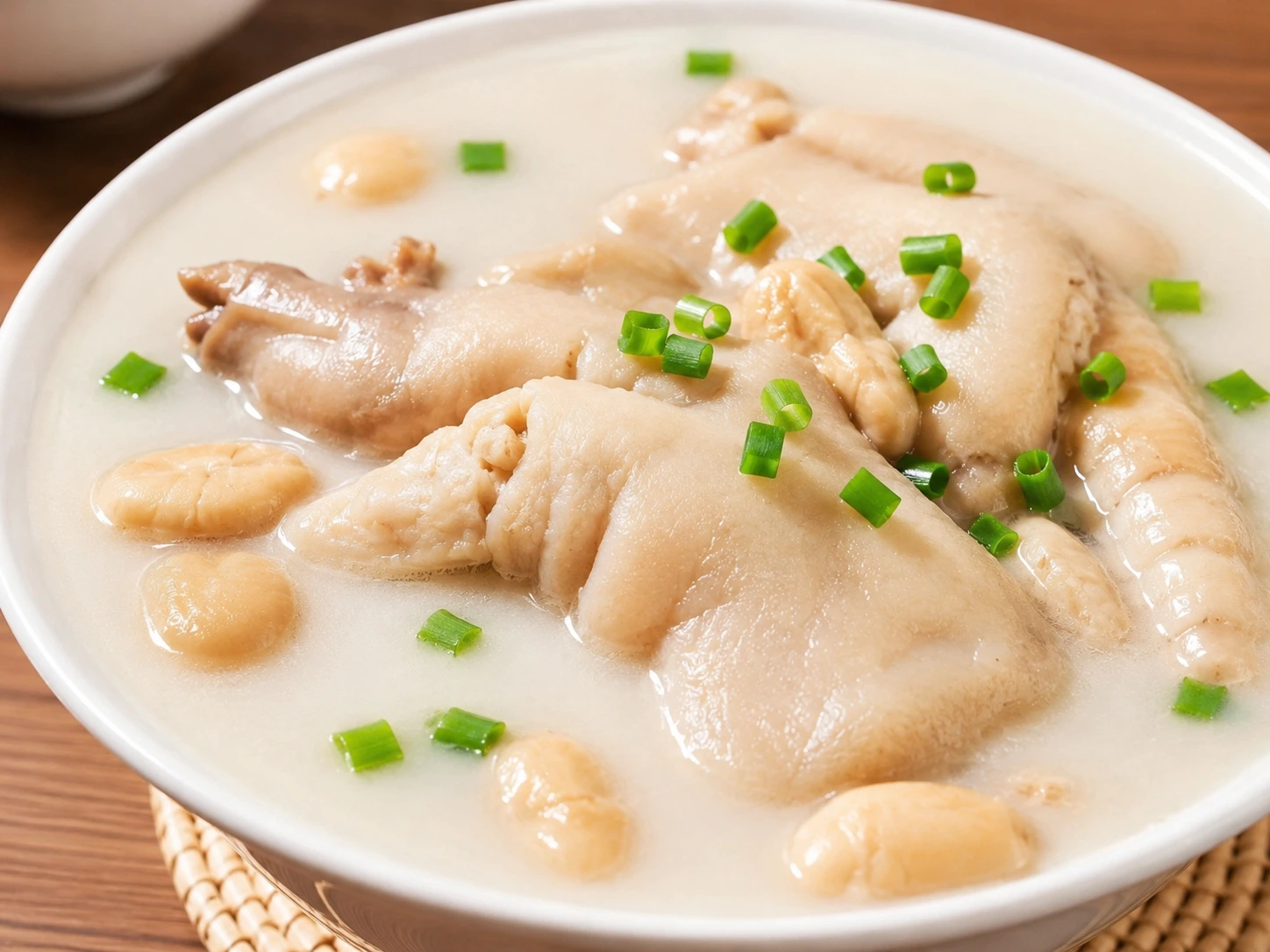
The pot is old, the glaze cracked around the rim from decades of heat cycles. It sits on a gas burner turned so low the flame is barely visible, a blue whisper under the ceramic belly. Inside, pork hocks float in water that has been at a tremble for five hours. The meat has given up its collagen. The bones have given up their marrow. The water has become something else entirely.
A cook named Auntie Zhou checks the pot at four in the morning. She does not stir. Stirring clouds the broth. She only looks, tilting the lid just enough to let out a puff of steam that smells of pork fat and white pepper and the faint sweetness of yellow rock sugar dissolved hours ago. The liquid is milky white, the color of porcelain, thick enough that a spoon dragged through it leaves a trail that closes slowly, like cream.
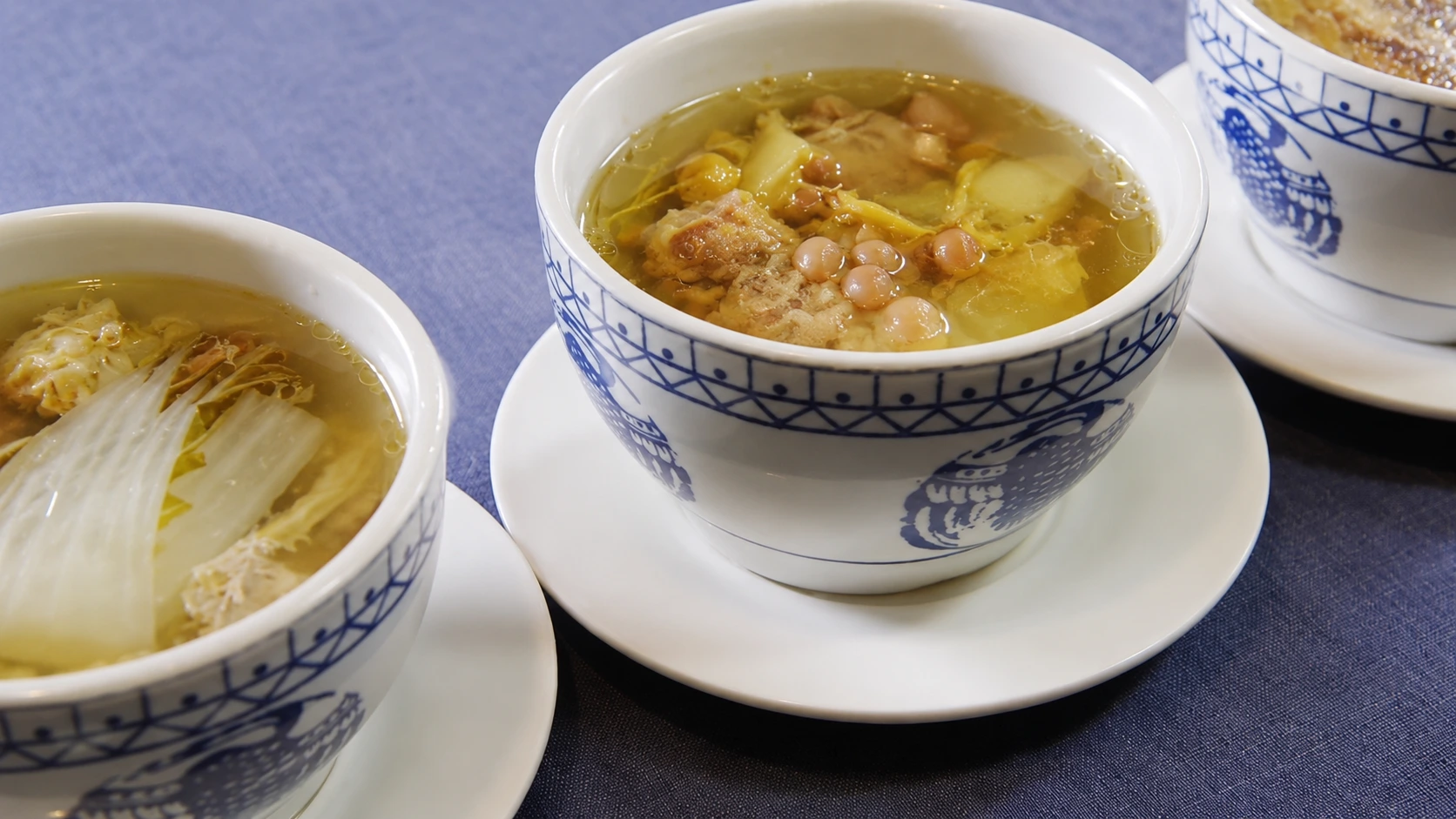
This is Lao Ma pork hock soup. It is not a lunch food. It is not a dinner food. It is the food of the night shift worker, the taxi driver finishing his last fare, the student pulling an all-nighter before an exam. In Chengdu, people eat it at five in the morning, when the broth is at its deepest and the meat falls from the bone if you breathe on it.
The Hock That Gives Everything
The pork hock is not a pretty cut. It is the lower leg, heavy with bone and sinew and a thick layer of skin that would be tough as leather if cooked quickly. Auntie Zhou buys hers from a butcher on Hua Xing Street who saves her the front legs, which have more meat and less fat than the hind.
She scalds them first, dunking them in boiling water for ninety seconds to tighten the skin and draw out the blood. Then she rinses them under cold tap water, scrubbing with a coarse brush until the skin is pale and clean as a peeled potato. She splits the joints with a cleaver, not cutting all the way through, letting the bones hold the pieces together so they do not fragment in the pot.
Into the cold water they go, along with ginger, scallion whites, and a single dried jujube, the red date that adds a background sweetness most eaters cannot identify. The heat comes up slowly. A rapid boil would emulsify the fat and turn the broth greasy. Auntie Zhou wants a simmer, the gentlest possible movement, a quivering surface that looks almost still.
The White That Takes Eight Hours
The color comes from collagen. As the connective tissue breaks down, it releases proteins that scatter light, turning the liquid from clear to cloudy to opaque white. There is no cream. No milk. No flour thickener. The whiteness is pure pig, extracted with patience.
At hour three, the broth is thin and gray. At hour five, it has body. At hour seven, it coats the back of a spoon. At hour eight, Auntie Zhou adds the final ingredients: fresh white beans, soaked overnight until they split their skins; snow fungus, rehydrated into frilly white rosettes; and a handful of wolfberries that turn the surface into a constellation of red dots.
She tastes with a porcelain spoon, not a metal one, which would throw off her palate. She adds salt in three small pinches, tasting between each. Too little, and the broth is flat. Too much, and it becomes a meal you finish from obligation rather than desire. The exact point is a hair's width. She has been finding it for thirty years.
The Table at Five-Thirty
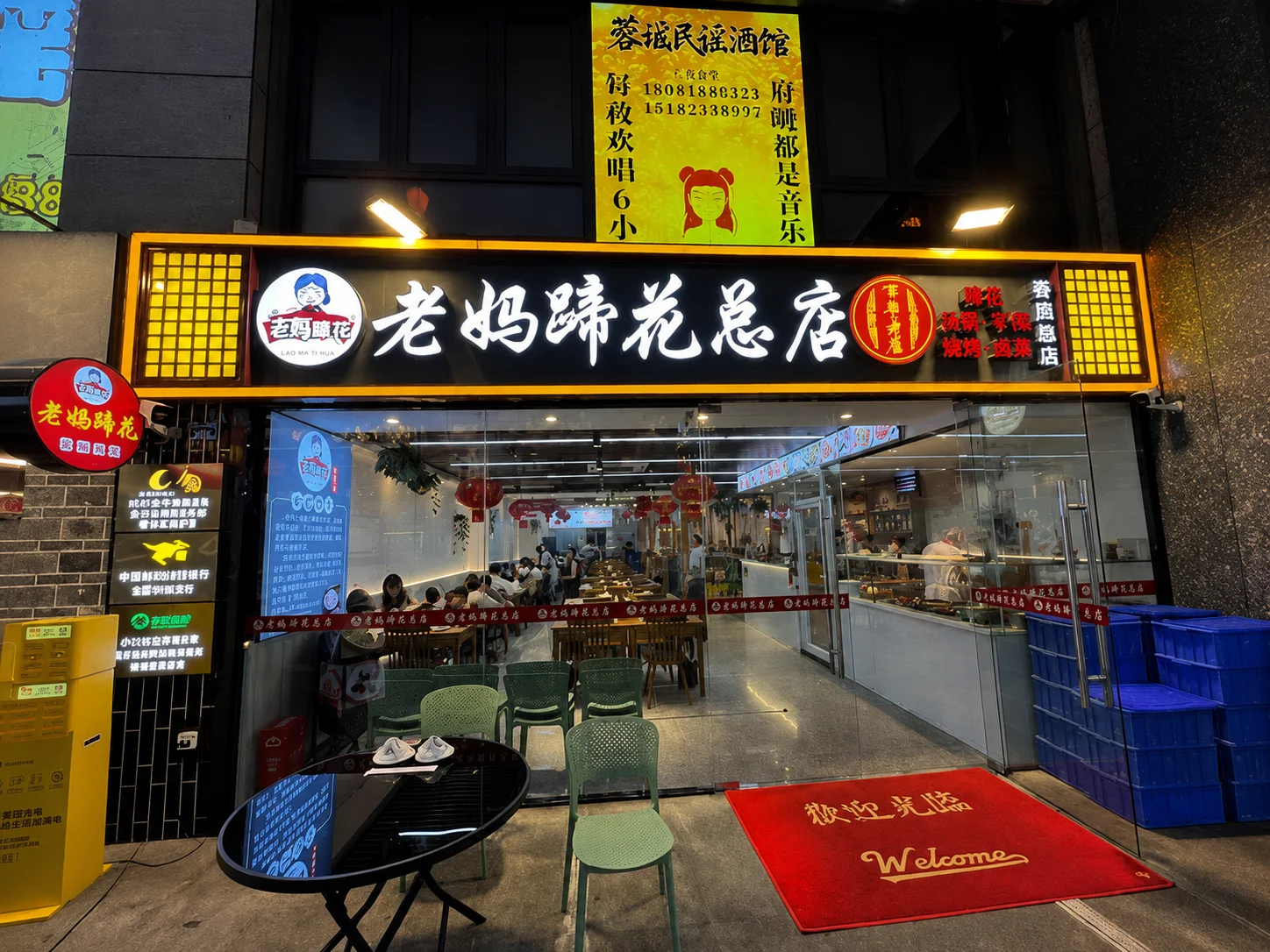
The restaurant opens at five, but the first customers arrive at five-fifteen. They are men in jackets with oil stains, women in hospital scrubs finishing night shifts, delivery drivers whose electric scooters are parked in a row outside the door. They do not look at menus. They say "yi wan," one bowl, and Auntie Zhou ladles from the pot.
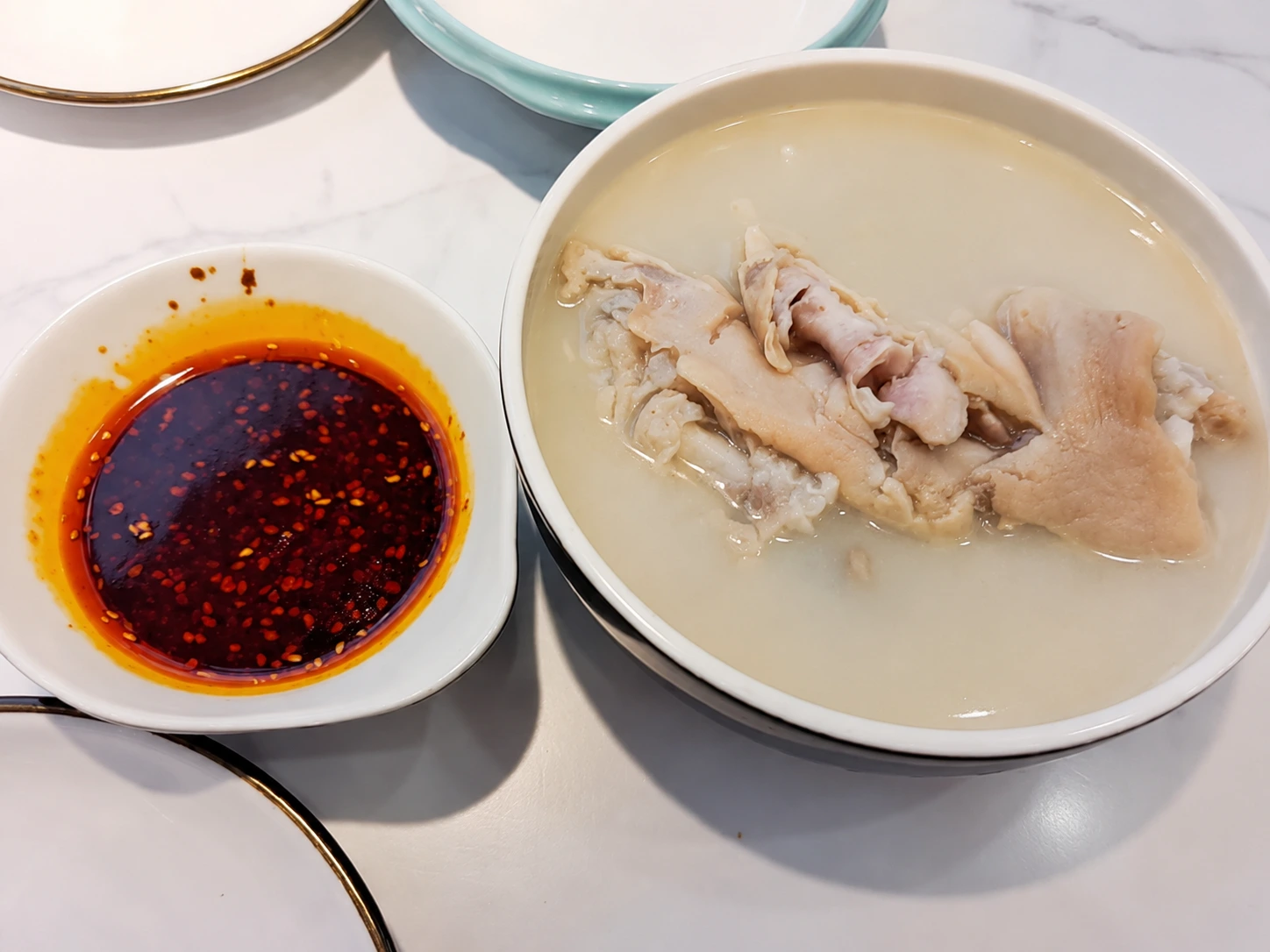
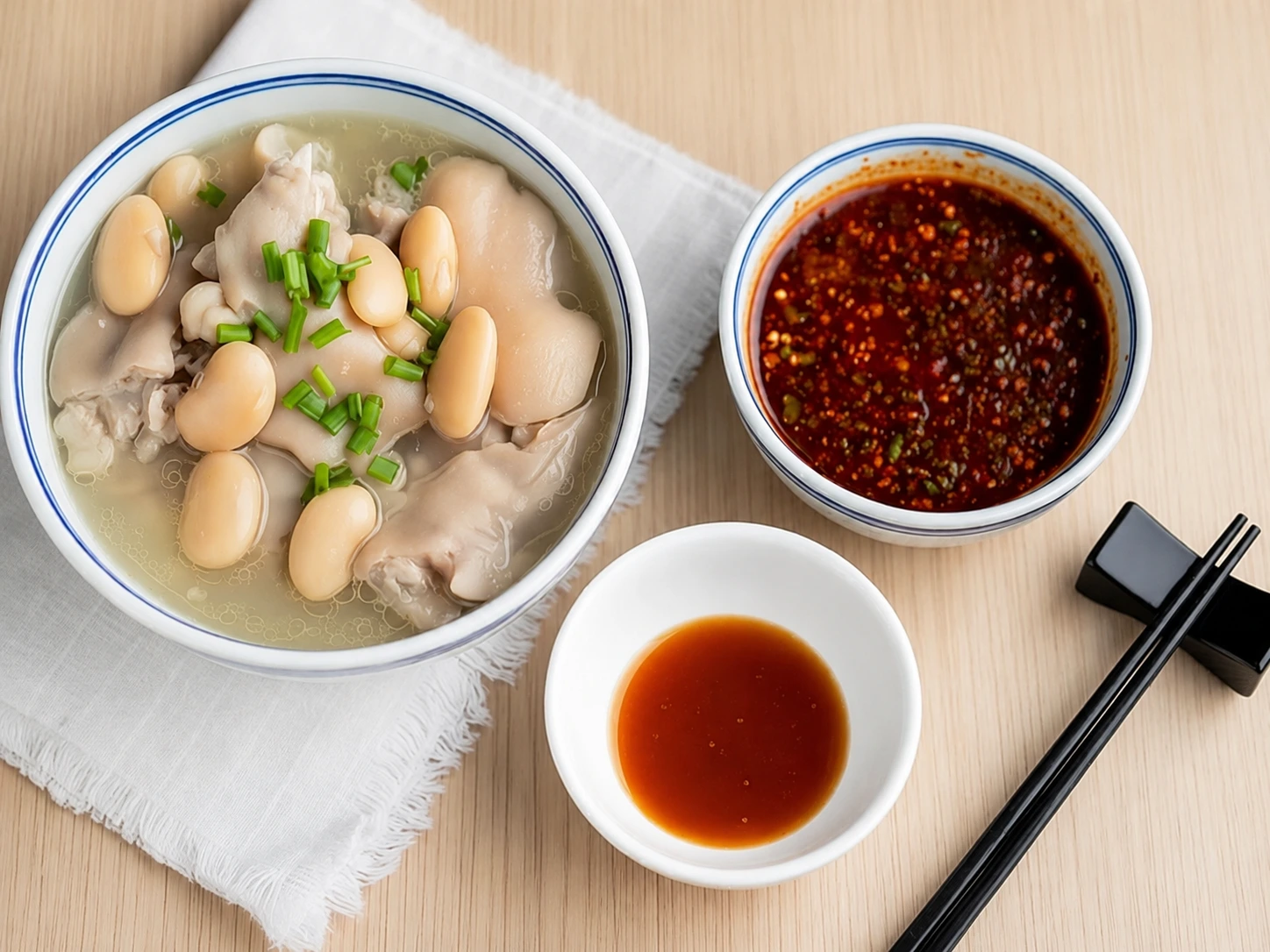
The bowl is heavy ceramic, wide enough that the broth cools slightly on its surface while the center remains scalding. A hock piece sits in the center, the skin glistening, the meat pale and loose around the bone. The beans have settled to the bottom. The wolfberries float.
You eat the broth first, sipping from the edge where it has cooled enough not to blister your tongue. It is rich without being heavy, meaty without being gamy. The white pepper prickles the back of your throat. Then you attack the hock. The skin slips off in one piece, gelatinous and mild. The meat separates into strands with the pressure of your chopsticks. The bone, when you lift it, is almost clean, the marrow a soft yellow butter that you poke out with a straw or the tip of your chopstick.
By six-thirty, the pot is half empty. By eight, it is gone. Lao Ma pork hock soup does not keep. Reheating breaks the emulsion and turns the broth grainy. Auntie Zhou makes one batch per day, and when it is finished, she turns off the burner and scrubs the pot.
The Silence After the Last Ladle
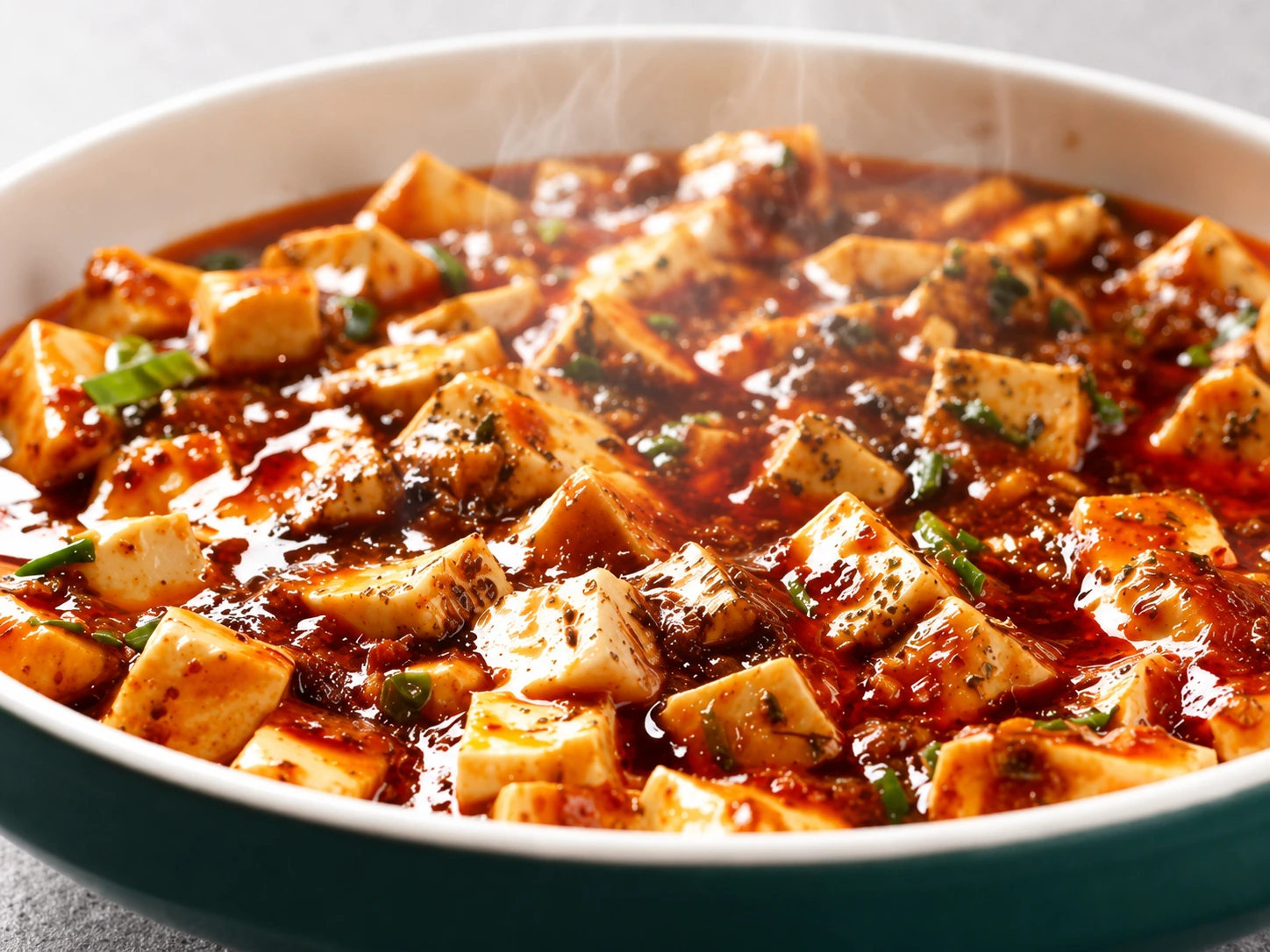
At noon, while the city eats hotpot and noodles and mapo tofu, Auntie Zhou sleeps. Her restaurant is closed, the chairs stacked on the tables, the floor mopped with water that smells of bleach and pork fat. The pot sits upside down on a rack to dry.
But her mind is still in the broth. She is thinking about tomorrow's hocks, whether the butcher will have front legs or only hind, whether the weather will be humid enough that she needs to reduce the flame to keep the simmer from breaking into a boil. She is thinking about the exact moment, eight hours from now, when she will lift the lid and see that color, the color of milk and bone and time.
The city moves around her, fast and loud and red with chili oil. The pot waits. The flame waits. The gurgle will begin again at midnight, while the rest of Chengdu sleeps, and the white broth will climb toward its final texture one slow bubble at a time.