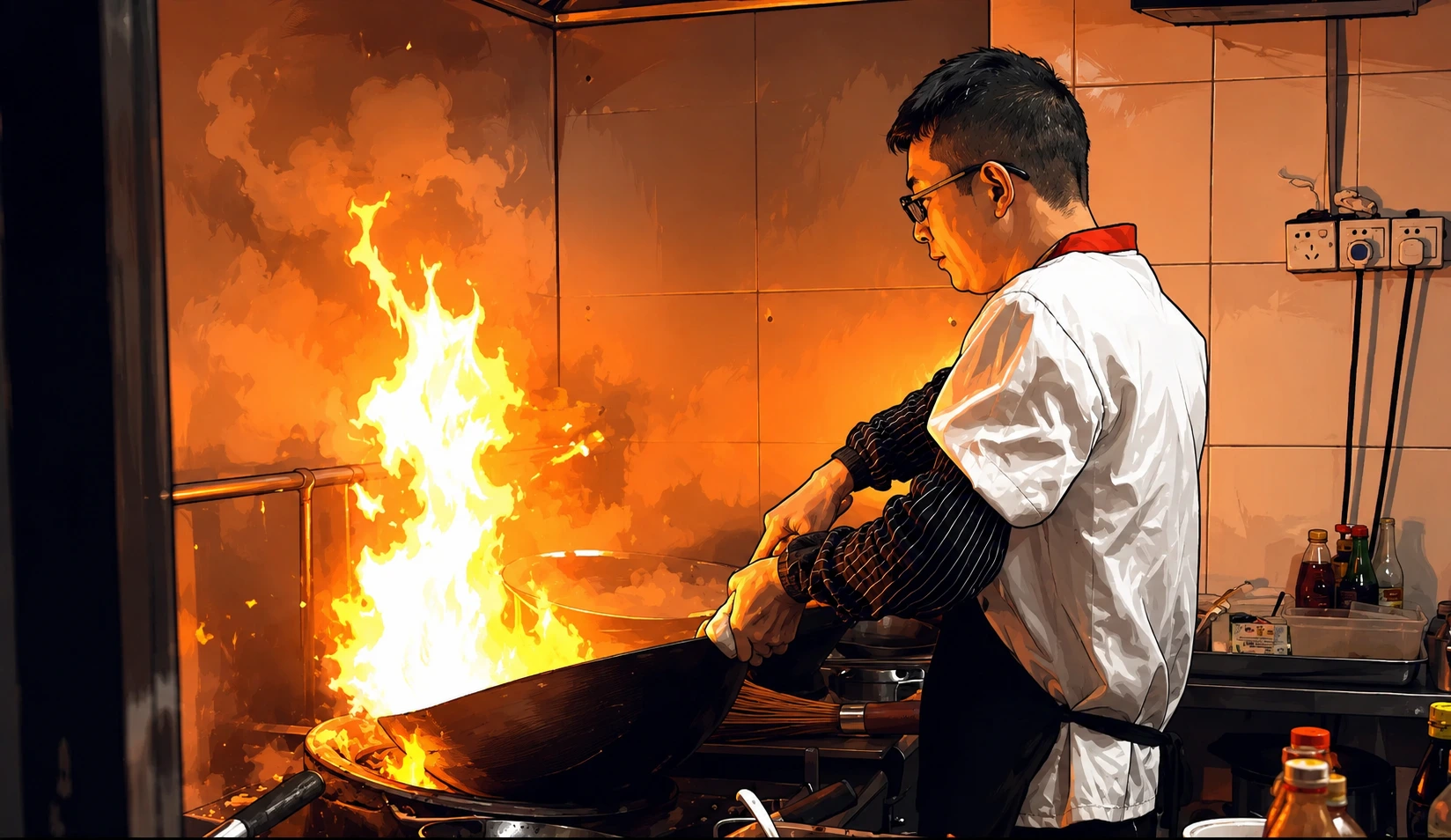
The sound arrives before the light does. A wet hiss, then a roar — oil hitting a wok that has been heating over a jet of blue flame for a full minute, the steel so hot it has begun to shimmer. Then the clang of a metal spatula, a rapid-fire rhythm like someone hammering a dent out of a pot. Then the whoosh: a tongue of orange fire leaping from the wok's rim as the cook flips the contents into the air, the oil catching, the flames climbing, the whole alley lit for a single second in the glow of burning rice wine.
This is not a kitchen. This is the street. A cluster of plastic tables has colonized a patch of pavement between two old buildings in Liwan District. Above, laundry hangs from bamboo poles. Below, a cook in a sleeveless undershirt and rubber sandals moves between two woks like a man conducting an orchestra of fire. This is a dai pai dong — Guangzhou's original open-air food stall — and on a humid June night, with the temperature still hovering near thirty degrees, the alley is fuller than most restaurants will be all day.
The License Plate on the Wall
To understand a dai pai dong, you have to look at the sign. Not the one with the menu — the one with the license. After the Second World War, as Guangzhou rebuilt itself, the government issued permits to families who had lost their livelihoods, allowing them to cook and sell food on the street. Each permit came with a large paper plate — a pai — that had to be displayed. That is where the name comes from: dai pai dong, "big license plate stall."
Most of those original plates are gone now. The government stopped issuing new ones decades ago, and the number of licensed dai pai dong in Guangzhou has shrunk from the thousands to maybe two dozen, hidden in the folds of the old city. But the spirit has never died. Walk through any residential neighborhood after nine at night and you will see them: unlicensed, unofficial, unstoppable. A wok on a portable burner. Four plastic tables. A cooler full of beer and soy milk. A woman chopping garlic on a board balanced across two buckets. The license plates may be gone, but the hunger that created them has not gone anywhere.
The Breath of the Wok
There is a phrase in Cantonese cooking that every dai pai dong cook lives by: wok hei. It translates, roughly, to "the breath of the wok." It is not an ingredient. It is not a technique. It is what happens when oil, flame, steel, and speed converge at exactly the right moment — a smoky, slightly charred flavor that cannot be replicated on an electric stove or a nonstick pan. You can taste it. You can smell it. You cannot fake it.
A dai pai dong cook achieves wok hei through a combination of things that would terrify a home cook. The wok is carbon steel, seasoned black by years of use. It is never washed with soap — only scraped clean with a bamboo brush and hot water. The burner beneath it throws out more BTUs than most restaurant kitchens. And the cook works at a speed that makes the whole process look like a single continuous motion: oil in, garlic and ginger hitting the hot steel with a crackle, the main ingredient tossed in before the aromatics have a chance to burn, the spatula moving in a figure-eight pattern that flips and folds and keeps everything in motion, soy sauce splashed from a bottle with the cap already off, a ladle of stock from a pot kept warm at the edge of the burner, a final toss, a final whoosh of flame, and then the whole thing scraped onto a plate and handed across the counter before the sizzle has even stopped.
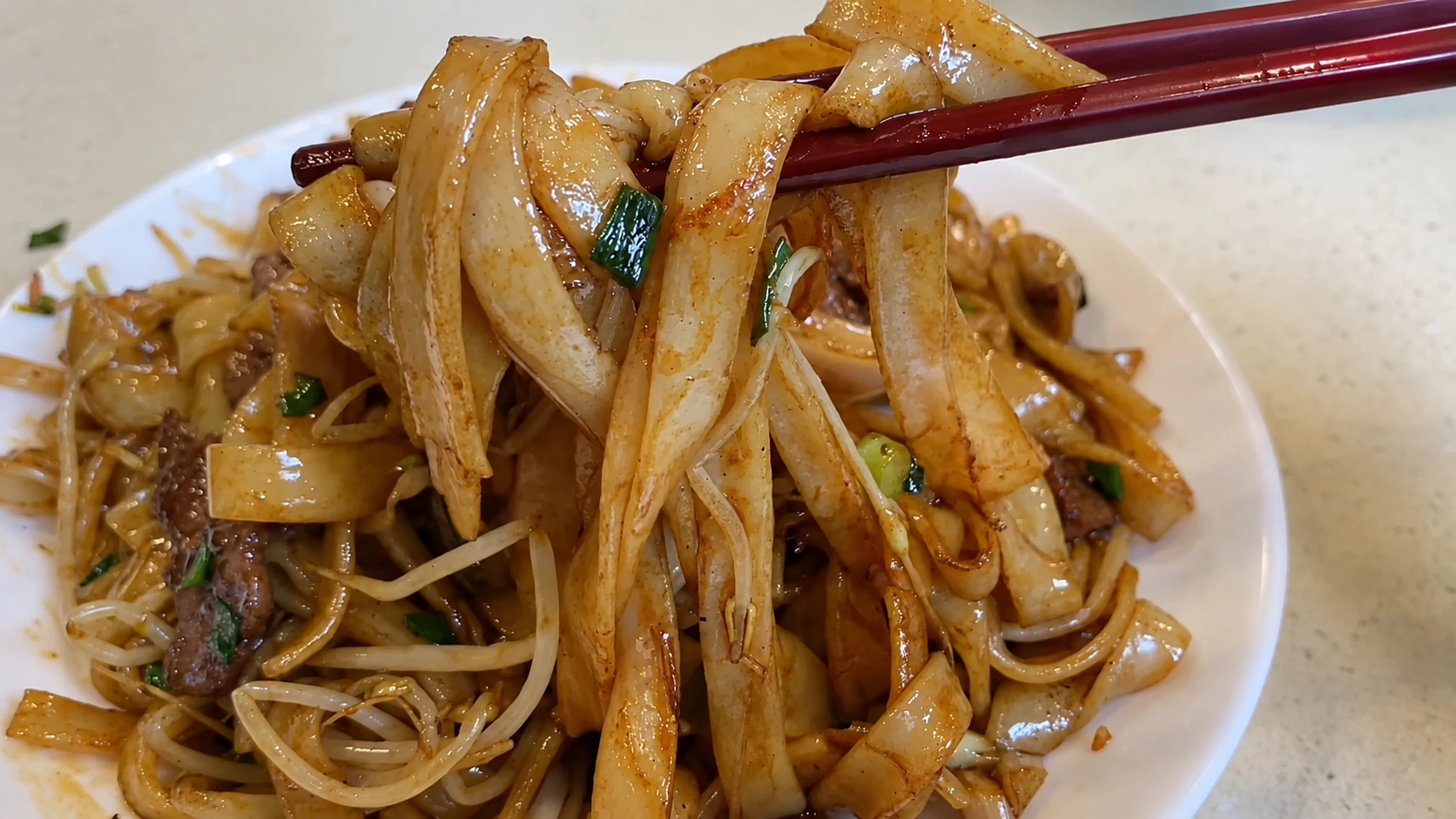
The signature dish at almost any dai pai dong is beef chow fun — dry-fried flat rice noodles with beef, bean sprouts, and scallions. It is the test. A cook who cannot produce a plate of beef chow fun with properly seared noodles, each strand separate, carrying the faint smokiness of wok hei, is not a cook worth following. A cook who can — and there are many in this city — will have a line of people waiting at ten-thirty on a Tuesday night.
Plastic Stools and Cold Beer
The dining room of a dai pai dong is whatever space the stall can claim. Sometimes it is a covered arcade beneath a row of old qilou buildings. Sometimes it is a dead-end alley where the only traffic is a cat and an occasional motorcycle. The tables are low, round, and permanently sticky. The stools are plastic, the kind that stack ten high and cost five yuan each. They are never quite level because the pavement is never quite level. You learn to sit with one leg compensating.
The menu is taped to the wall or, more often, shouted at you by a server who has already decided what you should order. There are no English translations, no pictures, no prices that would make sense to anyone who has not lived in this neighborhood for at least a decade. You point at what the next table is eating. They nod. The server nods. The cook nods. The wok flares.
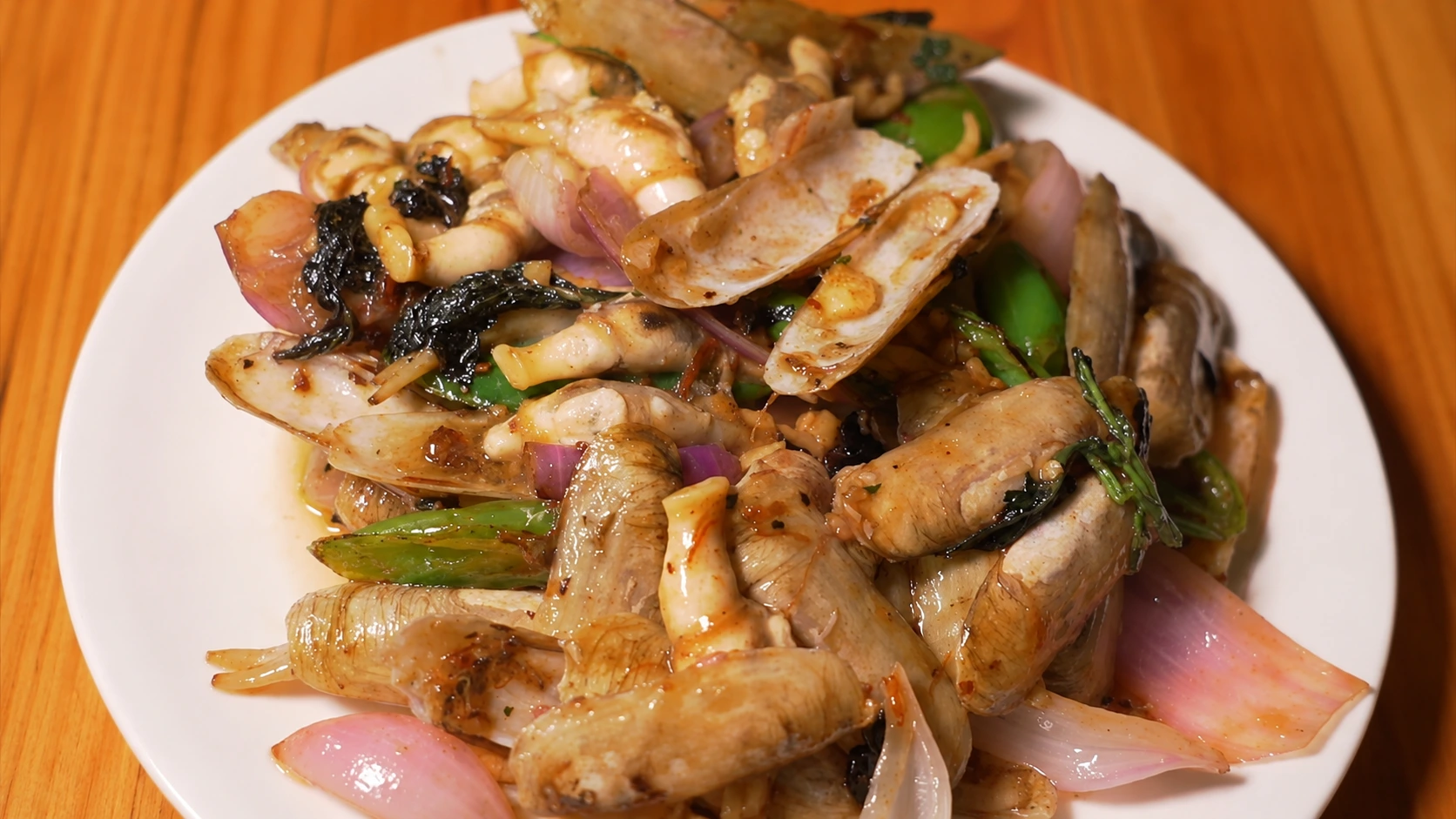
The dishes come when they come. Not together. Not in any order that a Western diner would recognize as logical. A plate of salt-and-pepper squid might arrive first, then ten minutes of nothing, then the clams in black bean sauce, then another pause long enough to finish your beer and signal for another, then the beef chow fun, then the stir-fried morning glory with garlic, then — just when you think the meal is over — the claypot rice that was ordered forty minutes ago because claypot rice takes forty minutes and the cook started it the moment you sat down.
Around you, the alley is alive. A table of construction workers is halfway through a case of Zhujiang beer, their shirts off and draped over the backs of their stools. A young couple shares a single plate of noodles, heads bent together, chopsticks crossing. An old woman walks through the alley with a cart selling fresh lychees, calling out prices in a singsong Cantonese that cuts through the noise of the woks. A man in a suit jacket, tie loosened, sits alone with a bowl of congee and a plate of youtiao, the fried dough sticks, tearing pieces off and dropping them into the steaming rice porridge. He looks exhausted. He looks happy.
The Night's Last Order
By midnight, the first wave of diners has gone home. The second wave is arriving: taxi drivers coming off their shifts, young people who have been out drinking and need something hot and salty to absorb the alcohol, night-shift workers for whom this is not dinner but breakfast. The cook does not slow down. If anything, he speeds up. The wok is hot. The orders are coming. There is no reason to stop.
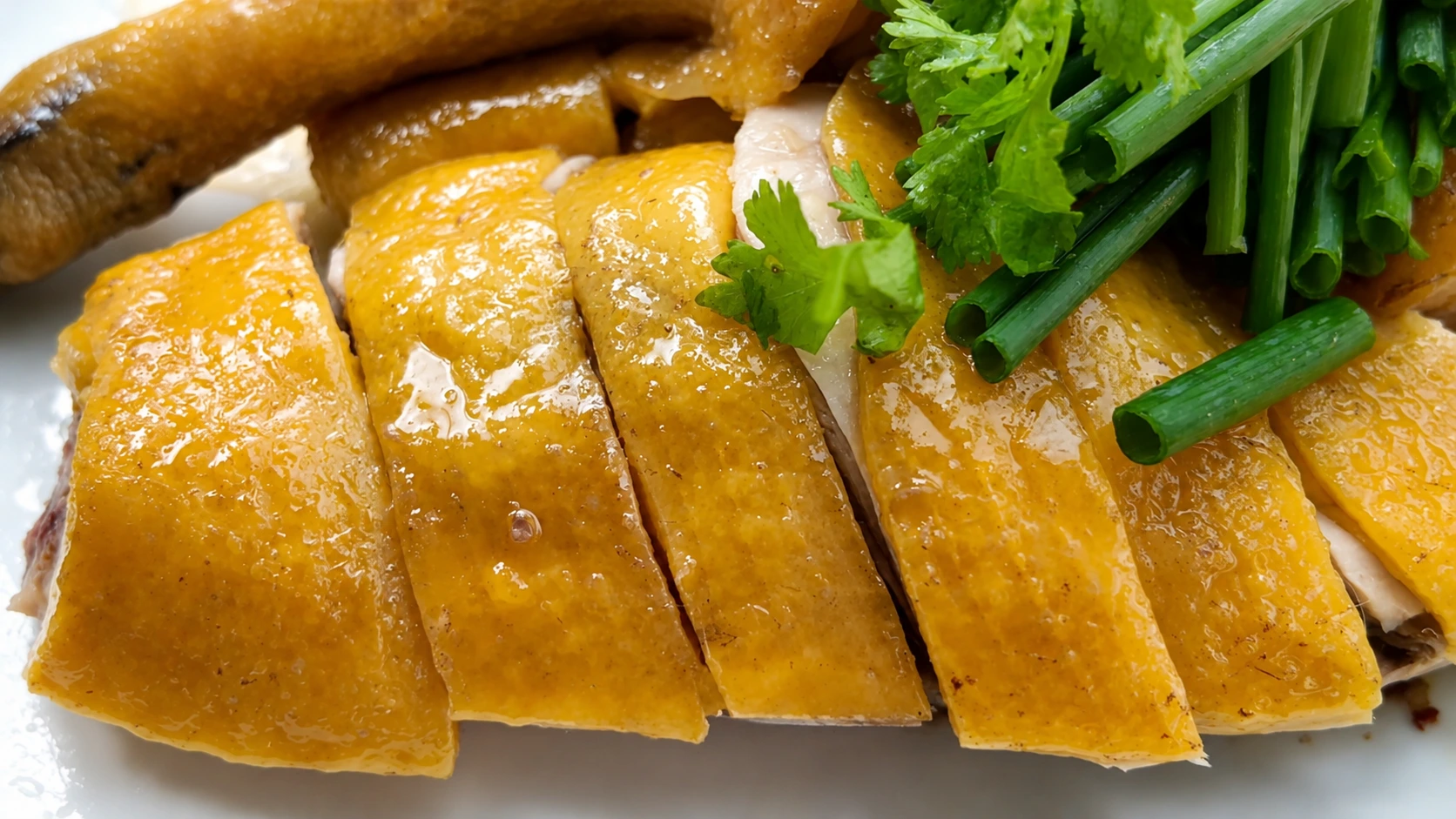
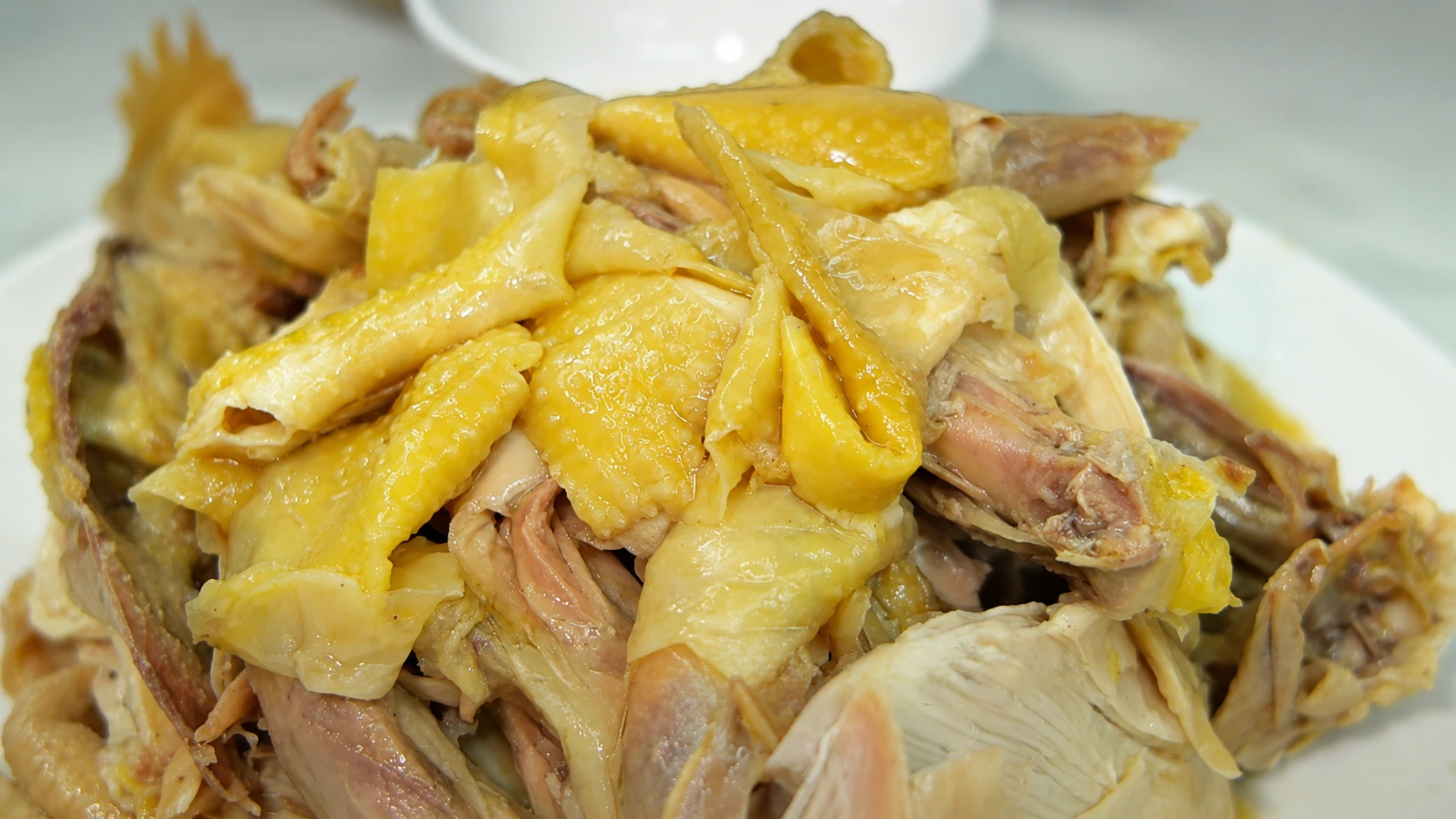
At one in the morning, a man at the corner table orders a final dish: hand-shredded chicken, served cold, the skin a pale gold and the meat glistening with its own juices and a whisper of sesame oil. It is a dish that requires no fire — the chicken was poached hours ago, chilled, and pulled apart by hand — but the cook still makes it with the same focus he gave the beef chow fun. He arranges each strand of meat on the plate with the skin draped across the top, spoons the poaching broth around the edge, and wipes the rim of the plate with a cloth before handing it over. Even at one in the morning, on a plastic plate, in an alley, presentation matters.
By two, the alley begins to empty. The tables are wiped down with a rag dipped in tea. The stools are stacked. The woks are scraped clean and hung on hooks. The cook turns off the gas and the sudden silence is shocking — no whoosh, no clang, no sizzle. Just the hum of a refrigerator and the distant sound of a motorcycle.
Tomorrow night, the fire will come back. It always does. In the alleys of old Guangzhou, the woks have been burning since before anyone can remember, and they will burn long after the last license plate has rusted away. All you have to do is follow the sound. Follow the whoosh. Follow the light that flickers orange against the brick, and when you find it, pull up a plastic stool. Dinner is ready.