The zenggao seller's day begins the night before.
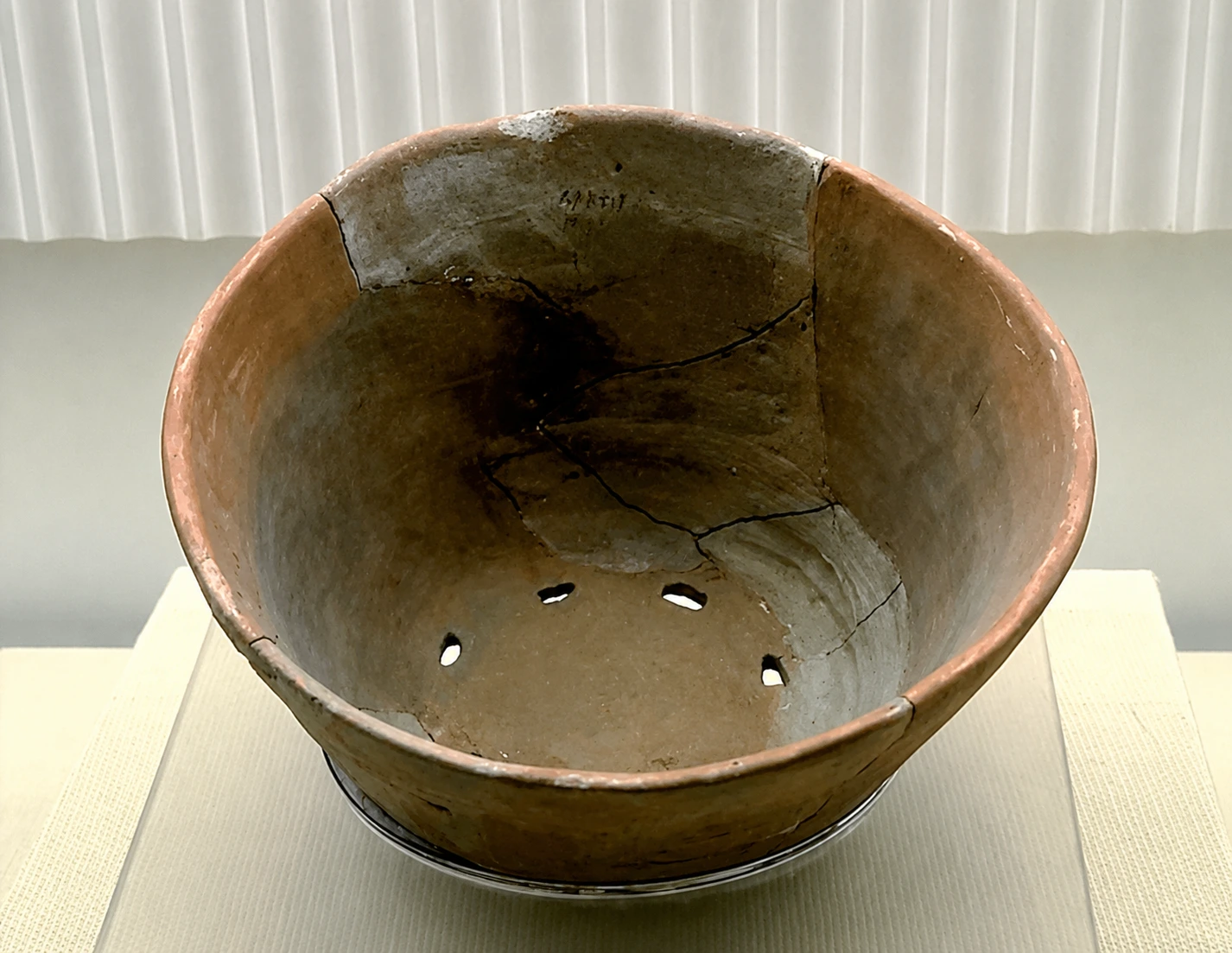
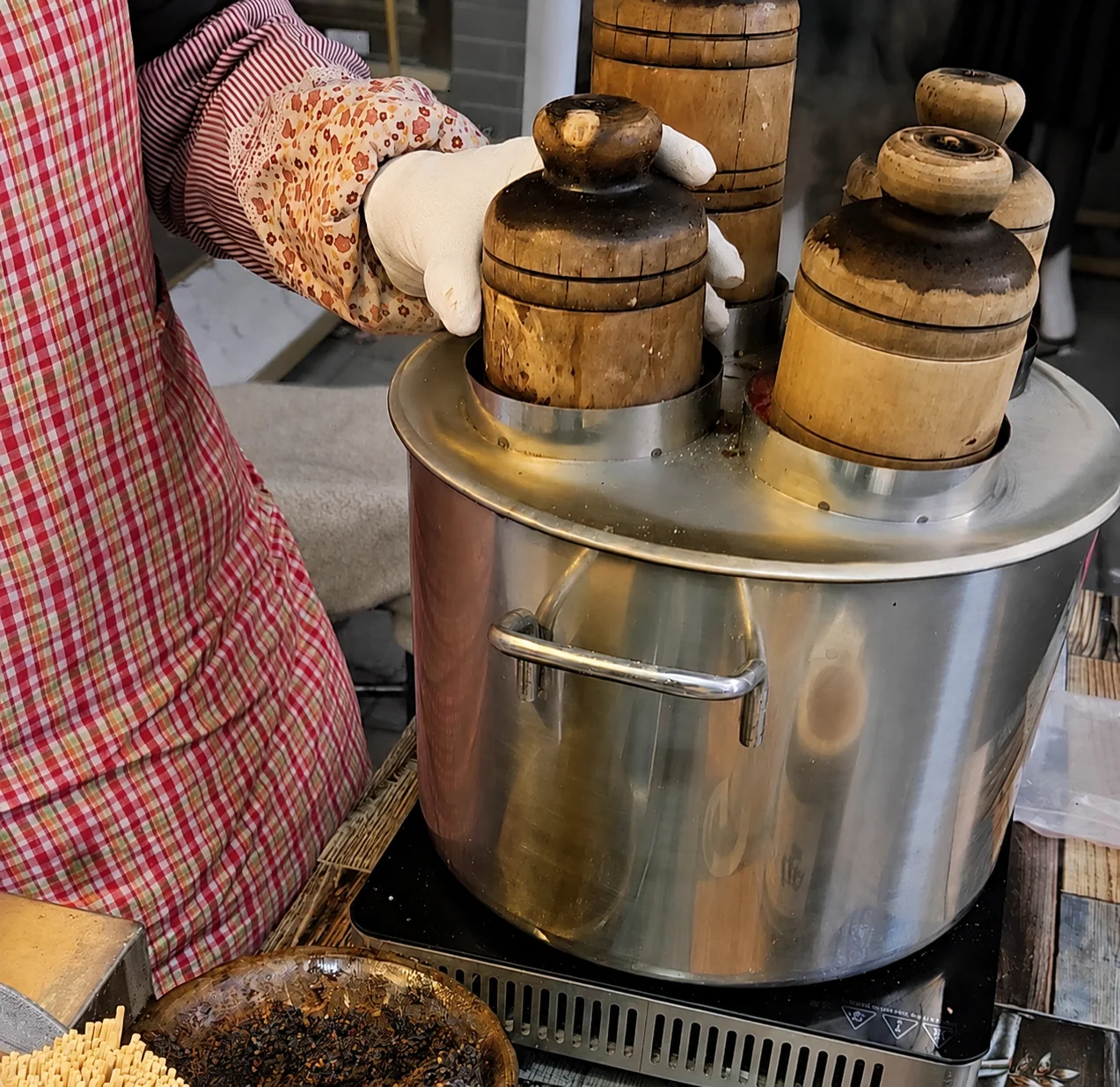
When the streets thin and shop signs go dark, glutinous rice is soaked, red dates are washed, and the deep steamer is prepared. The old vessel, called a zeng, gives the cake its name. It is not a delicate pastry mold. It is a working pot, built for layers, steam, and time.
By dawn, the lid is heavy with condensation. When it lifts, the smell comes out first: dates, rice, beans, and a sweetness that feels warmer than sugar.
What comes out of that pot is zenggao, also written as zeng gao: a dense Xi'an breakfast cake made by steaming layers of glutinous rice, red dates, and beans for hours. Its name comes from the old *zeng* steaming vessel. Vendors do the slow work overnight so the cake is hot, soft, and ready when the city's first customers arrive.
A Cake Made by Weight and Waiting
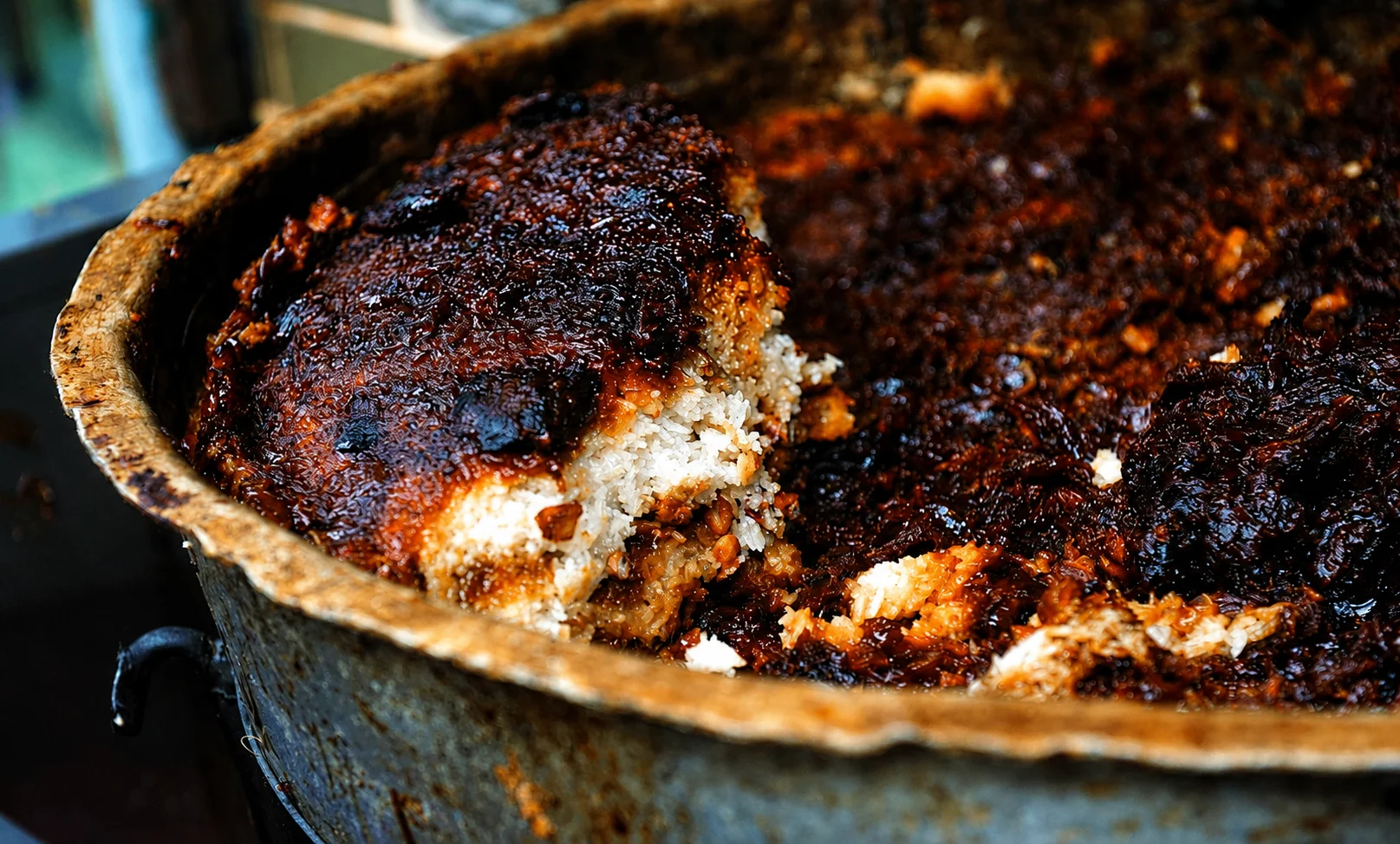
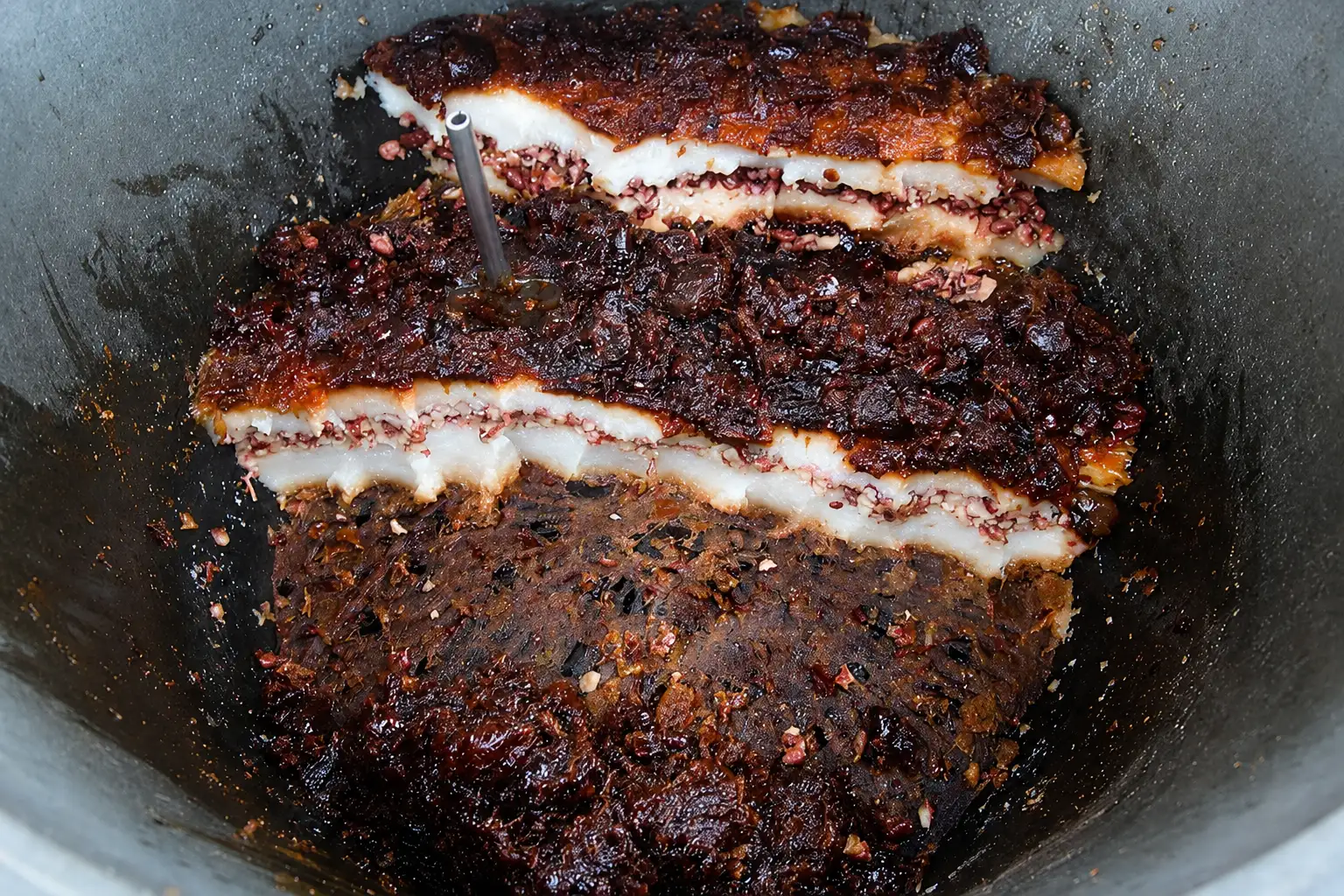
Zenggao is simple in ingredients and demanding in patience. Glutinous rice is layered with red dates, sometimes candied dates, and often kidney beans. The layers are pressed down. Water is controlled carefully. The steamer works for hours, often four to six, until the rice grains soften, swell, and take in the dark fruit sweetness.
The surface turns red-brown where the dates collapse into the rice. A scoop cuts through the layers and comes up sticky, shining, and uneven. That unevenness is part of its charm. One bite may be mostly rice, another heavy with date paste, another carrying the soft bite of beans.
It is eaten in the morning, but it does not belong to haste. A vendor can sell it quickly only because the night has already done the slow work.
Why the Sweetness Feels Different
Many desserts announce themselves with sugar. Zenggao speaks through steam. The sweetness is rounded by the fruit, deepened by heat, and held in the chew of glutinous rice. It does not crunch. It does not flake. It stretches and clings.
That texture matters in Xi'an. This is a wheat city, but its sweet morning snacks often lean on stickiness: rice, honey, date paste, syrup. They are food for cold fingers and early errands, for people who need something dense before a long walk through markets or work sites.
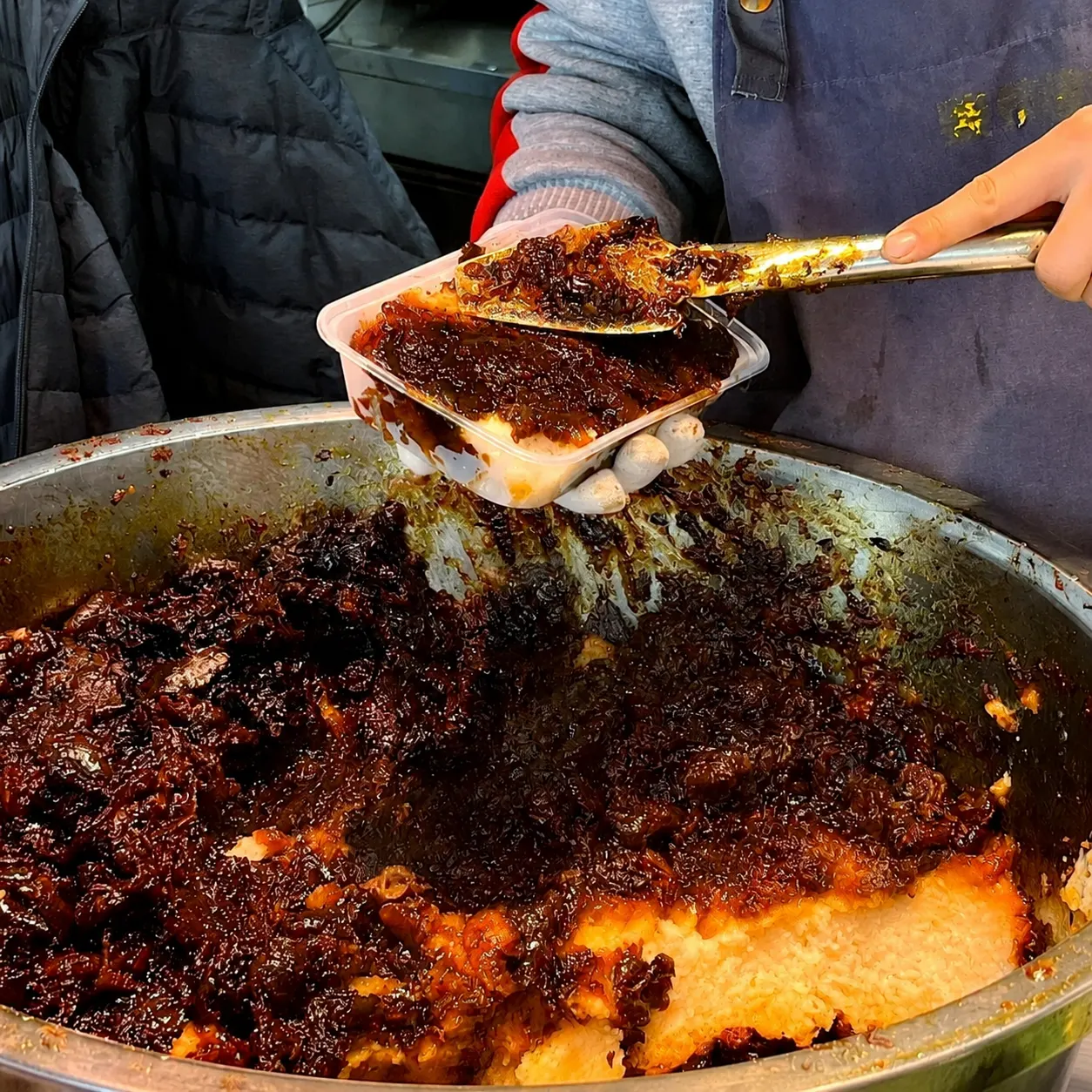
The vendor's shovel scrapes the steamer wall. A portion lands in a small bowl or paper tray. It looks humble, almost rough. Then the steam reaches your face, and the red dates smell like they have been cooked into memory.
Zenggao has no frosting, no bright decoration. Its luxury is that someone stayed awake long enough to let rice become soft.
The Small Round Mirror
Xi'an's sweet street food has other morning voices. Jinggao, or mirror cake, is one of the most playful. Small bamboo steamers hold rounds of glutinous rice flour, usually filled or topped with sweet pastes, nuts, sesame, rose jam, or brown sugar. When the lid opens, the cake is pale, round, and smooth, like a little mirror.
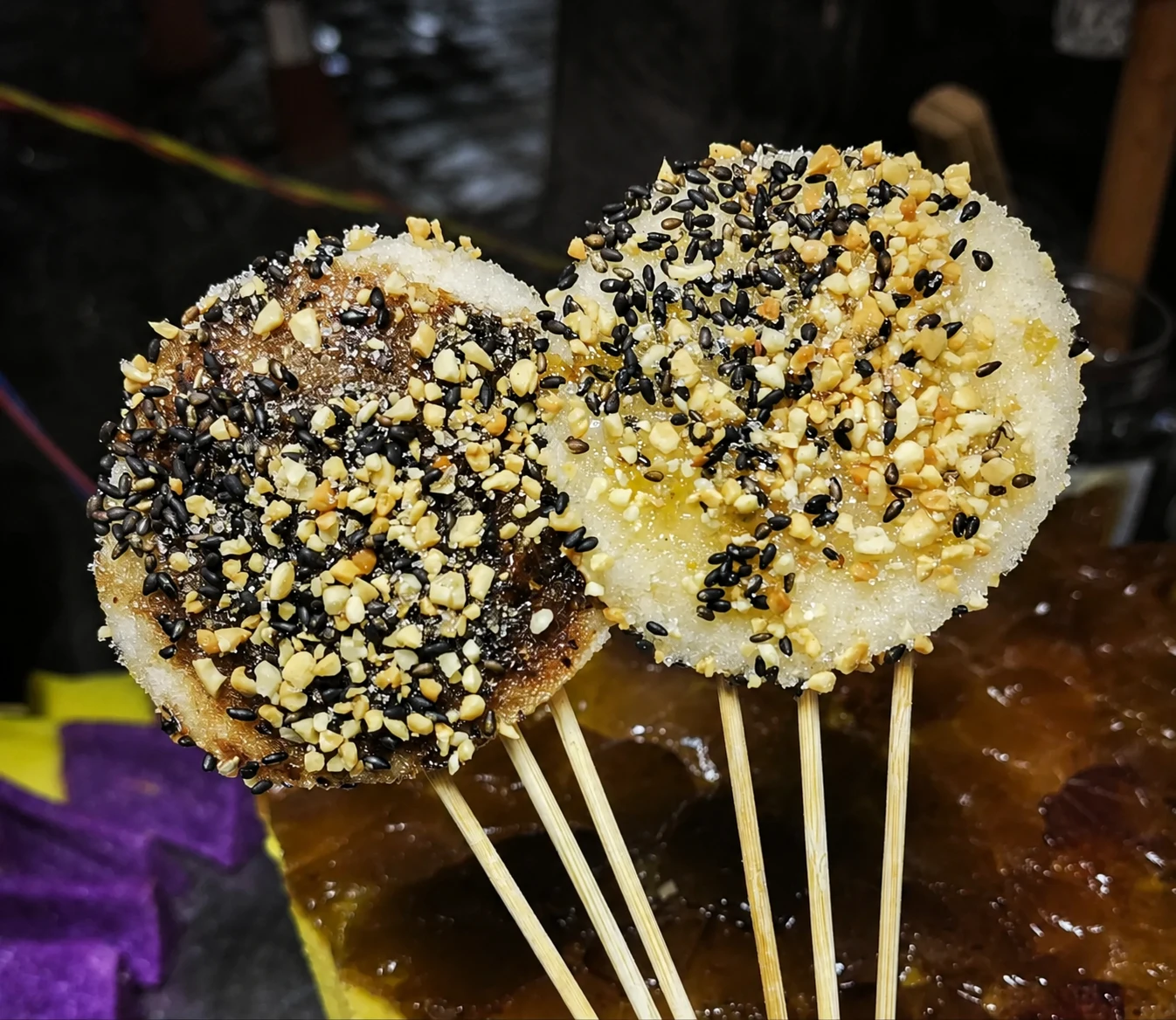
Children know it by sight. The cakes are small enough to hold, soft enough to bite through, and colorful enough to feel like a reward. Vendors stack the bamboo cups, lift them in rhythm, and dust or brush the surface before handing them over.
Where zenggao is deep and heavy, jinggao is light and quick. One belongs to the large steamer. The other belongs to the hand.
Honey, Rice, and Summer Relief
Another old sweetness appears when the weather warms: fengmi liangzongzi, chilled rice dumplings with honey. Unlike the savory zongzi known in many parts of China, Xi'an's version can be plain glutinous rice, cooled, sliced, and dressed with honey or syrup. Sometimes rose or osmanthus fragrance joins it.
The pleasure is in contrast. Sticky rice is cold. Honey is floral. The city outside is hot and dusty. A bite cools the mouth without pretending to be light.
These sweets share a local habit: they are not grand desserts after a banquet. They live closer to the street, the market gate, the school entrance, the breakfast stall. They are bought in small portions and remembered in large ones.
The Market Clock
Zenggao is most beautiful before it is neat. Early in the morning, the top layer is still glossy. Dates have melted into dark seams. The first customers know to come before the best pieces are gone. Some want more dates. Some want the corner where rice has pressed against the pot. Some ask for a softer scoop from the center.
The vendor understands without ceremony. The shovel goes in, turns, lifts. Steam rises between customer and seller. Money changes hands. The line moves.
Xi'an is famous for armies under earth and palaces turned to ruins, but zenggao belongs to another kind of preservation. It survives because breakfast repeats. Because someone still soaks the rice. Because a sweet made in the dark can pull people toward a street corner at first light.
The lid drops back onto the steamer. The next customer steps forward. Under the metal, the rice keeps breathing.